Fourteen years ago, the MHI T-Point demonstration combined-cycle plant in Takasago, Japan, changed the way modern gas turbines are validated under real operating conditions. In February, T-Point marked yet another milestone by starting to validate the world’s largest and highest efficiency gas turbine, which operates at the unprecedented turbine inlet temperature of 1,600C.
Until the 1990s, gas turbine prototypes were shop-tested and validated at “beta” sites where commercial power production was typically hampered by issues associated with the introduction of new technologies. In order to optimize the process of detecting and correcting defects during the validation phase, and to prevent exposing clients to the debugging process, Mitsubishi Heavy Industries Ltd. (MHI) introduced the concept of in-house validation under real operating conditions.
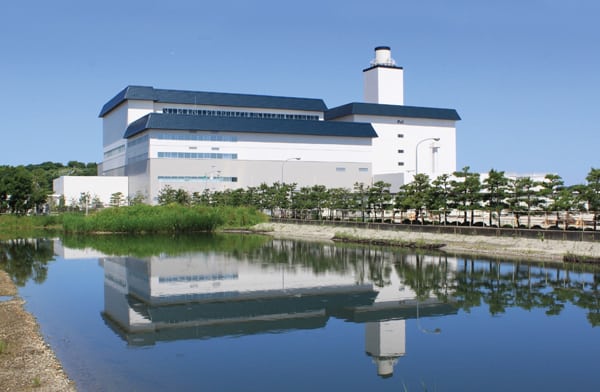
The plants providing this service are operated and maintained by MHI staff and sell their electrical output to local utility companies. Carlos Koeneke, vice president, project engineering at Mitsubishi Power Systems Americas Inc., told POWER in April that MHI built the first 50-Hz validation plant, K-Point, in Kanazawa in 1992. It was followed in 1997 by a 60-Hz counterpart in Takasago, called T-Point (Figure 1).
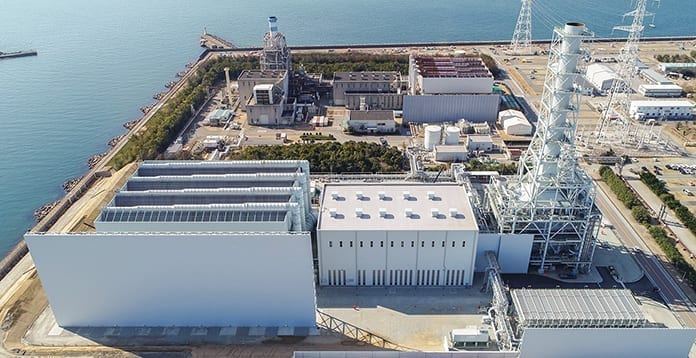
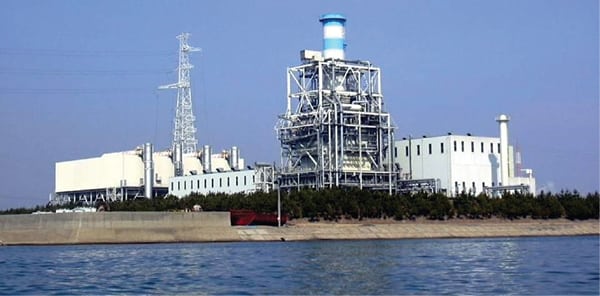 |
| 1. Carrying its own financial weight. The T-Point combined-cycle plant is maintained and operated by MHI under dispatch instructions from the local utility, Kansai Electric. The plant is frequently started and stopped, and every single MW of generated electricity is sold under a contract. This makes it economically possible to sustain long-term validation operation. Courtesy: Mitsubishi Heavy Industries Ltd. (MHI) |
“These demonstration plants were the first of their kind and revolutionized the way validation of advanced gas turbines is performed,” Koeneke said. “K-Point plant was decommissioned several years ago, but T-Point plant continues selling the generated power and even today, 14 years after T-Point went commercial, there is no other company that performs the comprehensive validation that the T-Point plant provides.”
The highest cost of sustained long-term validation under real operating conditions is not the equipment but the fuel consumed. The T-Point plant is maintained and operated by MHI under dispatch instructions from the local utility (Kansai Electric). The plant is frequently started and stopped, and every single MW is sold under a contract, as with any other independent power producer. Koeneke explained that this arrangement “makes it possible, from the economic point of view, to sustain long-term validation operation.”
A Strong Track Record
In addition to revolutionizing the way modern industrial gas turbines are validated, in 1997 the T-Point plant pioneered the introduction of steam cooling to gas turbines. Through extensive validation of the steam-cooled M501G gas turbine, as well as the upgraded M501G1 gas turbine in 2003, the T-Point plant delivered excellent results that facilitated deployment of the largest and most successful steam-cooled fleet of gas turbines in the market. To date, 47 units in operation have logged in excess of one million actual hours and 11,600 starts. This impressive G-Series record culminated with the introduction of the air-cooled version, which also was validated since 2009.
Operating and maintaining the demonstration plants in the same facility where design and manufacturing occurs (the MHI Takasago Machinery Works, which also includes a rheostat shop test facility that can be used to test off-frequency conditions) results in a smooth debugging process with a lower risk of failures and quick recovery after unforeseen issues, Koeneke explained. The validation process would not be representative of real operating conditions if the running modes were not determined by a real demand condition or if the duration of the validation run were restricted to only a few hundred hours due to the high cost of fuel. The T-Point plant has logged more than 2,300 start-stop cycles, 1,300 of those correspond to daily operating cycles. It has also operated more than 420 days, either continuously or under weekly start/stop cycles.
“Because of the lower failure and interruption risks, this demonstration concept is widely praised by the insurance community,” Koeneke said. “The testing scope goes beyond the gas turbine. T-Point also has allowed testing of a number of innovations, including steam turbine upgrades, air-cooled condenser technology, generators, and static frequency converters.”
Donald S. Schubert is the senior vice president of the Power Practice Division of Marsh Inc., an insurance company in the energy sector that provides coverage in the areas of project risk management, claims services, and errors and omissions protection for engineering services. He told POWER that he agrees with Koeneke’s assessment of the value of the demonstration concept pioneered by MHI.
“Looking back at the history of all the [original equipment manufacturers’] efforts to test and validate their new engines, T-Point certainly leads historically for the application of ‘load dynamic’ testing,” Schubert said. “MHI’s early industrial approach was testing in a power plant environment where dispatch and loading of units are not under their control.”
The insurance community’s point of view shows that MHI’s approach promotes advanced product validation in a non-owner operator environment, according to Schubert. The new engine validation “supports technology acceptance by the insurance markets by clarifying risks associated with new and upgraded designs.”
Validating Upgraded Components During Periods of Low Demand
MHI uses periods of low demand to inspect the plant’s equipment and to introduce upgraded components intended to promote enhanced reliability and performance, Koeneke said.
Designers and research and development staff based in nearby buildings have the ability to request the installation of temporary sensors that allow them to gather valuable insights pertaining to the modified parts. They have the invaluable opportunity to see immediate, first-hand results of their modifications and review their ideas to develop even better designs. Numerous improvements to the G-Series fleet of gas turbines were validated at the T-Point plant and consequently resulted in the high reliability this class enjoys.
Another Milestone: Demonstration of the M501J Gas Turbine
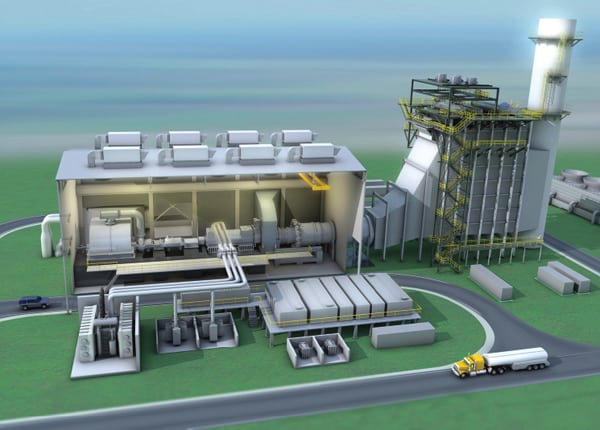
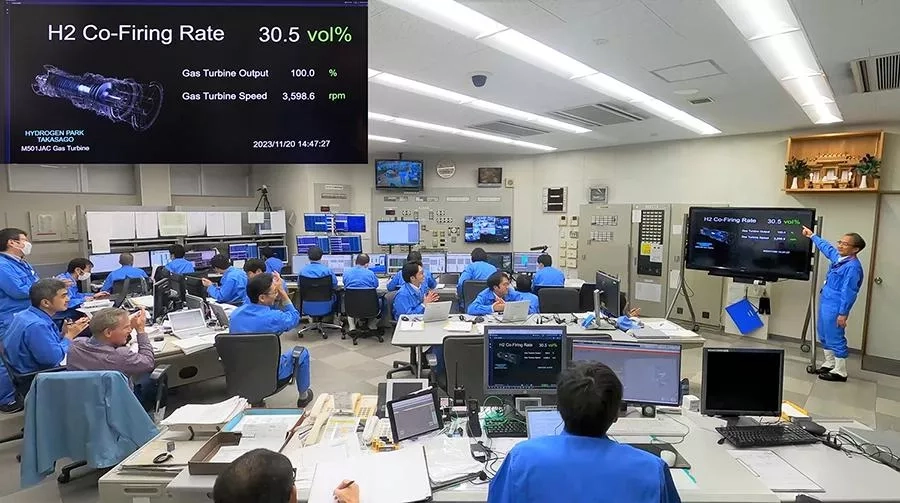
In November 2010, after T-Point staff completed validation of the air-cooled M501GAC gas turbine, they replaced this frame with the first M501J gas turbine (Figures 2 and 3). T-Point has achieved another unprecedented milestone with the ongoing demonstration operation of this turbine, which has a inlet temperature of 1,600C (2,912F). That’s 100C higher than the current highest-temperature engine.
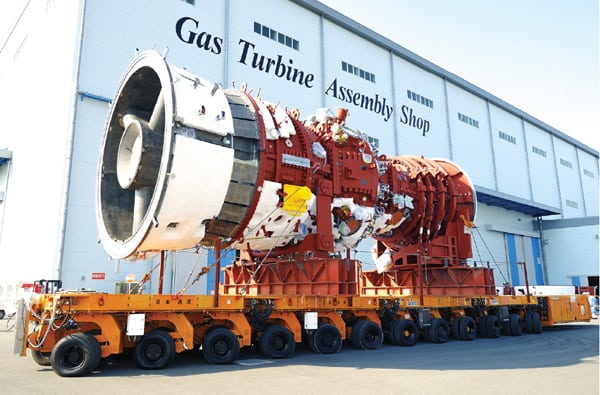 |
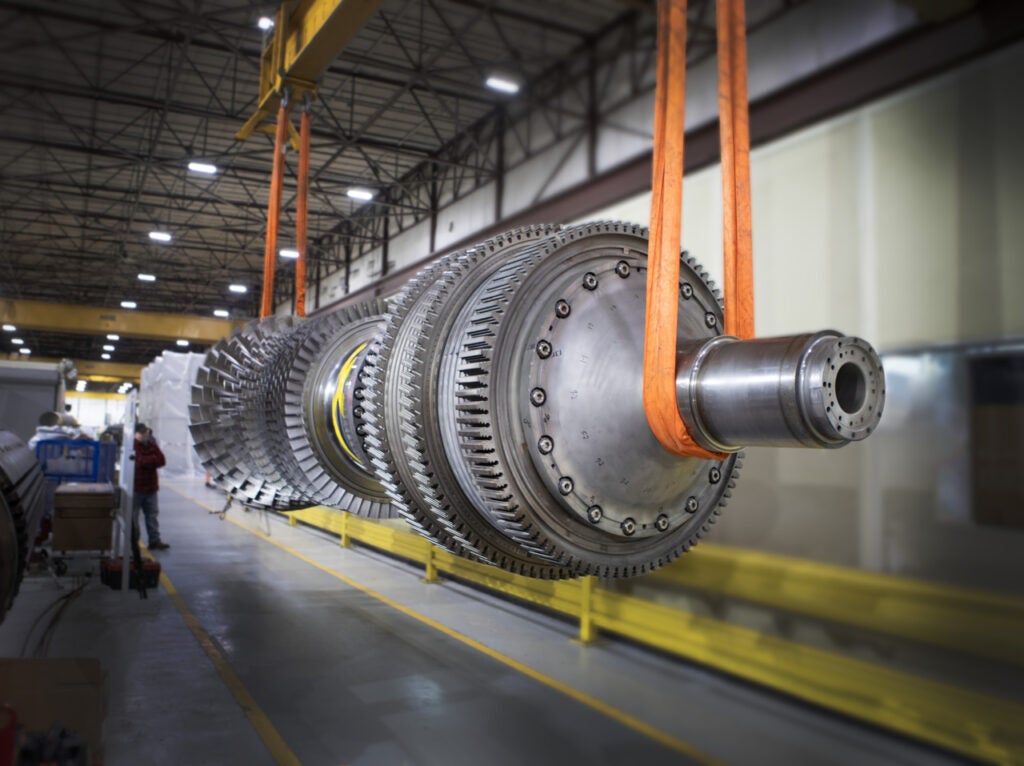
| 2. Traveling turbine. The M501J gas turbine is prepared for transportation to the T-Point plant for validation testing. Courtesy: MHI |
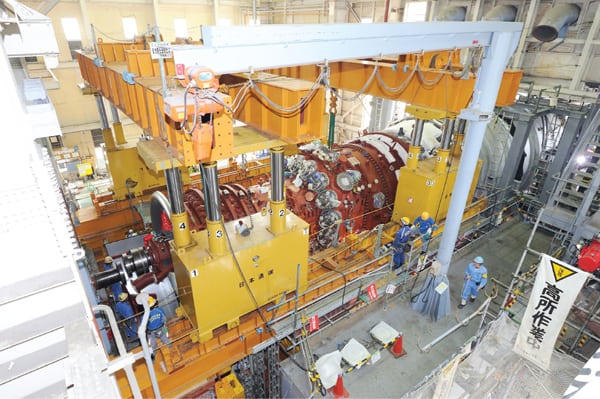 |
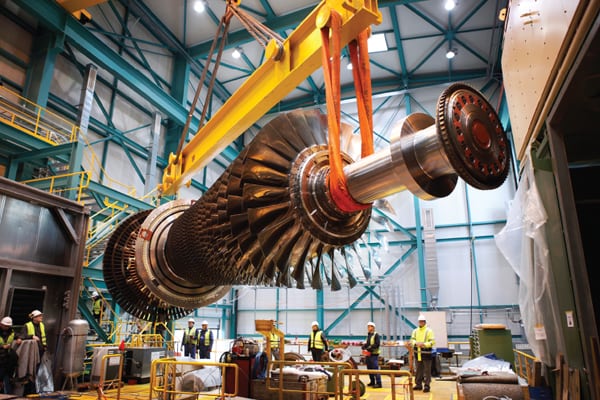
| 3. Making the mark. The T-Point achieved another unprecedented milestone with the ongoing demonstration operation of the M501J gas turbine, which has a turbine inlet temperature of 1,600C (2,912F). Courtesy: MHI |
The 60-Hz J-Series turbine achieves a rated power output of about 320 MW (ISO basis) and 460 MW combined-cycle power generation. According to MHI, this new gas turbine is able to withstand temperatures 100 degrees higher than the company’s existing 1,500 C-class G-Series gas turbine because of a low-thermal-conductivity thermal barrier coating technology and improvements in cooling efficiency. The adoption of an enhanced three-dimensional design contributes to improved aerodynamics. In the J-Series gas turbine, the compressor is designed to provide a higher compression ratio, while the combustor carries on the steam-cooled technology originally developed for the G-Series turbine.
“We have rheostat capabilities at Takasago Machinery Works, but it is naive… to assume that the short-term shop test operations with or without off-frequency operations can replace true validation under ‘demand conditions,’” Koeneke said. However, “Validation should replicate as much as possible the operating conditions the equipment will be exposed for years to come, and no demonstration plant in the world has achieved this task better than the T-Point Plant.”
— Angela Neville, JD is POWER’s senior editor.