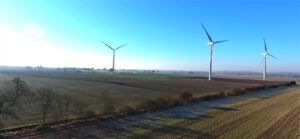
Wind turbine blade health strategies must get smarter to adequately support rapid advancements in turbine engineering.
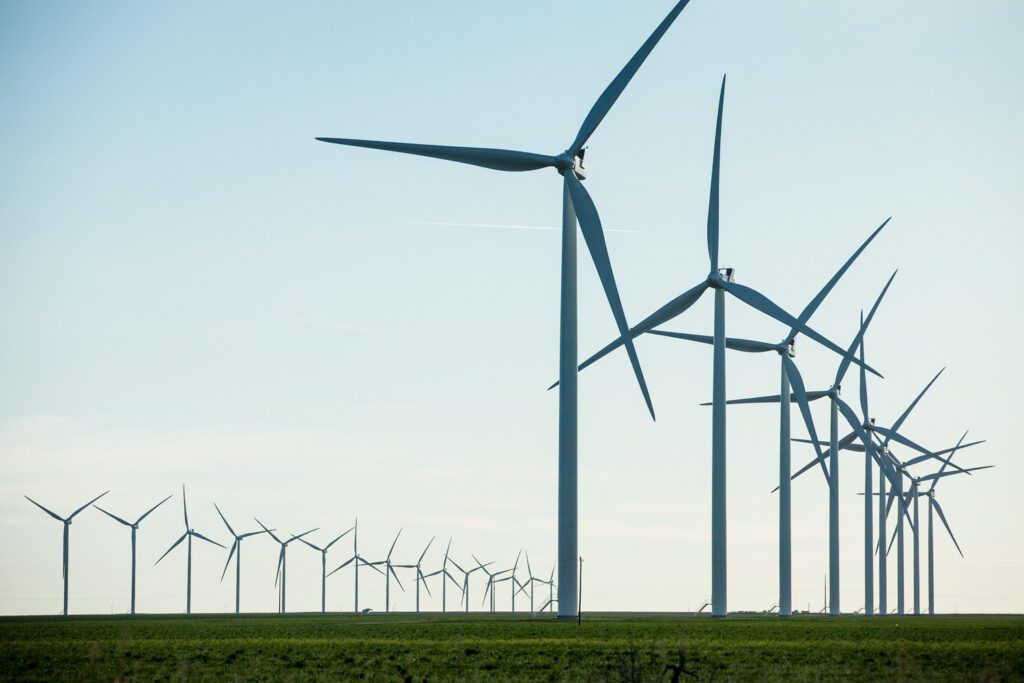
Over the last decade, global wind capacity has almost tripled. One of the keys to this growth story has been the sector’s ability to manufacture and deploy ever-larger wind turbines at pace. Today’s onshore models are, on average, three times greater in capacity compared to 2016 models, while offshore models are more than twice the capacity.
This feat has been possible thanks to significant leaps in research and development (R&D), and technological sophistication, greatly enhancing the revenue potential of wind farms. However, that progress is exposing a significant lack of evolution and implementation in the operations and maintenance (O&M) sector. Against a landscape of macroeconomic uncertainty, running more effective operations is becoming a top priority for wind energy companies.
The contrast is stark when we consider turbine blade health management strategies, which commonly persist with inadequate monitoring methods despite blade damage being one of the costliest issues to repair. Unless strategies to proactively maintain blade health evolve, the lucrative gains attained by scaling will continue to be undermined by increasingly expensive catastrophic losses.
Shifting from Speed and Scale to Operational Efficiency
A decade ago, the largest commercial wind turbine to be deployed boasted a now-modest 8-MW capacity and, at the time, signaled the culmination of long-term, incremental progress. Since then, 25-MW-plus turbines have emerged in what seems like the blink of an eye. For many years, the industry’s modus operandi has been to chase down efficiencies to reduce wind’s levelized cost of electricity through larger machines, and we have seen astonishing levels of investment pour in to accelerate this process.
The race to scale in wind has contributed to cheaper energy production and improved project economics. However, inflation, rising interest rates, the dilution of political support, grid connection and permitting delays, and supply chain issues are putting pressure on returns for newly built projects. Moreover, the rapid introduction of new models has brought an uptick in serial defects and a drop in standardization that would normally make performance and maintenance risks easier to quantify.
These challenges are prompting proactive companies to zero in on operational efficiency, and the deeper they look, the more opportunities they are finding to reduce maintenance costs and improve uptime revenue. Unlike turbines, which have grown exponentially, many current operational strategies are the legacies of managing much smaller assets and portfolios, and are inadequate for the present-day reality.
Nowhere is this gap more apparent than in wind turbine blades, which, despite exceeding 150 meters in length in some cases, continue to be managed in ways that allow damage to progress beyond the point at which operators can make a targeted, efficient, and cost-effective repair.
Avoidable Turbine Blade Maintenance Costs Are Creeping
Incremental blade damage and degradation represent the most significant impact on an asset owner’s budget for maintenance after lightning damage. Last year, the U.S. wind industry spent more than $1 billion on blade issues alone, accounting for 37% of the total share of wind turbine repairs, according to IntelStore reports. As wind turbines grow, and blade designs push further against engineering margins, the complexity and cost of blade failures is increasing.
Turbines are exposed to harsh climatic conditions to harness more wind, and blades bear the brunt of this exposure. From a hardware perspective, ensuring the durability and longevity of blades is both the most challenging and important issue at hand. This also means that internal defects that might occur due to manufacturing variability, extreme weather conditions, or simply through age, and wear and tear, can escalate into structural failures with little external warning.
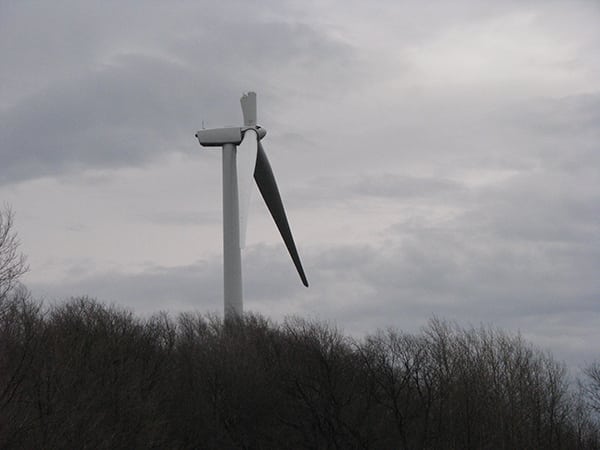
Structural failure of a blade brings operations to a halt, and the lost revenue of business interruption, averaging approximately $100,000 per day, compounds the expense of repairing the blade or sourcing a replacement. The availability of replacement blades is very limited and those that can be ordered cost between $300,000 and $500,000 with a potential lead time of more than 12 months. Meanwhile, a complete turbine replacement can exceed $5 million.
This is true of other parts of an asset if they experience a failure, for example, the gearbox or the generator, but condition monitoring for these parts has become standard in the industry to enable proactive maintenance decision-making. Condition monitoring for blades, however, is not yet standard. This reactive approach to blade maintenance means that potentially catastrophic blade behavior is not being identified and tackled early enough to prevent significant damage. Blade maintenance strategies must follow those of other key turbine components in shifting from reactive to proactive stances.
Now Is the Time to Evolve Blade Health Management Strategies
Asset owners’ blade maintenance costs are high, and rising, at a time when operational cost-savings can make a big difference to profitability. The typical way to monitor blade health today is through annual drone inspections, and that technology is improving with greater efficiency in identifying slow-developing defects.
However, issues such as structural degradation, subsurface cracking, and bond-line failures are essentially invisible to operators until they have become incredibly expensive to fix. Drones are limited to external diagnostics and cannot be run continuously to detect these issues at the critical moment for intervention. At ONYX, we estimate that early detection of cracks, structural faults, and other damaging behavior (even short-lived and high-energy events) can ultimately save owners 10 to 100 times their maintenance costs.
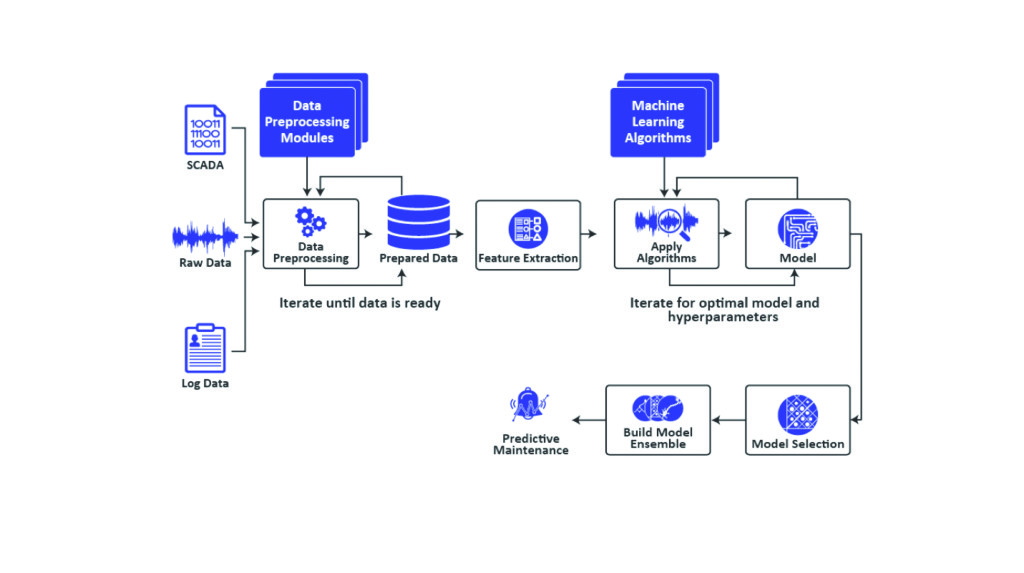
This calls for the development of blade condition monitoring systems (CMSs) that can complement drone inspections with thorough tracking of internal blade conditions. Looking ahead, the experience of tracking damage detection data should then feed into a data model that can be used to address blade damage much earlier in the process and therefore bolster blade reliability. The aim for the industry must be to reduce O&M costs and increase turbine availability related to blade damage in the same way it has been able to achieve this through drivetrain CMS development.
Blade health has continued to be a reactive consideration despite being one of the turbine components that has undergone the most upgrading in the race to scale. As blades have grown in size, so too has the cost of their maintenance. Now is the moment, as owners consider alternative forms of revenue growth besides new builds, to evolve blade management strategies, be front-footed, reduce creeping and avoidable costs, and maximize efficiency and profitability.
—Alexis Grenon is CEO of ONYX Insight. ONYX Insight empowers wind asset owner-operators to predict the unpredictable and manage their fleets with clarity and control. Acquired by Macquarie Capital in 2024, ONYX is trusted by eight of the world’s top 10 wind owner-operators and selected as GE Vernova’s exclusive provider of onshore drivetrain CMS. It delivers predictive analytics software, advanced sensing technology, and engineering expertise across the whole turbine. The company’s insights enable early fault detection, data-driven maintenance planning, and reduced operational costs across more than 32,000 turbines in 45 countries.