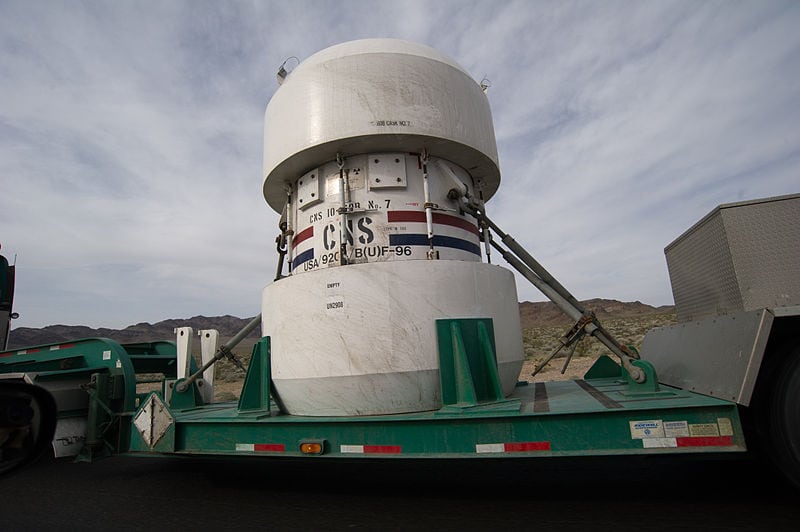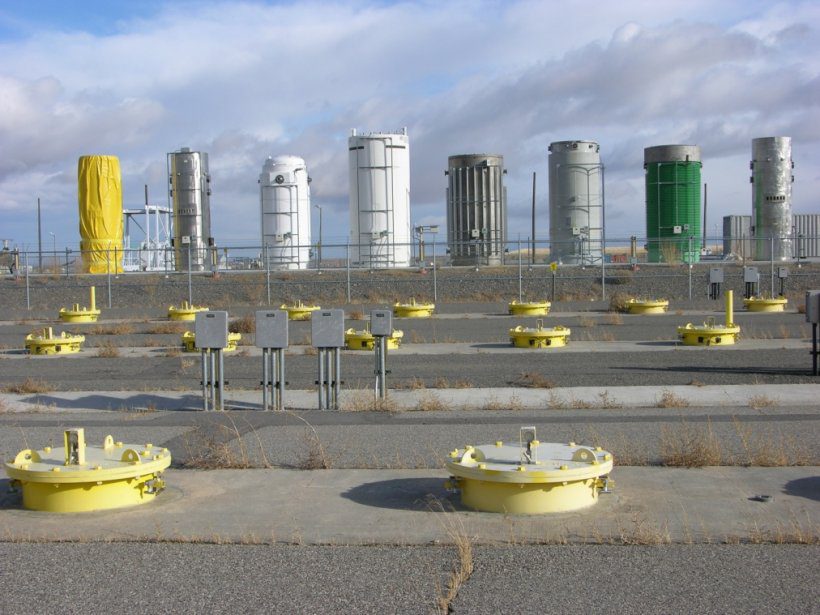
A new federal effort to develop nuclear “lifecycle” campuses has produced something Washington, D.C., has rarely seen: states competing for a role in managing America’s used nuclear fuel.
For decades, nuclear waste was a political third rail. Now, governors see the possibility of pairing advanced reactors, fuel production, recycling, and manufacturing with responsible management of used fuel.
COMMENTARY
But the emerging opposition in Idaho and Tennessee should not be dismissed as reflexive anti-nuclearism. Residents and lawmakers are asking reasonable questions: How much material would arrive? How long would it remain? What happens if promised recycling facilities or reactors are never built? And what prevents an “innovation campus” from becoming a permanent federal waste site?
The nuclear industry and federal government, in partnership with states and local communities, must answer those questions directly.
America should not ask a state to accept unlimited used fuel for undefined benefits. Nor should Washington repeat its history of commitments that can later be changed, delayed or abandoned.
A successful national strategy must rest on a different principle: States should be consenting partners with enforceable rights, clearly defined benefits and a binding plan for disposition.
The difference between a waste dump and a genuine lifecycle campus cannot be rhetorical. It must be established in binding agreements and physical infrastructure.
A real lifecycle campus would not merely receive and store used fuel. It would recover valuable materials, manufacture new fuels, support advanced reactors, greatly reduce the material ultimately requiring permanent disposal and generate high-paying, generational jobs. It would create an integrated industrial ecosystem—not storage pads surrounded by promises of development someday.
By now it’s well known that used nuclear fuel is not merely waste. The Department of Energy estimates that more than 90 percent of its potential energy remains after reactor use. Advanced recycling can recover energy-bearing material and valuable medical and industrial isotopes while reducing the volume requiring disposal.
That does not eliminate the need for permanent disposal. Every recycling process produces residual material that must be isolated safely. Anyone claiming technology can make the disposal question disappear is overstating science.
But it is equally misleading to treat every component of used fuel as worthless material that must remain untouched for millennia. Modern technologies can separate useful resources from the smaller fraction that genuinely requires long-term isolation. American policy should reflect that distinction.
States have the right—and should be strongly supported—to require the following assurances:
First, states should define what materials may enter, in what quantities, and for what purposes. There should be no open-ended authority to ship unlimited material based on facilities that may eventually be built.
Second, shipments should be linked to demonstrated operating capacity and measurable milestones. If recycling, reactor or manufacturing projects are not constructed on schedule, deliveries should not continue as though nothing has changed.
Third, host states and local communities deserve durable economic participation—not just one-time grants vulnerable to future appropriations. Benefits should include infrastructure, workforce development, emergency preparedness, environmental monitoring and continuing payments tied to the material managed.
Fourth, the federal government must retain responsibility for final disposition. A lifecycle campus cannot quietly become a substitute for a permanent repository. Material designated for disposal must have an enforceable pathway out of the host state.
Finally, states and local communities should be priority long-term partners, with meaningful oversight, access to judicial review and the authority to enforce the commitments made to them.
These protections are not obstacles to nuclear development. They are the foundation for durable development and public confidence.
The lifecycle-campus concept offers a chance to move beyond past failures and create genuine benefits for local communities, states and the nation. Louisiana’s heavy-manufacturing base, Utah’s world-class mining industry and business-friendly policies, Idaho’s scientific expertise, Tennessee’s industrial base and other states’ capabilities can help rebuild America’s neglected nuclear fuel cycle.
The question should not be whether a state is willing to “take nuclear waste.” That framing virtually guarantees political failure because it reflects neither the facts nor the potential value.
The real question is whether the federal government is prepared to enter a transparent and enforceable partnership with a state to transform used fuel into energy, economic opportunity and a smaller, more manageable disposal burden.
If Washington can offer that partnership, lifecycle campuses may become one of the most important energy and industrial initiatives of this generation. If it cannot, skeptical communities will be right to fear that “innovation campus” is simply a new name for an old broken promise.
—Edward McGinnis is former Assistant Secretary for Nuclear Energy (Acting) at the U.S. Department of Energy and current president and CEO of Curio, an advanced nuclear infrastructure company whose core business is nuclear fuel recycling.