
The Department of Energy (DOE) has released specifications for 26 artificial intelligence (AI) challenges under its Genesis Mission that could reshape how power plants are designed, licensed, built, and operated. Several directly target nuclear plant deployment timelines, grid interconnection bottlenecks, data center load integration, fusion commercialization, and subsurface energy recovery.
Launched via executive order on Nov. 24, 2025, the “Genesis Mission” seeks to “double the productivity and impact of American science and engineering within a decade” by integrating AI across DOE’s 17 national laboratories, user facilities, and decades of operational data. The DOE has described the initiative as a national discovery platform intended to “build the world’s most powerful scientific platform” by linking supercomputing, AI systems, emerging quantum technologies, and large-scale scientific instruments into a coordinated infrastructure for sensing, simulation, and experimentation. The effort will center on “pairing scientists with intelligent systems that reason, simulate, and experiment,” and its key objective is to generate high-fidelity data, train physics-informed AI models, and accelerate the cycle from scientific hypothesis to engineering deployment in energy, materials, and security domains, it says.
The agency has moved quickly to secure industry support, signing non-binding memorandums of understanding with 24 organizations on Dec. 18—including Amazon Web Services, Google, Microsoft, NVIDIA, and OpenAI—to explore AI applications for nuclear energy, grid modeling, materials science, and national security. Earlier this month, the DOE also established the Genesis Mission Consortium, a TechWerx-administered partnership that provides coordinated access to national lab supercomputers, datasets, and experimental facilities.
The 26 challenges—unveiled on Feb. 12 alongside a 28-page technical document—appear to represent the DOE’s roadmap for where it believes AI can deliver the biggest breakthroughs. The document sets specific, measurable targets for industry and researchers to pursue. These include cutting nuclear deployment schedules in half, slashing operational costs by more than 50%, speeding grid interconnection decisions by up to 100 times, and developing fusion energy digital twins that integrate plasma physics and materials science in real time.
“These 26 challenges are a direct call to action to America’s researchers and innovators to join the Genesis Mission and deliver science and technology breakthroughs that will benefit the American people,” said Michael Kratsios, assistant to the president and director of the White House Office of Science and Technology Policy. He added that the administration looks forward to “expanding the list of challenges across federal agencies to bring even greater impact to the Mission.”
Nuclear Infrastructure and Enterprise Modernization
The bulk of the Genesis Mission challenges—10 of the 26 initiatives—pertain to nuclear systems, spanning commercial reactor deployment, site remediation, nuclear facility digitization, and modernization of the National Nuclear Security Administration (NNSA) enterprise. Challenges focus directly on accelerating nuclear timelines, integrating digital modeling into operations, expanding experimental throughput, and modernizing data infrastructure across both civilian and defense-facing facilities.
Across this cluster, the DOE consistently emphasizes digital twins, surrogate modeling, explainable AI workflows, and multimodal data integration as mechanisms to compress schedules, reduce costs, and increase system-level reliability. In both commercial and NNSA contexts, the DOE describes AI as a tool to reduce iteration cycles between design, licensing, production, and operation.
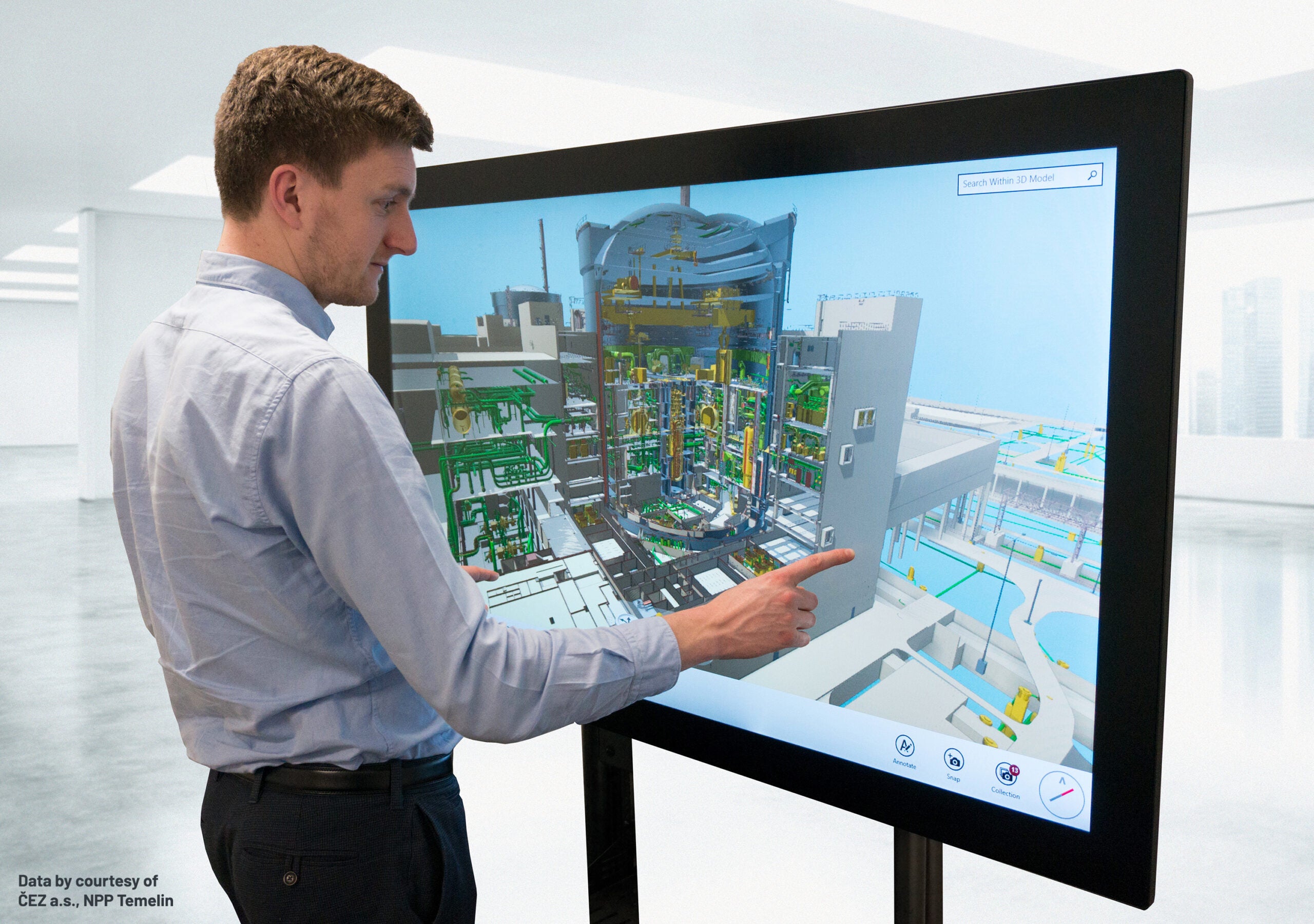
Delivering Nuclear Energy That Is Faster, Safer, Cheaper. The DOE will target long development timelines and high capital costs in commercial nuclear power, aiming for “at least 2x schedule acceleration” and more than 50% operational cost reduction. The initiative will deploy “explainable AI,” including surrogate modeling, agentic workflows, autonomous labs, and digital twins, across design, licensing, construction, and operations to compress deployment cycles and expand firm U.S. capacity. “For example, for reactor operations, we will use digital twin systems with AI components that will interpret complex operational data in real time,” it says.
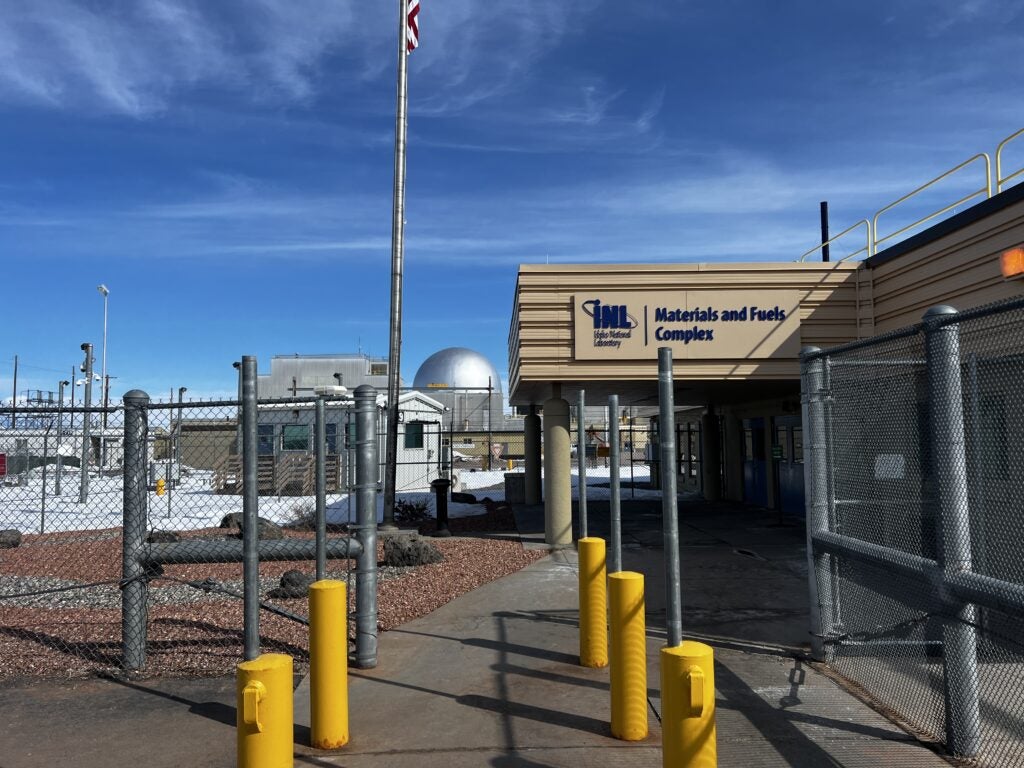
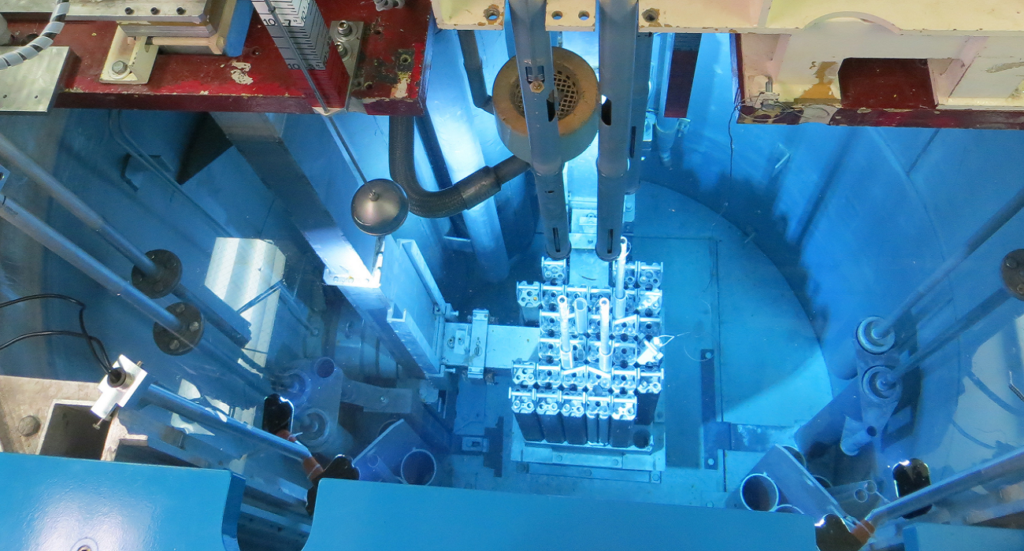
The effort will leverage national laboratory infrastructure—including Idaho National Laboratory’s (INL’s) Advanced Test Reactor and Transient Reactor Test Facility, Oak Ridge’s High Flux Isotope Reactor, and Argonne’s Mechanisms Engineering Test Loop Facility—along with decades of operational data, regulatory partnerships, and DOE’s computational ecosystem. Anticipated outcomes include accelerated reactor deployment, reduced human error, strengthened national security, and “multi-billion-dollar cost savings per gigawatt of generating capacity.”
Increasing Experimental Capacity at Nuclear Research Facilities. The DOE plans to stand up an AI “facility operating system” for limited‑capacity, high‑consequence test sites, using agentic workflows to plan and schedule experiments, steer execution in real time, and fuse live diagnostics with multi‑fidelity simulations so each shot yields maximum information with minimal turnaround. The effort also calls for interoperable facility digital twins, common data and provenance standards, and uncertainty‑aware analytics that operators can trust in stringent safety and security environments. By uniting supercomputing, advanced simulation, and automated labs under a single architecture, the DOE and NNSA are seeking to increase experimental throughput, cut the number of costly physical tests required, and shorten qualification timelines for advanced fuels, materials, and reactor concepts—while creating a model for AI‑driven R&D that can extend to civilian energy and other strategic industries.
Transforming Nuclear Cleanup and Restoration. Facing an estimated $540 billion environmental liability over eight decades—including an estimated 90 million gallons of highly radioactive tank waste—the DOE will train multimodal AI models on decades of cleanup data to accelerate treatment and remediation of legacy sites. Faster processing and improved predictive modeling will reduce lifecycle costs and unlock contaminated sites for energy infrastructure reuse, it says.
Harnessing America’s Historic Nuclear Data and Research. The DOE will digitize more than eight decades of legacy nuclear weapons test records, reports, and imagery into simulation-ready datasets using optical character recognition, data extraction, and geometry inference tools. Converting analog archives into structured digital inputs will strengthen modeling, safety validation, and nonproliferation analysis.
Integrating Design and Production Operations for Nuclear Deterrence. The DOE will develop an AI-enabled “enterprise twin” that links physics-based design models with manufacturing digital twins to reduce iteration time between national laboratories and production plants. Closed-loop optimization will modernize coordination across the nuclear deterrence enterprise.
Streamlining Production, Removing Red Tape, and Ensuring Safety in the Nuclear Enterprise. Aimed at NNSA’s high‑hazard weapons and production facilities (not commercial nuclear plants), the initiative will deploy auditable, AI‑assisted workflow tools to digest safety‑basis requirements, automate safety analyses and documentation, and reduce regulatory and compliance bottlenecks while maintaining rigorous assurance standards. The DOE describes the goal as building a “trusted digital regulatory corpus” with full provenance and end‑to‑end audit logs, turning safety‑basis navigation from a bottleneck into a “transparent trust‑building capability” and cutting planning and documentation time by more than 50%. Officials say this could accelerate approvals and production timelines across the deterrence enterprise and eventually provide a transferable model for civilian nuclear energy, chemical processing, and aerospace.
Accelerating Nuclear Threat Assessment, Preparedness, and Response. The agency will deploy advanced predictive modeling tools to enhance simulation of nuclear or radiological incidents, improving situational awareness and response planning. Faster analytical capability will strengthen national readiness and coordination.
Safeguarding Nuclear Materials from Proliferation Threats. The DOE will implement AI-based anomaly detection and data fusion systems to improve monitoring, accounting, and verification of nuclear materials across facilities. Enhanced detection capability will support nonproliferation commitments and security assurance.
Strengthening Deterrence Through Attribution of Nuclear and Radiological Signatures. The agency will apply machine learning tools to analyze radiological signatures and historical datasets to improve the accuracy of nuclear forensics and attribution. More rapid and precise attribution will strengthen deterrence credibility and national security posture, the DOE said.
Grid Infrastructure and Large Load Integration
The challenges unveiled on Thursday show that DOE also plans to extend the Genesis Mission into transmission planning, interconnection processing, data center integration, and water-resource forecasting, areas where modeling speed and system uncertainty increasingly constrain infrastructure development. Across these initiatives, the agency says it will deploy AI-driven analytics and simulation tools to accelerate decision-making, improve reliability, and support large-load expansion.
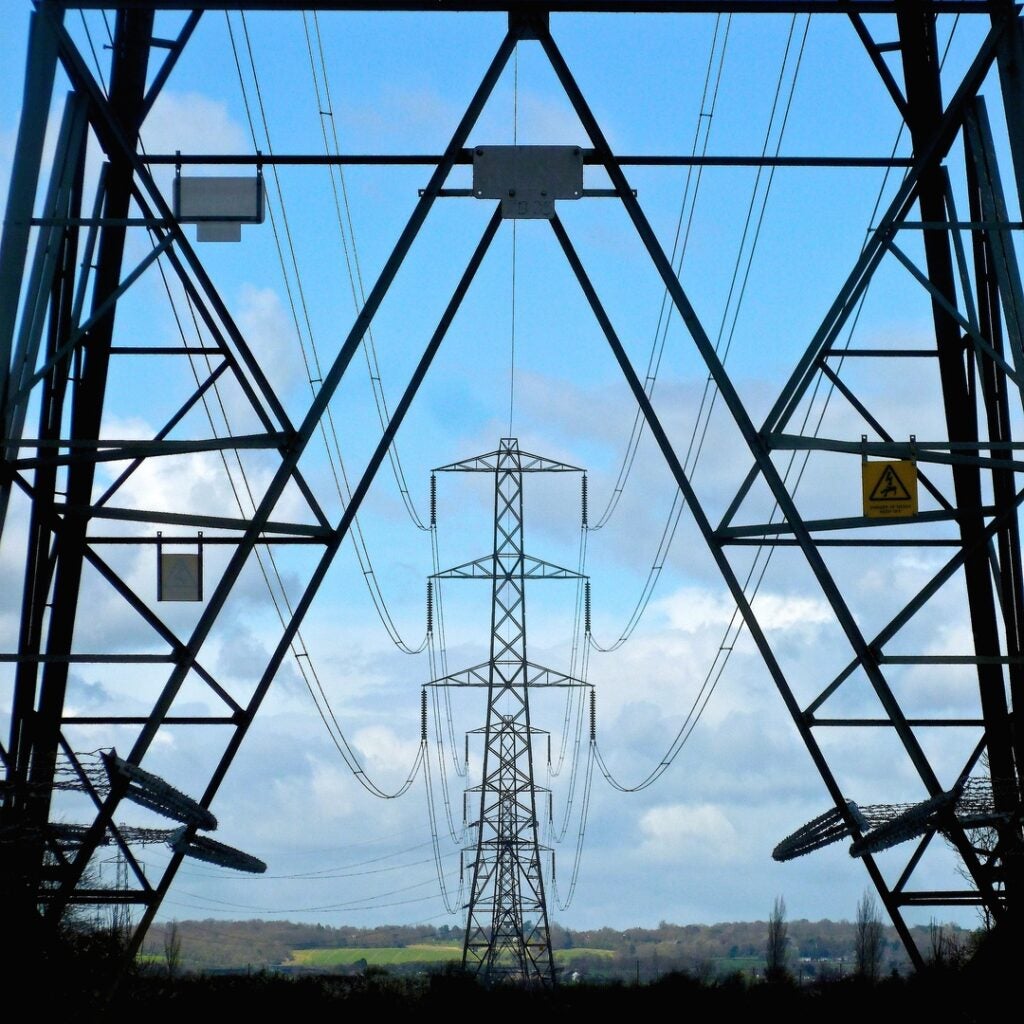
Scaling the Grid to Power the American Economy. As electricity demand surges from data centers, manufacturing, and electrification, the grid faces reliability challenges and infrastructure limitations that threaten affordable power delivery, the DOE says. The agency will apply deep and reinforcement learning techniques to newly integrated data sources to “reduce uncertainty, improve insights, and speed processes in grid planning, interconnection, operations, and security.” The target: “20-100x faster decision-making” and “at least 10% improvement in electricity cost and reliability.”
The initiative considers that while utilities hold critical grid data, they have low risk tolerance, limited R&D capacity, and a regional focus. The agency will bridge this gap by combining utility data with national laboratory capabilities, including INL’s Critical Infrastructure Test Range Complex (CITRC) and the National Laboratory of the Rockies’ (NREL’s) Advanced Research on Integrated Energy Systems (ARIES) platform, to develop validated, deployable AI solutions for grid operators.
Securing U.S. Leadership in Data Centers. The DOE describes data center development as essential to “winning the AI race” while maintaining “secure, reliable, and affordable energy for consumers.” The initiative will use artificial intelligence/machine learning (AI/ML), digital twins, and cyber-physical testbeds to “rapidly de-risk advanced data center technologies and their grid integration,” supporting data center operators, equipment providers, utilities, and host communities. Essentially, AI/ML will accelerate physics-based models to enable real-time digital twins, explore millions of deployment scenarios, and optimize across competing constraints, mainly to balance computing performance, energy efficiency, grid reliability, and cost. The DOE will leverage the Center of Expertise for Data Center Energy at Lawrence Berkeley National Laboratory, which maintains datasets on data center energy use, to inform development and validation.
Predicting U.S. Water for Energy. The DOE will develop AI capable of multi-scale temporal reasoning to tackle three interconnected challenges: cloud physics, surface and subsurface water flows, and the broader hydrologic cycle. AI will improve and couple exascale-class modeling systems, including the DOE Energy Exascale Earth System Model (E3SM), through advances in model initialization and surrogate models trained on DOE’s atmospheric and terrestrial observations, at a fraction of the computational cost of existing approaches. The goal is to radically improve forecasts of surface and groundwater availability amid changing demand, new energy technologies, and expansion ambitions.
Next-Generation Baseload and Resource Expansion
Several challenges focus on expanding the physical resource base that underpins long-duration, dispatchable U.S. energy capacity. It spans fusion as a prospective firm power source, subsurface oil, gas, and coalbed methane, geothermal recovery, and the mineral inputs essential to energy, defense, and advanced manufacturing supply chains.
Accelerating Delivery of Fusion Energy. Realizing fusion on the grid requires coordinated progress across plasma physics, materials science, nuclear engineering, and full-facility systems integration, the DOE will advance an AI-enabled Digital Convergence Platform. The platform will integrate high-performance computing codes, physics-informed neural networks, surrogate models, and whole-facility digital twins to evaluate performance trade-offs and failure modes across the six Fusion Science and Technology Roadmap challenge areas unveiled in October 2025. The objective is to shorten innovation cycles and accelerate the delivery of fusion as a firm, scalable baseload energy source.
Unleashing Subsurface Strategic Energy Assets. Cost-effective extraction of unconventional oil and gas, geothermal, and coalbed methane is constrained by heterogeneous, fracture-dominated reservoirs and limited predictive capability, the DOE says. The agency will integrate seismic, geochemical, biological, and hydrologic data into physics-informed AI models and digital twins capable of reasoning under extreme uncertainty, linking molecular-scale processes to field-scale resource availability. The effort will improve reservoir characterization, increase recovery efficiency, and reduce the costs of subsurface energy development.
Securing America’s Critical Minerals Supply. Given that domestic production of critical minerals remains expensive and time-consuming, and mired in complex, multi-step extraction and processing pathways, the DOE will develop physics-based AI systems that integrate geophysical data, process optimization, cost estimation, and economic modeling to accelerate resource assessment, recovery, refinement, and development of substitute materials. The goal is to expand the U.S. mineral resource base, reduce reliance on foreign supply chains, and strengthen national security and energy independence.
Industrial and Manufacturing Infrastructure
One cluster of challenges explicitly targets bottlenecks in domestic industrial capacity—ranging from plant construction and advanced materials qualification to semiconductor fabrication and bio-based production. The DOE frames these challenges as opportunities to apply AI to reduce development timelines, improve productivity, and strengthen U.S. manufacturing leadership.
Reenvisioning Advanced Manufacturing and Industrial Productivity. U.S. manufacturers face rising costs, process variability, and limited ability to optimize across complex multi-step production systems, the DOE says. The agency will develop AI-enabled modeling and control systems capable of real-time optimization across design, fabrication, and operations to increase productivity and reduce waste in industrial facilities.
Designing Materials with Predictable Functionality. Because materials discovery and qualification cycles remain slow, performance is often validated through lengthy trial-and-error testing. The DOE plans to deploy physics-aware machine learning systems to predict structure–property relationships and enable inverse design of materials with specified performance characteristics, accelerating qualification timelines for energy and strategic applications.
Reimagining Construction and Operation of Buildings. To address construction timelines, cost overruns, and inefficient building operations that continue to constrain infrastructure scaling, the DOE will integrate AI models with digital building representations and operational data to improve construction efficiency, optimize energy use, and enhance lifecycle performance.
Recentering Microelectronics in America. Recognizing semiconductor manufacturing requires precise process control, yield optimization, and supply-chain resilience, the DOE will apply AI tools to advance design, fabrication, and materials integration in microelectronics production, supporting domestic capacity and reducing dependence on foreign supply chains.
Scaling the Biotechnology Revolution. Bio-manufacturing processes often involve complex biochemical pathways and costly scale-up from lab to production, the DOE says. The agency will develop AI-guided modeling systems to accelerate strain engineering, bioprocess optimization, and industrial feedstock conversion, enabling more efficient domestic bio-based production.
Foundational Scientific and Computational Platforms
Underpinning the entire Genesis Mission, the DOE is moving to build the reasoning engines, simulation environments, and integrated physics models that it says will transform how discovery and engineering are conducted across energy and security systems. Rather than targeting a single subsector, the initiatives seek to accelerate the scientific cycle itself.
Enhancing Particle Accelerators for Discovery. Particle accelerators require precise tuning and coordination of complex subsystems to operate efficiently, the DOE says. The agency plans to deploy adaptive AI control systems and digital models to improve beam stability, system performance, and experimental throughput, accelerating discovery in materials, medicine, and energy science.
Discovering Quantum Algorithms with AI. While quantum computing hardware continues to advance, algorithm development remains constrained by theoretical complexity. The DOE will apply machine learning tools to explore and optimize quantum algorithms for applications in chemistry, materials modeling, logistics, and energy-relevant simulations.
Realizing Quantum Systems for Discovery. Scaling quantum systems, meanwhile, requires integration across cryogenics, error correction, materials, and device engineering. The DOE will use AI-based modeling and design tools to accelerate development of more stable, scalable quantum platforms capable of addressing high-dimensional energy and physical science problems.
Unifying Physics from Quarks to the Cosmos. Many DOE research missions span dramatically different physical scales—from subatomic particles to astrophysical phenomena. The agency will build AI-enabled multiscale modeling frameworks that integrate datasets and simulations across these domains, supporting a more comprehensive understanding of fundamental physics and its implications for energy and national security.
—Sonal Patel is a POWER senior editor (@sonalcpatel, @POWERmagazine).