
Gas
-
 Gas
GasDOE Approves Fourth LNG Export Project
The Department of Energy on Wednesday conditionally authorized Dominion Cove Point LNG, LP to export domestically produced liquefied natural gas (LNG) to countries that do not have a Free Trade Agreement (FTA), marking the fourth order allowing non-FTA LNG exports. The orders authorizes Dominion Cove Point LNG to export 0.77 billion cubic feet of natural […]
-
Legal & Regulatory
Washington Think Tank Scopes Out State Shale Gas Regulation
U.S. states vary widely on how they are regulating the booming business of producing natural gas from shale formations, according to a study released this summer by the Washington environmental think tank Resources for the Future (RFF). “As the shale gas boom has taken off,” says RFF, “states have updated their regulations, each with varying […]
-
Coal
BP: King Coal Keeps the Worldwide Throne Against the Gas Challenger
The revolution that has toppled coal from the top of the generating queue in the U.S. has not reached the rest of the world, according to the “BP Statistical Review of World Energy.” While natural gas may have supplanted coal as king of the hill in the U.S. electric generating mix, the solid mineral—geographically the […]
-
Gas
The Challenge of Methane Emissions: How Important, How to Detect
Much recent debate about shale gas recovery through horizontal drilling and hydraulic fracturing has focused on methane emissions from shale gas wells. The general take on this topic is that methane (the remarkably simple molecule CH4) is a greenhouse gas “20 times” or “25 times,” or some other number, more “potent” than carbon dioxide, the […]
-
Gas
How New Jersey’s Linde Has Been Building on the Shale Boom
Linde Group, an international industrial gases firm based in Munich with a U.S. home in New Jersey, is an unusual beneficiary of the U.S. shale gas revolution. The company has developed technology using the industrial gases it can produce in copious quantities, to reduce some of the environmental objections to developing shale gas wells. Linde […]
-
Gas
Summer 2013 Shale Gas News Bites
Looking Out for Shale Gas Labor Issues The Houston Chronicle reports that the U.S. Department of Labor is closely watching how shale gas producers protect their laborers from workplace accidents and injuries. They suspect violations of the Fair Labor Standards Act on hours of work and overtime pay. The gas industry’s critiques say the companies […]
-
Gas
The Real and Measurable Benefits of Fracking
In a welcome development almost no one saw coming, America’s greenhouse gas emissions have fallen to 1992 levels and are expected to continue to decline, according to the U.S. Energy Information Agency (EIA). In addition to a sluggish economy and more fuel efficient cars, “fracking” has been a big driver of this trend. “Fracking” is shorthand for […]
-
Commentary
How Shale Gas Has Helped Pennsylvania’s Economy
The Marcellus shale formation—the second-largest natural-gas field in the world—has been a blessing for Pennsylvania’s workers and our economy. Almost a quarter-million people in Pennsylvania work to produce natural gas from the Marcellus shale or in related industries. Thanks to the growth of hydraulic fracturing, commonly known as fracking, the Marcellus has been responsible for […]
-
Commentary
Gasland Part II: Same Misleading Images, New Conspiracy Theory
Director and provocateur Josh Fox is confident, “There is no safe drilling” and has made two of what the New York Times called “muckraking documentaries” crusading against the practice of hydraulic fracturing or “fracking.” His movies are powerful propaganda rife with misleading or inaccurate claims and leave little to no room for the other side. […]
-
Commentary
The Extraordinary Life and Accomplishments of George Mitchell
Most Americans have never heard of Texas oilman George Mitchell, who died in July at the age of 94 at his home in Galveston, Texas. But Mitchell, the son of a Greek immigrant goat herder, was arguably the most important individual in America’s energy history since Thomas Edison and John D. Rockefeller. Mitchell truly was […]
-
Gas
Trend: Is Shale Gas a U.S.-Only Phenomenon, or Does It Have Farther Reach?
The shale gas revolution has so far been a U.S. phenomenon. But hydrocarbon-containing Devonian shale formations are far from a U.S. or even North American phenomenon. Geologic forces didn’t follow political boundaries in the Devonian period 400 million to 300 million years ago. Indeed, the continents then were not where they are today by large […]
-
 Commentary
Renewable Intermittency Is Real
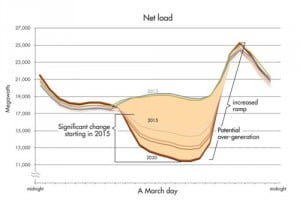
If you’ve been paying attention to energy issues in the media lately, you may have encountered a curious narrative that’s starting to gain traction among supporters of renewable energy. Namely, that the core problem with wind and solar photovoltaic (PV) generation, which is matching moment-to-moment demand with the intermittency wind and sunlight, isn’t really a […]
-
 Gas
GasGermany Sounds Retreat on Gas-Fired Power
If you’ve seen U.S. coal industry executives casting wistful glances across the Atlantic recently, there’s a reason. In the U.S., natural gas is enjoying a boom unseen in decades, perhaps ever. New production from shale should make the country a net exporter within a decade. New gas-fired plants are starting up almost as fast […]
-
Coal
More Than 5.5 GW of Generation Switched to Gas Since 2011, Says SNL Energy Study
As environmental regulations continue their forward march and gas prices remain low compared to historic rates due to increased domestic supply, the number of power plants changing their primary fuel source to natural gas has increased dramatically. In 2011 and 2012, just more than 5.5 GW of power plant capacity switched to burning primarily […]
-
 Coal
CoalIEA Sees Strong Growth in Asian and North American Gas as Europe Lags
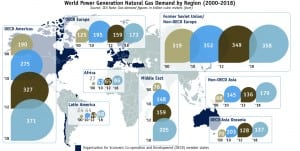
Despite frail demand for natural gas in Europe and difficulties in upstream production growth in the Middle East and Africa, the “Golden Age” of natural gas will remain in full swing until at least 2018, recent projections from the International Energy Agency (IEA) show. A medium-term outlook released by the Paris-based autonomous intergovernmental organization in […]
-
Commentary
How Anti-Fracking Activists Deny Science on Air Emissions
A common talking point among critics of hydraulic fracturing is that they somehow “own the science” on shale development. The industry is merely raising doubt about scientific studies, they claim—just enough to confuse the public and make them think there’s a legitimate debate. As the Washington Post recently characterized Gasland Part II director Josh Fox’s opinion: Fox frets […]
-
 O&M
O&MTo Flush or Not to Flush, That Is the Question
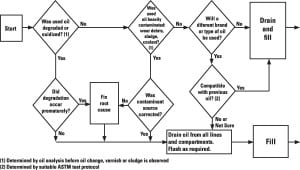
Lubricating oil is the lifeblood of virtually all rotating equipment found in a power plant. Keep it clean and the lube system is relatively low maintenance. However, cycling operation and restarts after a temporary or long-term shutdown can reveal a whole new class of perhaps unfamiliar problems. The fundamental question is determining when a […]
-
 Gas
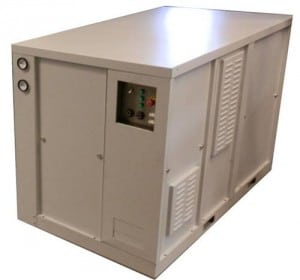
GasFuel Cell Unit Could Replace Tactical Diesel Generators for U.S. Military
One lesson learned from the U.S. military’s far-flung operations during the 2010s was the critical importance of fuel supply lines. At the peak of the conflict in Afghanistan, getting each gallon of gasoline or diesel into remote operating bases could cost upwards of $1,000 when all transportation and security costs were factored in. With U.S. […]
-
 Gas
GasTop Plant: Amman East Power Plant, Al Manakher, Jordan
Owner/operator: AES Jordan PSC AES Corp.’s $300 million, 370-MW gas-fired Amman East Power Plant entered commercial service in 2008 and was the first independent power plant in Jordan. The Jordanian
-
 Gas
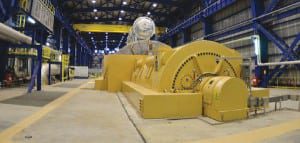
GasTop Plant: Combined Cycle Power Plant Brazi, Brazi, Romania
Owner/operator: OMV Petrom S.A. Romania began the process of restructuring its vertically integrated, state-owned electricity industry to meet European Union (EU) directives several years before it joined the
-
 Gas
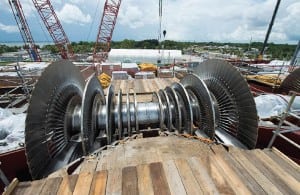
GasTop Plant: Cape Canaveral Next Generation Clean Energy Center, Brevard County, Florida
Owner/operator: Florida Power & Light No one can accuse Florida Power & Light (FPL) of having anything against natural gas. The biggest consumer of gas in a state with the second-biggest appetite for
-
 Gas
GasTop Plant: Sasol Gas Engine Power Plant, Sasolburg, South Africa
Once flush with cheap electricity, the Republic of South Africa has recently been beset by power shortages and reliability challenges as a result of decades of underinvestment in its electrical infrastructure
-
 Gas
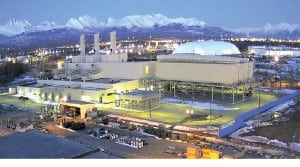
GasTop Plant: Southcentral Power Project, Anchorage, Alaska
Owners: Chugach Electric Association Inc. and Anchorage Municipal Light & PowerOperator: Chugach Electric Association Inc. Alaska’s vast land mass broken up by mountainous regions and glacier fields does
-
Gas
Hints of What’s Next from GE on the Technology Front
When Gary Leonard, General Electric’s global technology director for aero-thermal and mechanical systems technologies, spoke with POWER Contributing Editor Mark Axford at this year’s Gulf Coast Power
-
 Renewables
Reports: Future Coal and Nuclear Prone to Market Forces, Gas Expansion
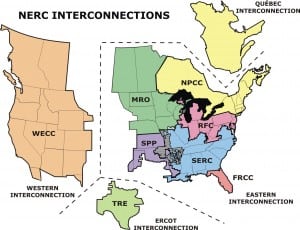
Two federally sponsored reports submitted to the Eastern Interconnection States’ Planning Council (EISPC) suggest that the rapid expansion of natural gas could force the closure of between 35 GW and 60 GW of U.S. coal power capacity over the next five years and weaken market forces that now bolster existing nuclear plants. An Energy Department–funded […]
-
 Gas
GasEurope’s Gas Power Plant Carnage Intensifies
Europe’s Gas Power Plant Carnage Intensifies Another 1.2 GW of gas-fired generation has been idled in Germany as utilities scramble to rein losses that are pegged to falling wholesale electricity prices and a surge in renewable power generation. Norwegian power company Statkraft put into “wet reserve” the 800-MW Knapsack 1 and 417-MW Herdecke power plants, […]
-
Gas
Report Warns of Narrowing Window for LNG Exports
A report circulated by Sen. Lisa Murkowski (R-Alaska), ranking member of the Senate Committee on Energy and Natural Resources, warns the U.S. could miss its window to become a major player in global natural gas trade. The white paper titled “The Narrowing Window: America’s Opportunity to Join the Global Gas Trade,” part of the senator’s […]
-
Gas
DOE Authorizes Third LNG Export Facility
The Department of Energy (DOE) on Wednesday conditionally authorized Lake Charles Exports to export domestically produced liquefied natural gas (LNG) to countries that do not have a Free Trade Agreement (FTA) with the U.S. The firm can now export LNG from its Lake Charles Terminal in Lake Charles, La. Lake Charles previously received approval to […]
-
Gas
NRG Adds Another Gas Plant to California Fleet
Courtesy: Siemens. Copyright Brian Haux—SkyHawk Photography No nukes? No problem. The state of California, once home to three major nuclear power plants, weathered an early July heat wave in good shape despite having only one operating reactor, Unit 2 at Diablo Canyon Power Plant. Unit 1 at Diablo Canyon was forced to shut down for […]
