
Environmental
-
 Legal & Regulatory
Prop 7: California’s illusory promotion of renewable power
This November, as part of California’s eclectic version of participatory democracy, its residents will vote on whether to amend the Solar and Clean Energy Act of 2008. Proposition No. 7 (Prop 7) promises to place the state on “the path to energy independence.” It would require all California electric utilities, including municipals, to procure 50% […]
-
 Environmental
EPA’s air program: Still hazy after all these years
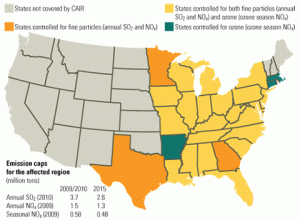
While the Bush administration is winding down during its final year, several of its major air pollution initiatives have recently unraveled. These casualties were the result of two recent federal court decisions and the Environmental Protection Agency chief’s refusal to regulate greenhouse gases under existing laws. These developments make it plain that any important new attempts to regulate air emissions will have to be made by the next president.
-
 Environmental
Gore knows best
Al Gore, self-appointed father of the climate change movement, astonished his most ardent supporters with a plan to produce 100% of the nation’s electricity from renewable energy and carbon-free sources within 10 years. “The quickest, cheapest, and best way to start using all this renewable energy is in the production of electricity. In fact, we […]
-
 Nuclear
Global Monitor (August 2008)
Australia considers seabed sequestration legislation / ElectraTherm installs its first commercial waste-heat generator / Mass. researchers achieve dramatic increase in thermoelectric efficiency / Nuclear power option for developing nations gaining steam / The great green wall of China / POWER digest / Correction
-
 Legal & Regulatory
Reality bites California GHG plan
The California Air Resources Board (ARB) recently issued its long-awaited draft Climate Change Scoping Plan (Draft Plan) for implementing Assembly Bill (AB) 32, California’s ambitious greenhouse gas (GHG) emissions-reduction initiative. AB 32 requires California to reduce GHG emissions to 1990 levels by 2020—roughly a 30% reduction in projected “business-as-usual” emissions levels or 168 million metric […]
-
 Coal
CoalOh Canada! B.C. ratifies North America’s first carbon tax
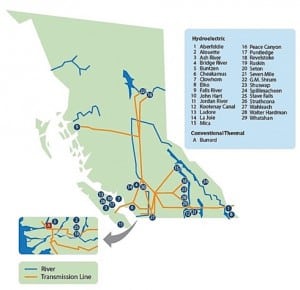
British Columbia began collecting increased tax revenue on fossil fuels on July 1 with a promise to rebate those taxes through reduced income and business tax rates. This "revenue recycling" plan makes little progress toward the province’s goal to reduce CO2 emissions 33% by 2020, yet it is hailed by proponents as a legislative milestone. Others believe B.C. residents are victims of another governmental "bait and switch" program. Does it matter to the rest of the world?
-
 O&M
O&MHow to Measure Flyash Levels
Measuring the level of flyash in your silos is not an easy task, in part because the flyash collected at one plant can be remarkably different from that collected at another plant, even if both fire the same coal. Such variability means that selecting the right instrument for your application is important.
-
 Coal
CoalCourt Kicks CAIR Rules to the Curb
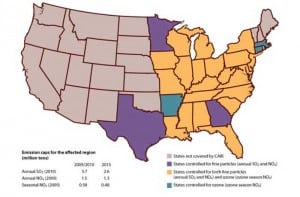
A federal appeals court has struck down a key Environmental Protection Agency (EPA) program for reducing fine particulate and smog-causing emissions in the eastern half of the nation, saying the rules were riddled with “several fatal flaws,” including the agency’s failure to properly focus pollution cuts to prevent movement of air pollution from one state from worsening air quality in a downwind state.
-
Coal
EEI Leaders Say Promise of Carbon Capture and Storage “Overblown”
In a sobering assessment of a key technology that’s expected to help keep the coal industry viable in the face of likely greenhouse gas caps, several electric utility executives have expressed deep concern that the promise of carbon capture and storage for coal-fired power plants has been “overblown” and “oversold.”
-
 Commentary
EPA Staff’s GHG Proposal Will Paralyze the U.S. Economy
The Environmental Protection Agency (EPA) has announced that is it well on its way to regulating at least 85% of the energy used in America in the name of global warming (never mind the fact that temperatures have inexplicably not increased since at least 2001). If the proposal is enacted, any organization or person that emits more than miniscule amounts of CO2 will be required to obtain a permit, effectively bringing our economy to its knees in short order.
-
Commentary
Rules Designed to Be Broken
By Dr. Robert Peltier, PE
The fallout from the Supreme Court’s April 2, 2007, decision (Massachusetts v. Duke Energy) in which the high court ruled that the EPA does have the right to regulate CO2 emissions as a pollutant under the Clean Air Act (CAA) continues. The court also ruled that the EPA has the authority to regulate carbon emissions from automobiles and other vehicles—and, by extension, power plants (my words, not the court’s). -
 Coal
CoalEnvironmentally Sound Handling of Deactivated SCR Catalyst
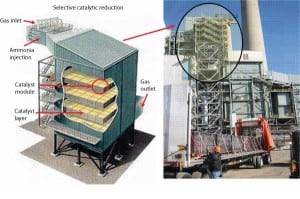
Selective catalytic reduction systems were introduced as a means of reducing the nitrogen oxide emissions of power generators in the 1980s. Since then, environmental issues have increased in importance, as has the value of an SCR reactor. Unfortunately, because this technology is still so new, not all users understand its full potential and proper maintenance techniques.
-
Coal
Trona Injection Reduces SO3 Emissions
Emissions of SO3 (or its hydrated form, H2SO4) have created a nagging problem for some coal-fired power generators after they’ve installed a selective catalytic reduction system. If your plant is in that unfortunate group, here’s a summary of the state of our understanding of the problem—and its solutions.
-
 Commentary
Kilowatt-hour tax is fairest approach
By Jim Rogers, Duke Energy Corp. The climate change debate has been dramatized in movies, on Hollywood’s red carpets, and in documentaries featuring melting ice caps. The collective effect is extraordinary, and positive. America now stands ready to address one of its toughest challenges since the industrial revolution—decarbonizing our energy supply and economy. Now the […]
-
 Legal & Regulatory
Climate change: Policy via litigation?
By Steven F. Greenwald and Jeffrey P. Gray David Crane, the CEO of NRG Energy, was recently quoted in a widely disseminated publication as saying: “It is a moral imperative that we take steps to reduce CO2 concentration in the earth’s atmosphere.” One might expect those reacting to Crane’s comments (made in a February 2007 […]
-
 Coal
CoalOptions for reducing a coal-fired plant’s carbon footprint, Part II
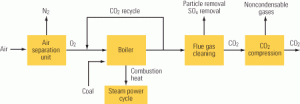
A conventional coal plant’s CO2 emissions can be reduced either after combustion (see Part I of this article in POWER, June 2008) or before. In the latter case, typified by integrated gasification combined-cycle (IGCC) plants, the fuel used is synthesis gas (syngas), which contains mostly hydrogen (H2) and CO. A water-shift reactor converts the CO […]
-
 Coal
CoalWoods and power company CEOs agree: “The state of the industry is cautious”
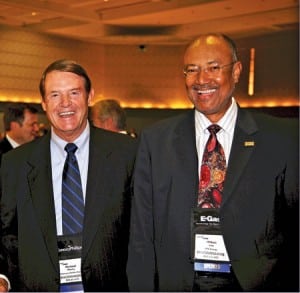
It is rare indeed to witness, at an otherwise staid industry forum, the public rebuke of the country’s most prominent supplier to the electric power industry. But at the Keynote session and Power Industry CEO Roundtable of the 2008 ELECTRIC POWER Conference & Exhibition in Baltimore this May, Milton Lee, general manager and CEO of […]
-
 Coal
CoalCarbon Constraint Conference: Dealing with the climate change conundrum
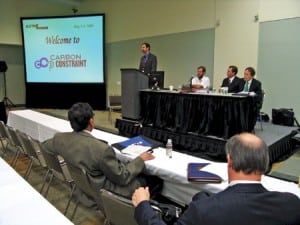
“Once it’s enacted, the impact of climate change legislation on the electric power industry will be ten times bigger than that of the Clean Air Act,” said Dan Adamson, an attorney with the law firm of Davis Wright Tremaine and chair of the opening session at the 2nd Annual Carbon Constraint Conference (Figure 1). 1. […]
-
 Water
WaterNew strategies for conquering environmental challenges
No doubt some power plant engineers feel that tackling environmental problems is a lot like dealing with the Hydra, the ancient mythological serpent monster with multiple heads. When an attacker would cut off one of the Hydra’s numerous heads, two new ones would grow back in place of the head that was removed. All too […]
-
Commentary
Deadlock: Bush’s Air Policy
After almost eight years, the Bush administration’s approach to air pollution policy—including global warming—ends up with bupkus. That’s a wonderfully-useful Yiddish word meaning, literally, “nothing,” but implying less than nothing, or the meaningless result of lots of apparent, but futile, effort.
-
 Coal
CoalNew Source Review Update
The mere mention of the words "New Source Review" (NSR) will immediately capture the full attention of any utility executive and might cause the cancellation of even the best power plant "upgrade" project. The effects of those three words have nothing to do with project economics or whether a project increases or decreases emissions. It’s all about the lawsuits.
-
 Coal
CoalDebate on the Cost of Carbon Control Begins
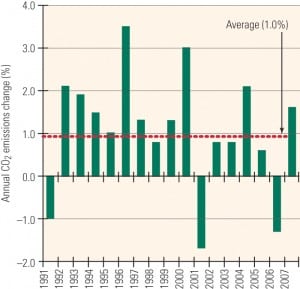
Senate legislation to cap U.S. greenhouse gas (GHG) emissions beginning in 2012 would have generally modest cost impacts on the national economy, leading to reductions in gross domestic product (GDP) by 2030 that range from 0.2%, or $444 billion, to 0.6%, or $1.3 trillion, according to an Energy Information Administration analysis.
But the analysis, which concluded that the costs of the legislation would depend largely on the availability of advanced nuclear and coal-fired generation technologies, drew criticism from Republicans for its projection of a massive buildup of nuclear generation.
-
Coal
Designing Material-Handling Systems for FGD Projects
Reducing NOx, SO2, and other air pollutants continues to be a challenge for the power generation industry. The technologies are well-understood, but the devil is always in the details, especially when a complex treatment system is retrofitted to an existing plant.
The most common method for reducing SO2 from plant emissions is the conventional lime- and limestone-based flue gas desulfurization (FGD) system. Material-handling systems for limestone and gypsum present specific challenges and opportunities that differ from those of coal-handling systems. This article looks at factors to consider before and during the design of a new material-handling system. The choices you make about these many variables will determine the cost and longevity of your system.
-
Commentary
Wishful Thinking
By Editor-in-Chief Dr. Robert Peltier, PE
Zhou Dadi, director general (emeritus) of the Energy Research Institute at China’s National Development and Reform Commission, recently spoke at a panel discussion sponsored by the Carnegie Endowment for International Peace. Zhou boasted that China has set aggressive short-term goals for improved energy efficiency and that his country understands that it needs to make significant reductions of CO2 in the future. This is a remarkable statement considering that China installed over 100 GW of new coal-fired generation in 2006 and another 75 GW in 2007. -
Coal
From Plan to Plant: The Struggle to Make “Clean Coal” a Reality
In early June, New York Gov. David Paterson proclaimed that his state would commit $6 million to buttress a carbon capture and sequestration (CCS) viability study for the development of a new 50-MW clean coal plant in Jamestown, in western New York. The circulating fluidized-bed (CFB) project, which would use pure oxygen to combust coal and subsequently capture and sequester 90% of emitted carbon dioxide (CO2), would be “the first of its kind in the world” and could potentially enable New York firms to launch exports of the technology worldwide, Paterson promised.
-
 Coal
CoalGlobal Monitor (June 2008)
Artificial photosynthesis for solar power? / Poultry litter to fuel 55-MW N.C. plan / First fuel cell-powered plane takes flight / First HTS transmission cable energized / PTC powers wind power industry / Renewing Greensburg / GAO deems coal-to-gas switch impractical / Assessing the Congo River’s power potential / POWER digest / Corrections
-
 Coal
CoalOptions for reducing a coal-fired plant’s carbon footprint: Part I
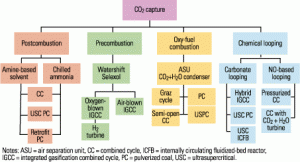
Caps on greenhouse gas emissions are imminent in the U.S., and they will change how we design tomorrow’s coal-fired power plants. Efforts are already under way to develop alternative capture and sequestration technologies, mainly for CO2. Unfortunately, the proposed processes all consume lots of energy, reducing plants’ net output and efficiency. In Part I of our look at these technologies, we list and quantify the negative impacts of postcombustion removal of CO2 from a coal plant’s flue gas. Next month, in Part II, we’ll do the same for four other CO2 reduction techniques: oxyfuel combustion, using higher-temperature and higher-pressure boilers, cofiring biomass, and replacing some coal-fired capacity with renewable capacity.
-
 Coal
CoalGlobal Monitor (May 2008)
National Grid divested of Ravenswood/ GE to sell Baglan Bay plant; From prairie grass to power/Renewables experience 40% growth/ The sustainable city/Solar recharger for developing countries/ Seeking CCS solutions/ Hoover Dam could stop generating/ Japan turns to fossil fuels/U.S. reactors produce record power/ POWER digest
-
 Legal & Regulatory
Why RPS programs may raise renewable energy prices
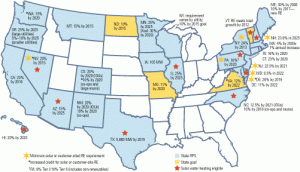
Until very recently, common wisdom held that the price of renewable energy would fall as legislative procurement mandates ensured its long-term demand. The resulting growth in supply and sales would spur investment in the field, create economies of scale, and accelerate progress down the technology learning curve. Something unexpected, however, happened along the way. Though […]
-
 Wind
WindRegulating wind power into a dispatchable resource
Perhaps the biggest shortcoming of wind power is its unreliability. Unconcerned with human needs, Mother Nature has decided that the wind usually blows strongest at just the wrong times, when electricity demand is lowest. However, using savvy negotiations to exploit a new provision in California’s renewable energy regulatory regime could make wind power more dispatchable during peak-demand periods and increase the capacity of wind farms at the same time.