
Environmental
-
Coal
Court Revives CO2 “Nuisance” Suit Against Utilities
In another major legal victory for states pressing for controls on industry emissions of carbon dioxide, a federal appeals court has reversed a lower court decision and ruled that eight states and the city of New York City could bring “nuisance” suits against five coal-burning utilities to curb greenhouse gas discharges that the states claim are causing damage to their natural resources.
-
Coal
EPA to Clamp Down on Coal Plant Wastewater
The Environmental Protection Agency announced it plans to “revise” existing, decades-old guidelines for water discharges of toxic metals from fossil fuel-fired power plants, saying a recently concluded EPA study focused mostly on wastewater discharges from coal-fired power plants uncovered elevated levels of toxic pollutants.
-
Coal
EPA Finalizes Greenhouse Gas Reporting Rules
In a major climate change rulemaking, the Environmental Protection Agency has issued final regulations that will require most large emitters of greenhouse gases in the U.S. to report their emissions beginning in 2010.
-
O&M
Texas Wind Boom Cutting into Fossil Generator Profits
Can wind turbines actually reduce the amount of fossil fuels consumed? A Wall Street Journal analysis concludes that ERCOT utilities will begin to feel the squeeze in their profits this year and to expect the amount of fossil fuels used to generate electricity to be reduced.
-
 Environmental
Techniques for Determining Limestone Composition and Reactivity
Limestone composition and reactivity are critical factors that determine the performance of limestone-based wet flue gas desulfurization systems. Limestone quality affects sulfur dioxide (SO2) removal, reaction tank sizing, limestone consumption rate, and composition of the gypsum product and waste streams. Reactivity is a direct measure of how readily a limestone will provide alkalinity to neutralize the acid resulting from SO2 dissolution in water. In this article we review your limestone analytic measurement options and discuss their relative accuracy and limitations.
-
 Environmental
PNNL Pioneers New Sulfur and Carbon Dioxide Scrubbing Liquid
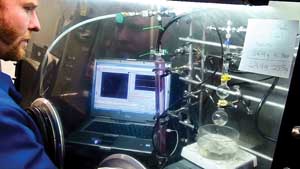
A reusable organic liquid developed by the U.S. Department of Energy’s Pacific Northwest National Laboratory (PNNL) to remove carbon dioxide (CO2) or sulfur dioxide (SO2) from power plant emissions could one day replace current scrubbing methods and allow power plants to capture the gases in a cost-efficient way that uses no water and less energy.
-
Environmental
Dead Man’s Hand
The stage is being set for negotiating a successor agreement to the Kyoto Protocol. The U.S. is trying to exert some leadership in the international climate change debate by attempting to build consensus for binding carbon emission reductions prior to the upcoming Copenhagen meeting. Meanwhile, carbon legislation is, thankfully, stalled in the Senate, and developing countries are rejecting our entreaties. You can’t win if other countries don’t want to play.
-
 Gas
GasTop Plants: Edward W. Clark Generating Station, Clark County, Nevada
The Edward W. Clark Generating Station, which has supplied electricity to the Las Vegas Strip for more than half a century, has learned the secret of life in the desert: adaptability. The plant’s early years featured conventional steam plants operated around the clock. By mid-life, Clark had been upgraded with two combustion turbine combined-cycle power blocks operated as intermediate-load resource. Today, the old steam plants have been replaced with fast-start peaking gas turbines.
-
 Coal
CoalCombined-Cycle Carbon Capture: Options and Costs, Part I
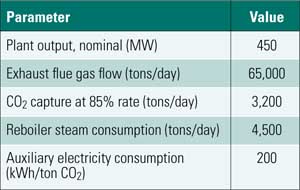
Uncertainty about CO2 emissions legislation is prompting power plant owners to consider the possibility of accommodating "add-on" CO2 capture and sequestration solutions for coal-fired plants in the future. Those same plant owners may be overlooking the possibility that future natural gas – fired combined cycles will also be subject to CO2 capture requirements. This month we examine the capture options. In a future issue, Part II will present the installation and operating costs of different carbon capture technologies.
-
 Coal
CoalReport: Costs for First-Generation Carbon Capture Plants Will Soar
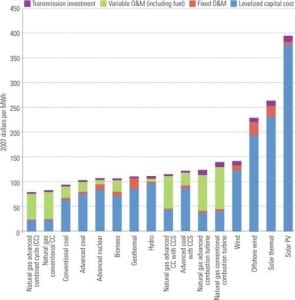
Carbon capture and storage (CCS) has of late gained steam as the best way to mitigate emissions of the greenhouse gas carbon dioxide (CO2) from fossil fuel power plants, despite evidence that the approach would require much energy and increase the fuel needs of a coal-fired plant by more than 25%. A new study from […]
-
 O&M
O&MWhat if New Source Review Were Repealed?
The New Source Review (NSR) permitting program was originally created as part of the 1977 Clean Air Act Amendments to ensure that new power generation facilities were properly outfitted with all the necessary air quality control systems when constructed. Plants in operation were exempt until they made plant modifications viewed as beyond “routine maintenance,” a term whose definition has been a moving target. Is it time for the NSR to take a back seat to improved plant efficiency and reduced carbon emissions?
-
O&M
High-Hazard Coal Ash Sites, and the TVA Spill Revisited
The EPA has identified 44 "high hazard" coal ash ponds around the U.S., and a recent Tennessee Valley Authority report indicates that the agency should have known its Kingston Plant pond would have been one of them.
-
Coal
Utility Business Customers to Feast on Free Allowances
An analysis by the Center on Budget and Policy Priorities concluded that two-thirds of the value of carbon emission allowances described by the recent H.R. 2545 will benefit utility business customers and households in the top quartile of personal income. The middle quintile will see increased cost for electricity.
-
Coal
MIT Report Urges Faster Action on Carbon-Capture Retrofits
MIT researchers push for faster commercialization of carbon capture technologies for coal-fired power plants by reducing system costs.
-
 Coal
CoalCommercially Available CO2 Capture Technology
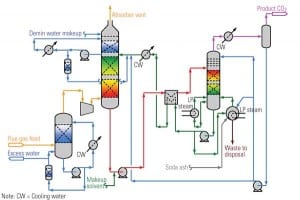
While many CO2 removal technologies are being researched through laboratory and pilot-scale testing, an existing technology has a significant operating history at commercial-scale facilities, where it is collecting CO2 from multiple sources, including low-CO2 concentration flue gas (<3.1% by volume) with high oxygen concentrations (>13% by volume).
-
 Environmental
Help Build the Global Energy Observatory
How would you like to be able to access data on all the power plants in the world and all of their performance metrics, analyze that data, and map it? Those abilities are part of the vision behind the Global Energy Observatory (GEO), an OpenModel website that serves as a wiki for global energy data.
-
 Coal
CoalOf Fracking, Earthquakes, and Carbon Sequestration
Hydraulic fracturing — the process of drilling and then pumping fluid deep into a formation to generate fractures or cracks, typically for extracting natural gas from shale formations — has been under fire lately, owing to concerns that it contaminates drinking water. But while Congress debates proposed legislation that would impose new restrictions on the technology, an entirely different concern related to fracturing — or "fracking" — is emerging: It may trigger earthquakes.
-
 Coal
CoalMajor Scottish Coal Plant Starts CCS Pilot Program
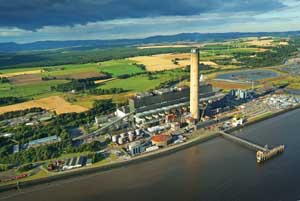
Energy provider ScottishPower on May 29 flicked on the switch of a carbon capture and storage (CCS) pilot program at its 2,304-MW coal-fired Longannet power plant, in Fife, Scotland, marking the beginning of a seven-month test — and the first time a UK coal-fired power plant has reportedly attempted to capture its carbon emissions.
-
 Coal
CoalCarbon Control: The Long Road Ahead
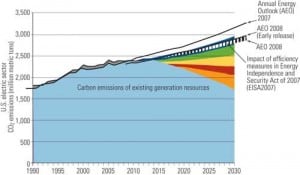
The industry is preparing for carbon legislation by exploring options for dealing with CO2. But even if the technical issues are resolved, actually sequestering CO2 poses a number of other daunting challenges.
-
 Coal
CoalTechnology Could Deliver 90% Hg Reduction from Coal
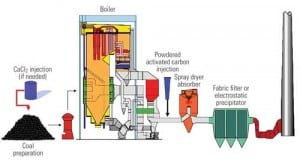
Reducing mercury emissions at coal-fired power plants by 90% has been considered the holy grail of mercury control. A new technique promises to get us there — at a price.
-
 Environmental
Power Industry Needs to Do a Better Job of Educating and Messaging
At the opening ELECTRIC POWER 2009 plenary session, both the keynote speaker and the Power Industry Executive Roundtable participants kept circling back to the problems created by a public and lawmakers who seem to be promoting policies without an adequate understanding of energy realities. Most of the speakers acknowledged that the industry itself is partly to blame, but nobody offered a way forward.
-
Legal & Regulatory
Looking Downstream After the Cooling Water Case
In the wake of the recent U.S. Supreme Court ruling related to cooling water intake practices at large power plants, many utilities are relieved to be off the hook as far as implementing expensive control upgrades to protect fish and other aquatic organisms.
-
 Coal
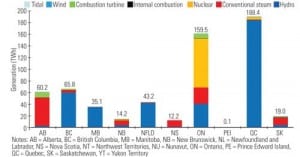
CoalCanada Moves to Rebalance Its Energy Portfolio
Though Canada is rich in fossil fuels, nuclear power may fuel a significant portion of the nation’s future electrical generation needs, especially in provinces that have traditionally relied on hydropower and fossil fuels.
-
 O&M
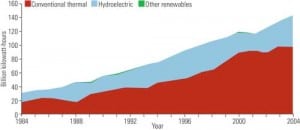
O&MTurkey Opens Electricity Markets as Demand Grows
Turkey’s growing power market has attracted investors and project developers for over a decade, yet their plans have been dashed by unexpected political or financial crises or, worse, obstructed by a lengthy bureaucratic approval process. Now, with a more transparent retail electricity market, government regulators and investors are bullish on Turkey. Is Turkey ready to turn the power on?
-
 Coal
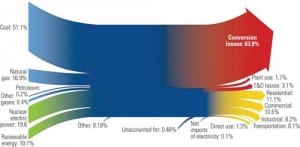
CoalCHP: Helping to Promote Sustainable Energy
Because combined heat and power (CHP) plants optimize energy use, they cut fuel costs and pollution. Even though U.S. power plants have been using CHP for decades, today’s energy experts have a newfound appreciation for its ability to promote sustainable energy use.
-
 Coal
CoalCapturing CO2: Gas Compression vs. Liquefaction
Carbon capture and sequestration is very likely to be a key element of any future greenhouse gas legislation. Integrated gasification combined-cycle plants now under design have provisions to separate the CO2 at elevated pressures. Coal-fired plants have a far more difficult and expensive task — separating and compressing CO2 from pressures just above atmospheric conditions.
-
 Coal
CoalAustralia Faces Imminent Power Supply Issues, Groups Say
Australia, the world’s second-largest exporter of thermal coal and uranium, and a significant exporter of liquefied natural gas (LNG), faces inevitable electricity rationing and the threat of blackouts unless the government acts urgently to ensure large-scale investments are made in new power-generating capacity, experts from five nations said in April. The Australian Academy for Technology […]
-
Coal
Energy R&D: The Missing Link to a Sustainable Energy Future
Q: What do you get when you gather roughly two dozen top researchers from academia, government, and industry to speak on interdisciplinary energy-related issues for a week?
A: A lot of informative but crowded slides, high-octane brain power, fact-based analysis of where we are and we’re headed globally, informed questions, and surprisingly practical answers. -
Coal
EPA Preparing Regulations for Coal Plant Ash
New coal-fired power plant ash management regulations appear to be inevitable, perhaps as soon as year-end. The Tennessee Valley Authority and Edison Electric Institute are on board with new regulations, as long as the ash is regulated as a nonhazardous waste under the Resource Conservation and Recovery Act.
-
Coal
UK Sets Binding Carbon Cuts; Requires CCS at Coal Plants
The UK has all but doomed new coal-fired capacity by simultaneously setting binding carbon reduction goals and by requiring carbon capture and sequestration (CCS) of carbon emissions from new mid-size coal-fired power plants. Existing plants will also be required to retrofit their plants when CCS technology is demonstrated, now estimated to happen by 2020.