
Business
-
 Legal & Regulatory
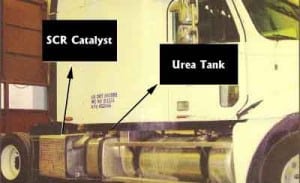
SCR Coming to Diesel Vehicles
Power plant managers are familiar with selective catalytic reduction (SCR), a technology to reduce emissions of nitrogen oxides from fossil-fueled generating plants. Starting in 2010, SCR technology, using a urea reagent, will also be required on new diesel-powered vehicles in utility fleets, ranging from light-duty pickups to 18-wheelers.
-
HR
Trend: Power Industry Layoffs
Layoffs in the wake of the economic crash dive have begun to hit the power business. Here are some links to announcements related to layoffs that directly affect the people who make, distribute, and buy electricity:
-
Business
POWER Digest (March 2009)
News items of interest to power industry professionals. RWE and E.ON to partner on new UK nuclear capacity. German giants RWE AG and E.ON AG on Jan. 14 said they would partner to develop new nuclear power stations in the UK. The 50:50 joint venture will have a long-term focus on seeking secure sites being […]
-
 Environmental
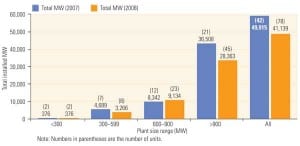
Update: What’s That Scrubber Going to Cost?
POWER published a summary of the flue gas desulfurization system scrubber cost survey conducted by the EUCG’s Fossil Productivity Committee in our July 2007 issue. Although the detailed results of the latest survey are proprietary to EUCG members that participated in it, we are privileged to present the newest summary data. The bottom line: Costs continue to rise but appear to be more predictable.
-
 O&M
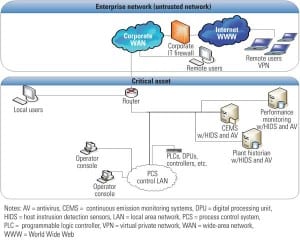
O&MHelping Power Plant Control Systems Achieve NERC CIP Compliance
This guide offers suggestions from a control system engineering perspective for protecting power-generating units that are determined to be critical cyber assets
-
Nuclear
900 U.S. Reactors by 2035?
A professor and consultant who has experience and connections with just about every part of the nuclear power world concludes that the U.S. will need to add 900 nuclear reactors in the next quarter century.
-
 O&M
O&MFERC Focuses on Internal Compliance Programs
By now, most electric industry participants are aware of the mandatory reliability standards required by the Energy Policy Act of 2005 and managed by the North American Electric Reliability Corp. (NERC). Bulk-power system users, owners, and operators (known as NERC registered entities) are responsible for complying with the set of standards that are applicable to their operations in their specific region. Compliance is monitored by the NERC regions (Texas Regional Entity, Western Electric Coordinating Council, Reliability First Corp., Midwest Reliability Organization, SERC Reliability Corp., Florida Reliability Coordinating Council, Northeast Power Coordinating Council, and Southwest Power Pool) through spot checks, self-certifications, audits, and investigations.
-
-
 Business
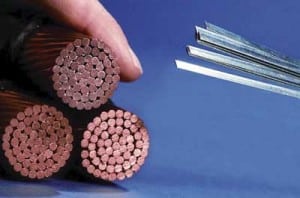
HTS Cables Speed up the Electric Superhighway
High-temperature superconducting cables deliver up to 10 times as much power as conventional electric power transmission cables. They are poised to help to reduce grid congestion as well as installation and operating costs.
-
 Business
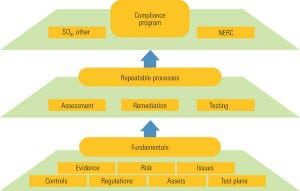
NERC Drives Development of Sustainable Compliance Programs
Compliance with reliability standards has moved beyond the "check the box" phase to one of regulations with real deliverables and fines for noncompliance. Utilities that aren’t vigorously evaluating and refining their compliance procedures today may find NERC’s 2009 audit cycle much more challenging.
-
 Business
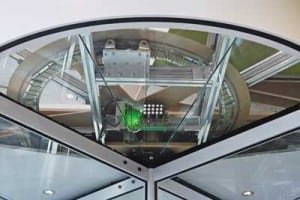
An Energy-Generating Door
An energy-generating revolving door installed at Driebergen-Zeist railway station in the Netherlands is the latest experiment in eco-building. Dutch company Royal Boon Edam Group Holdings designed the manual door to match the newly refurbished station’s sustainable technology theme, while keeping in mind that the station — converted into a multifunctional area featuring restaurants and a tourist information and visitor center — holds 8,500 commuters at capacity.
-
Solar
President Obama Signs Orders Aimed at Energy Independence and Economic Recovery
Following a press briefing this morning, President Barack Obama signed new executive orders intended to spur “swift action” on both U.S. economic recovery and American energy independence.
-
 O&M
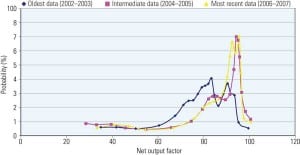
O&M2009 Industry Forecast: Existing Generating Assets Squeezed as New Project Starts Slow
Most forecasting reports concentrate on political or regulatory events to predict future industry trends. Frequently overlooked are the more empirical performance trends of the principal power generation technologies. Solomon & Associates queried its many power plant performance databases and crunched some numbers for us to identify those trends.
-
 Business
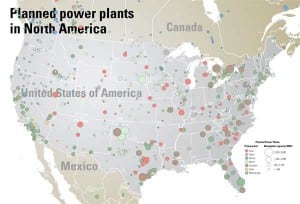
Planned Power Plants in North America
Courtesy: Platts Data source: Platts Energy Advantage and POWERmap. All rights reserved.
-
Business
POWER Digest, January 2008
News items of interest to power industry professionals. GE Hitachi Nuclear Trade Delegation to India Postponed. In late November, GE Hitachi Nuclear Energy (GEH) announced that its president and CEO, Jack Fuller, would lead a 50-member U.S. trade mission to India Dec. 2–9. It was to be the first civilian nuclear energy delegation to visit […]
-
 Gas
Gas2009 Industry Forecast: New Power Politics Will Determine Generation’s Path
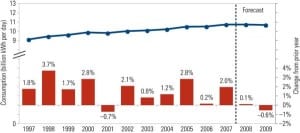
The U.S. power industry’s story in 2009 will be all about change, to borrow a now-familiar theme. Though the new administration’s policy specifics hadn’t been revealed as POWER editors prepared this report, it appears that flat load growth in 2009 will give the new administration a unique opportunity to formulate new energy policy without risking that the lights will go out.
-
 Business
2009 Industry Forecast: A Challenging Year Lies Ahead
The power industry will be challenged in the coming year to chart its strategic direction and meet investor expectations, although business conditions should take a turn for the better going into 2010.
-
 Business
Training the Next Generation of Welders
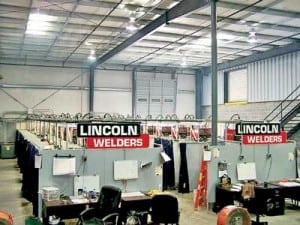
Concern about the shortage of skilled workers for the energy industry has grown considerably over the past few years. Most discussions have focused on the shortage of engineers, but recently concerns about the scarcity of technical crafts have arisen as well.
-
Environmental
Appeals Court Reinstates CAIR
Two days before Christmas, the Federal Appeals Court for the District of Columbia reinstated (PDF) the Clean Air Interstate Rule (CAIR) while the Environmental Protection Agency (EPA) makes changes to it. Judge Judith W. Rogers said, "The parties’ persuasive demonstration, extending beyond short-term health benefits to impacts on planning by states and industry with respect to […]
-
Business
A Dozen Secretaries of Energy
In the past two days, numerous news outlets have reported that president-elect Barack Obama will nominate Nobel Prize winner Steven Chu, director of the Lawrence Berkeley National Laboratory, to become the next secretary of energy. If he is officially announced and then confirmed, Chu will become the 12th individual to lead the Department of Energy. Do you remember the 11 who preceded him, starting in 1977?
-
Business
Transforming transmission is key to power industry’s future
Call it the "trillion dollar conundrum." Really big money is needed to equip the U.S. transmission system to handle a variety of new requirements and increased load, but it isn’t clear how to raise it, spend it, or recover it. Expect new renewables projects to die on the vine until the gridlock loosens.
-
Business
Change is coming
An historic election is over and the people have spoken. President-elect Obama and an expanded congressional majority will now rebalance the economic and environmental importance of coal-fired generation in this country differently than ever before, and that change is unsettling to many. When the expected costs of the anticipated new policies are counted, I predict many voters will experience a severe case of buyer’s remorse.
-
Business
POWER digest (December 2008)
News items of interest to power industry professionals. Economic slowdown delays Canadian IGCC plant, kills W.Va. coal-to-liquids plant. Canadian firm Alter NRG announced in late October that it would shift its corporate focus from internally led project development to technology sales, in response to the global economic slowdown and turbulent capital markets. Among the projects […]
-
 Coal
CoalUnder construction in South Africa
This summary of power generation projects is a web-only supplement to the November 2008 special report titled “Whistling in the dark: Inside South Africa’s power crisis.”
-
 History
Whistling in the dark: Inside South Africa’s power crisis
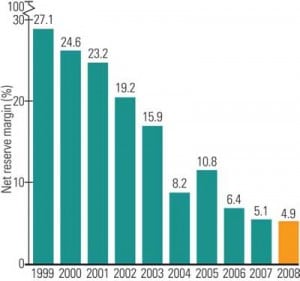
Eskom’s cautionary tale should remind those involved in the power industry anywhere in the world that past performance is not a guarantee of future success.
-
Legal & Regulatory
California’s GHG plan gives power heaviest load
On Sept. 12, the California Public Utilities Commission (CPUC) and California Energy Commission (CEC) took the next step in the implementation of Assembly Bill (AB) 32, California’s ambitious greenhouse gas (GHG) emissions – reduction initiative, with the release of a 300-page proposed decision on GHG regulatory strategies.
-
 Business
Workforce management lessons from women in power generation
Do you have enough women working in your power plant? Forget for a moment equal opportunity laws. More important is the knowledge that the programs and culture changes that would make women more likely to consider a plant career are the same ones that would make it more attractive to many younger men.
-
 Smart Grid
Flywheel technology nears commercial deployment
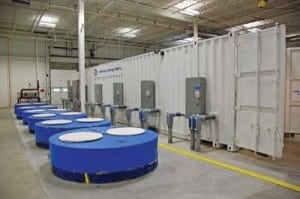
An integrated matrix of 10 high-power flywheels built and tested by Beacon Power Corp. earlier this year successfully absorbed and supplied a full megawatt of electricity, the energy storage technology company said in September. The achievement could mean that grid regulation using efficient energy storage is close to commercial deployment. The flywheel system, called the […]
-
Business
POWER digest (November 2008)
News items of interest to power industry professionals. Mitsubishi to supply gas turbines to Endesa. Mitsubishi Heavy Industries Ltd. (MHI) said in September it had received a full turnkey order for two sets of liquefied natural gas – fired gas turbine combined- cycle (GTCC) power generation systems from Endesa Generacion S.A., an electricity generation company […]
-
 Business
The return of compressed air energy storage
Faced with soaring energy prices, researchers and developers worldwide are giving compressed air energy storage (CAES)—a technology almost 50 years old—a dusting, a spit shine, and a new life. In particular, they see it as a critical component for the dispatch of wind and other renewable power. The technology, which involves storing off-peak-generated energy in […]