
Articles By

-
News
Maryland Senate Approves Reregulation Bill as Session Deadline Looms
The Maryland Senate last week approved a bill that reverses a failed 1999 energy deregulation policy and gives state regulators the authority to order utilities to build new power plants in the state. The future of the bill is unclear, however—the state’s annual 90-day legislative session is scheduled to end on April 13.
-
News
First U.S. Large-Scale CO2 Storage Project Advances
Drilling nears completion for the first large-scale carbon dioxide (CO2) injection well in the U.S. for CO2 sequestration, the Department of Energy (DOE) reported Tuesday. This project will be used to demonstrate that CO2 emitted from industrial sources—such as coal-fired power plants—can be stored in deep geological formations to mitigate the release of large quantities of greenhouse gas emissions to the atmosphere.
-
 Gas
GasConsider CHP for LNG Vaporization
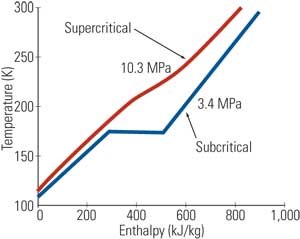
The conversion of liquefied natural gas (LNG) to pipeline-quality gas requires large quantities of low-grade thermal energy that may be available from industrial waste streams, steam power plants, or ocean water at the point of discharging LNG from the tanker. Alternatively, heat may be provided by the combustion of LNG or another fuel. In either case, the large temperature differences between these heat sources and the temperature of the LNG can be used to operate an engine that will offset or eliminate the pumping or fuel costs incurred.
-
Smart Grid
House Dems Introduce Draft for Comprehensive Clean Energy Act
House Democrats on Tuesday unveiled a 648-page discussion draft of the “American Clean Energy and Security Act of 2009,” a bill touted as a “comprehensive approach to America’s energy policy” because it seeks to establish, among other things, a carbon emissions reduction goal, a cap-and-trade program, and a federal renewable energy standard.
-
Business
ELECTRIC POWER 2009 Exhibitor Preview
This year’s ELECTRIC POWER Exhibition will feature the latest technologies and services from approximately 500 companies. Get a preview of some of the exhibitor offerings here. For the entire offerings, you’ll have to visit the show floor in Chicago this May. (You’ll find all the event information here.)
-
 O&M
O&MHydrokinetic Plant Piggybacks on Existing Hydro Plant
Hydrokinetic energy — which generates power by using underwater turbines that harness moving water — is on the rise in the U.S. In January, the first U.S.-licensed, commercial, grid-connected hydrokinetic project installed the first of two 100-kW nameplate-rated turbines downriver from an existing run-of-river hydroelectric plant on the Mississippi River.
-
News
Exelon Selects GE-Hitachi’s ABWR for Victoria County Plant
Two months after Exelon Nuclear dropped GE-Hitachi Nuclear Energy’s Economic & Simplified Boiling Water Reactor (ESBWR) design as its preferred technology for a proposed two-unit nuclear facility in Victoria County, Texas, the company has reached agreement with GE-Hitachi for two advanced boiling water reactors (ABWRs) for that site.
-
 Coal
CoalCERAWeek 2009: Floundering Economy Eclipses Renewable, Carbon Plans
For the past 26 years, Cambridge Energy Research Associates (CERA) has hosted an annual conference in Houston that is world-renowned for its high-profile speakers and attendees’ willingness to exchange ideas and share industry forecasts. The consensus this year was that the power industry remains strong but market and political forces, often working at cross-purposes, make bringing any new power generation to market more problematic than ever.
-
News
EIA Annual Outlook Report: Fossil Fuels Dominate U.S. Generation in 2030
According to the newest Annual Energy Outlook report from the Energy Information Administration (EIA), the U.S. will add between 184 GW and 350 GW of new capacity by 2030, depending on economic growth. Coal will continue to provide the largest share of energy for the U.S. in 2030, but natural gas–fired plants will account for more than half of all capacity additions, followed by renewables at 22%, 18% for coal, and 5% for nuclear.
-
 Business
2009 Electric Power Conference Preview
ELECTRIC POWER, the world’s most comprehensive conference covering power generation, will be presented at the Donald E. Stephens Convention Center in Chicago May 12 through May 14.
-
News
Canadian Government Funds Eights Private Sector CCS Projects
The Canadian government last week said it would inject up to C$140 million (US$111 million) into eight private sector projects that have proposed to research, develop, and demonstrate carbon capture and storage (CCS) technologies.
-
 Coal
CoalFossil Fuels + Solar Energy = The Future of Electricity Generation
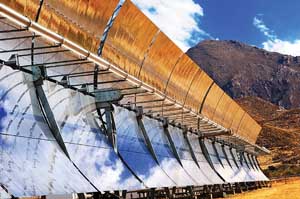
Renewable energy, though still accounting for a comparatively small portion of overall supply, generates a larger portion of the world’s electricity each year. Combining many of the available solar energy conversion technologies with conventional fossil-fueled technologies could reduce fuel costs while simultaneously helping utilities that are struggling to meet their renewable portfolio goals.
-
News
New Nuclear in the UK Kicked up a Notch
As European utilities vie in an auction for the pubic land on which the UK’s new fleet of nuclear power plants will be built, the UK government on Monday announced it would sell the UK Atomic Energy Authority’s commercial arm, an entity that provides nuclear decommissioning, waste management, and new nuclear build support services.
-
 O&M
O&MFire Safety in Modern Hydroelectric Stations
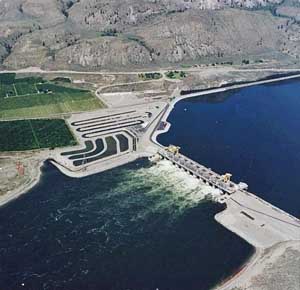
It may seem counterintuitive, but fire can be a serious danger in hydropower plants. In some respects, the danger is even greater than in thermal power stations. Most U.S. hydro plants are 30 to 70 years old but can deliver another 20 or 30 years of service with upgrades — including state-of-the-art fire protection systems. The design options outlined here also apply in large part to other generating stations.
-
 Coal
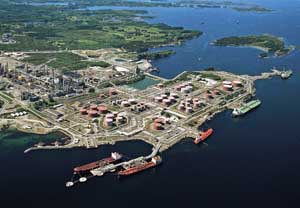
CoalNorway Leads the Way on CCS
According to a new study from Emerging Energy Research, more than $20 billion will be spent on carbon capture and storage (CCS) projects this year at 50 power generation projects totalling 16 GW around the world. The European Union (EU), with an investment of $11.6 billion, leads all efforts, because it is pressed to achieve a target to reduce carbon emissions by 20% of 1990 levels by 2020. In December, the governing body reached agreement on a climate and energy package, which includes a framework for CCS and a directive on the way EU members and Norway will regulate licenses to ensure reliable carbon storage. The U.S. takes second place, earmarking $6 billion, and Canada is third, at $2.7 billion.
-
 Hydro
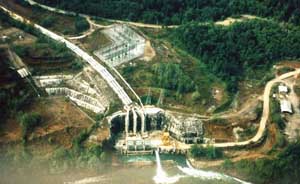
HydroFast-Tracking a Control System Retrofit
Upgrading a 1970s-era generator control system to new millennium technology in 12 days during a three-week shutdown would require careful planning and teamwork under any circumstances. The quick replacement of the governor and control system at the PT Inco smelter’s hydroelectric generation system is even more impressive because the facility is located in the middle of an Indonesian jungle.
-
 Nuclear
Problems Plague Russia’s Nuclear Power Ambitions
"The Russian Nuclear Industry: Status and Prospects," a February report from a Canadian-based think tank, Centre for International Governance Innovation, examines a revival of Russia’s Soviet-era plans for a massive nuclear expansion within the current state of the country’s nuclear power industry. It concludes that although the industry has been greeted with renewed funding and enthusiasm, achieving its ambitious plans will require the federation to overcome considerable problems and limitations.
-
Legal & Regulatory
Transmission Superhighway or Interconnected Patchwork?
President Obama promoted "green energy" as a signature theme in his presidential campaign. During his first weeks, he reaffirmed his administration’s commitment to renewable resources. In a radio address, he promised to double the nation’s alternative energy capacity within three years and to construct a 3,000-mile transmission grid to "convey this new energy from coast to coast."
-
 Wind
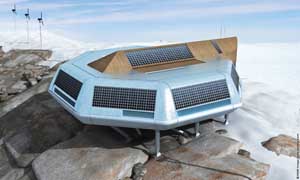
WindTurbines Spinning at Antarctica’s First "Zero-Emissions" Station
About 110 years after the Belgica expedition — a polar voyage organized by the Geographical Royal Society to establish the world’s first Antarctic scientific research program — a new, unique research station sponsored by the Belgian Federal Government has been commissioned. Inaugurated on Feb. 15 after two years of construction, the Princess Elizabeth Station (Figure 4) is the only polar base to run entirely on renewable energies.
-
Proposed Federal RPS Needs Rewrite
A 16% national RPS would require almost a 500% increase in renewable generation in the next decade, or about 32,000 MW. EIA data show that the U.S. had about 8% renewables online at the end of 2007. What’s worse is that very few existing projects would count toward the requirements of this proposed legislation.
-
 Environmental
Researchers: Spanish Electricity Model Is Unsustainable
The current Spanish electricity model is unsustainable: Carbon dioxide (CO2) emissions are hard to control, demand shows no sign of weakening, and the country is overly dependent on imported fuel. These are the conclusions of a team of scientists from the Institute for Research in Technology of the University of Pontificia Comillas in Madrid, who looked at how the Spanish electricity sector would evolve in four different scenarios.
-
 Nuclear
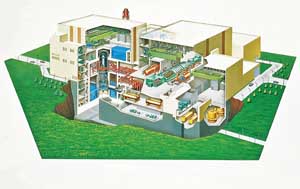
Toshiba Completes EPC Negotiations for STP
The pace at which next-generation nuclear power is developing in the U.S. accelerated this February as the U.S. arm of Toshiba inked an engineering, procurement, and construction (EPC) agreement with an advanced boiling water reactor (ABWR) nuclear development company jointly owned by NRG Energy and Japan’s Toshiba Corp. The agreement seeks to ensure that the two ABWRs planned to expand the South Texas Project (STP) in Bay City, Texas, will be constructed on time, on budget, and to exacting standards.
-
 Waste to Energy
Compact, Portable System Converts Trash to Energy
Post-consumer waste could be the newest, ubiquitous fuel source for distributed energy generation if a mobile waste-to-energy conversion system launched this January finds its way onto the parking lots of facilities that produce more than two tons of waste daily. According to its developer, Massachusetts-based IST Energy, the GEM system can process up to 3 tons of waste daily — which can include paper, plastic, food, wood, and agricultural materials — and produce up to 120 kWe and 240 kWth.
-
 O&M
O&MMaking the Most of Thermal Imaging Data
This article discusses planning, operation, and documentation procedures designed to effectively use the thermal imaging camera as a critical element in an effective reliability program.
-
 Waste to Energy
New Biogas Plant Runs Purely on Nonedible Materials
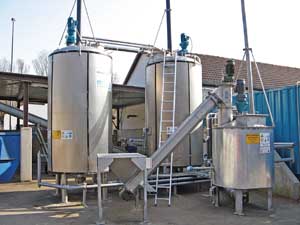
German researchers in February said they had developed the first-ever biogas plant to run purely on waste instead of edible raw materials. The team from the Fraunhofer Institute for Ceramic Technologies and Systems IKTS (Institut Keramische Technologien und Systeme) in Dresden said that the plant, which uses a fuel cell to convert the gas into electricity, exclusively uses agricultural waste such as corn stalks — and it generates 30% more biogas than conventional plants.
-
-
 O&M
O&MReducing Millirem Exposure
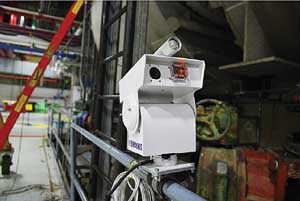
Radioactive materials are clinging to the inside walls of reactor system components because of a noble metals injection process error some years ago at Cooper Nuclear Station (CNS). CNS has launched an aggressive, long-term program to remove the materials, but until the work is successfully completed, the station is also taking extensive measures to protect employees and reduce higher source term dose.
-
 News
NewsStainless Steel Flowmeters
The expanded line of CoolPoint vortex shedding flowmeters introduced recently by Universal Flow Monitors Inc. is designed to ensure flow consistency in hydroelectric generators, heat exchangers, boiler feed pumps, steam turbines, natural gas humidification, and process cooling applications where water quality may be less than optimal. Additions to the product line include four larger sizes […]
-
 News
NewsKnife Gate Valve for Heavy Slurry Applications
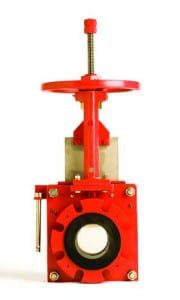
Red Valve Company Inc. launched Series DX Slurry Knife Gate Valve, a durable and user-friendly gate valve that has been designed especially for heavy slurry applications in the power and mining industries. When the valve opens, the reinforced elastomer sleeves seal against each other and provide a 100% full port opening, minimizing turbulence, which in […]
-
 News
NewsWatertight Temperature Data Loggers
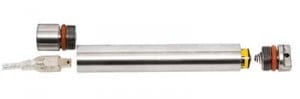
Dickson’s new stainless steel case data loggers are designed to monitor up to 275F in wet conditions. The watertight instruments are made of stainless steel and are available in three models: HT 200 (the "Takes-the-Heat-Watertight" model) and piercing probe models HT 220 and HT 225. All models are available with user-replaceable one-year batteries and USB-enabled […]