
Articles By

-
News
GEH Inks Agreements with India to Develop Multi-Unit ABWR Power Station
GE Hitachi Nuclear Energy (GEH) on Monday signed separate agreements with India’s state-run companies Nuclear Power Corp. of India (NPCIL) and Bharat Heavy Electricals Ltd. (BHEL) to prepare for construction of a potentially massive advanced boiling water reactor (ABWR) power station in that country.
-
News
Wellinghoff Is FERC’s New Chair
President Barack Obama has put the Federal Energy Regulatory Commission (FERC) squarely in the hands of Jon Wellinghoff, formally designating him chair of the agency on Friday. The president also separately reappointed Suedeen Kelly to her third term as commissioner, though her role will need to be confirmed by the U.S. Senate. Both are Democrats.
-
General
Steven Chu: His Irrelevance
The Obama administration’s energy secretary, Dr. Steven Chu, has quickly become Dr. Who. As a recent New York Times article noted, Chu has repeatedly stumbled politically, demonstrating that being a Nobelist in physics is no qualification for the bumps-and-grinds of energy politics in Washington. The Times observed that Chu is most comfortable with the science […]
-
Commentary
Steven Chu: His Irrelevance
The Obama administration’s energy secretary, Dr. Steven Chu, has quickly become Dr. Who. As a recent New York Times article noted, Chu has repeatedly stumbled politically, demonstrating that being a Nobelist in physics is no qualification for the bumps-and-grinds of energy politics in Washington.
-
General
Will technology lead to ANWR drilling?
Here’s a hoot. Call it thinking “outside the box,” or, more specifically, thinking outside the boundaries drawn by Congress. Maybe we can drill for oil and gas in the 1002 lands in the Arctic National Wildlife Refuge in Alaska from outside the refuge. The technology is directional drilling, which the oil and gas industry has […]
-
News
GAO: DOE Overestimated FutureGen Cost Before Canceling It
The Department of Energy’s decision last year to withdraw from FutureGen—the first “clean coal” plant in the U.S.—largely because costs had doubled and would escalate substantially, was rooted in faulty calculations, the Government Accountability Office (GAO) said in a report released last week.
-
News
DOI and FERC to End Turf War to Facilitate Offshore Energy Permitting
The U.S. Department of the Interior (DOI) and the Federal Energy Regulatory Commission (FERC) on Tuesday confirmed they would end a longstanding jurisdictional conflict and work together to make permitting of renewable energy in offshore waters easier.
-
News
Sens. Reid and Ensign Propose Commission to Study Yucca Alternatives
Nevada Senators Harry Reid (D) and John Ensign (R) last week introduced a bill to create a national commission to study long-term alternatives to Yucca Mountain for managing nuclear waste in the U.S.
-
News
South African Coal Supply Needs Expansion, Specialist Says
South Africa, a country that holds the sixth-largest coal reserves in the world, will need to invest up to 110 billion rand ($10.52 billion) in coal mining and dig at least 40 new mines by 2020 to meet growing demand, a coal specialist at the state-run utility Eskom said last week.
-
News
Georgia PSC Approves Georgia Power’s Vogtle Reactors
Georgia’s Public Service Commission (PSC) on Tuesday voted 4–1 in support of plans by Southern Co. subsidiary Georgia Power to build two reactors at the Vogtle nuclear power plant site.
-
News
Alliant Pulls Plug on Marshalltown Hybrid Plant; LS Power Defers Building White Pine Plant in Nev.
Alliant Corp. last week shelved plans to construct its proposed $1.8 billion coal-biomass hybrid power plant in Marshalltown, Iowa, while LS Power “indefinitely postponed” construction of the 1,590-MW White Pine Energy Station near Ely, Nev. Both companies cited a combination of factors—including the economic climate, and environmental, legislative, and regulatory uncertainties—as the reason for their decisions.
-
News
Report: Strong U.S. Geothermal Growth Continues
Geothermal power projects in the U.S. continue to gain steam, a new report from the Geothermal Energy Association (GEA) shows. Between August 2008 and March 2009, the number of new projects jumped 25% while overall production potential surged 35%.
-
News
EPA Requires Facilities to Review Integrity of Coal Ash Management Units
In response to last year’s massive coal ash spill at a Tennessee Valley Authority (TVA) facility in Kingston, Tenn., the Environmental Protection Agency (EPA) last week ordered electric utilities with surface impoundments containing coal combustion residuals to review the structural integrity of those units and respond to agency questions about their condition.
-
News
Revamp of UK Grid to Meet Renewable Targets to Cost $6.51 Billion, Study Says
Upgrades to the UK power grid to accommodate 45 GW of new power generation by 2020 will require an investment of about £4.7 billion ($6.51 billion), according to a report released last week by the Electricity Networks Strategy Group (ENSG).
-
News
U.S. to Construct Radioactive Waste Storage Facility for Jordan
The U.S. has signed an accord with Jordan to help the kingdom construct a modern facility to store radioactive waste for a nuclear plant the country is planning to build by 2015 and additional plants by 2030.
-
News
Proposed EPA Rule Mandates National Reporting of GHG Emissions
The U.S. Environmental Protection Agency (EPA) on Tuesday proposed the first rule that mandates reporting of greenhouse gas (GHG) emissions from large sources in the U.S.—including electricity-generating facilities.
-
News
Maryland Governor Proposes to Reregulate State Energy Market
Maryland Gov. Martin O’Malley last week introduced to the state Legislature a blueprint that would partially reregulate the state’s energy markets and reverse a deregulation law that has been widely thought a failure.
-
General
Obama administration’s renewable delusions
When it comes to future electricity supply, the Obama administration is engaged in an implicit con game. Whether the president knows this, which I doubt, there must be smart people in his circle who understand that the promises he makes about renewable energy simply don’t stand up to the delusions they create. Those people are […]
-
Finance
Utilities Survive Credit Woes, So Far
So far, U.S. electricity generators have managed to survive the current credit slump and financial collapse, but their viability could suffer if the economy continues to deteriorate and credit markets remain tight.
-
Finance
Uranium Prices Fall with Those of Other Commodities
Market watchers predict that uranium prices will remain low in the short term. But low prices don’t necessarily mean that the fuel’s sales will increase.
-
Business
BPL’s Second Act
Originally seen as promising deep and widespread access to the Internet service provider market, broadband over power line (BPL) technology has failed to deliver. Today’s options for deploying BPL are more numerous but, to date, they involve niche markets.
-
HR
Flu Pandemic Could Cause Blackouts
No utility can fully prepare for power outages caused by severe weather, but there are things that power generators could do to prevent severe disruptions to power supplies that could easily result from a flu pandemic.
-
 Legal & Regulatory
SCR Coming to Diesel Vehicles
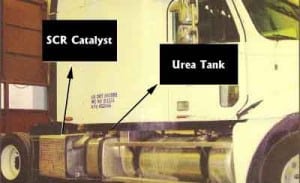
Power plant managers are familiar with selective catalytic reduction (SCR), a technology to reduce emissions of nitrogen oxides from fossil-fueled generating plants. Starting in 2010, SCR technology, using a urea reagent, will also be required on new diesel-powered vehicles in utility fleets, ranging from light-duty pickups to 18-wheelers.
-
HR
Trend: Power Industry Layoffs
Layoffs in the wake of the economic crash dive have begun to hit the power business. Here are some links to announcements related to layoffs that directly affect the people who make, distribute, and buy electricity:
-
General
Thoughts of an Orwell fan
I’m a George Orwell fanatic. I own, and display proudly in my office, every book he wrote (Homage to Catalonia is the best), every Orwell (1903-1950) biography, and every critical study of his work. I also have the four-volume edited collection of his works, compiled by his widow, Sonia Orwell, and their friend and collaborator […]
-
General
Feds are transmission obstacles
By Kennedy Maize When it comes to access for transmission lines to bring renewable power from where it is located to folks who can use it, who poses the biggest obstacles? In the West, according to Pedro J. Pizarro, Southern California Edison’s vice president of power operations, a chief villain is Uncle Sam. Federal land […]
-
News
Obama’s 2010 Budget Calls for Carbon Cap-and-Trade, Slashes Yucca Mountain Funding
Along with a focus on the development of a clean energy economy, President Barack Obama’s proposed $3.55 trillion budget for 2010 factors in a carbon cap-and-trade system to fund investments in clean energy, and it slashes funding for the proposed Yucca Mountain nuclear waste repository.
-
News
DOE Renewable Energy Loan Guarantees Could Be Announced Within Two Weeks
The first loan guarantees issued by the Department of Energy (DOE) could reportedly be announced within the next two weeks, with awards likely going to solar and energy efficiency technologies.
-
Smart Grid
More Transmission Lines Equal the Same Dumb Grid, Institute Warns
Building new transmission lines indicates support for the development of a national grid, but doing so would ultimately stifle entrepreneurship and innovation, a campaign focused on the creation of a “perfect” consumer-focused electric energy system has warned.
-
News
UK Coal-Fired Plant Decision Unlikely Before Autumn
The UK government has reportedly delayed its decision on an application by German power generation giant E.ON to build a 1,600-MW clean coal power station at Kingsnorth, in Kent, until after the summer.