
Articles By

-
News
Exelon Suspends Victoria Nukes on Economic Uncertainties, Loan Guarantees
Exelon, the largest nuclear power generator in the U.S., has suspended plans to build a proposed two-unit nuclear plant in Victoria, Texas, because of uncertainties in the domestic economy and limited federal loan guarantees.
-
 Coal
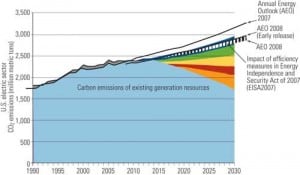
CoalCarbon Control: The Long Road Ahead
The industry is preparing for carbon legislation by exploring options for dealing with CO2. But even if the technical issues are resolved, actually sequestering CO2 poses a number of other daunting challenges.
-
 Gas
GasQatar Starts Construction on Middle East’s Largest Power and Water Plant
The gas-rich Persian Gulf state of Qatar in May commenced construction of the region’s largest power and water plant, a massive project comprising eight gas turbine generators, eight heat-recovery steam generators, four steam turbine generators, and 10 desalination units.
-
News
Report: Combination of “Rarely Found” Factors Led to TVA Coal Ash Spill
The breach of a 50-year-old coal ash storage pond and subsequent ash spill at the Tennessee Valley Authority’s (TVA’s) Kingston Fossil Plant in Roane County, Tenn., last December was caused by a rare and complex combination of conditions, a six-month independent engineering study has found. These included the existence of an unusual bottom layer of ash and silt, the high water content of the wet ash, the increasing height of ash, and the construction of sloping dikes over the wet ash.
-
 Coal
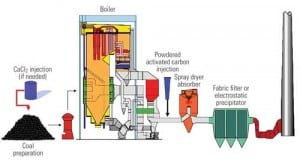
CoalTechnology Could Deliver 90% Hg Reduction from Coal
Reducing mercury emissions at coal-fired power plants by 90% has been considered the holy grail of mercury control. A new technique promises to get us there — at a price.
-
 Wind
Wind"Smart Turbine Blades" to Improve Wind Power
Engineers at Purdue University and Sandia National Laboratories have developed a technique that uses sensors and computational software to constantly monitor forces exerted on wind turbine blades. Their achievement could one day improve the efficiency of wind turbines by providing the blades’ "smart" structure with necessary data to adjust to rapidly changing wind conditions.
-
News
Interior Department to Fast-Track Solar Development on Public Lands
Federal agencies will work with western leaders to designate tracts of U.S. public lands in the West as prime zones for utility-scale solar energy development, fund environmental studies, open new solar energy permitting offices, and speed reviews of industry proposals, Secretary of the Interior Ken Salazar said on Monday.
-
 O&M
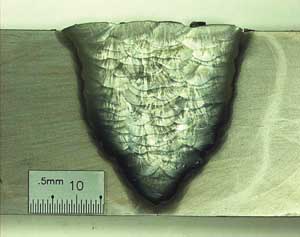
O&MImproved Filler Metal Enables Higher-Temperature Dissimilar Metal Welds
The welding of dissimilar metal joints in new and retrofit power plant boiler tubing has long proved challenging. New plants designed to operate at higher temperatures and pressures require advanced alloys and a filler metal that produces reliable welds. EPRI recently developed and sponsored the commercialization of a new filler metal. Its first application is the fabrication of boiler tubes for American Electric Power’s ultrasupercritical John J. Turk, Jr. Power Plant.
-
 Business
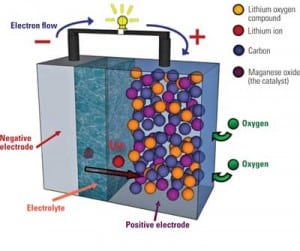
Energy Storage Efforts Making Progress
The intensifying spotlight on renewable energy seems to be casting a brighter light on the energy storage problem, with lawmakers, researchers, and investors scrambling to seek out the most feasible solution to bridge the intermittent nature of renewable power sources.
-
News
GE Energy and MHI to Co-Develop “Next Generation” Steam Turbine
GE Energy and Mitsubishi Heavy Industries (MHI) last week agreed to co-develop a “next generation” steam turbine for use in gas turbine combined-cycle power plants. If successful, the parties will separately manufacture and sell the co-developed steam turbine.
-
 Solar
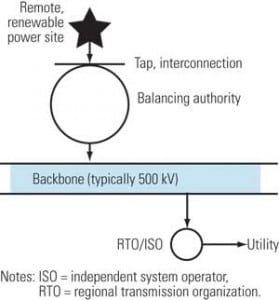
SolarThe Odd Couple: Renewables and Transmission
The tension between the growing number of renewable energy projects and limited transmission capacity is reflected in Washington’s legislative agenda of establishing a national renewable portfolio standard and new transmission lines dedicated to moving renewable energy coast-to-coast. Even if those ideas become law, hurdles to the happy marriage of renewables and transmission remain.
-
 Solar
SolarPG&E Makes a Deal for Space-Based Power
Just as reports emerged earlier this year that NASA had abandoned, for lack of financial resources, its research into space-based solar power that would be harnessed via orbiting solar arrays beaming microwaves to earthly receivers, California’s Pacific Gas & Electric Co. (PG&E) wrote the California Public Utilities Commission (PUC) requesting its approval of a power purchase agreement from a similar technology.
-
 Coal
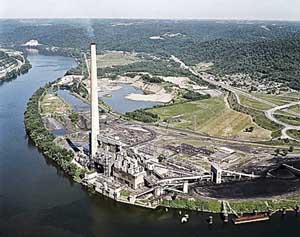
CoalBiomass Cofiring: Another Way to Clean Your Coal
Demand for renewable power is burgeoning as state governments (and maybe soon the U.S. federal government) impose increasingly rigorous environmental and procurement standards on the energy industry. Surprisingly, biomass cofiring has yet to attract much attention, even though it could help many utilities meet their renewable portfolio requirements, reduce carbon emissions, and solve other regional environmental problems. U.S. developers, investors, and regulators should consider including cofiring as part of the energy mix going forward.
-
Business
How Company Size Affects NERC Compliance
In the world of North American Electric Reliability Corp. (NERC) Reliability Standards, each company (entity) that must comply with the standards determines for itself the scope and size of its compliance program, based on the scope and size of its operations.
-
Commentary
Managing Solar’s Revenue Impact on Utilities
Since 1882, when Thomas Edison installed the world’s first central generating plant in New York City, utility business models have varied little from the basic one: cover costs and generate profit by selling more electricity. But today, unprecedented challenges are sweeping through the industry. Soon utilities will face yet another new challenge: the large-scale implementation of distributed solar power, which can result in lower electricity sales. As solar implementation further challenges business-as-usual models, what’s a forward-thinking utility to do?
-
 O&M
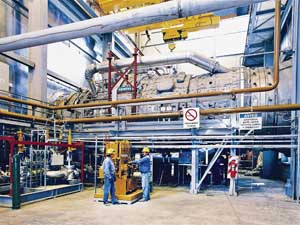
O&MOptimize Gas Turbine Performance Using Acoustic Simulation Software
Increasingly fierce competition driven by deregulation and privatization is putting downward pressure on power plant operations and maintenance (O&M) budgets. Recently, lower natural gas prices have pushed natural gas – fired combined-cycle plants higher up in many utilities’ dispatch order in some regions, a welcome change from the twice-a-day cycling experienced by some plants during the past few years. However, with more operating hours comes more interest in plant operating availability, and that means increased emphasis on reliable gas turbine operation.
-
 News
NewsCO2 Sensor/Transmitter
The recently released EX-5165 Sensor/Transmitter from ENMET Corp. is a three-wire 4-20 mA sensor for the detection of carbon dioxide in ranges from 0 to 500 ppm and 0% to 100% by volume. It also features a 24 VDC loop-powered transmitter. The nondispersive infrared sensor continuously monitors high concentrations of the gas, and it can […]
-
 News
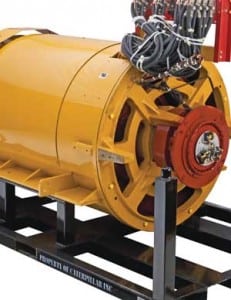
NewsRemanufactured Generator Ends
Caterpillar Inc. introduced a new family of remanufactured generator ends for standby, prime, and continuous power applications. The C32 and 3500 series Caterpillar engines have been used for applications ranging from distributed generation to prime power for remote communities. The first wave of remanufactured generator ends includes 34 part numbers, which are available worldwide in […]
-
Legal & Regulatory
White House Announces Cyber Security Plan
The Obama administration has unveiled its long-awaited policy on cyber security of government and private-sector communication and distribution systems. Is it less than meets the eye, as some critics argue?
-
Smart Grid
Electrical Manufacturers Warn Against “Aggressive” Smart Grid Strategy
Clashes between industry and the Department of Commerce on backward compatibility of standards could stifle and delay the development of a “smart” electric transmission and distribution grid.
-
Legal & Regulatory
New Administration’s Energy Priorities: Hydrogen Is Out, Coal Is In
The Obama administration has pulled the plug on the Department of Energy’s attempts to develop hydrogen-powered fuel cell cars. (The Bush administration had been touting H-powered cars for many years, with nothing to show for the effort other than large expenditures and a General Motors concept car that cost in the millions to build.) At about the same time, the Obama administration announced it would resurrect the billion-dollar FutureGen coal-fired generating project, aimed for Mattoon, Ill.
-
 Legal & Regulatory
Obama Names Jaczko to Head NRC
As expected, President Obama has named Nuclear Regulatory Commissioner Gregory Jaczko, an ally of Sen. Harry Reid (D-Nev.), as chairman of the NRC, almost certainly dooming the Yucca Mountain, Nev., site for disposal of spent nuclear fuel.
-
 Supply Chains
Is Unconventional Gas the New Energy Super Supply?
Gas found in shale deposits and recently discovered natural gas hydrates may be game-changers when it comes to supplying natural gas to the United States.
-
Commentary
Learning from Past, Failed Energy Laws
It’s not easy writing energy legislation, as the experience of the past demonstrates. Nor are the results always in the public interest.
-
Legal & Regulatory
Cap-and-Trade or a Carbon Tax for Greenhouse Reductions?
What makes more sense to reduce greenhouse gas emissions from power plants—a cap-and-trade regime or a carbon tax? It’s a contentious issue among those who generate power and among academic economists and policy makers.
-
Commentary
Why I Am a Climate Realist
I was one of the scientists counted as supporting the United Nations’ Intergovernmental Panel on Climate Change 1996 report. It turns out that effort was bogus and intellectually dishonest.
-
Commentary
Regulatory Effectiveness: Is It Measurable?
A [state utility regulatory] commissioner asked recently, “By what metrics can I assess my commission’s performance?” That’s a tough question.
-
Commentary
America’s Many Energy Policies
It’s not that the U.S. doesn’t have any energy policy, says this veteran of energy politics and head of a major Washington energy and environmental think tank. It’s that we have too many, and they aren’t coordinated and coherent.
-
HR
TREND — Power Companies Push Hiring Military Vets
Many U.S. power companies are focusing their hiring efforts on military veterans. According to human resources HR experts, it makes a lot sense—beyond pure patriotism. Vets are motivated, experienced, often well-trained, and instilled with team-work. Plus, there is a great need to replace the retiring “baby boomers” generation who have populated many key industry jobs. In some cases, there’s even a financial incentive for hiring vets.
-
News
Duke Unveils Plans to Build New Nuclear Plant in Ohio
Duke Energy is planning a new nuclear power plant at the Department of Energy’s (DOE’s) Portsmouth site in Piketon, Ohio, the company announced with partners AREVA, USEC Inc., UniStar Nuclear Energy, and the Southern Ohio Diversification Initiative (SODI) on Thursday.