
Articles By

-
 News
NewsPreventing Dust Accumulation on Beams
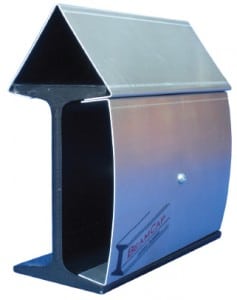
BeamCap’s signature product, the BeamCap, prevents dust accumulation on I-beams, structural steel members, pipes, cable trays, and other difficult-to-clean areas. BeamCap pieces completely enclose the structures, eliminating horizontal surfaces where dust consistently builds up. This eliminates the need for cleaning in hard-to-reach places and greatly reduces the potential for fires and secondary explosions. The aluminum […]
-
 Commentary
Not a Clue
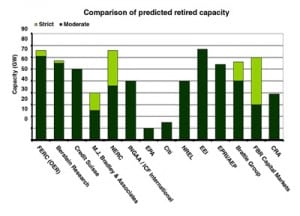
U.S. Environmental Protection Agency (EPA) rules are being processed at a furious pace in 2011. Unexpectedly, the new greenhouse gas and ozone rules were stayed by President Obama. However, it’s the Utility MACT Rule and the Cross-State Air Pollution Rule that leave utilities on unsteady ground. The result has been a number of plant closure announcements that far exceed the magnitude of the coal-fired generation losses predicted by the EPA. The predicted losses vary greatly.
-
 Gas
GasKuwait Starts First Turbines of 2,000-MW Gas Plant
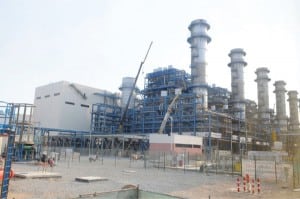
Kuwait put online the first 1,400 MW of its massive 2,000-MW combined cycle gas turbine Sabiya facility in June to mitigate looming power shortages it faces each summer. The plant—Kuwait’s largest power plant and one of the largest in the Gulf region—is now operating six GE 9FA gas turbines; the remaining 600 MW are expected […]
-
 News
NewsRobotic Underwater Debris Remover
Aqua-Vu, a provider of portable underwater viewing systems, introduced the Claw 360, a device designed for the detection and removal of objects in an underwater environment. The Claw 360 incorporates a Sharp 520 color camera that can rotate 360 degrees to scan the environment. Lighting is provided by high-intensity LEDs that rotate with the camera. […]
-
Coal
Luminant, AEP to Mothball Coal Units, Implement Derates on CSAPR Compliance Concerns
Dallas-based Luminant, Texas’ largest power generator, on September 9 filed a legal challenge against the Environmental Protection Agency’s (EPA’s) Cross State Air Pollution Rule (CSAPR) but said the newly finalized rule that will require generators to dramatically reduce sulfur dioxide and nitrogen oxide emissions from power plants had forced it to idle two coal-fired units and reduce capacity at three other units. This decision follows a similar decision made by American Electric Power to shutter 6GW of coal-fired plants in June.
-
 Hydro
HydroHydro Reservoir GHG Emissions Lower Than Estimated
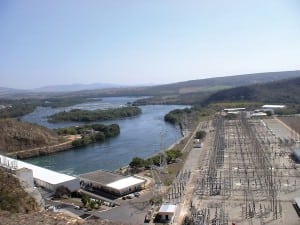
A new analysis of 85 hydroelectric reservoirs distributed around the world suggests that these systems emit about 48 million metric tons of carbon annually. That figure is much lower than earlier estimates of 64 million metric tons that were based on studies relying on more limited data and which cautioned that reservoirs of all types […]
-
 Coal
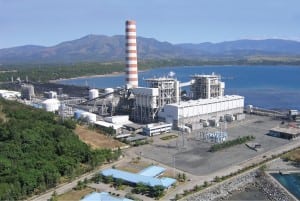
CoalTop Plant: Masinloc Power Plant, Zambales Province, Philippines
In April 2008, AES Philippines purchased the Masinloc coal-fired power plant in Zambales Province in the Luzon region. Originally constructed in 1998 as a two-unit, 600-MW plant, the facility uses coal from a variety of sources in the Pacific Rim. After AES finished overhauling much of its equipment, the expanded 660-MW (gross) plant’s availability increased from 48% to 74%, which enabled net electricity production to jump by 129% by 2010.
-
 News
NewsNut, Bolt, and Flange Face Corrosion Protection
Advance Products & Systems’ new Kleerband Flange Protectors and Radolid Protection caps protect bolts, nuts, and flange faces on raised-face or full-face flanges in conditions where extreme corrosion occurs, such as at gas plants, pump stations, and above- and below- ground installations. Kleerband is a patented transparent polymer band with grease injection fittings and a […]
-
Commentary
Is Coal a Fuel of the Future?
Few reasonable people can dispute that the U.S. Environmental Protection Agency (EPA) is conducting a war against coal. If you doubt that conclusion, just look at the large number of new regulations affecting coal-fired power plants that have been proposed in rapid-fire succession by the EPA.
-
News
POWER Digest
Siemens Gets $1 Billion Order to Build Gas Power Plants in Thailand. Siemens on Aug. 17 said it received two orders worth $1 billion from Thailand for the engineering, procurement, and construction (EPC) of combined cycle power plants. The firm will build Chana Block 2 in the province of Songkhla and Wang Noi Block 4 […]
-
 Coal
CoalTop Plant: Plum Point Energy Station Mississippi County, Arkansas
The new 665-MW Plum Point Energy Station is energizing the Arkansas Delta, an area that is ready to supplement its farming heritage by promoting new jobs that offer residents a higher standard of living. But first, the plant’s construction team had to overcome a number of significant challenges related to building a facility in the New Madrid fault zone.
-
Commentary
Shaping America’s Energy Policy
America’s energy and environmental policies have been dysfunctional for decades. Obsessively moving toward “green” has made America weaker and has damaged our economy. During POWER’ s first 100 years (1882–1982), the magazine chronicled the U.S. growing into the strongest industrialized economy in the world. America designed and built products for the world using raw materials and energy from within our own borders. Now we are in a recession and the U.S. Environmental Protection Agency’s (EPA) “War on Coal” continues. Does anyone get the connection? Ever-worsening regulations are killing jobs by the thousands.
-
Commentary
Recent Blackout Highlights Nation’s Rickety Power Grid
Experts say the cascading blackout that put millions of Westerners in the dark in early September was no surprise: Major power outages have more than doubled in the last decade
-
 Solar
SolarTHE BIG PICTURE: A Solar Switch
The plummeting cost of photovoltaic (PV) panels—resulting from lower costs for high-grade silicon and advancements in thin-film technology, solar storage, and electronic control technologies—has a slew of firms rethinking concentrating solar power (CSP) projects. Although there is a CSP project pipeline (including both CSP and concentrating PV) of more than 9 GW in the U.S., […]
-
 Coal
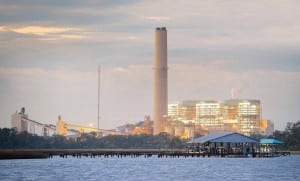
CoalTop Plant: St. Johns River Power Park, Jacksonville, Florida
A recent NOx reduction project added selective catalytic reduction equipment to each of the two 640-MW, mixed coal–fired units at the St. Johns River Power Park. The selection of precisely the right catalyst required extensive long-term testing with “mini” reactors. Once the right catalyst formula was identified, the actual retrofit project was completed in a mere 23 months, an aggressive project schedule that required overcoming many design and construction challenges.
-
Coal
EPA Indefinitely Delays Power Plant Greenhouse Gas Rules
Just two weeks after the Environmental Protection Agency (EPA) withdrew its smog rule, the agency confirmed it would not meet a Sept. 30, 2011, deadline for issuing proposed New Source Performance Standards (NSPS) to limit greenhouse gas emissions from new, modified, and existing power plants. The agency did not specify a new deadline for proposing the rule.
-
 O&M
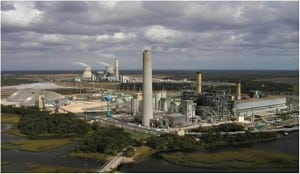
O&MJEA Increases Power Output Through CFB Improvements
JEA’s Northside Generating Station in Jacksonville, Fla., Units 1 and 2 were built in 1966 and 1972, respectively, although the Unit 2 boiler had not operated since 1983. Both were heavy oil– and natural gas–fired steam units rated at about 300 MW. The utility “repowered” those two units by removing the old boilers and adding new circulating fluidized bed (CFB) boilers (Figure 1) that entered service in 2002. At that time, they were the world’s two largest CFBs, and the plant won POWER’ s Plant of the Year Award.
-
 Coal
CoalCWA 316(b) Update: Fish Guidance and Protection
The U.S. Environmental Protection Agency (EPA) has proposed new Clean Water Act section 316(b) regulations for once-through cooling water intake structures. Comments on the proposed rules closed in August, and a final rule is expected mid-2012. The EPA estimates that at least half of the power plants using once-through cooling will be required to implement a best technology available solution in coming years. That typically means barriers and screens, but you may want to consider other options.
-
Coal
Obama Shelves Smog Rule on Concerns About Regulatory Burdens, Uncertainty
President Obama has scuttled the Environmental Protection Agency’s (EPA’s) smog rule, saying that he had underscored the importance of reducing regulatory burdens and uncertainty. The decision has dealt a blow to environmental groups—which are contemplating legal action—and won the Democratic president praise from Republicans and industry groups.
-
 O&M
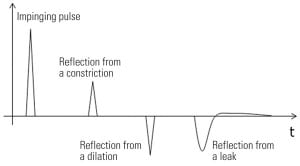
O&MApplying Acoustic Pulse Reflectometry in a Geothermal Plant
Acoustic pulse reflectometry (APR) is a tube inspection method that has been gradually gaining acceptance as a tool for heat exchanger inspection. Different types of heat exchangers operating in different operating environments have different failure mechanisms, making some of them more suited than others for inspection by APR. Finned tube heat exchangers are a typical example of heat exchangers particularly conducive to APR inspection.
-
 Coal
CoalFundamentals of Zero Liquid Discharge System Design
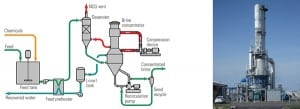
Power plants often produce wastewaters that contain salts, such as those from wet gas scrubbing, coal pile run-off, and leachate from gypsum stacks. Evaporation of those liquid wastes in a modern zero liquid discharge system produces clean water that is recycled into the plant plus a solid product suitable for landfill disposal. Here are the options to consider.
-
 O&M
O&MPulverizers 101: Part II
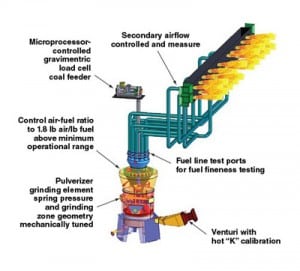
Pulverizers prepare the raw fuel by grinding it to a desired fineness and mixing it with the just the right amount of air before sending the mixture to boiler burners for combustion. In Part I of this three-part report, we examined the essentials of pulverizer design and performance. In the second part, we discuss the importance of fuel fineness. In the final article, we will discuss the importance of air and fuel measurement.
-
Legal & Regulatory
New EPA Rule Calls for Flexibility
Quin Shea, vice president, environment for the Edison Electric Institute, comments on the Utility MACT rule that is expected to be finalized in November.
-
 O&M
O&MImproved Coal Fineness Improves Performance, Reduces Emissions
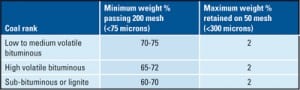
Utilizing engineering ingenuity and today’s developing computational fluid dynamics tools, a new classifier design is now available that significantly improves fineness from pulverizers without the heavy costs associated with dynamic classification or any downsides on pulverizer capacities, maintenance, and parasitic power. Instead, operational flexibility and improved emission control options are enhanced.
-
 Coal
CoalAn SCR Can Provide Mercury Removal Co-Benefits
Complying with various state (and expected federal) requirements governing mercury removal from the stack gas of coal-fired power plants has usually been achieved by adding an expensive activated carbon injection system. Now there is another alternative: a catalyst that features higher mercury oxidization activity than conventional catalysts while maintaining the same SO2 to SO3 conversion activity—and all at a lower operating cost. Full-scale installations are under way at several Southern Company plants that burn a variety of coals.
-
 Instrumentation & Controls
Managing Equipment Data Through Asset Virtualization
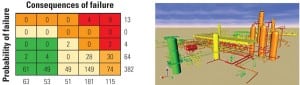
Asset “virtualization” extends and combines the technologies of 3-D visualization and virtual reality to a new, practical level for the life-cycle management of power industry equipment. All pertinent data for a component, subsystem, or plant is associated with, stored, and accessed through as-built 3-D digital models of the actual plant that are constructed using laser scanning techniques.
-
 Coal
CoalConstructing Maryland’s First Permitted Landfill for Coal Combustion By-products
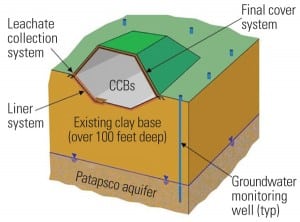
Constellation Power Source Generation Inc., which owns and operates three coal-fired power plants in Maryland, has contracted with Charah Inc., an ash management company, to build a landfill to strict environmental requirements for the disposal of its plants’ coal combustion by-products that can’t be recycled for other uses.
-
Coal
U.S. Coal-Fired Power Development: Full Employment for the Lawyers
The EPA began rolling out its long-anticipated power plant regulations this year, causing some utilities to shutter some older coal-fired plants. Other utilities paused, perhaps hoping that a neighbor’s closure decisions would allow continued operation of some of their own older, smaller, less-efficient plants. As the nation sweated through a scorching summer, air conditioners hummed thanks to coal-fired power plants built 50 or more years ago. How many of them will be retired, and over what timeframe?
-
Solar
Epic Fail
Over the past 18 months, four solar energy equipment companies have closed their doors. Each one blamed poor market conditions for its economic woes, even though each had fundamental weaknesses that went unaddressed. It now appears that the Department of Energy (DOE) did insufficient due diligence before backstopping one of those four companies, Solyndra, with a $535 million loan guarantee.
-
Legal & Regulatory
Too Much of a Good Thing Creates Legal Havoc
As last winter’s abundant snowfall in the Pacific Northwest melted, rivers swelled and hydroelectric operators enjoyed substantial increases in generation. That bountiful clean and cheap power generation was a blessing, but it also triggered a host of legal issues.