
Articles By

-
News
MIT: Integrating Renewables Will be Challenging, but Attainable
A report unveiled on Monday by the Massachusetts Institute of Technology (MIT) on the future of the smart grid over the next two decades finds that the U.S. grid can stand up to the challenge of integrating electric vehicles as well as new sources of distributed and intermittent power generation—as long as certain policy changes are made.
-
News
Bingaman to Float Clean Energy Standard Next Year; EIA Examines Impacts
Last week, as Chairman of the Senate Energy and Natural Resources Committee Jeff Bingaman (D-N.M.) announced he would propose a federal Clean Energy Standard (CES) bill early next year, the Energy Information Administration (EIA) released an impact analysis that examines how such a policy would affect the nation’s power profile and carbon emissions.
-
General
MIT Report: Both Irrelevant and Smart on Grid Issues
By Kennedy Maize Washington DC, December 6, 2011—The Massachusetts Institute of Technology has rolled out the latest, and fifth, of its Future Of series of studies of U.S. energy policy, this one focused on the interstate electric transmission grid. The massive transmission tome contains little that’s new to anyone who has followed this subject. Included […]
-
General
Where Lights and Lungs Meet
By Kennedy Maize Washington, D.C., December 2, 2011 — Think the tension between electric reliability and environmental protection is just theoretical hand-waving? Debra Raggio, assistant general counsel at GenOn Energy, the non-utility generator formerly known as Mirant, will tell you you’re wrong, and she can back it up. Raggio told her tale of regulatory Catch-22 […]
-
 Coal
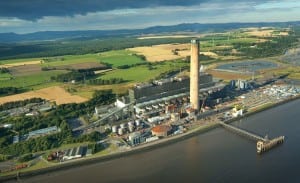
CoalUK Pulls Funding for Flagship Longannet CCS Demonstration
Ditching the only project remaining in its £1 billion ($1.60 billion) carbon capture and storage (CCS) competition, the UK government declined to back the much-watched CCS project at the Longannet power station in Fife, Scotland, in October. The decision balances the UK’s low-carbon ambition with the need to ensure that taxpayer money is invested in “the most effective way,” the nation’s Department of Energy and Climate Change said. The funds are now expected be used to “pursue other projects” in both Scotland and England.
-
 Coal
CoalRestructuring the South African Power Industry
South Africa is at a critical turning point. An uncertain environment for private investment, escalating electricity prices, and a lack of available power threaten South Africa’s position as an attractive investment destination for many of the country’s most important industries. Power has been placed at the forefront of the government’s agenda, but South Africa needs a collaborative effort to meet the country’s energy demands and diversify its generation portfolio in order to drive economic growth.
-
 O&M
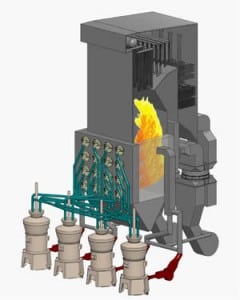
O&MPulverizers 101: Part III
Pulverizers prepare raw fuel for burning by grinding it to a desired fineness and mixing it with the just the right amount of air before sending the mixture to boiler burners for combustion. Part I of this three-part report examined the essentials of pulverizer design and performance; Part II discussed the importance of fuel fineness. This final article discusses the importance of air and fuel measurement.
-
 Hydro
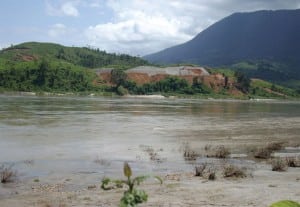
HydroBurma Halts Massive Chinese-Developed Hydropower Dam
China’s efforts to build the Myitsone Dam—a $3.6 billion hydropower project planned at the confluence of the Mali and N’Mai Rivers at the source of the Irrawaddy River in Burma’s Kachin State—were thwarted in late September after Burma’s President Thein Sein suspended construction “to respect the will of the people.”
-
 Gas
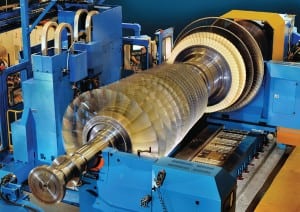
GasSiemens Releases “Shaping Power” Option for Renewables Integration
The need for flexible power generation has increased drastically over the past few years, particularly when integrating renewables. Another driver is seasonal peaks in demand that have become more severe as global drought conditions have reduced hydropower production. One option for addressing this need is the Siemens Energy SGT6-5000F with Shaping Power. It offers the familiar gas turbine reoptimized for increased output and higher efficiency during hot weather and for improved operating flexibility at part-load conditions.
-
Commentary
Divide and Conquer
The U.S. Environmental Protection Agency (EPA) is expected to release new air quality standards for coal-fired power plants this month. Division in the power industry is encouraging the EPA to set an unachievable compliance timetable.
-
 Nuclear
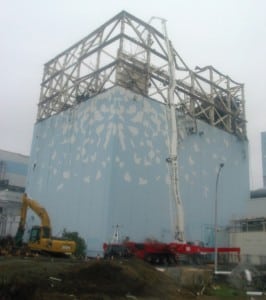
Airtight Cover Completed for Daiichi 1
Tokyo Electric Power Co.’s (TEPCO’s) Fukushima Daiichi 1 reactor—a unit that suffered a core melt and hydrogen gas explosion after the March 11 earthquake in Japan and subsequent tsunami devastated the six-reactor facility—was fully encased in an “airtight” cover in October.
-
 Gas
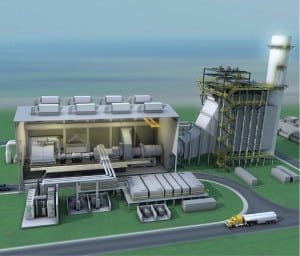
GasGE Develops FlexEfficiency 50 for Increased Operational Flexibility
The newest member of the 60% thermal efficiency combined cycle club is GE Energy’s FlexEfficiency 50. In an era when flexible grid operation is growing in importance, this 50 Hz, single-shaft combined cycle also holds its design point efficiency down to 87% load and features turndown to 40% of rated load.
-
 O&M
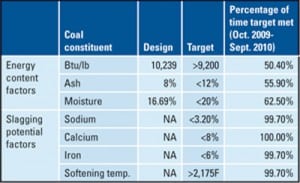
O&MImproved Performance from Priority-Based Intelligent Sootblower Systems
When sootblower operation frequency is too high, a plant risks losing power generation from tube leaks; but when sootblower frequency is too low, there is a risk of boiler pluggage. Intelligent sootblowing finds the right balance between tube erosion and plant economic operation.
-
 Waste to Energy
Does Cow Power Pay Off?
Since a 2008 University of Texas-Austin study showed that converting farm animal droppings into renewable power could generate enough power to meet up to 3% of North America’s consumption, interest in cow power has been piling up.
-
 Geothermal
Can U.S. Geothermal Power Fulfill Its Potential?
Geothermal power and conventional fossil fuel–powered technologies have similar power production cycles, and both generation types can be dispatched. Geothermal power’s primary advantage is its renewable fuel. Its primary disadvantage is that its fuel requires large investments over many years to characterize uncertain sources. Enhanced recovery techniques that use fracking may be the future of this renewable resource.
-
Business
POWER Digest (December 2011)
Fluor Enters Small Modular Reactor Market, Backs NuScale. Fluor Corp. on Oct. 13 announced it planned to invest more than $30 million in NuScale Power, an Oregon-based small modular reactor (SMR) technology company. As part of its investment, Fluor has purchased the company’s shares that had previously been in U.S. Securities & Exchange Commission receivership […]
-
 News
NewsUltrasonic Flow Meters
Sierra Instruments has introduced a new lineup of its popular transit-time ultrasonic flow meters, which now include improved next-generation Innova-Sonic 203, 205i, and portable 210i models. The Innova-Sonic 205i is Sierra’s highest performing dedicated clamp-on instrument. It incorporates the latest developments in digital signal processing to offer excellent accuracy and repeatability for a wide variety […]
-
 O&M
O&MTools at Height
A structure or mechanical system that requires fasteners also demands tools to maintain it properly. In power sectors such as wind, fossil fuel, and nuclear, some work areas may be several hundred feet in the air. While working at those extreme heights, or even just 10 feet off the ground, it’s simply unacceptable to drop anything. That’s why the concept of “tools at height” is being embraced as a way to improve safety and efficiency on the worksite.
-
 News
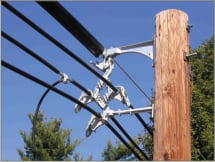
NewsSpacer Cable Systems
Hendrix Wire & Cable, a provider of overhead and underground power distribution products, introduced its Spacer Cable Systems, a “green” solution for overhead distribution circuits. Because Spacer Cable is more compact and can withstand temporary contact with branches without causing outages, Hendrix Spacer Cable Systems can help reduce the amount of vegetation that must be […]
-
 O&M
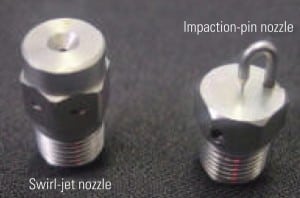
O&MMicrons Matter: Proper Design of Fogging Nozzles
Inlet fogging systems for combustion turbines achieve their effect at the molecular level: The cooling effect occurs by converting thousands of gallons of water into single evaporated molecules suspended in the air. The right fog pattern comes down to a matter of selecting the best nozzle design and proper placement in the inlet air stream.
-
 News
NewsEco-Friendly Absorbent Pads
Oil Eater Naturals is a new line of eco-friendly absorbent pads made of natural plant by-products. Featuring woven construction, the pads are designed to provide a safer and cleaner workplace and help users meet OSHA and EPA requirements. The line includes Oil-Only Pads and Rolls that soak up oil and repel water; Universal Pads and […]
-
 O&M
O&MUsing Temperature- Measuring Indicators
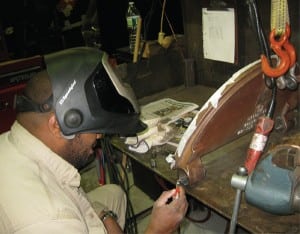
Correct welding procedures are extremely important elements of the work done by the PSEG Central Maintenance Shop (serving Public Service Electric and Gas Co., PSEG, a New Jersey utility). We have, for example, a Critical Weld Inspection Program for high-temperature pressure piping whose goal is to identify cracks in high-temperature piping welds.
-
 News
NewsElectric Wire Rope Hoists
Harrington Hoists launched the RHN Series, a new line of electric wire rope hoists, offered in two configurations: the deck/base-mounted hoist in 2–20 metric tons and ultra-low-headroom trolley hoist in 2–15 metric tons. Both versions are dual speed. The deck/base-mounted hoist features a compact, modular design that is perfect for stationary applications or combined with […]
-
Legal & Regulatory
Will San Bruno Be a “Game-Changer”?
Energy professionals and the general population are both acutely aware of the explosion of a Pacific Gas & Electric Co. (PG&E) natural gas pipeline in San Bruno, Calif., that led to the death of eight people and the total destruction of 38 homes in September 2010. The tragic accident garnered immediate national attention, thrusting the natural gas industry into the spotlight. The California Public Utilities Commission’s (CPUC) Independent Review Panel neatly encapsulated the sentiment surrounding the event: “The fact that a large segment of pipe literally blew out of the ground in an urban neighborhood and the residents were generally unaware of the proximity of a high-pressure natural gas transmission system to their homes—raises significant public safety concerns.”
-
 News
NewsIndustrial-Strength Pressure Sensing
Ashcroft A2, A2X, and A4 pressure transmitters answer the call for an accurate, rugged, and reliable heavy-duty sensor. Available in accuracies up to +/-0.25% full scale, the A2 is offered with a wide variety of electrical connections, analog output signals, and pressure ports to meet the requirements of most any industrial application. The A2X (explosion/flame proof) […]
-
 Solar
SolarTop Plant: Copper Mountain Solar 1, Boulder City, Nevada
The current largest photovoltaic plant in the U.S., the 48-MW Copper Mountain Solar 1, utilizes approximately 775,000 solar panels to generate emission-free electricity for about 14,000 homes without the use of water. The facility was constructed in less than a year—an unprecedented achievement for a project of this size.
-
 News
NewsInteractive Virtual Training Content Software
Advanced graphical interface technology provider DiSTI Corp. unveiled Replic8, a new software tool to effortlessly create interactive virtual training content from Autodesk’s 3D Studio Max. Replic8 allows users to easily produce compelling 3-D interactive training content through a simplified development process. (The image is a Relic8-generated 3-D Cummins 855 Diesel Engine.) The software tool works […]
-
 Wind
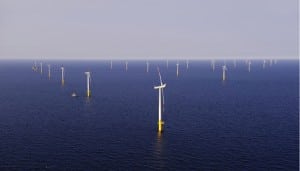
WindTop Plant: EnBW Baltic 1, Darss-Zingst Peninsula, Mecklenburg Province, Germany
Owner/operator: EnBW Energie Baden-Württemberg AG/EnBW Renewables GmbH Germany’s first commercial offshore wind farm—the 48.3-MW EnBW Baltic 1—consists of 21 Siemens wind turbines, each with a capacity of 2.3 MW and a rotor diameter of 93 meters. Siemens constructed the facility in an area covering about 7 square kilometers in the Baltic Sea.
-
Commentary
Wind Energy: Dealing with Intermittency Challenges
The wind power industry has exploded over the past decade. In the U.S. alone, almost 40,000 MW of wind power have come online since 2000. As more wind generation has been added, grid operators have been challenged to integrate a large amount of intermittent generation. As the state with by far the most installed wind power capacity, Texas has had to face this problem head on.
-
Coal
EPA Moves Forward with GHG Regulations for Power Plants
The EPA’s proposed rules on limiting greenhouse gas emissions from new, modified, and existing power plants has taken another step forward.