
Articles By

-
News
Deep Saline Aquifers Could Provide Century’s Worth of CCS, MIT Study Says
Enough capacity exists in deep saline aquifers in the U.S. to store about a century’s worth of carbon dioxide emissions from the nation’s coal-fired power plants, a new study from researchers at the Massachusetts Institute of Technology (MIT) shows.
-
News
Commerce Department to Impose Tariffs on Chinese Solar Panels
After concluding that the Chinese government provided illegal subsidies to domestic solar panel makers, the U.S. Commerce Department on Tuesday said it would impose countervailing duties on the imports of Chinese crystalline silicon photovoltaic (PV) cells and modules. But the tariffs were smaller than some solar companies had petitioned for, ranging at 2.9% to 4.73%, depending on which company manufactured them.
-
News
Miss. Supreme Court Reverses Permit Approval for $2.8B Kemper IGCC Plant
In a major setback for Southern Co.’s 582-MW integrated gasification combined cycle (IGCC) Kemper power plant that is under construction in Kemper County, Miss., the Mississippi Supreme Court reversed an order by the Mississippi Public Service Commission (MPSC) granting the project a Certificate of Public Convenience and Necessity.
-
News
Nuclear Briefs: Milestones for Reactors in Ontario, Tamil Nadu, and Vermont
In the past week, Ontario’s Bruce A restarted after 17-year hiatus, with hiccups; Indian state approval restarted work to complete Kudankulam; Vermont Yankee turned 40; and Entergy won a new legal round to keep the contested Vermont reactor operating.
-
News
NRG Considers Mothballing N.Y. Coal Plant on Concerns It Is “Uneconomic”
NRG Energy last week filed a notice of intent with the New York Public Service Commission (PSC) to mothball Units 1, 2, 3, and 4 of its 635-MW Dunkirk coal-fired power plant near Buffalo, N.Y., by September this year until market conditions improve.
-
News
FERC OKs New Enforcement Approach for Minor Reliability Standard Violations
The Federal Energy Regulatory Commission (FERC) last week conditionally approved an enforcement approach proposed by the North American Electric Reliability Corp. (NERC) that allows industry to self-report “low risk” reliability standard violations. The initiative will “free up resources and attention to address more serious risks to reliability,” FERC said in its decision.
-
News
Constellation Settles Market Manipulation Allegations with Record-Setting Penalty
An agreement reached between the Federal Energy Regulatory Commission (FERC) and Constellation Energy Commodities Group will require the company to pay $245 million to settle FERC allegations that the company manipulated power markets run by the New York Independent System Operator (ISO) and ISO New England between September 2007 and December 2008. The penalty is the largest ever imposed by FERC under the expanded enforcement authority assigned to the federal body in 2005.
-
General
Will Natural Gas Inventories Hit Their Caps This Fall?
By Thomas W. Overton San Diego, 20 March 2012 — A fair amount of ink has been spilled in the commodities market over record natural gas storage inventories in the U.S. As of March 9, they stood at 2,369 Bcf, a whopping 735 Bcf more than this point last year, and well above the previous […]
-
General
Energy Efficiency and the End of the Free Lunch
By Kennedy Maize Washington, D.C., March 20 2012 — The most important economist you probably have never heard of is William Stanley Jevons. Contemplating the convergence of coal, industry, and technology in the middle of the 19th Century, Jevons explained why increasing efficient use of coal meant more, not less, use of the dusky diamonds […]
-
General
Bad News for San Onofre
By Thomas W. Overton, JD San Diego, 16 March 2012 — Yesterday, the NRC announced that it is sending a special team to San Onofre after several steam generator tubes in one of the reactors failed an inspection. This isn’t good, but probably sounds worse than it is. First, full disclosure and some background: I […]
-
General
Climate Science: A Super-Wicked Mess
By Kennedy Maize Washington, D.C., 14 March 2012 — Climate science is a wicked mess. That’s not a political statement or a casual description of the difficulties of the man-made global warming knife fight. It’s a technical term some social scientists use to shed light on complex, convoluted, interconnected problems. It also provides a useful […]
-
News
Graham’s Bill Seeks to Rebate Nuclear Waste Funds
A bill introduced by Sen. Lindsey Graham (R-S.C.) on Monday could force the government to provide rebates for $35.8 billion collected in the Nuclear Waste Trust Fund since 1983 to help build and operate the permanent federal nuclear waste repository at Yucca Mountain in Nevada. According to the Nuclear Energy Institute, customers have been paying […]
-
News
Report: Dynegy Asset Transfer Before Chapter 11 Defrauded Creditors
Dynegy Inc.’s transfer of some coal plant assets to itself from its subsidiary Dynegy Holdings two months before the latter company filed for bankruptcy protection last November represented a “fraudulent transfer,” a court-appointed examiner in the bankruptcy case said in a report released on Friday.
-
News
Merger Complete, Exelon-Constellation Combo Is Biggest U.S. Power Utility
Exelon Corp. and Constellation Energy on Monday completed their long-awaited $7.9 billion merger. The combined company, which retains the Exelon name, has a market cap of $34 billion, a 35-GW generation fleet, and activity in 47 U.S. states and some Canadian provinces. It is now the biggest power utility in the U.S.—until the $26 billion Duke-Progress merger is completed, at least.
-
News
House Passes Bill to Minimize Environmental Reviews for Small Hydropower
A bill passed with a bipartisan vote of 265–154 by the U.S. House last week seeks to fast-track permitting for hydropower installations of 1.5 MW or less in canals and pipelines by minimizing environmental reviews.
-
News
NEI: FLEX Fukushima Response Strategy Requires Reactor Operators to Buy Emergency Equipment
The Nuclear Energy Institute (NEI) last week detailed its “FLEX” response strategy, a program that calls for more safety and emergency response equipment at each of the nation’s 104 commercial nuclear reactors. According to the trade industry group, “The initiative commits every U.S. company operating a nuclear energy facility to order or enter into contract for a plant-specific list of emergency equipment by March 31.”
-
News
Battered Solar Sector Saw Record Gains During 2011
A report released today by the Solar Energy Industries Association (SEIA) claims that though the U.S. solar power sector was hard hit by policy changes and plunging global prices of photovoltaic (PV) panel prices, it installed 1,855 MW of PV capacity last year—more than doubling the previous annual record of 887 MW set in 2010.
-
News
GAO: DOE’s Loan Program Lacks Consolidated Data, Could Improve Application Reviews
The Department of Energy has made $15 billion in loan guarantees and conditionally committed to another $15 billion, but its loan guarantee program lacks much-needed consolidated data on application status, which could make easier efficient management and program oversight, a new report from the Government Accountability Office (GAO) has found. The report was released on Monday, just before Energy Secretary Steven Chu defended the Obama administration’s loan programs before a Senate committee.
-
News
DOE Announces $180M Funding Opportunity for Offshore Wind Development
Energy Secretary Steven Chu on Thursday announced a planned six-year $180 million initiative—including an initial commitment of $20 million this year—to accelerate the deployment of four offshore wind power projects in the U.S. The funds are subject to congressional appropriations.
-
News
Bingaman Introduces Federal Clean Energy Standard Act
Senate Energy and Natural Resources Chairman Jeff Bingaman (D-N.M.) on Thursday introduced the Clean Energy Standard Act (CES) of 2012, a bill that could require some utilities around the nation to ensure at least 24% of all power sold in 2015 could be defined as “clean energy.” Under the bill, by 2020, that percentage would grow to 39%, by 2025, 54%, and by 2035, 84%.
-
News
Federal Court Denies PNM’s Request to Stall Pollution Controls for San Juan
A federal appeals court on Thursday ruled that Albuquerque, N.M.–based PNM could not delay enforcement of an Environmental Protection Agency (EPA) mandate that would force it to install pollution controls at its 1,800-MW coal-fired San Juan Generating Station near Farmington, N.M., while the issue is considered by the court.
-
News
GE to Operate Pa. Homer City Coal Plant As Edison Unable to Finance Upgrades
Edison International last week said it was unable to secure financing for more than $700 million in scrubbers and other air pollution equipment required by state and federal regulations to continue operating the beleaguered 1,884-MW Homer City Generating Station Pennsylvania. The news comes on the heels of the announced closure of the firm’s two Chicago coal-fired power plants by 2014.
-
News
BPA Files Revised Plan to Manage Power Oversupply in Pacific Northwest
The Bonneville Power Administration (BPA) on Tuesday submitted a revised open access transmission tariff to the Federal Energy Regulatory Commission (FERC), addressing situations that occur mostly in the springtime when the Columbia River surges and there is too much power available for delivery.
-
News
NERC: Loss of Reactive Power, Voltage Instability Likely Outcome from Geomagnetic Disturbance Effects
A new report released last week by the North American Electric Reliability Corp. (NERC) finds that loss of reactive power is the most likely outcome from a severe solar storm centered over North America. Significant losses of reactive power could lead to voltage instability, and, if not identified and managed appropriately, power system voltage collapse could occur, the report concludes.
-
News
Experts: Formal China Energy Plan Favors Grid, Nuclear Firms, Not Coal Generators
A report presented to China’s legislature on Monday by Premier Wen Jiabao could have positive implications for the country’s centrally owned grid and nuclear firms, but they could leave "thermal generators out in the cold," experts said.
-
News
Statoil CEO Calls for Transparency, Dialogue, Responsibility
In the keynote address to the CERAWeek 2012 conference in Houston on Tuesday, Helge Lund, president and CEO of Norway-based Statoil, urged the oil and gas industry to embrace a greater sense of responsibility in facing its current and future challenges.
-
News
Public-Private Partnership Seeks to Boost Development, Licensing of Small Modular Reactors
Three Memorandums of Agreement (MOA) between the U.S. government entities and private companies signed on Friday will seek to leverage Savannah River’s land assets and energy facilities near Aiken, S.C., to support potential private sector development, testing, and licensing of prototype small modular reactor (SMR) technologies.
-
General
Conflating Energy and Climate Policy: Road to Nowhere
By Kennedy Maize Washington, D.C., March 4, 2012 — Conflating climate and energy policy in the U.S. over the past several decades has produced incoherent policy in both areas, along with considerable confusion and loss of focus, argues economist Denny Ellerman in the current issue of Economics of Energy & Environmental Policy, the journal of […]
-
 Gas
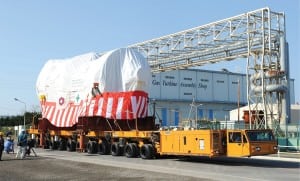
GasMHI Ships First Commercial J-Series Turbine
The first unit of Mitsubishi Heavy Industries’ (MHI’s) much-watched J-Series gas turbine, a technology MHI has been testing for a year, was shipped this December from its Takasago Machinery Works in Hyogo Prefecture, Japan, for commercial use at Himeji Unit 2, also in Hyogo, owned by Kansai Electric Power Co.
-
Business
Investing in Information to Respond to a Changing Climate
Putting more money and effort into information and information technology will pay solid returns when it comes to understanding and adapting to the world around us, including our changing climate.