
Articles By

-
News
LG&E to Shutter Kentucky Coal Units Earlier Than Planned
Louisville Gas and Electric Co. (LG&E) on Monday said it would shut down three coal units in Kentucky—a total capacity of 563 MW—eight months earlier than originally planned.
-
News
DOI Establishes 17 Solar Energy Zones on Public Lands in Six Western States
The Department of Interior on Friday finalized its Programmatic Environmental Impact Statement (PEIS), establishing an initial set of 17 solar energy zones totaling about 285,000 acres of public lands that will serve as priority areas for commercial-scale solar development. The initiative is part of the Obama administration’s goal to authorize 10,000 MW of renewable power on public lands.
-
News
Bruce Power’s Unit 2 Synchronized with Ontario’s Grid
Bruce Power on Tuesday synchronized its Bruce Power Unit 2 to Ontario’s grid, marking a milestone in its program to refurbish Units 1 and 2 at the Bruce A nuclear generating station. The company, which synchronized the 750 MW Bruce A Unit 1 with the grid on Sept. 19, said that first synchronization of Unit 2 will allow it to carry out final planned commissioning activities at the plant.
-
News
Lawmakers to EPA: Consider MATS Subcategory for Waste Coal Plants
A bipartisan delegation of lawmakers from Pennsylvania on Monday urged the Environmental Protection Agency (EPA) to consider creating a separate subcategory for power plants that convert coal refuse into energy in its final Mercury and Air Toxics Standards (MATS). Though waste coal plants made an important environmental contribution by reducing coal refuse piles, the hydrochloric acid (HCl) standard in the MATS rule could push them out of business, they said.
-
News
A123, Satcon Are Latest Clean Tech Casualties
A123 Systems, maker of an advanced lithium iron phosphate battery and energy storage systems on Tuesday filed voluntary petitions for reorganization under Chapter 11, as Satcon, a provider of utility-grade power conversion solutions for the renewable energy sector, filed for bankruptcy on Wednesday.
-
General
Cato Crushes Romney on Energy R&D
By Kennedy Maize (@kennedymaize) Washington, D.C., 15 October 2012 – Would Republican Mitt Romney be tougher-minded than Barack Obama when it comes to some of the most egregious energy subsidies flowing out of Washington? As election day mercifully approaches, a duo of libertarian energy experts has examined Romney’s rhetoric on energy. They find that “the […]
-
Coal
EPA Petitions Full Federal Court to Rehear CSAPR Appeal
The Environmental Protection Agency (EPA) on Friday appealed a federal court decision handed down on Aug. 21 that vacated the agency’s July 2011–finalized Cross-State Air Pollution Rule (CSAPR) because, the court said, it violated federal law. The EPA is now seeking a rehearing en banc that would involve all eight judges that serve at the U.S. Court of Appeals for the D.C. Circuit.
-
News
Regulators Approve First New Power Plant to Use Marcellus Shale Gas in Penn.
Pennsylvania’s Department of Environmental Protection (DEP) on Wednesday issued an air quality plan approval for a project to build the state’s first power plant to run at least partially on locally sourced Marcellus Shale gas. Moxie Energy’s proposed 936-MW plant in Asylum Township, Bradford County, uses two power blocks that will each consist of a combustion gas turbine and a steam turbine.
-
News
CEZ Disqualifies AREVA Bid for Two-Unit Czech Reactor Expansion
Czech utility ÄŒEZ on Wednesday told AREVA that a bid submitted to build two new EPR units at the Temelín Nuclear Power Plant—a site that already houses two VVER-1000 reactors built in 2000 and 2003—has been disqualified because it failed to fulfill “some other crucial criteria” defined in the tender. The decision, which AREVA said it would appeal, means only Westinghouse and an AtomStroyExport-led consortium remain as contenders for that project contract.
-
News
Growth Spurt Foreseen for Global Nuclear Capacity as Japan Resumes Construction of ABWR
Global nuclear power capacity is expected to grow nearly 25% from current levels to 456 GW by 2030 according to low projections, International Atomic Energy Agency (IAEA) Director General Yukiya Amano told conference attendees in Kyoto, Japan, on Monday. The Fukushima Daiichi accident was a "big wake-up call" on nuclear safety, but it would not mean "the end of nuclear power," he said as he called on Japan to engage in dialogue about its stated policy to shut down all existing reactors by 2040.
-
News
SCE Submits Restart Plan for SONGS Unit 2 as NRC Considers Requiring License Amendment
Southern California Edison (SCE) last week outlined measures it had completed to correct issues identified in the steam generator tubes of its beleaguered San Onofre Nuclear Generating Station (SONGS) Units 2 and 3, as requested by the Nuclear Regulatory Commission (NRC). As part of a restart plan also submitted to regulators last week, the company proposed to restart Unit 2 at 70% power for a five-month trial period.
-
News
PPL to Shut Down Susquehanna Unit 1 for Turbine Blade Inspection
PPL Corp. on Friday said it was preparing to shut down Unit 1 of its two-reactor Susquehanna Nuclear Plant in northeastern Pennsylvania for additional turbine inspection and to confirm data provided by new instrumentation that could finalize a plan to resolve turbine blade cracking that has afflicted both reactors at the plant.
-
General
Another Fusion Failure Bites the Dust, Maybe
By Kennedy Maize (@kennedymaize) Washington, D.C., 6 Oct. 2012 — A big science boondoggle bit the dust this month, giving the quest for fusion energy another black eye. But look for the high-energy physicists who have been living off of fusion confusion for more than a generation to mount a rescue mission, claiming somehow that […]
-
Coal
Brattle Report Projects Doubled Coal Retirement Estimates Ascribed to Low Gas Prices
An update to a 2010 analysis on the market and regulatory outlook facing coal-fired power plants in the U.S. from economists at The Brattle Group forsees that 59 GW to 77 GW of coal plant capacity are likely to retire over the next five years—about 25 GW more than previously estimated—due primarily to lower expected natural gas prices.
-
Nuclear
Report: Crystal River Repair Technically Feasible, But Costs Could Surge to $3.5B
Repair of the damaged containment structure at Progress Energy’s Crystal River nuclear power plant in Florida will likely hover at $1.5 billion, but it could escalate to as much as $3.5 billion and take eight years to complete in the worst-case scenario, an independent review of a potential repair plan shows.
-
News
New House Bill Seeks to Reform EPA’s Science Advisory Board
A bill introduced on Friday by a ranking member of the U.S. House Science, Space, and Technology Committee seeks to reform the Environmental Protection Agency’s (EPA’s) Science Advisory Board (SAB) and its sub-panels to deal with concerns about “balance, impartiality, independence, and public participation.”
-
Coal
State Proposal to Resolve EPA Dispute Calls for Retirement of San Juan Coal Units
A settlement proposed by New Mexico’s Environment Department on Wednesday calls for retiring two units at the 1,800-MW San Juan Generating Station located 15 miles west of Farmington, N.M., by December 2017 and installing selective noncatalytic reduction, a less-costly air emissions control technology than one proposed by the U.S. Environmental Protection Agency (EPA), on the other two units, 3 and 4. Plant owner PNM Resources said in statement that it was hopeful the state’s proposal would resolve a long-standing dispute with the EPA to address regional haze.
-
Coal
GenOn, Progress Shutter 972-MW of Coal-Fired Capacity on Oct. 1, Rocky Mountain Considers Closure
On Oct. 1, GenOn shuttered its 482-MW coal-fired Potomac River Generating Station as Progress Energy Carolinas retired three coal-fired units—two at the 316-MW Cape Fear plant near Moncure, N.C., and the 177-MW H.B. Robinson Unit 1 near Hartsville, S.C. Utah’s Rocky Mountain Power, a unit of PacifiCorp, meanwhile reportedly warned employees and public officials that it may close its 190-MW coal-fired Carbon Power Plant in northeastern Utah over the next few years because it has no room to install air emissions controls to make it compliant with federal rules by 2015.
-
Business
$1.2 B Pennsylvania–New Jersey Line Gets Federal OK
The National Park Service on Monday approved a $1.2 billion 500-kV transmission line that will run from the Berwick area in Pennsylvania to Roseland, N.J., a project that developers Public Service Electric and Gas Co. (PSE&G) and PPL Electric Utilities say will boost electric service reliability and provide a significant economic stimulus to the region.
-
 News
NewsMicrobial Fuel Cells Promise Power from Sludge
A microbial fuel cell technology developed at Oregon State University (OSU) promises to produce 10 to 50 times more electricity per volume directly from wastewater than most other approaches using microbial fuel cells. The breakthrough could reportedly have significant implications for waste treatment plants by replacing the “activated sludge” process that has been widely used for almost a century. The new approach could produce significant amounts of electricity while effectively cleaning the wastewater, OSU researchers say.
-
 Coal
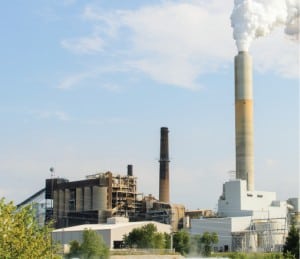
CoalTOP PLANT: Merrimack Station’s Clean Air Project, Bow, New Hampshire
To comply with the New Hampshire law governing mercury emissions, Merrimack Station management recently installed a single scrubber system on the facility’s two coal-fired boilers. The plant’s Clean Air Project was completed on Mar. 30, 2012, ahead of schedule and under budget. Now the 440-MW Merrimack Station has reduced its mercury and sulfur dioxide emissions by more than 95% and is one of the cleanest coal-fired power plants in the nation
-
 News
NewsElectronic Differential Pressure Sensor
The Deltabar FMD72 Electronic Differential Pressure measurement system launched by Endress+Hauser uses two pressure sensor modules connected electronically to a single transmitter and eliminates the need for impulse lines or capillaries and their related issues of icing up, clogging, leaky taps, dry/wet leg inconsistencies, and problems with temperature changes. Ambient temperature changes cause measurement drift […]
-
Business
POWER Digest (October 2012)
Chile Supreme Court Strikes Plans for $5B Coal Plant. Chile’s Supreme Court on Aug. 28 rejected the $5 billion Central Castilla thermoelectric power plant planned by Brazilian firm MPX Energia and Germany’s E.ON, citing environmental reasons. Developers argued that the 2,100-MW plant is needed by Chile, the world’s foremost copper producer, which struggles with high […]
-
 Coal
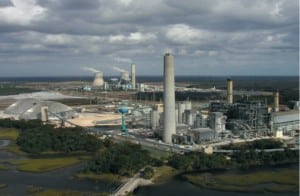
CoalTOP PLANT: Northside Generating Station, Jacksonville, Florida
Since the Northside Generating Station’s two repowered units were placed into service in 2002, a series of modifications and repairs have been undertaken to make its two circulating fluidized bed boiler plants reliable. The two chief problems were ash agglomeration on heat transfer surfaces and poor Intrex heat exchanger performance. JEA reports these problems have been permanently resolved, and data shows the two units have joined the top tier of reliable fossil plants.
-
Commentary
Veterans and Utilities: A Valuable Partnership
The brave men and women of the U.S. military spend years crafting special skills and developing traits that prepare them for the challenging assignments they will be given throughout their terms of service. They receive orders for tours of duty and venture without hesitation into places steeped in peril and instability. Because of their consistently courageous responses to unimaginable challenges, civilians herald America’s servicemen and women as heroes. How can we begin to repay our veterans for defending our freedom?
-
Gas
Blowing Sunshine
The influx of cheap Chinese-manufactured solar panels has upended the solar industry in more ways than one. The saga offers some lessons on what to do about LNG exports.
-
 O&M
O&MFly Ash Erosion Control and Prevention
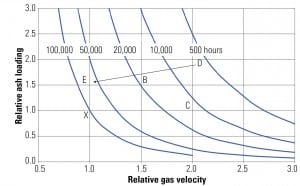
Boiler tube failures (BTFs) are responsible for the largest portion of availability loss (about 4%) in the fossil boiler industry, and approximately 25% of all tube failures are due to fly ash erosion (FAE). An Electric Power Research Institute report indicated that the problem was being managed in U.S. utilities by maintenance activities that were put into effect each time a boiler was taken off-line. The cost of an individual repair was a small fraction of the forced outage cost, and therefore has been considered justified in the past. However, many forced outages continue to be experienced each year due to FAE, and in many cases, these occur at identical locations, indicating that applied solutions relieve, but do not cure, the problem.
-
 Coal
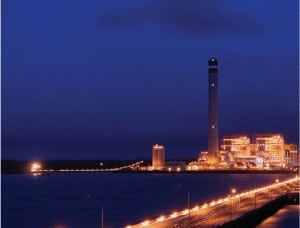
CoalTOP PLANT: Tanjung Jati B Electric Generating Station, Central Java Province, Republic of Indonesia
Units 3 and 4 expand the Tanjung Jati Electric Generating Station’s capacity by adding 1,320 MW of reliable power that helps to boost Indonesia’s growing economy. Now the 2,640-MW coal-fired facility provides approximately 12% of the electricity available on the Java-Bali grid. The new units feature a flue gas desulfurization system and electrostatic precipitators that reduce air emissions and protect the environment.
-
 Water
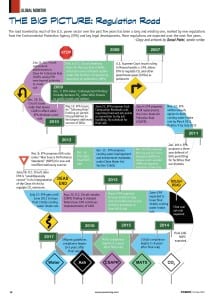
WaterTHE BIG PICTURE: Regulation Road
To view a larger version of this graphic, download the file here.
-
O&M
Major Noise Sources and Mitigation Cost Estimates for Gas-Fired Power Facilities
Natural gas–fired power plants can generate substantial amounts of noise. With proper planning and foresight during the design phase, major noise sources can be effectively mitigated, while failing to plan can be very expensive in the long run.