Cassidy DeLine has spent more than 16 years developing renewable power plants. Now, as the founder and CEO of Linea Energy, she’s building an independent power producer that she believes can do the work better, not by tearing up the playbook, but by running every play better. As a guest on The Power Podcast, DeLine laid out the philosophy, strategy, and ambitions behind Linea’s rapid rise.
Better Data, Earlier Decisions, and Smarter Risk Management
At the heart of DeLine’s thesis is a deceptively simple idea: developers make too many high-stakes decisions with bad information. Traditionally, detailed site data, such as wetland boundaries, topography, and transmission characteristics, only becomes available after leases are signed and field teams are mobilized. Linea has built proprietary simulations that pull from multiple data sources to surface that information before a single landowner conversation takes place. The goal isn’t to eliminate risk, but to make the risk-adjusted decisions that define development far more informed, far sooner.
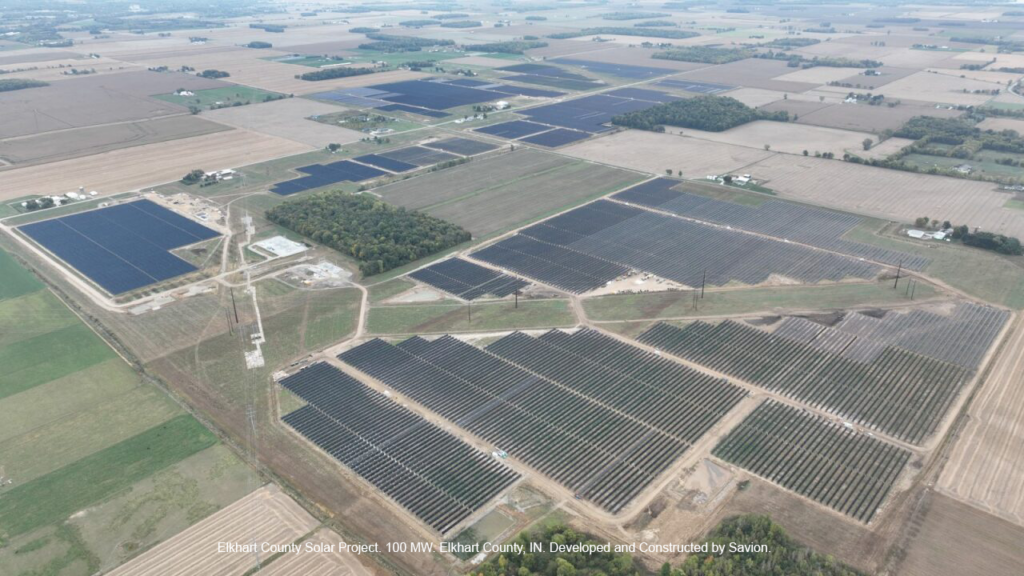
Linea has assembled a remarkable pipeline exceeding 7 GW in roughly two years, a pace DeLine said was “a bit unrivaled” for a company of its size and age. She attributed the speed to front-loading investment in technology and process before the company had any projects at all. About 2 GW of the portfolio came through acquisitions of mid-stage projects, and of the seven acquired projects, five have reached or are nearing construction. The rest is greenfield development, guided by a precise view of what technology belongs in which market and on what timeline.
Unlike most developers, Linea is comfortable advancing projects without a power purchase agreement (PPA) locked in. DeLine explained that signing a PPA too early can actually introduce risk, that is, if capital costs spike after the revenue side is fixed, the developer is trapped. Linea instead performs rigorous bottom-up fundamental analysis of each market to underwrite the value of the electron, then times its offtake agreements to align with cost certainty. She noted the broader industry has started moving in the same direction, especially as tariff volatility has made early-stage PPAs a liability rather than a comfort.
Data Centers, Storage, and Evolving Capital Markets Keep Things Interesting
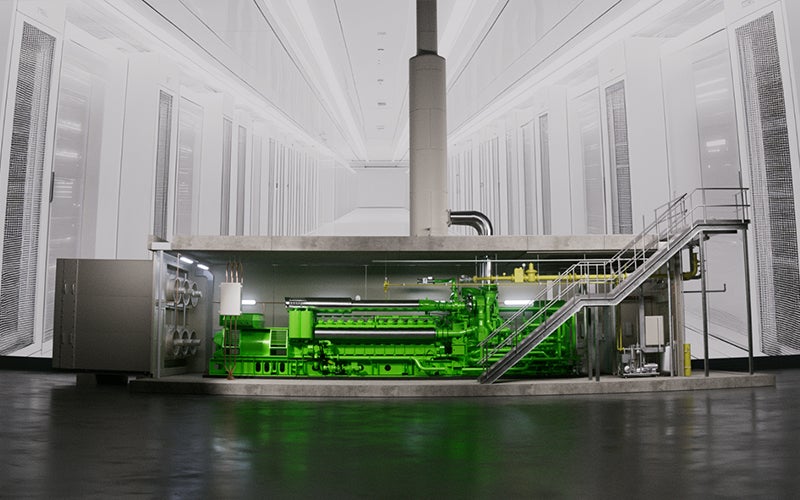
Data centers have become a major part of Linea’s business. The company is doing bespoke development for data center operators, and in some cases developing the data center itself alongside the energy campus. But DeLine is clear-eyed about the engineering challenges: inference workloads can cause load to fluctuate on a microsecond basis, which is fundamentally different from what the grid was designed to handle. Linea has developed specific solutions using batteries and inverters to smooth those rapid swings, driven by a bedrock principle: “The lights have to stay on.”
DeLine is bullish on battery storage, citing the head of the Electric Reliability Council of Texas’s (ERCOT’s) characterization of it as one of the most exciting grid advancements since combined cycle generation. She pointed to concrete evidence in Texas, where batteries have delivered rate-payer savings by shaving peaks. Linea sees storage playing an expanding role as a capacity and balancing resource across the Midcontinent Independent System Operator (MISO), PJM Interconnection, and other markets.
On the financing side, DeLine observed that private capital for renewables has become relatively commoditized, with deep liquidity and well-understood expectations. The gap, she said, is in public markets. The renewable energy sector has struggled to achieve scale in public equity markets, and she expects coming years to bring more consolidation, which may finally open the door to meaningful public market participation.
Grid Access, Community Roots, and a Nuclear Hedge
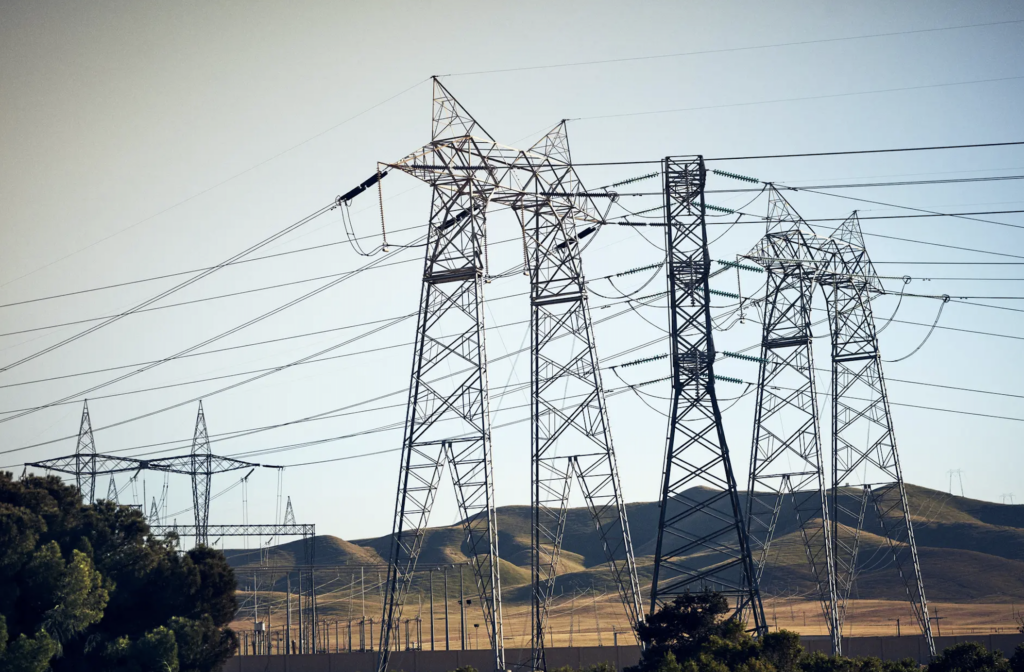
The interconnection backlog is a widely acknowledged bottleneck, and DeLine said Linea can’t fix the problem itself. What the company can control is the quality of its own submissions. By running robust internal transmission modeling, Linea ensures it doesn’t flood the queue with low-probability positions, a discipline she sees as both good practice and industry obligation.
With a 40-year ownership horizon on its projects, Linea treats community engagement as a core operating function, not a permitting checkbox. The company sets up local offices near larger projects, invests in area nonprofits, and builds direct relationships with landowners. DeLine stressed that this work can’t be solved with technology; it requires people.
Perhaps the most forward-looking signal from the conversation: Linea is actively evaluating small modular reactor (SMR) technology. DeLine was candid that neither the economics nor the technology are ready today, but with greenfield projects started now unlikely to come online before the early-to-mid 2030s, she’s thinking about where the market will be by then. Bipartisan political support for SMRs is encouraging, she said, but private capital will only flow once cost competitiveness improves.
The Bottom Line
DeLine’s overarching message was that renewable energy development doesn’t need a revolution; it needs rigor. Better analytics, disciplined queue management, flexible contracting, and genuine community roots add up to a model that can move faster and fail less. With a 7-GW-plus pipeline, construction underway, and a willingness to look beyond wind and solar, Linea Energy is a company betting that doing the hard work better is itself an edge.
To hear the full interview with DeLine, listen to The POWER Podcast. Click on the SoundCloud player below to listen in your browser now or use the following links to reach the show page on your favorite podcast platform:
For more power podcasts, visit The POWER Podcast archives.
—Aaron Larson is POWER’s executive editor (@AaronL_Power, @POWERmagazine).