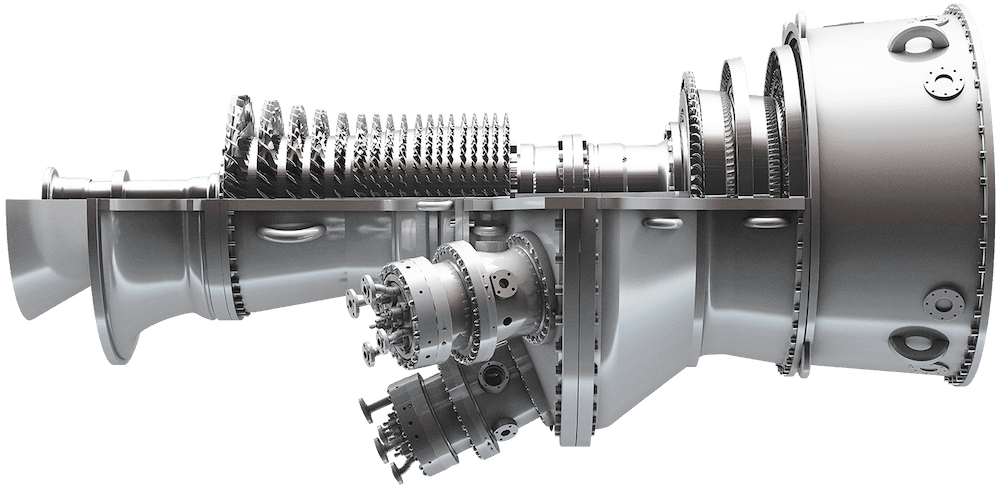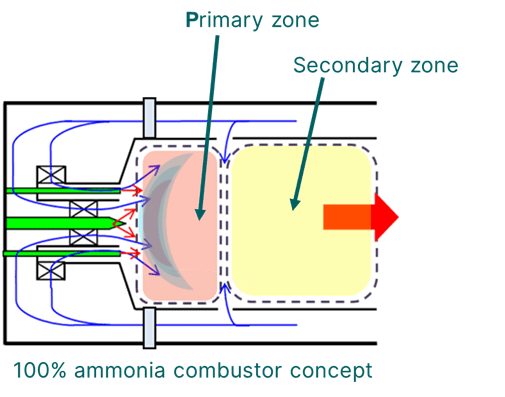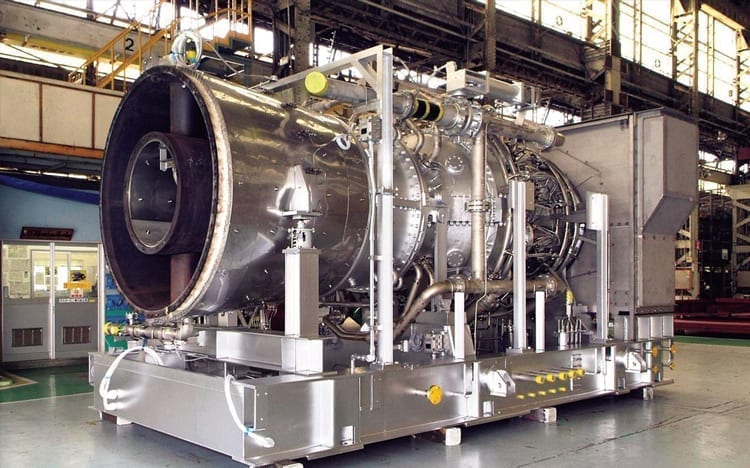
GE Vernova and Japanese integrated heavy industry group IHI Corp. have demonstrated for the first time that full-scale combustor components for GE Vernova’s F-class gas turbines can operate on 100% ammonia at full-load conditions, clearing a critical technical barrier in their joint effort to decarbonize dispatchable power.
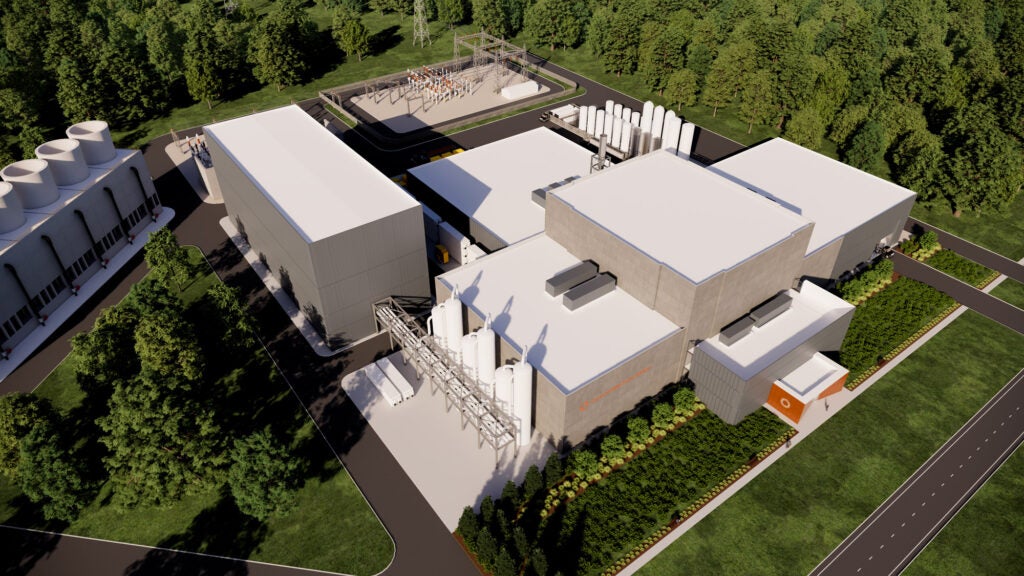
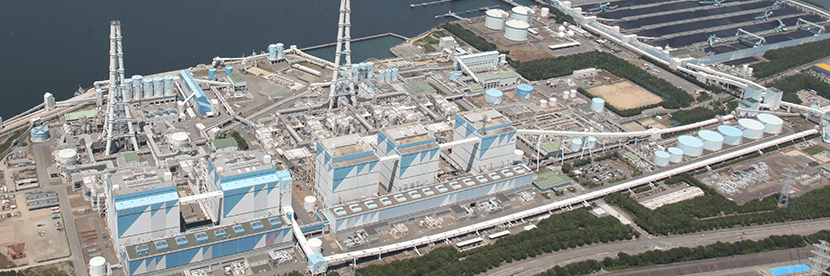
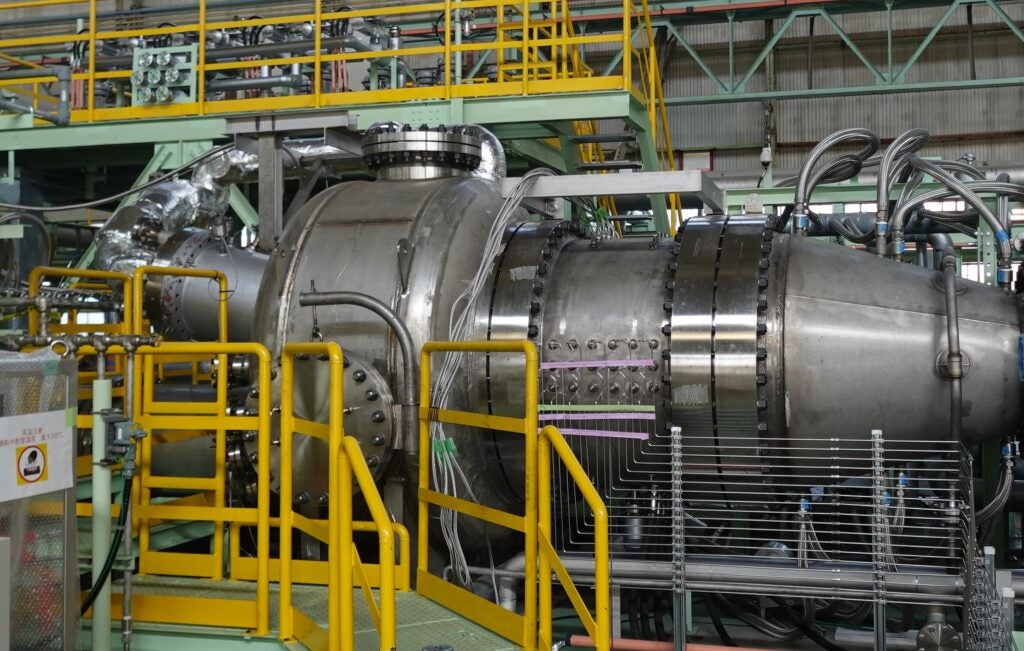
The test was conducted at IHI’s Large-Scale Combustion Test facility at Aioi Works in Hyogo, Japan, a purpose-built installation the companies inaugurated in June 2025 specifically to replicate GE Vernova’s F-class full-load operating conditions, including pressure, temperature, and air and fuel flow rates. The companies on March 17 said measured emission levels align with their joint development roadmap, which envisions the commercial deployment of an ammonia-capable F-class turbine by 2030.
However, neither company disclosed details about test parameters, including its recorded nitrogen oxide (NOx) levels, which is a consequential technical metric for regulatory permitting in any target market. IHI and GE Vernova declined to share more information about the companies’ findings on power output, thermal efficiency, fuel supply assumptions, and a timeline for full engine integration. “Our objective is to ensure that, when this product is commercially offered in the future, it can be implemented without requiring changes to the downstream turbine hardware,” a spokesperson said.
GE Vernova’s Carbon Solutions leader, Jeremee Wetherby, in a statement, noted, however, that the successful demonstration “of running an F‑class gas turbine on 100% ammonia fuel marks a pivotal step in our journey toward a lower‑carbon energy future.” Wetherby suggested work will continue. “We see significant potential for ammonia as a carbon‑free combustion fuel and are energized to continue working together to help unlock its role in advancing global decarbonization,” he noted.
From MOU to Milestone
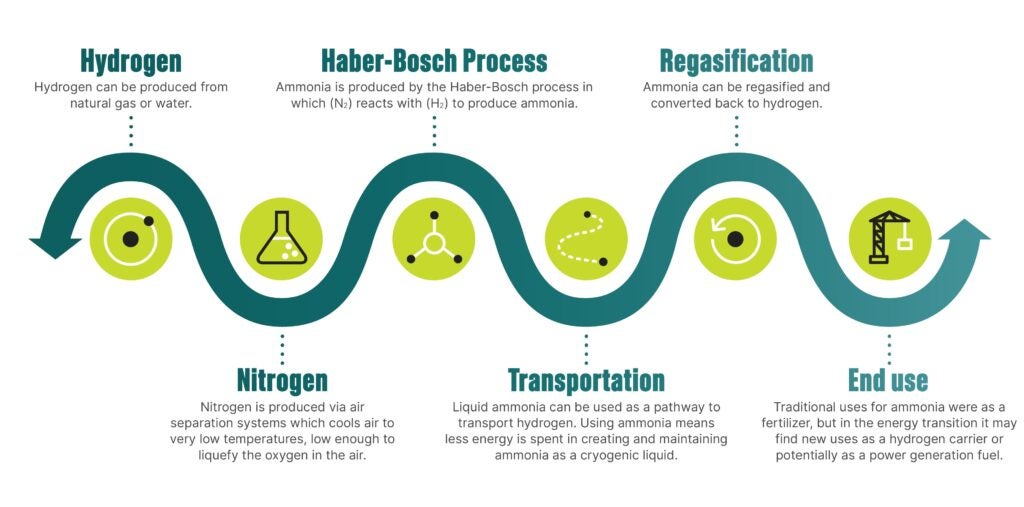
As POWER has reported, ammonia’s appeal as a power generation fuel stems from several structural advantages over pure hydrogen. While ammonia contains no carbon and produces no carbon dioxide during combustion, it is the second-most-produced chemical worldwide. Approximately 10% of global output is shipped annually across an established network of roughly 170 vessels. Liquid ammonia requires cooling only to –33C (–28F) for storage—compared to –253C for liquid hydrogen, making it significantly easier to handle within existing port and industrial infrastructure. Those logistics advantages have made ammonia an attractive hydrogen carrier for export-dependent energy markets like Japan and South Korea, where domestic renewable resources are insufficient to meet decarbonization targets through electrification alone.
Despite that potential, significant technical hurdles have slowed the commercial development of ammonia as a gas turbine fuel. Ammonia burns more slowly than natural gas, making it harder to ignite and raising operability concerns in gas turbines designed for methane. Its lower reactivity can complicate combustion stability, potentially requiring a secondary start-up fuel, while its toxicity introduces additional safety and handling requirements for plant operators.
GE Vernova and IHI’s milestone reflects a development program that has been building for nearly five years. GE Vernova and IHI signed a memorandum of understanding in June 2021 to define an ammonia gas turbine business roadmap, covering joint research on market potential, feasibility studies for ammonia as a gas power plant fuel in Japan and Asia, and initial technology scoping. In February 2023, after a year-long study, the companies concluded that ammonia could be a potentially lower-cost alternative fuel for gas turbines in Japan than liquid hydrogen, when the full import value stream is considered.
That analysis led to a joint development agreement signed in January 2024, under which the companies committed to developing a retrofittable 100% ammonia-capable combustion system compatible with GE Vernova’s 6F.03, 7F, and 9F gas turbine models. The JDA also leveraged IHI’s earlier work on developing a combustor for its 2-MW IM270 gas turbine, an effort funded by Japan’s New Energy and Industrial Technology Development Organization.
In June 2022, notably, IHI conducted tests to mono-fire liquid ammonia in the turbine at its Yokohama Works facility using a novel combustion method that involved liquid ammonia being directly sprayed in the gas turbine combustor. The tests showed a greenhouse gas reduction rate—including both CO2 and nitrous oxide (N2O)—exceeding 99%, even when the ammonia fuel ratio was between 70% and 100%.
The Large-Scale Combustion Test facility at Aioi Works, which POWER detailed following its June 2025 inauguration, was the program’s first major capital commitment. The purpose-built installation is designed to scale IHI’s IM270 combustion expertise up to F-class operating conditions, while drawing on shared best practices from GE Vernova’s advanced combustion test facility in Greenville, South Carolina.
“An essential piece of the ammonia value chain is now coming into place,” said Noriaki Ozawa, IHI managing executive officer and president of the Resource, Energy and Environment Business Area on Tuesday. “Since the signing of the joint development agreement in 2024, the collaboration between our two companies has gained strong momentum, with the efforts of both teams now bearing fruit. The successful achievement of 100% ammonia combustion in a full-scale F-class gas turbine marks a major milestone and helps reinforce the decarbonization roadmap envisioned by our customers in the power sector.”
A Market Starting to Move
The announcement arrives, meanwhile, as ammonia power appears to have regained commercial momentum after years of incremental laboratory progress. Japan has arguably done the most to translate ammonia’s structural advantages into binding policy, embedding hydrogen and ammonia as explicit pillars of its Seventh Strategic Energy Plan, finalized in February 2025, which calls for decarbonizing thermal power through ammonia co-firing, carbon capture, and eventually 100% ammonia combustion. The country has already begun contracting. In December 2025, Japan’s Ministry of Economy, Trade and Industry certified two landmark supply agreements under its Green Transformation contracts-for-difference scheme, covering nearly 800,000 metric tons per year of low-carbon ammonia from Louisiana, to supply co-firing projects at coal-fired plants operated by JERA and Hokkaido Electric Power, with deliveries beginning as early as 2030.
While no original equipment manufacturer (OEM) has yet brought a 100% ammonia-capable large industrial gas turbine to market, Mitsubishi Power is developing a 40-MW class turbine based on its H-25 model for direct ammonia combustion. In an April 2025 interview with POWER, Mitsubishi Power’s Peter Sawicki said combustor testing had produced “pretty promising results,” adding that “with selective catalytic reduction (SCR) control, we can get to manageable levels with ammonia combustion.”
For GE Vernova, the successful combustor test comes as demand for its gas turbine portfolio is surging. “We continue to see accelerating demand and favorable pricing trends for both equipment and services as customers invest in new units and existing assets,” CEO Scott Strazik said during the company’s January 2026 earnings call. The company ended 2025 with 83 GW of gas power equipment backlog and slot reservation agreements—up from 62 GW just one quarter earlier—and Strazik said GE Vernova expects to reach approximately 100 GW under contract by year-end 2026.
According to GE Vernova’s 2025 Annual Report, the company maintains an installed base of approximately 7,000 gas turbines—the largest in the world—with roughly 1,800 units operating under long-term service agreements, which underscores the scale of the retrofit opportunity that a commercially available ammonia-capable combustion system could unlock. That installed base is also growing rapidly: In 2025 alone, GE Vernova booked orders for 173 gas turbines—110 heavy-duty units, including 43 HA-class, and 63 aeroderivatives—nearly double the 93 units ordered in 2023.
The F-class turbines, which remain the heart of its fleet, span the 6F.03, 7F, and 9F models, and remain among the most widely deployed heavy-duty units in that fleet. The company has suggested that a retrofittable 100% ammonia-capable combustion system would allow existing operators, particularly in Japan and South Korea, where policy support and fuel constraints are driving interest, to decarbonize in place without replacing capital equipment.
GE Vernova has also begun to position its lower-carbon generation portfolio—including gas turbines paired with hydrogen and ammonia, carbon capture, and other advanced technologies—in explicitly risk-based terms. In its 2025 annual report, the company warned: “Our long-term success depends on addressing both electrification and decarbonization by adapting our portfolio and scaling less carbon-intense and lower carbon technologies (such as gas as a replacement for coal, small modular or other advanced nuclear reactors, hydrogen-based power generation, carbon capture and sequestration, and grid-scale storage).”
The transitions will “require substantial investments by us and third parties in grids, infrastructure, R&D, and new technologies, and depend on timely governmental and regulatory support, incentives, and market design,” it noted. “If we do not succeed, or are perceived to not succeed, to advance our electrification and decarbonization objectives, or if investors and financial institutions shift funding away from certain types of generation, our and our customers’ access to capital could be negatively affected. Government actions may also affect these dynamics in unforeseeable ways.”
—Sonal Patel is a POWER senior editor (@sonalcpatel, @POWERmagazine).
Editor’s Note: This story is currently evolving and subject to change. We encourage you to revisit this article or check our website for the latest updates.