China to buy four AP1000 reactors
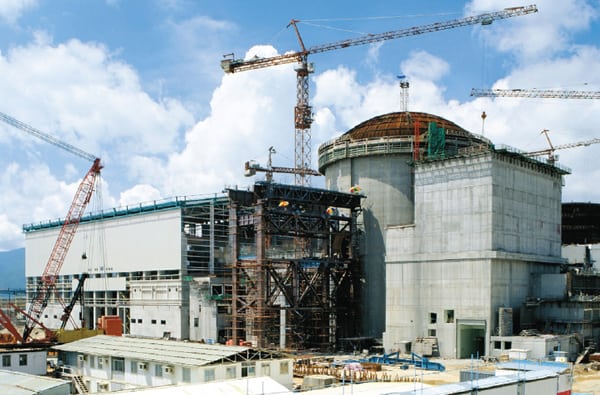
In a deal brokered by the U.S. Department of Energy (DOE), China is ordering four Westinghouse AP1000 nuclear reactors for plants to be constructed at Sanmen, in the eastern province of Zhejiang, and Yangjing, in the southern Guangdong province. Westinghouse, The Shaw Group, and China’s State Nuclear Power Technology Co. signed an agreement in Beijing on December 16 to negotiate the details of the sale.
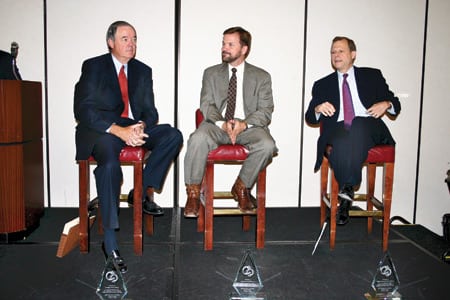
At the same time, U.S. Energy Secretary Samuel Bodman and Ma Kai, chairman of China’s National Development and Reform Commission (Figure 1), signed a memorandum of understanding to support the technology transfer. The Associated Press commented, "The agreement capped several days of top-level trade talks between China and the United States that otherwise yielded few concrete results. It was signed on the sidelines of a closed-door meeting of five major oil-importing nations hosted by China."
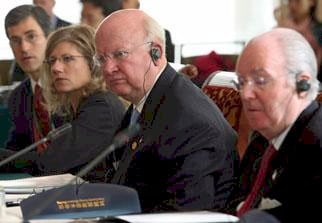
1. Paying attention. U.S. Energy Secretary Samuel Bodman (center) listens intently in Beijing as the U.S. and China sign a technology transfer deal that will see Westinghouse sell four nuclear units to China. Courtesy: U.S. Department of Energy
Westinghouse won the reactor order by beating out France/Germany’s AREVA NP and Russia’s Atomstroyexport. According to The New York Times, China excluded General Electric from the competition because it was not interested in a boiling water reactor. The Westinghouse, AREVA, and Russian reactors are all pressurized-water units.
Westinghouse, recently bought by Japan’s Toshiba Corp., claims the deal benefits both the U.S. and China. Westinghouse CEO Steve Tritch said, "China benefits because it will move closer to its goal of energy independence through deployment of the AP1000 technology, which is in our view the safest and most efficient nuclear power plant now available in the worldwide marketplace. The United States benefits through both job creation and the multi-billion dollar export of products, technology, and services."
Tritch acknowledged that about half of the work on the four plants will be sourced in China. "Over time, though," he added, "as Westinghouse wins additional contracts for new plant work in China, additional scope will be sourced in-country. However, Westinghouse, our U.S. supplier base, and our consortium partners will continue to benefit much as we do now in the Republic of Korea, where recent new plant awards from that country’s maturing industry still provide about $100 million per plant in U.S. scope."
According to a DOE news release, the U.S. began working with China to support a bid by a U.S. reactor vendor in 2004, when Spencer Abraham was energy secretary. The DOE in the 1990s funded the AP600, the AP1000’s predecessor, under the Advanced Light Water Reactor program, and is engaged in a cost-sharing agreement with Westinghouse for the AP1000 detailed design, an upgrade of the previously approved 600-MW AP600. "The total design is set to cost $436 million, of which DOE will fund $218 million over seven years, FY 2005-FY 2011," the agency said.
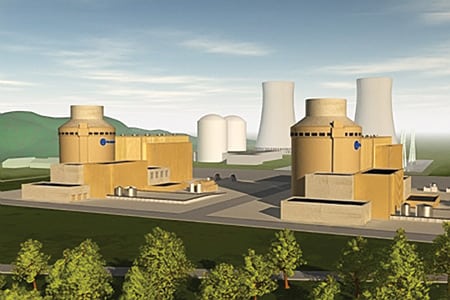
The 1,100-MW AP1000 reactor (Figure 2) features passive safety features based on gravity, thermal circulation (conduction and convection), and other natural physical phenomena to reduce the need for man-made pumps, valves, and other engineered equipment.
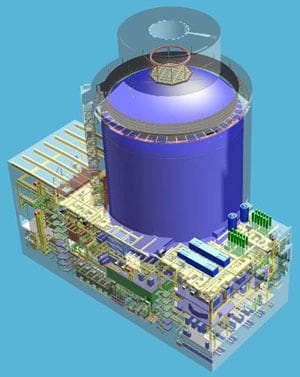
2. Naturally safer. Westinghouse’s advanced AP1000 reactor features many passive safety features—including gravity, convection, and conduction—and relies much less on engineered safety. Source: Westinghouse
Midwest Gen, Blagojevich reach pollution deal
The state of Illinois and Midwest Generation, one of the nation’s largest independent generating companies, have reached a deal to cut emissions of mercury, sulfur dioxide, and oxides of nitrogen at the company’s fleet of six coal-fired plants in the state. The state has similar, but smaller, multipollutant agreements with Ameren and Dynegy. According to Standard & Poor’s (S&P) Ratings Services, the plant cleanups will cost Midwest Gen some $2.5 to $3.5 billion between 2008 and 2018 in capital expenditures. The company said it would not purchase SO2 or NOx credits to meet the lower emissions limits agreed to.
Chicago-based Midwest Gen said its agreement with Governor Rod Blagojevich will lead to mercury emissions control 18 months earlier than called for by the federal Clean Air Mercury and Clean Air Interstate rules established by the U.S. Environmental Protection Agency. In addition to cutting pollution from the six existing plants, Midwest Gen said it will work with its parent, Edison Mission Group (both companies are owned by California-based Edison International), to develop up to 400 MW of new wind power, "provided the company can obtain ‘commercially reasonable’ terms for building and selling the output from the wind projects."
Midwest Generation and Illinois also agreed to work together to build an integrated gasification combined-cycle project in the state. Blagojevich has been promoting IGCC because its viability would make Illinois high-sulfur coal more marketable.
Under the agreement, Midwest Gen will:
- Close two of the four units at the 1,092-MW Will County Station in Romeoville, Ill., between the end of this year and the end of 2010. Midwest Gen is likely to shut the 156-MW Unit 1 and 154-MW Unit 2, both of which went into commercial service in 1955.
- Close one of the three units at Waukegan Station on Lake Michigan within the same time frame. The likely target, based on its capacity and age, is the 100-MW Unit 6, which began commercial operation in 1952.
- Close or install additional SO2 controls at the single-unit 356-MW Fisk Station (Figure 3) in Chicago by the end of 2015.
- Close or install additional pollution controls on the remaining two units at Waukegan Station by the end of 2014.
- Close or install additional pollution controls on the two-unit, 542-MW Crawford Station in Chicago by the end of 2018.
- Install additional pollution controls on all other coal-fired units of the Illinois fleet by the end of 2018.
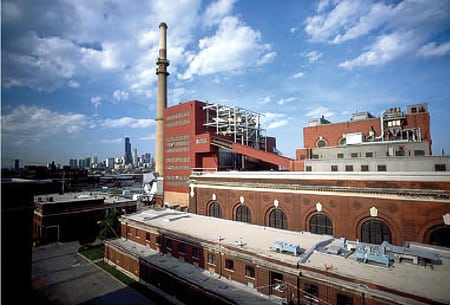
3. Does this plant have a future? A deal on pollution controls between Illinois and Midwest Generation could doom the Fisk coal-fired power plant, located in Chicago. Courtesy: Midwest Generation
According to the Illinois Environmental Protection Agency, the agreement will reduce mercury emissions by an estimated 84% by 2009, 90% 2013, and 95% by 2018.
"These agreements mean cleaner air and cleaner water," said Blagojevich, "and that means fewer health problems for children, for pregnant women, and for people all across Illinois."
Ted Craver, Edison Mission Group CEO, said, "This agreement provides long-term certainty for both the state and our company, helps the state and city of Chicago achieve their clean air goals, and allows us to plan and manage significant capital investments and major technology projects in a reasonable timeframe."
S&P said that, although the deal will not affect the credit ratings of Midwest Gen or its parents, it has already lowered their outlooks from "positive" to "stable." Said S&P credit analyst David Bodek, "While it is still uncertain what the mix of cash from operations and proceeds of debt issuance will be in support of these additions to the capital program, it is our view that the magnitude of the expanded capital program has the potential to alter financial metrics."
Behold, the carpet gasifier
We’ve heard plenty about gasifying coal of late. But how about gasifying carpet?
Martha Senf of Siemens Building Technologies told a session at the Power-Gen International meeting in Orlando, Fla., last November of a project her alternative energy group has done with Shaw Industries of Dalton, Ga. When the Shaw plant makes carpet, there are lots of trimmings, which used to end up in landfills. That’s no longer the case.
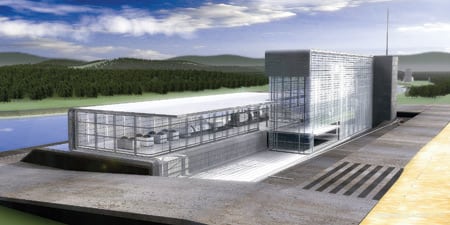
Siemens built a gasification plant (Figure 4) to process both the carpet waste and wood flour from another Shaw plant into a synthetic gas. Senf told POWER that carpet is a pretty good fuel, with a heat content of 8,000 to 10,000 Btu per pound. That’s considerably better than Powder River Basin coal.
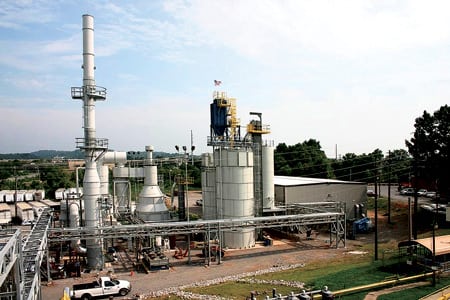
4. Carpet burner. This small plant at a carpet factory in Dalton, Ga., turns carpet trimmings and wood waste into synthetic natural gas that is burned in a waste-heat boiler. As fuels go, carpet is a pretty good one. Courtesy: Siemens
According to Siemens, U.S. carpet factories produce about 2.5 million tons of waste annually. Believe it or not, there’s a joint industry-government program to divert carpet and carpet waste from landfills. It’s called the Carpet America Recovery Effort (CARE) and can be found at www.carpetrecovery.org/index.php. Shaw Industries is on the board of the organization.
Senf said the Shaw plant in Georgia is gasifying 12,000 tons per year of carpet and up to 6,000 tons yearly of wood flour. The plant, using an off-the-shelf gasifier, produces 50,000 pounds per hour of steam from the syngas. The gas is too dirty to run through a gas turbine to produce electricity, but it is clean enough to burn in a waste-heat boiler.
The carpet gasifier provides an interesting hedge against natural gas prices. Its economics are driven by both high gas prices and high and increasing tipping fees for disposing of solid waste in landfills. Senf told the Orlando meeting that Siemens is interested in doing renewable and recycling projects "that make sense on their own economics, not based on subsidies."
To that end, she said, Siemens has targeted opportunities to:
- Use advanced technologies to convert solid waste into synthetic gas that can be used to generate steam or electricity.
- Recover low-Btu gas from landfills or digesters and use it in the same way.
- Design systems to meet or beat regulated air emissions standards.
In other news from Siemens, the German-based international power giant says its SGT-800 gas turbine (Figure 5) has accumulated 375,000 operating hours. Siemens says that as of last November, it had sold 48 SGT-800 units in 16 countries around the world. Of those, 10 are in simple-cycle service, 15 are powering cogeneration applications, and 23 are driving combined-cycle plants.
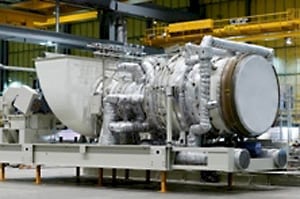
5. Ironman. Siemens’ 64-MW SGT-800 gas turbine has racked up 375,000 operating hours. Some 48 units are now in service in 16 countries. Courtesy: Siemens
According to Siemens, the SGT-800 runs at 53% efficiency and delivers up to 64 MW in a combined-cycle configuration. Equipped with the company’s "dry low emissions" burners, the turbines run cleanly enough to meet most permit limits without the need for water or steam injection. The most recently installed SGT-800 turbine is part of the Rya combined heat and power project in Gothenburg, Sweden (POWER, January 2007).
AREVA casks green-lighted by NRC
AREVA Inc. (www.us.areva.com) has won U.S. Nuclear Regulatory Commission (NRC) approval for its spent fuel transportation and storage system that allows U.S. utilities to store used fuel on site.
The NRC ruling, published in the December 11, 2006, Federal Register, approves the use of the NUHOMS HD system developed by AREVA subsidiary Transnuclear Inc. Since 1990, the NRC has approved 16 dry cask storage designs from five different companies.
According to AREVA, the NUHOMS HD is the second cask in the industry to be approved for high-decay heat limits from high-burnup fuel. The first was Transnuclear’s NUHOMS 24PTH, which was blessed by the NRC in 2005.
Tara Neider, Transnuclear Inc.’s president and chief operating officer, said, "We are pleased with the NRC’s ruling, which represents an important milestone for [us]. NUHOMS HD is state-of-the-art technology that meets our utility customers’ need for storage of high-burnup used fuel while providing maximum radiation shielding."
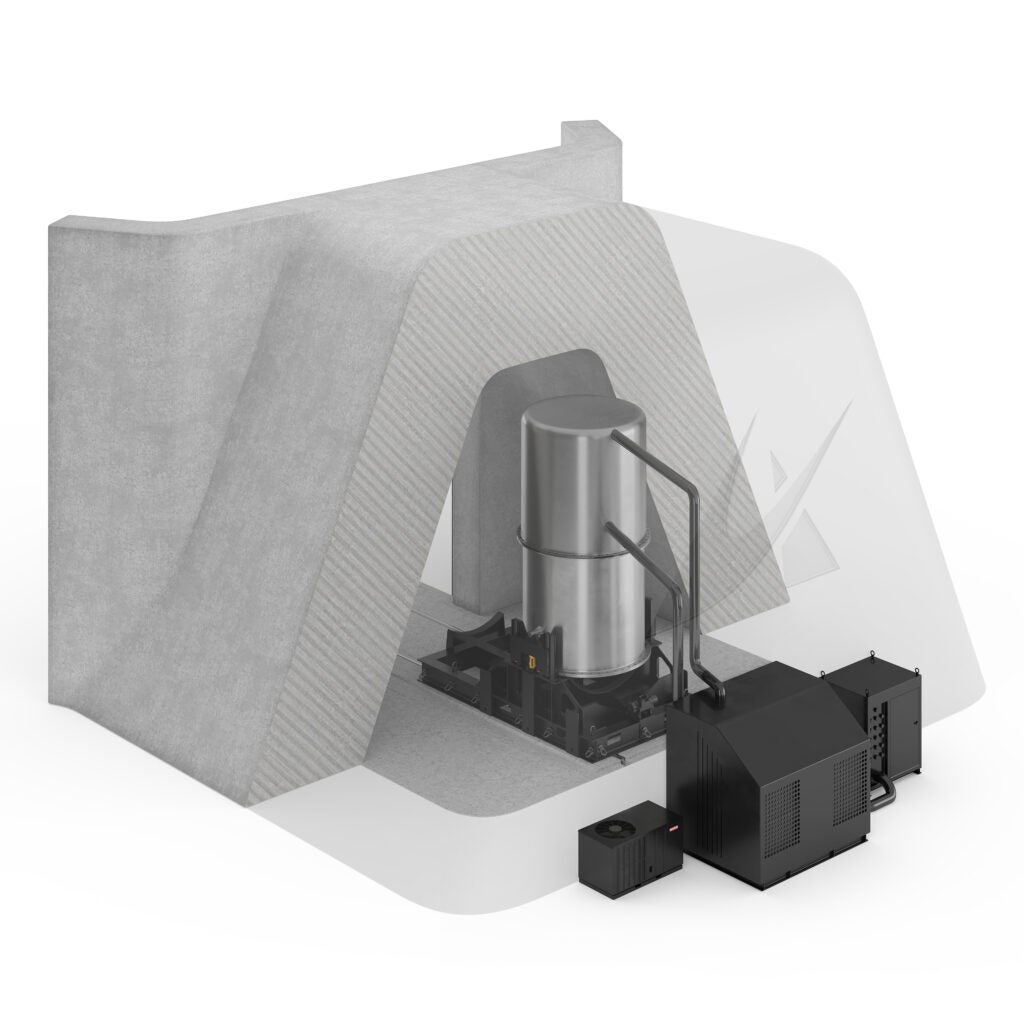
The NUHOMS HD has two components. The first is an HSM (horizontal storage module), which is built of precast reinforced concrete to handle high-burnup, highly radioactive waste with high heat loads (Figure 6). The second (Figure 7) is a dry shielded canister, for transporting the fuel and storing it for up to 40 years, according to AREVA’s description. It is fabricated from stainless and high-carbon steel and aluminum.
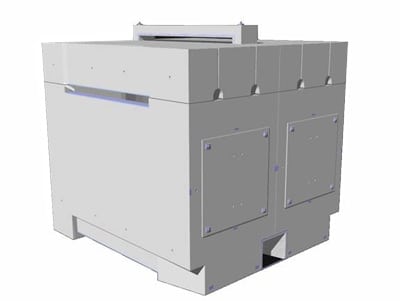
6. Hot, hot, hot . . . The AREVA spent nuclear fuel cask approved by the Nuclear Regulatory Commission has two parts. Shown is the HSM-H (horizontal storage module, model H), designed for high-burnup fuels. Courtesy: AREVA

7. Dry storage. This is the second element of the AREVA dry cask storage system, the 32PTH DSC (dry shielded canister). Courtesy: AREVA
Brookfield Power upgrades Oswego Falls
With a license amendment from the Federal Energy Regulatory Commission (FERC) in hand, Brookfield Power is upgrading its Oswego Falls West hydro project (Figure 8) in Oswego County, N.Y., by 1 MW, to 6.76 MW of peak capacity. The upgrade is part of the company’s portfolio improvement plan (PIP). The plan, which is awaiting further FERC action, calls for modifications and upgrades at 10 plants in New York and Pennsylvania.
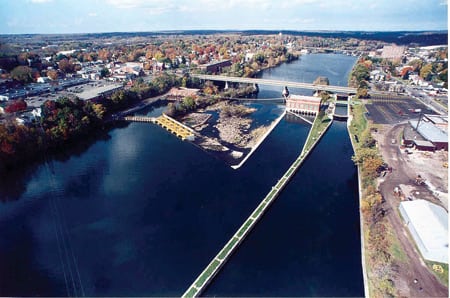
8. Upstate uprate. Brookfield Power’s Oswego Falls hydro plant in upstate New York was recently uprated by 1 MW. Courtesy: Brookfield Power
The Oswego Falls site is the second of the PIP projects to get FERC certification, which entitles the project to renewable production tax credits contained in the 2005 Energy Policy Act. Last June, Brookfield Power announced that the PIP project at its Piney hydro project in Pennsylvania was the first to be eligible for the tax credits. That project pumped up Piney’s maximum rating from 28 MW to 31 MW.
At Oswego, said David Youlen, Brookfield Power vice president, "We are removing the one existing non-operational turbine and installing two new 500-kW turbines and two generators." The upgrade also includes an addition to the existing powerhouse.
Based in Liverpool, N.Y., Brookfield Power has developed and operated hydro facilities for nearly 100 years. The company’s power portfolio totals almost 3,800 MW and includes 138 hydro stations and one pumped storage plant on 49 river systems, one wind farm, two thermal plants, and transmission and distribution assets in the U.S. Northeast and in South America.
Korea fires up 50-MW landfill gas project
One of the world’s largest landfill gas–fueled power plants has been commissioned in Inchon, Korea (Figure 9). According to the French news service AFP, Eco Energy (a private firm) spent $83 million to build the 50-MW plant, which it will operate it for 11 years and then turn over to the Korean Ministry of Commerce, Industry and Energy.

9. Making methane disappear. Owners of a 50-MW landfill gas–fueled power plant in Inchon, Korea, hope the plant will qualify for greenhouse gas reduction credits under the UN’s "clean development mechanism." Courtesy: Korean Ministry of Commerce, Industry, and Energy
The Korea Times said the government estimates that the plant will produce more than $5 million a year in financial benefits. Seoul breaks them down as follows: profits from electricity sales ($2 million), the avoided cost of buying 500,000 barrels of imported fuel oil (another $2 million), and more than $1 million in certified greenhouse gas emissions reductions as part of the "clean development mechanism" under the United Nations Framework Convention on Climate Change. Korea has asked the UN to register the project.
The project burns methane produced by decomposition of waste from nearby landfills. The methane, which would otherwise find its way into the atmosphere, is a far more potent contributor to global warming than carbon dioxide.
Today, there are 12 other landfill gas–fueled power plants in the Republic of Korea. Most are small, in the range of 1 to 7 MW. Korea, which has few indigenous energy resources, gets most of its electricity from nuclear plants and plants fueled by imported coal.
Alstom lands big Russian deal
Alstom has won a contract with a leading Russian utility to develop a turnkey 420-MW gas-fired addition to a combined heat and power plant in Moscow. The company will be working with a Russian partner—Power Engineering Group Energomachinostroitelny Alliance (EM Alliance)—to increase the capacity of Mosenergo’s TPP26 station by 2009.
The new unit, the eighth at the station, will increase its rated capacity to 1,830 MW. The EM Alliance was created by a partnership agreement signed in October 2005. The Russian contract is for $368 million, of which Alstom’s share is $223 million.
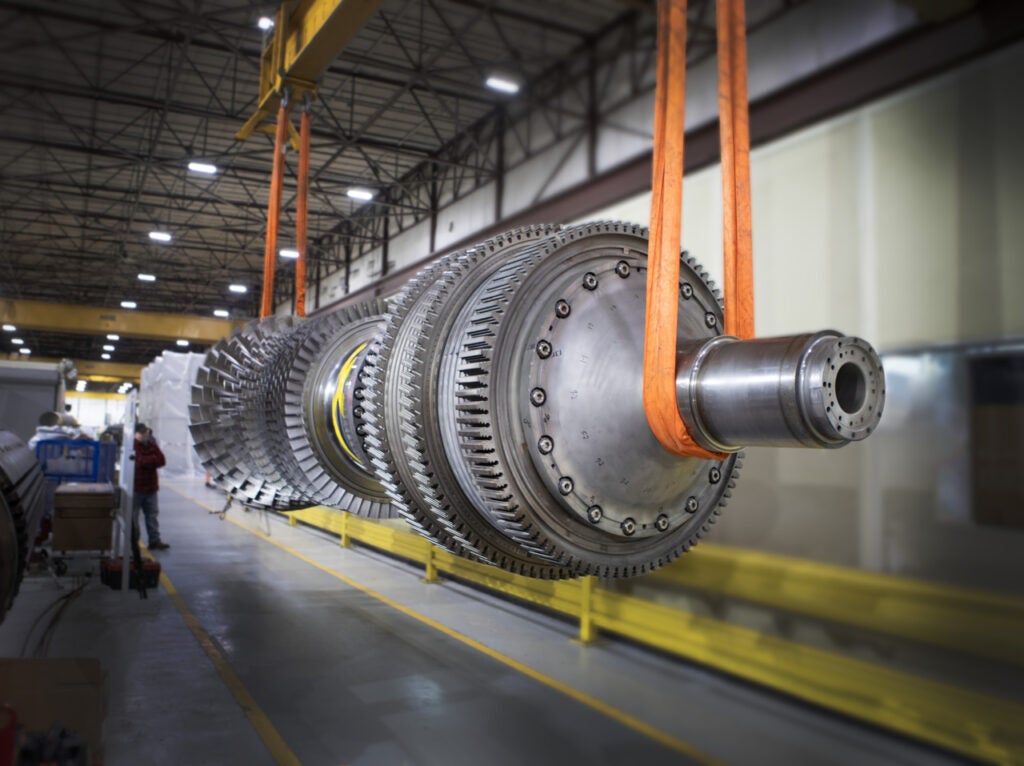
Alstom will provide a multi-shaft combined-cycle system consisting of one 288-MW GT 26 gas turbine (Figure 10), one steam turbine, two generators, one heat-recovery steam generator, and the control system. EM Alliance will manage civil works and construction and will provide the balance of plant, including the cooling tower, electrical equipment, heat exchangers, and piping for a district heating system.
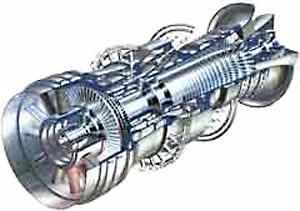
10. Big mama for Russia. At 288 MW, Alstom’s GT-26 is one hefty gas turbine. One will soon find itself at the heart a 420-MW combined-cycle addition to an existing combined heat and power plant in Moscow. Courtesy: Alstom
Patrick Kron, Alstom CEO, said, "This turnkey project has no counterpart in the Russian power industry. It will produce electricity at an efficiency of up to 59%, thus dramatically reducing CO2 emissions in comparison with other power plants."
In other Alstom news, the French-based global firm has won a contract worth $65.6 million from the Grand River Dam Authority (GRDA) to refurbish GRDA’s Markham Ferry hydro plant in Oklahoma. Alstom will be responsible for engineering, fabrication, supply, site work, and commissioning of four 27-MW generating units. The scope of work comprises rehabilitation of four Kaplan runners and wicket gates and provision of new stator frames and cores, windings, digital governors, and control systems. The first unit is scheduled to be overhauled in 2008 and the last in 2011.
GRDA is a state public power agency formed in 1935 by the Oklahoma Legislature to manage the Grand River. The system’s hydro and coal-fired plants have a combined capacity of 1,480 MW.
POWER digest
News items of interest to power industry professionals.
Thermal too thirsty?
A new U.S. DOE study says availability of water will be a growing problem for development of fossil-fueled generating capacity, particularly in rapidly growing arid areas such as Nevada and Arizona. The report—Estimating Freshwater Needs to Meet Future Thermoelectric Generation Requirements—updates a groundbreaking 2004 study.
The report estimates the pace of both freshwater withdrawal (water removed from the ground or diverted from the surface) and consumption (water not available for immediate reuse because it has evaporated, transpired, or been incorporated into products). The National Energy Technology Laboratory, which did the work, said it is based on energy demand forecasts from the DOE’s Energy Information Administration.
Nationally, says the report, "freshwater withdrawal is projected to decrease anywhere from 1-31% between now and 2030, while consumption will increase from 21-48% over the same period." A comparison with the 2004 report "revealed significant regional differences in projected electricity and freshwater demand and availability, particularly in arid areas like Nevada and Arizona."
According to the DOE’s Office of Fossil Energy, "Water is a significant emerging factor in economic development, especially at local and regional levels. The report emphasizes that water resources must be included in planning efforts to ensure that water supplies are not only currently available, but also on hand for all future water-use sectors over the long term, including thermoelectric generation."
Renewables rising in Hawaii
Hawaii’s largest utility—Hawaiian Electric Co. (HECO)—says it plans to rely entirely on renewable fuels, particularly ethanol and biodiesel, for a proposed 110-MW gas turbine-based power plant in western Oahu. The mere mention of burning anything promptly drew fire from some environmentalists, who would prefer that all their power come from wind, waves, and geothermal energy.
HECO initially planned to fuel the simple-cycle combustion turbine with currently available fuels, such as low-sulfur diesel or naphtha, according to the environmental impact statement it filed last June. It would then switch to renewable fuels as they become more available.
Robbie Alm, HECO’s public affairs chief, told the Honolulu Star-Bulletin that the company decided to accelerate the switch to renewables early last year, after lawmakers passed bills aimed at reducing Hawaii’s almost total (90%) reliance on imported fossil fuels. One of those measures requires that by April 2007, 80% of gasoline sold in the state must contain 10% ethanol.
"After looking over what we believe is the reality of biofuels—ethanol and biodiesel markets—we felt we could make [a] commitment [to them]," said Alm. HECO says it plans to bid out fuel contracts and select suppliers by the end of this year. It plans to have the 110-MW unit, to be sited at an industrial park, running by July 2009.
But there is opposition, and not just from fans of cleaner air. Henry Curtis, head of Life of the Land, told the Star-Bulletin that ethanol from crops uses too much water to grow them. "The only thing you are gaining is water wars," he said. "To grow crops here means you have to find some way of stealing massive amounts of water, and that’s not something they’re going to be able to do by 2009."
AESWapiti taps Sargent & Lundy
An AES Corp. subsidiary has picked Sargent & Lundy to provide engineering services for the early stages of a 184-MW circulating fluidized bed project in northeastern British Columbia. AES won a competition, and a 30-year power supply contract, from BC Hydro last fall.
The $450 million AESWapiti project will be fueled 80% by coal and 20% by wood waste. The coal will come from a new surface mine nearby to be developed by Hillsborough Resources Ltd., a Canadian firm. The project includes a 22-mile, 230-kV transmission line.
Chicago-based Sargent & Lundy has been providing engineering, energy business consulting, and project services for power projects for 115 years. AES is one of the world’s largest global power providers, with 2005 revenues of $15 billion. In addition to many non-utility generation projects such as AESWapiti, the company owns 14 regulated utilities around the world.
The AESWapiti project is currently under provincial review, including British Columbia Utilities Commission analysis of the power-purchase agreement. AES says it expects construction to start late this year and that the plant will be put into service in 2010.
Correction
On p. 22 of the November/December 2006 issue, we incorrectly attributed the source of this photograph from the Gulf Coast Power Association meeting. The image was graciously provided by Barbara Schott. POWER regrets the error.