Russia’s state-owned nuclear power group said it will move forward with its power plant projects in foreign countries despite new sanctions from the UK government against Russian companies.
The British government on February 24 announced its largest sanctions measures against Russia, four years after the latter’s invasion of Ukraine. UK officials said Britain was issuing nearly 300 new sanctions as it continues to crack down on Russia’s energy revenues, including its exports of oil. Industry analysts have said Russia’s revenue from oil is at its lowest level since 2020, prior to the start of the war. British officials were in Kyiv, Ukraine, this week, announcing new support for Ukraine’s effort to repel Russian forces.
Rosatom, the Russian nuclear power company, on February 26 said it has obligations to continue its foreign nuclear projects. The UK’s sanctions include three Rosatom subsidiaries that are part of those foreign power plant builds. The UK government said the subsidiaries were included because they are involved “in trying to secure contracts for new Russian nuclear installations overseas, opening up additional energy revenue streams to make up for plummeting oil revenues.”
Rosatom in a statement said, “Rosatom regards any unilateral restrictions as illegitimate under international law. In the field of peaceful nuclear energy, safety is the overriding priority. Measures of this kind undermine that foundation.”
Officials stressed that Rosatom itself is not part of the UK’s sanctions. The Russian group has the world’s largest number of foreign nuclear power plant projects, with Rosatom saying it is involved in nearly 40 outside of Russia, in addition to three within Russia. Rosatom is known to be building nuclear power stations in China, Egypt, India, Bangladesh, Turkey, Hungary, and Kazakhstan. The company has said it is involved with ongoing construction of 90% of the world’s current nuclear power projects; it also is a global leader in development of nuclear fuels.
Officials in Kazakhstan on Thursday said the UK’s sanctions will not impact construction of that country’s first major nuclear power plant project in nearly 30 years. Rosatom in June of last year was chosen to lead an international consortium in construction of the Balkhash Nuclear Power Plant, a 2.4-GW facility located in the village of Ulken in the Almaty region, on the shore of Lake Balkhash. The Kazakhstan Atomic Energy Agency said the project has no contractual ties to a sanctioned entity. The agency said it will monitor any more moves by the UK or other countries that could involve Rosatom or other companies working on the project.
The Balkhash plant will feature two Generation III+ pressurized water reactors, known as VVER-1200, that will be supplied by Russia. Kazakhstan officials said the country, which produces more than 40% of the world’s uranium, will supply its own fuel for the project.
Rosatom’s Foreign Nuclear Builds
Rosatom’s other nuclear power plant construction projects include Rooppur NPP, in Bangladesh, that country’s first nuclear power plant. The facility is located about 100 miles from Dhaka, on the eastern bank of the Ganges River in Pabna District. The project was started in late 2017; it features two VVER-1200 reactors, with 2.4 GW of total generation capacity.
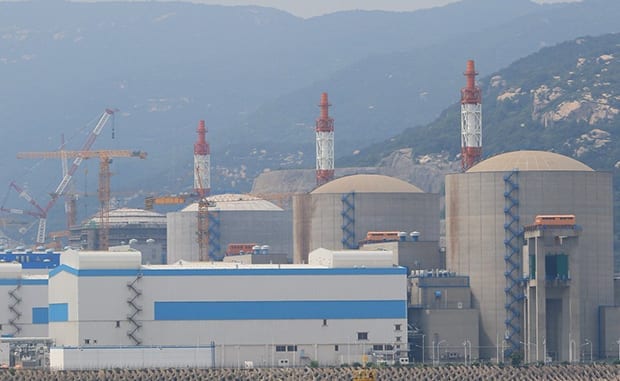
Rosatom’s largest facility in China is Tianwan NPP. Phase 1 of that project came online in 2007; subsequent reactors have been added in the years since. Current construction is of two new Generation III+ VVER-1200 reactors, which will be Units 7 and 8 at Tianwan. Rosatom also is building the Xudapu NPP, near Huludao in Liaoning Province in northeast China. Officials said the new power units “are built to AES-2006 design,” which would be similar to the Novovoronezh Nuclear Power Plant II in Russia that entered commercial operation in 2017. The plant’s second unit came online in 2019; both units feature VVER-1200 reactors.
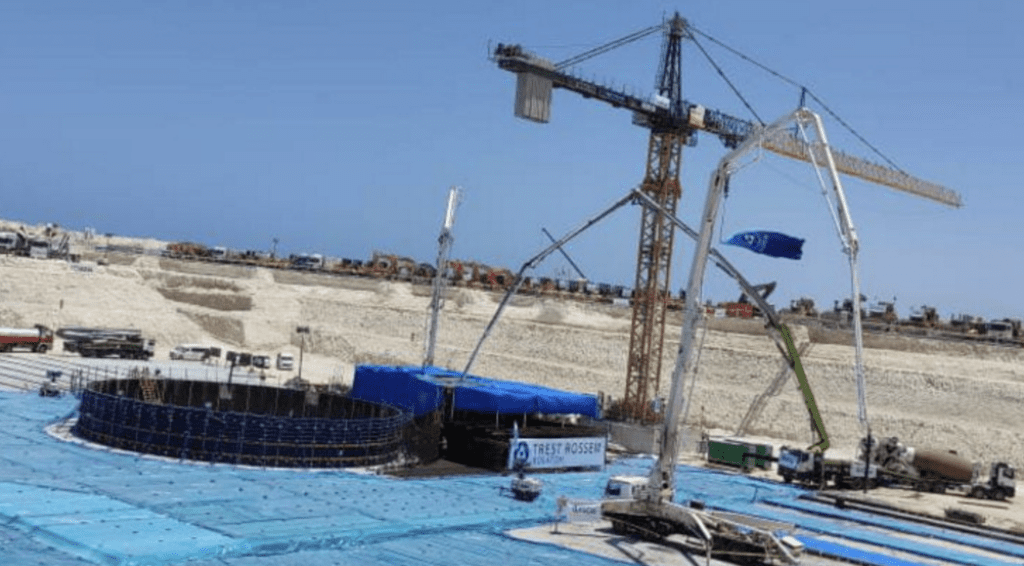
Four VVER-1200 reactors are being built for the El Dabaa NPP in the Matrouh region on the Mediterranean coast in Egypt. Rosatom said it also will supply nuclear fuel “throughout the plant’s entire lifetime.” Rosatom also will train the plant’s workforce. Rosatom said the contract is “based on Intergovernmental agreement between Russia and Egypt [signed on November 2015].” Rosatom said, “Dabaa will reference unit 1 of the Leningrad Phase II nuclear power plant in western Russia.”
The second stage of construction of the Paks II NPP is underway in Pass, in Tolna County, Hungary. The facility at present features four VVER-440 reactors. The second phase will add two VVER-1200 reactors.
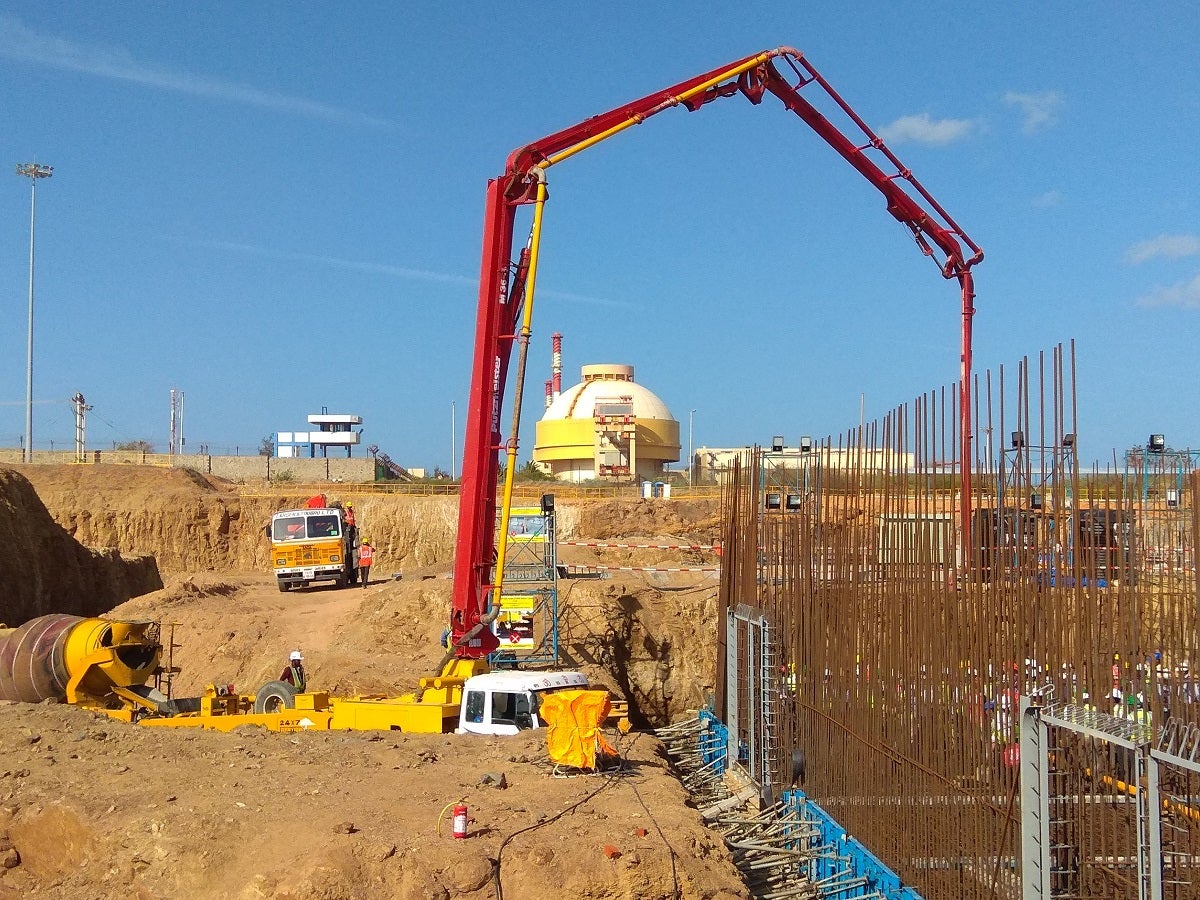
Rosatom is leading construction of four new units at the Kudankulam NPP in Kudankulam, Tamil Nadu, India. The power plant currently has two units, built as part of an agreement between Russia and India that was signed in November 1988. Units 3 and 4 are currently under construction, according to Rosatom, and will feature VVER-1000 reactors. The third stage of the project, Units 5 and 6, also will feature VVER-1000 technology.
Turkey’s first nuclear power plant is under construction in Mersin province in that country. The Akkuyu Nuclear Power Plant is expected to have 4.8 GW of generation capacity and feature four VVER-1200 reactors. Major construction began in March 2018. Russian officials had said the first unit was expected to come online in 2023, but supply chain issues have delayed commercial operation. Russia provided another $9 billion in funding for the project in December of last year, with officials saying they expect Unit 1 will enter service this year.
—Darrell Proctor is a senior editor for POWER.