POWER
-
 Legal & Regulatory
Carbon-neutral status shouldn’t be for sale
While elected officials in Washington debate the politics of climate change, state legislators and regulators have been busy putting in place programs to reduce greenhouse gas emissions. For the most part, the goals of the programs reflect desired changes to power supply and consumption: increasing the efficiency of electricity generation and delivery, using less fossil […]
-
 Gas
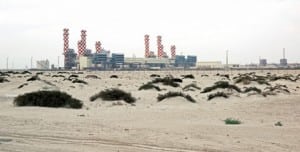
GasAl Ezzel Power Plant, Isle of Muharraq, Bahrain
Bahrain began privatizing its electricity and water-supply sectors three years ago, and the Al Ezzel Power Plant represents the first fruit of that strategic shift. The 950-MW plant, powered by two identical 2 x 1 combined-cycle units that burn natural gas, went commercial in May of this year. The plant now supplies about half of the national grid’s demand. The success of this fast-track project demonstrates the advantages of free markets and the wisdom of bringing in experts to build new capacity.
-
 Gas
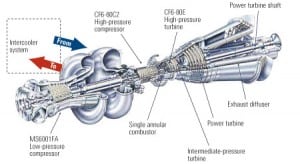
GasGroton Generating Station, Groton, South Dakota
This plant’s main claim to fame: It marks the commercial debut of GE’s 100-MW LMS100 gas turbine-generator. According to Basin Electric, over the unit’s first year of service it has demonstrated top-notch operating flexibility in peaking, mid-range, and baseload service, thanks to capabilities such as 10-minute cold start-ups and minimal impact on heat rate at partial loads. In addition to hosting the first LMS100, Groton Generating Station earns recognition as one of POWER’s Top Plants for the attention its design pays to reliability and resource planning.
-
 Gas
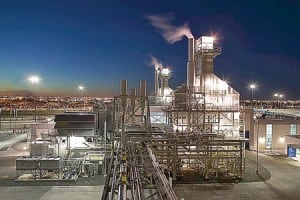
GasGTAA Cogeneration Complex, Mississauga, Ontario, Canada
When a blackout shuts down a factory, the impact isn’t apparent to the public. But lose power at an international airport, and thousands of angry travelers and the people waiting for them won’t be interested in excuses. The Greater Toronto Airports Authority learned that lesson in August 2003. Ten months later, it began building a 117-MW cogeneration plant that is now capable of supplying all of its energy needs—not just electricity, but space heating and chilled water as well.
-
 Gas
GasPort Arthur II Integrated Hydrogen/Cogeneration Facility, Port Arthur, Texas
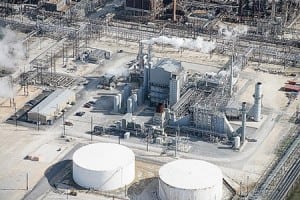
The rationale for a typical cogeneration plant is clear: Supply some power, and maybe some steam, to an industrial host and save energy dollars on both sides of the fence. But integrating a cogen plant that also produces hydrogen with a major refinery that operates 24/7 is a job best left to a company with diverse and proven technology skills. The Air Products Port Arthur II project proves that such a job can be done right. Accordingly, it is one of POWER’s natural gas–fired Top Plants of 2007.
-
 Gas
GasPort Westward Generating Plant, Clatskanie, Oregon
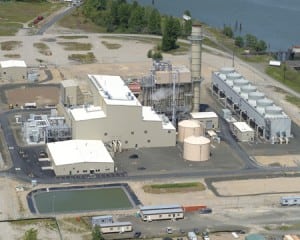
Since going commercial this June, Port Westward Generating Plant has taken its rightful place as one of America’s most efficient power stations. It is now helping to satisfy Portland General Electric’s summer demand reliably and cost-effectively. What differentiates Port Westward is its pioneering use in the U.S. of Mitsubishi Heavy Industries’ G1 class combined-cycle combustion turbine.
-
 Gas
GasTenaska Virginia Generating Station, Scottsville, Virginia
Not every facility that POWER singles out as a Top Plant has a unique design. Some, like this one, may be recognized for an excellent operations record and being a good corporate citizen. At Tenaska Virginia Generating Station, a formal program to make O&M personnel aware of best industry practices—and apply them on the job—has shortened the plant’s start-up time and elevated its availability, making it much more dispatchable and profitable.
-
 Water
WaterBiofouling control options for cooling systems
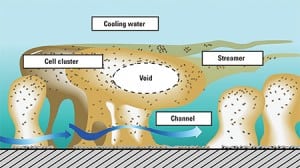
The infrequent or improper introduction of biocides into a plant cooling system may make fouling within it worse, by creating thick biofilms that can foster corrosion, reduce heat transfer, and increase water pumps’ operating costs. At the other end of the spectrum, overuse of biocides can waste expensive chemicals. Optimizing the quantity, frequency, and type of dosage can improve both the health of a cooling system and its plant’s bottom line.
-
Instrumentation & Controls
Integrated software platform eludes many owner/operators
Ongoing research into experience with plant- and fleet-level software reveals that these applications work side by side but do not necessarily function as an integrated “knowledge management” system. On the supplier side, the industry continues to be fragmented, with individual programs governing a narrow part of the overall plant.
-
 Synfuel
Fueling around
Europeans didn’t know that corn existed before Columbus "discovered" America. It had been cultivated by indigenous North Americans for thousands of years before the Italian brought home what was to become a favorite food for many. The more adventuresome even figured out how to distill corn into something more to their liking. Fast-forward five hundred […]
-
 Gas
GasGlobal Monitor (August 2007)
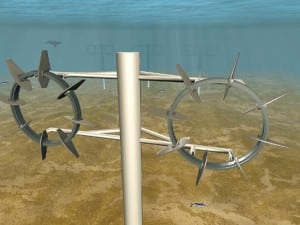
PG&E mounts tidal power project / GE F-class turbine breaks record / Iowa welcomes ethanol-fed hog / NYPA upgrades pumped-storage plant / Bush blesses Browns Ferry 1 restart / Shearon Harris looks to live on / Nevada bets on solar thermal / Climate models questioned / POWER digest
-
Readers talk back and Corrections (August 2007)
Reaction to reactor comment On page 34 of your April article on nuclear power, the author mischaracterized the maturity of one of the new reactors that have been submitted for NRC approval. The statement, "None of the advanced reactors that the NRC has certified (by reviewing engineering documents) has a performance record," is incorrect. GE’s […]
-
 O&M
O&MFocus on O&M (August 2007)
Stop valves from leaking money / Integrating plant and equipment models / Pricing priceless knowledge
-

Is ratepayer funding of utility R&D outdated?
Southern California Edison Co. (SCE) is requesting regulatory approval to recover over $50 million from ratepayers to analyze the feasibility and cost of a "commercial-scale" clean hydrogen power generation (CHPG) facility that would gasify coal to fuel a combined-cycle power plant and sequester the associated carbon emissions underground. If the study demonstrates the CHPG technology […]
-
 O&M
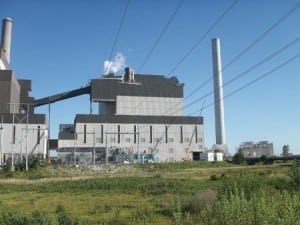
O&MMidAmerican’s Walter Scott, Jr. Energy Center Unit 4 earns POWER’s highest honor
MidAmerican Energy Co. and its project partners are convinced that supercritical coal-firing technology’s inherently higher efficiency and lower CO2 emissions no longer come with a price: reduced reliability. Their Walter Scott, Jr. Energy Center Unit 4, the first major new supercritical plant in the U.S. in more than 15 years, is POWER’s 2007 Plant of the Year.
-
 Coal
CoalPSNH’s Northern Wood Power Project repowers coal-fired plant with new fluidized-bed combustor
The Northern Wood Power Project permanently replaced a 50-MW coal-burning boiler at Public Service of New Hampshire’s Schiller Station with a state-of-the-art fluidized-bed wood-burning boiler of the same capacity. The project, completed in December 2006, reduced emissions and expanded the local market for low-grade wood. For planning and executing the multiyear, $75 million project at no cost to its ratepayers, PSNH wins POWER’s 2007 Marmaduke Award for excellence in O&M. The award is named for Marmaduke Surfaceblow, the fictional marine engineer/plant troubleshooter par excellence.
-
 O&M
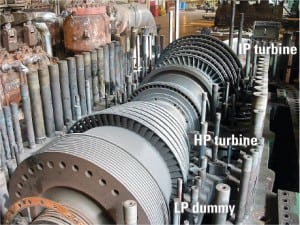
O&MFinding and fixing leakage within combined HP-IP steam turbines: Part II
By design, combined HP-IP turbines have a small amount of internal leakage from the high-pressure turbine to the intermediate-pressure turbine. As turbines age, the leakage increases considerably and becomes excessive, creating a heat rate penalty and possibly a reliability problem. Last month we explored the symptoms and causes of steam leakage within GE steam turbines and how to correct the problem. In Part II, we examine the same issues for Westinghouse and Allis-Chalmers turbines from both theoretical and practical angles.
-
 Environmental
Field experience with mercury monitors
With U.S. mercury regulations pending and control technologies in the full-scale demonstration stage, accurate and reliable measurement of mercury in flue gas is becoming more important than ever. This article compares the results of field measurements of commercially available mercury monitors to approved reference methods. A key but not-so-surprising finding: Not all mercury monitors are created equal.
-
 O&M
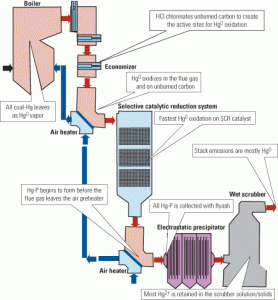
O&MUse predictive techniques to guide your mercury compliance strategy
Several states have mandated faster and/or deeper reductions in plant mercury emissions than those called for by the Clean Air Mercury Rule. Unfortunately, differences between plants make accurate evaluation of control options difficult. In most cases, even statistically based Hg emission models don’t pass muster because they don’t account for the dynamic chemical behavior of Hg species in gas cleaning systems. This article describes one system evaluation tool that has been validated using Hg field test data from 50 full-scale flue gas cleaning systems. It is already being used by TVA and other utilities.
-
 Business
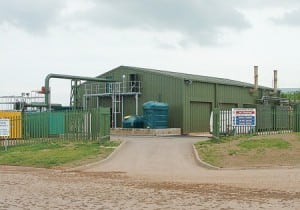
Application determines DG system configuration
The intended use is the primary consideration (even fuel is secondary) when choosing an on-site energy system. Whether the need is for power alone or for heat as well, distributed generation plants have delivered lower energy costs and improved reliability to industrial and commercial customers worldwide. Following are six case studies of reciprocating engine systems that highlight their versatility.
-
 O&M
O&MDetecting and solving lube oil varnish problems
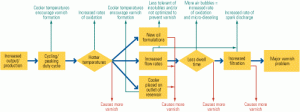
Have you bought electrostatic or agglomeration equipment to rid your turbine oil of varnish deposits, but its varnish potential rating failed to improve? Or, after an initial drop, has the varnish potential returned to its previous level? Even worse, have you had recurring valve sticking problems after making a sizeable investment to "solve" this problem? Welcome to the world of soluble varnish caused by autodegradation. Read the unvarnished truth about varnish and how to get rid of it for good.
-
 Marmaduke
Marmy’s loose rivets
Steve Elonka began chronicling the exploits of Marmaduke Surfaceblow—a six-foot-four marine engineer with a steel brush mustache and a foghorn voice—in POWER in 1948, when he raised the wooden mast of the SS Asia Sun with the help of two cobras and a case of Sandpaper Gin. Marmy’s simple solutions to seemingly intractable plant problems remain timeless. This Classic Marmaduke story, originally published in 1958, illustrates that big problems often have simple, but ingenious, solutions.
-
 News
NewsRetrospective
August 1886 POWER reported on one of the first twin-cylinder "Otto" natural gas–fired engines that had recently appeared in the U.S. power market. The report notes that "engines of 100 horsepower are being now economically used where gas is low in price, as in England and other European countries" (Figure 1). 1. A twin-cylinder "Otto" […]
-
 Commentary
Global warming "consensus" continues to melt away
We are witnessing an international awakening of scientists who are speaking out in opposition to former Vice President Al Gore, the United Nations, and the media-driven "consensus" on man-made global warming. In May, I released a report detailing scientists who were former believers in catastrophic man-made climate change but who have recently reversed themselves and […]
-
 O&M
O&MSafety, compliance, and then production maximizes bottom line
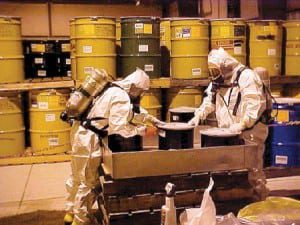
When injuries or accidents occur, the employer ultimately loses on two counts: increased medical costs and employee absences. A policy of "safety, compliance, and then production" is more than just good business; it’s also good stewardship of the health and safety of employees who deserve no less.
-
 Coal
CoalDynamic classifiers improve pulverizer performance and more
Keeping coal-fired steam plants running efficiently and cleanly is a daily struggle. An article in the February 2007 issue of POWER explained that one way to improve the combustion and emissions performance of a plant is to optimize the performance of its coal pulverizers. By adding a dynamic classifier to the pulverizers, you can better control coal particle sizing and fineness—and increase pulverizer capacity to boot.
-
 Coal
CoalWhat’s that scrubber going to cost?
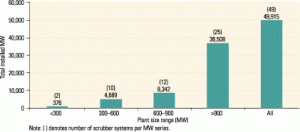
The latest benchmarking study by the EUCG examines the technology and costs of 49 flue gas desulfurization systems currently under design or construction by 12 of the nation’s largest utilities. Although the study’s detailed results are proprietary to EUCG members that participated in it, POWER was given access to the top-level findings. To get details at the plant/unit level, you’ll have to join the EUCG and participate in the study, which is ongoing.
-
This month in POWER…
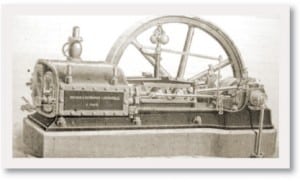
July 1886 POWER reported on the latest steam engine technology offered to the power generation market, this time by France. The Boulet engine (Figure 1) was described as a "French horizontal compound condensing receiver engine, having cranks at right angles, cylinders side by side, and live steam jacket. The valves are double slides, giving small […]
-
 Commentary
Third time the charm for unbiased open access?
The Federal Energy Regulatory Commission (FERC) recently issued major rules that address for the third time "discrimination" issues remaining after FERC’s 1996 landmark Order 888, which ushered in mandatory open access to transmission. The order was intended to give all power sellers equal access to power lines and thus increase wholesale price competition. Earlier […]