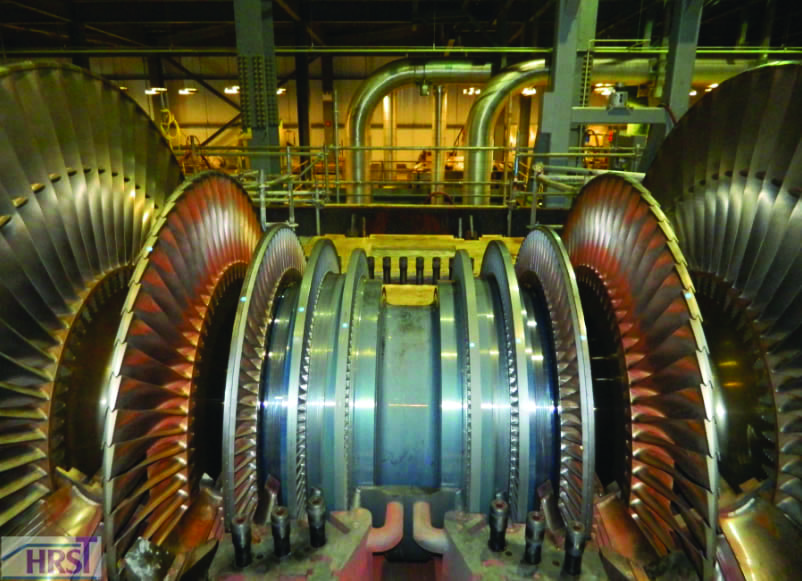
The common GE® D11 steam turbine, a single-casing HP/IP design used extensively in combined cycle applications, is demanding increased focus during normal outages, and ongoing attention for reliability, efficiency, and plant safety. Fundamental reasons are intensified by market-driven calls for continued cycling and low-load operation.
Units modified for higher efficiencies and compatibility with 7FA Gas Turbine exhaust temperatures are subject to the even higher rotor to casing differential thermal expansions in the more tightly-packed seal areas of this single-casing design.
The key to the continued efficiency and safe operation of these machines is highly specialized NDE inspections, remaining life analysis, and forward-looking repair option solutions.
HPIP Outer Casing/Shell Cracking
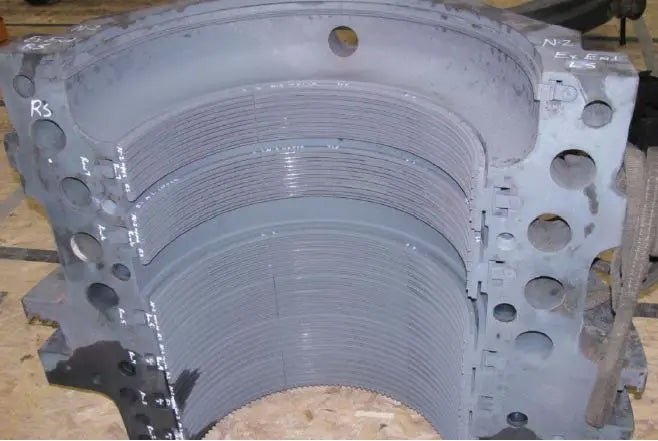
The HPIP Outer Casing has been shown to be susceptible to Low Cycle Fatigue (LCF) and Creep Rupture cracking. Both types of cracking are found adjacent to the N-2 male rabbet fit, which supports and positions the internal N-2 packing casing.
During a cold startup, the Hot IP inlet steam enters the IP steampath thru the two lower IP steam inlet bores. This steam rapidly heats the IP side of the HPIP Outer Casing N-2 male rabbet fit. The HP side of the N-2 male rabbet fit does not yet have any HP inlet steam so differential thermal expansion of the HPIP outer casing diameters occurs across this fit.
The differential thermal expansion puts the HPIP Outer casing into high compression adjacent to the fit. This compression creates LCF on the HP side of the N-2 fit. The LCF is cumulative with each cold startup. The accumulated LCF can then create radial and circumferential cracking on the HP side of the N-2 rabbet fit. The cracking is most severe in the lower half as this is closest to the IP steam inlets.
On the upstream (HP) side, Creep and/or LCF cracking has sometimes been known to sever the 4-inch-thick alloy steel HPIP Outer Casing wall in less than 5 years from the time of crack initiation.
N-2 Packing Head Cracking
The N-2 Inner Packing Casing separates the HP inlet steam from the IP inlet steam near the midspan of the HPIP rotor and Outer Casing. It is located by the N-2 rabbet fit noted above.
During steady-state full load operation at peak temperatures and pressures, there is a steady-state steam pressure difference between the HP and IP sides of the N-2 packing casing. The net difference wants to force the N-2 packing casing towards the IP section. The female fit on the outer perimeter of the N-2 packing casing is resisting this unbalanced steam force.
This creates a steady-state tension force at the HP side of the female rabbet fit. This steady-state tension force occurs at the full operating temperature. At this high temperature, the N-2 Packing casing material is vulnerable to creep rupture damage. The creep damage is again cumulative and radial circumferential cracking has been sometimes known to occur at the female fit at about 100,000 operating hours. This damage has led to the loss of axial positioning of the N-2 inner casing and internal damage to the rotor and diaphragms.
Solution
The key is to identify the cracking early, then pursue the optimum repair solution for safe and reliable long-term operation.
Most owners/operators do not know that the hidden internal damage exists until it surfaces as an emergent issue during a normal inspection outage.
Proper repair by MD&A for outer shell IP inlet is on-site stress-relief weld repair and in-shop repair and upgrade of N-2 cracking casing. If needed, our experts also perform thermodynamic analysis, evaluating cycle efficiency to help isolate problems.
MD&A has more than 40 years of experience successfully applying its technology, knowledge, and professionals on more than 500 casings worldwide on a variety of OEMs (Original Equipment Manufacturers.)
Bowed HIP and Clearance Control
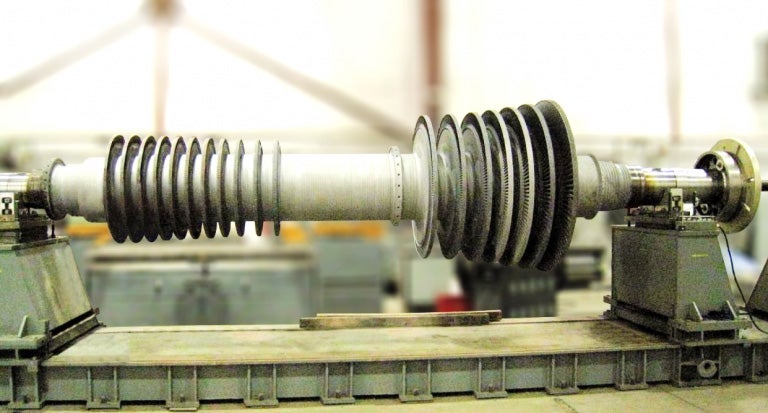
The D11 rotor geometry, as it is long and slender, significantly increases the risk of a bowed rotor condition. Being prepared for these issues when they arise is critical to the serviceability of these machines.
During a site inspection, MD&A technicians evaluate the specified clearances, the levels of distortion in the casing, rotor, and diaphragms, and all other components. For the casing and diaphragms, MD&A alignment engineers can perform a realignment to re-establish required clearances and for improved efficiency.
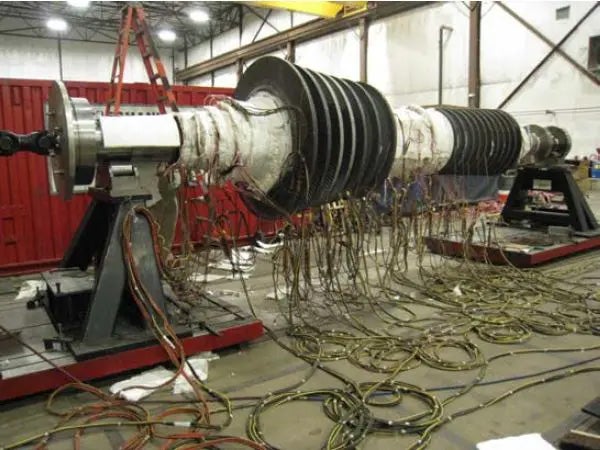
Traditional bowed rotor repair is a shop process performed by MD&A’s Turbine-Generator Repair Facility in St. Louis, MO USA. If needed, straightening can be performed on-site with vertical or horizontal thermal straightening and stress relief. When required, high-speed balance can be performed in our state-of-the-art balance facility.
Diaphragm Dishing
Diaphragm dishing can occur due to high operating temperatures, insufficient main weld depths, thermal events or poor operating conditions. Continued and unaddressed dishing can lead to catastrophic failure and long duration forced outages.
MD&A offers specialized diaphragm dishing repair services ranging from diaphragm inserts for upstream displacement, offset packing segments, restoration of diaphragm fabrication welds including increasing main weld depths, diaphragm stiffness improvements when possible, and all required machining. MD&A also offers new custom–engineered diaphragms, provided sufficient intellectual property (IP) can be obtained to support it.
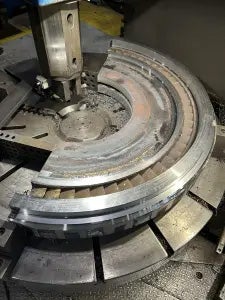
Horizontal Joint Leakage
The D11 lower HP/IP casing is long and slender, supported on the ends with the highest temperatures in the mid-span section. Over time the casing sags, with the lower half experiencing higher temperature transients during startups and high enough steady state midsection steam temperatures to permanently yield portions of the casing. The result can be steam leaks from inside to atmosphere and eventual steam cutting off the top to bottom flange, entering the insulation. The impacts are efficiency (heat loss), operability, and safety.
The solution requires localized repairs and re-machining to correct both the steam cutting and the casing sag.
MD&A offers laser scanning equipment to determine the amount of distortion as compared to the original joint plane. Following weld buildup of the horizontal joint, a laser-guided mill blends the repaired section to the original plane. MD&A’s skilled technicians have been performing this on-site work successfully for more than two decades on a variety of OEMs and steam turbine models.
A related issue is mid-span outer shell creep and associated axial clearance shift from the N-2 downstream as rotor length remains constant. Offset packing rings and modified diaphragm seal faces are two of several solutions offered by MD&A.
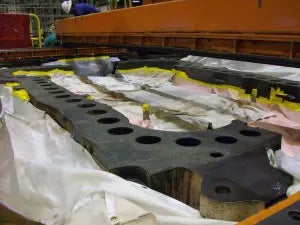
High Temperature Casing Bolting
Maintain critical turbine joint faces with OEM-quality bolting solutions that deliver the strength and durability, required for demanding power generation environments.
Our inventory includes a wide range of superalloys and creep-resistant material to manufacture and install casing fasteners designed to maintain clamping integrity and ensure safe, reliable operations. We have standard or custom-sized bolts, studs, nuts, washers, and threaded casing bushing inserts.
For enhanced reliability and improved joint integrity our materials inventory includes high temp ASTM A193 B16, Inconel superalloys, Durehete, and Refractaloy.
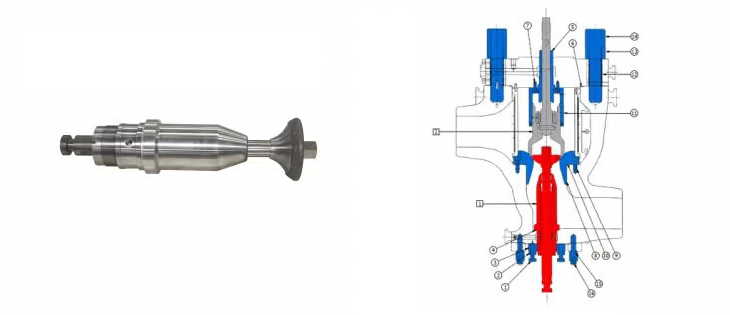
Combined Cycle Valve Drop-in
This drop-in valve removes a detailed inspection from critical path saving outage duration. It enables shop inspection of removed assemblies, including reuse/ repair/ replace decisions and purchase of valve parts (i.e. stems, bushings and disks) off critical path for outage. This is ideal for CI \ HGP Inspection cycles.
It is available for D11 and A10 steam turbines and other structured valve configurations.
“Hot swap” or Spare Sub-assembly Offerings:
• Control Valve/ Intercept valve in gray
• Stop Valve/ Reheat stop valve in red
• Blue are optional spare parts
Upgraded Stems/Seat/ Bushing
The D11/A10 MSCV (Main Steam Control Valve) Nickel Cladded Stem and Hardened Seat Upgrade reduces erosion rates and prevents steam leakage. This valve controls the flow of high-pressure steam from the boiler/HRSG into the steam turbine. It is interchangeable with existing components.
This upgrade has reduced steam erosion by 80% thereby enabling extended maintenance intervals.
The D11/A10 MSCV and CRV (Combined Reheat Valve) Stellite Lined Bushing Upgrade mitigates oxide formation growth rates. It reduces the opportunity for stem binding and maintains stem-to-bushing clearances. Also reduces wear which enables extended maintenance intervals.
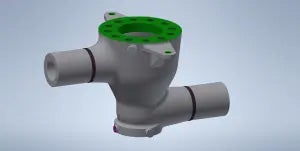
Combined Cycle Valve Casing Solution
Developed to address low cycle fatigue cracking in the OEM’s Combined Cycle D11/A10 fleet, this MSCV casing replacement can be provided standalone or with our valve internal upgrades options.
D11/A10 7″ and 9″ MSCV Casing features a direct, in-kind replacement with OEM material. The casing has martensitic steel upgrade option to increase toughness and creep strength. The valve casing and critical components are inspected using Non-Destructive Examination (NDE) methods to identify defects without damaging the parts, which increases turbine reliability and safety.
Steam Turbine Last Stage Buckets (34.5”)
These 34.5” Last Stage Replacement Buckets are drop-in ready. There is no need to modify the diaphragm or other existing components. It includes improved geometry for enhanced fatigue life and higher shot peening coverage for a longer life.
Each blade comes with perfect validation with:
• 3D Laser Measurement
• Bucket Vibration Testing
• Material Composition Analysis
• Hardness Testing
• Moment Weighing Testing
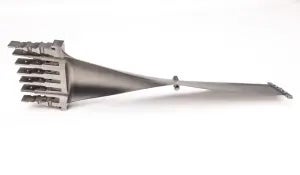
MD&A leverages our extensive in-house expertise for manufacturing and installation.
Advanced Seal System (Guardian/ Vortex)
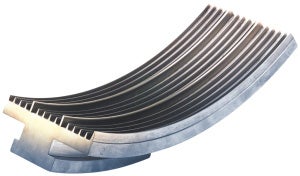
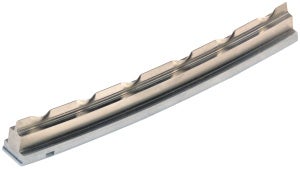
MD&A Parts Division Advanced Seal System consists of the patented Guardian® and Vortex Shedder® Sealing Technology which increases unit efficiency and lowers operating costs.
Benefits Benefits of Guardian® Packing Rings:
• Proven to prevent or limit damage to delicate teeth during a transient event
• Extends seal efficiency life and improves unit reliability
• Extends unit heat rate between overhauls
Benefits of the Vortex Shedder® Seal:
• Proven to increase unit efficiency above design, by 1.5% to 4.5%
• Reduces the pressure drop across the seal by creating a pressure barrier from the vortices
• Lower pressure drop results in higher efficiency and longer seal life
• Increases unit output above design
• Increased efficiency means lower EPA emissions per megawatt
Benefits of the Hybrid Guardian® and Vortex Shedder® Seal:
• All of the benefits listed above for both the Guardian® Packing Rings and the Vortex Shedder® Seals
D11 Fleet
MD&A is known for its catalog of field services, fast on-site and in-shop response, parts supply, and, above all, its approach to long-term better-than-original solutions.
Although most D11 problems are in the HP/IP area, MD&A’s overall philosophy is to eliminate and resolve all reliability problems. The intent is to improve, not just recreate.
The best solution moves beyond simply restoring a unit to its original specifications. MD&A’s working philosophy is to consider all repair/replace options, look beyond the original, and move forward in consultation with the owner/operator with the optimum solution for real-world service going forward.
Call MD&A’s Turbine-Generator Repair Facility today at (314) 880-3000 or use our Contact form.
Also read how, through its services experience and detailed engineering study of the D11 fleet and configuration, MD&A/Mitsubishi Power has developed an HP/IP “Drop-In” retrofit solution based upon proven steam turbine technology.
Lastly, we also repair 7A6/7FH2 Generator bearings and supply 7A6/7FH2 Generator stator bars and fields.