The first power purchase agreement (PPA) for space solar has been signed. Buyers, lenders, and insurers now need a way to price it.
Virtus Solis recently signed a 20-year PPA with Brae Systems to supply utility-scale solar power from orbit to data center compute infrastructure. It is the first executed PPA for space solar.
Most of the conversation about space solar still centers on technology demonstrations and capacity reservations. A signed long-term contract changes the question. For decades, engineers have asked whether power can be collected in orbit and sent to the ground. Buyers, lenders, and insurers now have to ask a more practical question: how do you underwrite it?
The answer is less exotic than it sounds. Every new-build PPA raises the same four questions. Will the technology work and get built on schedule? What happens when something fails? Who stands behind the contract? How does the power reach the meter? The PPA path to orbital solar follows the same known process with the only difference lying in the origin point of the energy.
Technology and Delivery Risk: Data Is King
Underwriting starts with what has to be proven. For orbital solar, that means three things: collecting power in orbit, transmitting it wirelessly to the ground, and converting it to grid power at a receiver. Each can be demonstrated separately, and each should be.
The right contract structure treats those demonstrations as conditions precedent. Offtake obligations switch on as the system clears defined technical gates, so the buyer never pays for power that has not been proven. The first solar, offshore wind, and early PPAs for small modular reactors were staged the same way. The industry has financed first-of-a-kind generation before, and in each case the contract made it financeable by tying commitment to evidence.
Underwriters should also ask what the underlying technology has already proven elsewhere. Space solar developers have taken different approaches to transmission, including radio-frequency and laser systems. Radio-frequency transmission, which Virtus Solis uses, relies on the same class of technology found in cell phones, where decades of component performance data already exist. Whatever the approach, the question is how much of the system’s reliability can be inferred from existing field data and how much must be shown in new demonstrations.
Delivery risk, whether the system gets built and into orbit on schedule, is driven by launch. Launch cadence has increased and launch costs have fallen sharply over the past decade, but launch availability remains the main schedule risk. Contracts should still carry the standard protections: a commercial operation date, a long-stop date, and delay damages. Modular systems can bring capacity online in tranches, with deliveries beginning on the first satellites rather than after a full constellation is in orbit. Contracts should define how partial capacity is treated during that ramp.
Lenders will focus on the gate structure and completion support. Buyers will focus on long-stop dates and their right to exit if gates are missed.
On-Orbit Failure and Insurance: An Industry That Already Exists
Space hardware fails in known ways. It can fail at launch or early in operation, it can be damaged by radiation or debris, and it degrades gradually over its life. The satellite industry has been measuring the probability of each for decades.
What changes is how those failures affect delivery. A ground plant that trips offline delivers nothing. A constellation loses capacity in increments: one failed satellite reduces output without stopping it. Forced-outage provisions should reflect that. Instead of treating an outage as a binary event, the contract should measure availability against contracted capacity and set remedies when it falls below a threshold. The replacement obligation becomes central: who pays to replace a satellite, and how quickly must capacity be restored.
The insurance market for space risk already exists. Commercial satellite operators routinely buy launch cover, first-year on-orbit cover, and in-orbit life cover. What is new is pairing that space-segment cover with the property and liability cover a power project carries on the ground. A combined product does not yet exist as a standard offering, and how it is structured will shape the cost of capital for the sector. Insurers will price the policies. Lenders will require them as a condition of financing, and buyers will care most about availability remedies.
Counterparty Considerations
A PPA is only as strong as the parties behind it, and both sides deserve scrutiny.
On the buy side, offtakers like data center operators bring load that is growing, runs around the clock, and cannot go down. Their credit varies widely, from hyperscalers to newer developers, and lenders will underwrite it accordingly. A 20-year tenor matches the life of project debt, which is the first thing a lender checks. Repeat demand matters as well. One contract proves a buyer exists, and a pipeline of contracts shows lenders the first one was not a one-off.
On the sell side, the developer is an early-stage company, as is the case with every first-of-a-kind energy project. The market has standard tools to manage that risk: credit support, step-in rights, escrow accounts, and completion guarantees. Buyers should also require performance security that covers delivery delays. Lenders will underwrite the offtaker’s credit, while buyers will underwrite the developer’s ability to deliver.
Orbital Transmission: Defining the Output Shape
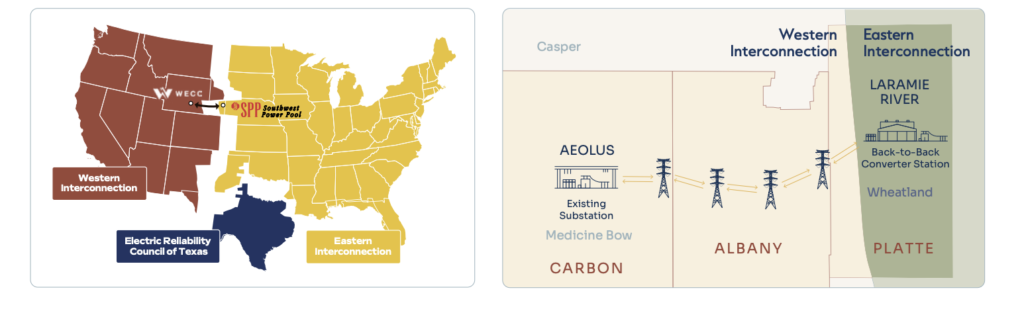
This is where orbital solar looks most like a conventional power project. Power is collected in orbit and transmitted to a receiver on the ground. From the receiver, it passes through a busbar to the grid, like the output of any other plant. The receiver point sits on the ground at an asset utilities already understand.
Transmission from orbit raises two permitting questions: spectrum licensing through the Federal Communications Commission (FCC) and the International Telecommunication Union (ITU), and compliance with radio-frequency exposure standards. Both are established regulatory processes with known timelines, and neither requires a new rulebook.
Receiver siting is where developers can reduce risk. Receivers placed next to data center campuses or at existing grid nodes limit exposure to new transmission lines and avoid the longest interconnection queues. Land use should be measured as energy delivered per acre rather than nameplate capacity per acre, because a receiver operates nearly around the clock.
The biggest difference from ground solar is the shape of the output. Terrestrial solar delivers on the sun’s schedule, so buyers who need firm power pay to firm it with storage, with backup generation, or with exposure to market prices after sunset. Near-continuous delivery can reduce much of that cost, along with the shape and basis risk of as-available contracts. The contract still has to define availability precisely, including any eclipse periods the orbit produces and scheduled maintenance windows.
A Proven and Familiar Framework Prices Risk
None of this requires a new discipline. Buyers, lenders, and insurers already know how to price technology risk, failure risk, counterparty risk, and delivery risk. And while the industry still needs to determine several key factors including the standard definition of availability for orbital capacity, a standard insurance product that spans orbit and ground, and a regulatory precedent for licensing spectrum for power transmission, early contracts are already beginning to set those precedents.
Data center load is growing faster than many grids can serve it, and buyers are signing long-term contracts for firm power from a widening range of sources. Orbital solar will be evaluated on the same terms as the rest: whether its risks can be identified, allocated, and priced.
—John Bucknell is founder and CEO of Virtus Solis. He was previously the SpaceX engineer responsible for the Raptor engines on Starship.