
Environmental
-
 Coal
CoalFirstEnergy Retools Coal Plant to Burn Biomass
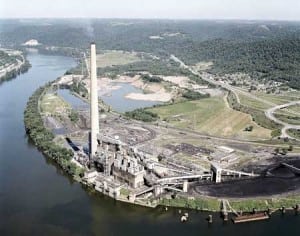
FirstEnergy has announced plans to repower two coal-fired units at the R.E. Burger plant to burn biomass. Conversion of the two units, expected to be completed by 2012, gets the utility off the hot seat with the EPA for alleged Clean Air Act violations.
-
 Coal
CoalCommercial Experience with Concrete-Friendly Mercury Sorbents
Commonly, 20% of the cement (by weight) in a concrete mix is replaced by fly ash. Fly ash enhances the workability, durability, and ultimate strength of concrete at a lower cost than cement. However, mercury sorbents can change the ash properties to make it unsuitable as a concrete additive. New “concrete-friendly” sorbents can keep the revenues from ash sales flowing.
-
 Coal
CoalCERAWeek 2009: Floundering Economy Eclipses Renewable, Carbon Plans
For the past 26 years, Cambridge Energy Research Associates (CERA) has hosted an annual conference in Houston that is world-renowned for its high-profile speakers and attendees’ willingness to exchange ideas and share industry forecasts. The consensus this year was that the power industry remains strong but market and political forces, often working at cross-purposes, make bringing any new power generation to market more problematic than ever.
-
 Coal
CoalNorway Leads the Way on CCS
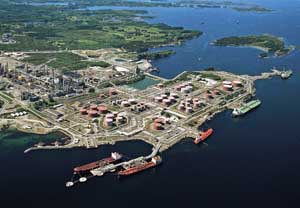
According to a new study from Emerging Energy Research, more than $20 billion will be spent on carbon capture and storage (CCS) projects this year at 50 power generation projects totalling 16 GW around the world. The European Union (EU), with an investment of $11.6 billion, leads all efforts, because it is pressed to achieve a target to reduce carbon emissions by 20% of 1990 levels by 2020. In December, the governing body reached agreement on a climate and energy package, which includes a framework for CCS and a directive on the way EU members and Norway will regulate licenses to ensure reliable carbon storage. The U.S. takes second place, earmarking $6 billion, and Canada is third, at $2.7 billion.
-
 Environmental
Researchers: Spanish Electricity Model Is Unsustainable
The current Spanish electricity model is unsustainable: Carbon dioxide (CO2) emissions are hard to control, demand shows no sign of weakening, and the country is overly dependent on imported fuel. These are the conclusions of a team of scientists from the Institute for Research in Technology of the University of Pontificia Comillas in Madrid, who looked at how the Spanish electricity sector would evolve in four different scenarios.
-
 Coal
CoalEPA Considers Regulating Coal Ash Ponds
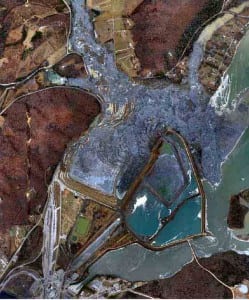
The Environmental Protection Agency has ordered a review of some 300 U.S. utility coal combustion waste sites and said it will develop new regulations to ensure that incidents like December’s colossal coal ash spill in Kingston, Tenn., are not repeated.
-
Coal
EPA to Reconsider Setting CO2 Standard for New Power Plants
Environmental Protection Agency Administrator Lisa Jackson has said that the EPA will reconsider a controversial policy memorandum issued by the agency late last year stating that the agency would not establish a carbon dioxide emission standard for new power plants and other large industrial sources of the heat-trapping gas.
-
Coal
Obama Answers Critics of Climate Allowance Auction
In the face of growing criticism from congressional Democrats of his plan to require electric utilities and other industries to pay for greenhouse gas emission allowances, President Obama told business leaders he is willing to negotiate on the issue, but warned that broad, free allowance allocations would mask the carbon price signal economists say is crucial to speed the deployment of clean technologies needed to fight global warming.
-
 Coal
CoalCFB Technology Offers Short- and Long-Term Environmental and Power Generation Benefits
Circulating fluidized bed technology has the potential to significantly reduce carbon emissions when burning coal and adds the additional flexibility of burning other renewable fuels. Foster Wheeler’s Flexi-Burn technology allows the CFB to produce a CO2-rich flue gas and be part of a practical carbon capture and storage solution.
-
 Coal
CoalPolish Plant Beats the Odds to Become Model EU Generator
Once a Soviet satellite, Poland is now transforming into a thoroughly modern nation. To support its growing economy, this recent European Union member country is modernizing its power industry. Exemplifying the advances in the Polish electricity generation market is the 460-MW Patnów II Power Plant — the largest, most efficient (supercritical cycle), and environmentally cleanest lignite-fired unit in the country.
-
 Water
WaterFlue Gas Desulfurization Wastewater Treatment Primer
Purge water from a typical wet flue gas desulfurization system contains myriad chemical constituents and heavy metals whose mixture is determined by the fuel source and combustion products as well as the stack gas treatment process. A well-designed water treatment system can tolerate upstream fuel and sorbent variation over time and consists of multiple process treatment steps arranged in just the right order to produce wastewater acceptable for discharge.
-
 Environmental
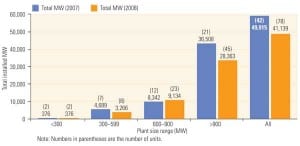
Update: What’s That Scrubber Going to Cost?
POWER published a summary of the flue gas desulfurization system scrubber cost survey conducted by the EUCG’s Fossil Productivity Committee in our July 2007 issue. Although the detailed results of the latest survey are proprietary to EUCG members that participated in it, we are privileged to present the newest summary data. The bottom line: Costs continue to rise but appear to be more predictable.
-
Nuclear
900 U.S. Reactors by 2035?
A professor and consultant who has experience and connections with just about every part of the nuclear power world concludes that the U.S. will need to add 900 nuclear reactors in the next quarter century.
-
Coal
Nation’s NOx Emissions Continue to Drop While Court Reinstates CAIR
In a major decision aimed at preserving the air quality benefits of the program, a federal court on December 23 modified its July 11 decision to throw out the Environmental Protection Agency’s (EPA’s) Clean Air Interstate Rule (CAIR).
-
 Commentary
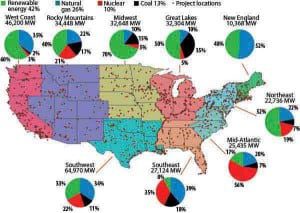
Tough Challenges Face the U.S. Power Industry in 2009
The new U.S. president will have a new set of priorities and regulatory policies that will affect the production and generation of electricity. The specifics of the new administration’s energy policy priorities were scant when this article was written, pre-inauguration, but the industry’s challenges are fairly well defined.
-
Coal
Conquering Insurance Obstacles for Carbon Sequestration Technologies
Whatever type of carbon-limiting regulations the U.S. faces in the future, they will affect the ability of the insurance industry to offer economic insurance options to the power industry.
-
 Coal
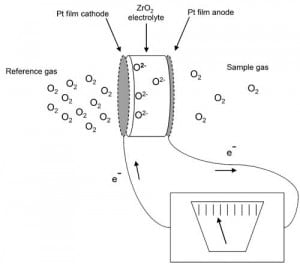
CoalA New Instrument for In Situ SCR NOx Measurement
A zirconium oxide sensor technology originally developed for automotive applications could make in situ, simultaneous measurement of O2 and NOx a breeze for coal-fired power plants.
-
Solar
President Obama Signs Orders Aimed at Energy Independence and Economic Recovery
Following a press briefing this morning, President Barack Obama signed new executive orders intended to spur “swift action” on both U.S. economic recovery and American energy independence.
-
 Coal
CoalCO2 Source and Sink Tracking Improving
Many opponents of climate change policies and regulations argue that it is unfair to penalize some sectors — like power generation — more heavily than others when it’s difficult to prove precisely where specific greenhouse gas (GHG) emissions are coming from, where they’re going, and what effect they are having. Toward the ends of scientific understanding and sound public policy, scientists are making progress in isolating GHG sources and sinks.
-
Environmental
Appeals Court Reinstates CAIR
Two days before Christmas, the Federal Appeals Court for the District of Columbia reinstated (PDF) the Clean Air Interstate Rule (CAIR) while the Environmental Protection Agency (EPA) makes changes to it. Judge Judith W. Rogers said, "The parties’ persuasive demonstration, extending beyond short-term health benefits to impacts on planning by states and industry with respect to […]
-
 Coal
CoalUp in Smoke: Measuring Mercury in Stack Gases
Two types of mercury monitoring are required of coal-fired power plants: continuous emission monitoring and periodic Relative Accuracy Test Audit. One of the more attractive approaches for these analyses is provided by the Hydra-C Appendix K from Teledyne Leeman Labs.
-
Coal
California Climate Plan Touts New Renewables, Trading Allowance Schemes
In a sweeping climate change proposal that could serve as a model for the nation, two California agencies have proposed a comprehensive program for reducing the state’s greenhouse gas emissions that calls for aggressive improvements in energy efficiency, higher targets for renewable energy, and an innovative scheme for allocating emission allowances to electric utilities.
-
Coal
GAO: Lack of U.S. Greenhouse Strategy Slowing Carbon Capture
A Government Accountability Office (GAO) study released in late September concludes that technological, legal, and regulatory uncertainties—compounded by the absence of a national strategy for combating global warming—are blocking deployment of crucial technology to capture and sequester carbon dioxide from coal-fired power plants.
-
Coal
“Cap and Dividend” Proposal Targets Carbon Suppliers
As senior members of Congress lay the groundwork for a new legislative debate on climate change next year, a new proposal making the rounds of Capitol Hill offices would replace the cap-and-trade approach now in vogue with one in which all carbon permits are auctioned and all auction revenues are returned to consumers.
-
 Coal
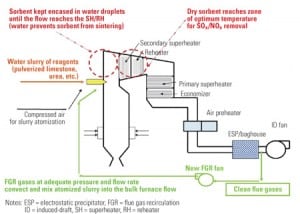
CoalBringing down the cost of SO2 and NOx removal
A twist on an old technique, flue gas recirculation, helps prevent slagging in the upper furnace and convective pass, according to pilot testing recently completed by APTECH CST and the Southern Research Institute. The technology—along with a companion technology for furnace sorbent and urea injection for SO2 and NOx control—could help owner/operators of smaller, older coal-fired plants meet emissions limits at a reasonable cost.
-
 Coal
CoalComputer simulation as a NOx reduction design tool
A utility evaluated various methods of obtaining a NOx reduction of at least 30%, as required by upcoming regulations for its boiler, which originally produced 0.54 lb of NOx/million Btu at 410 MW full load. Nalco Mobotec engineers performed a computational fluid dynamics (CFD) simulation of the boiler to first understand the boiler’s combustion process and then determine the most economical method to achieve the required NOx reduction.
-
Coal
Who Cares about CAIR?
In a bid to preserve some of the health and air quality benefits of a defunct regulation, House Democrats have floated a legislative proposal to codify the near-term emission reductions required under the Bush administration’s Clean Air Interstate Rule, a regional cap-and-trade program for utility emissions that was thrown out in July by a federal appeals court.
-
 Coal
CoalRevived Energy Storage Technology Offers Major Grid Benefits
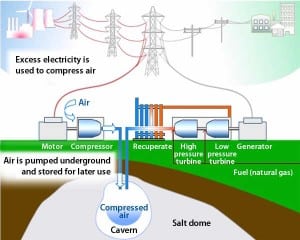
In a move that could boost the value of wind and nuclear generation, relieve stress on the nation’s transmission grid, and reduce utility carbon emissions, PSEG Global LLC and energy storage pioneer Michael Nakhamkin have announced that they have formed a joint venture to market and deploy “second generation” compressed air energy storage technology.
-
 Coal
CoalThe Problem of Fine Particles
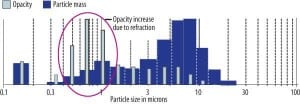
No matter what its size, fine particulate matter is a serious matter for coal-burning power plants. A process that charges those particles shows promise for mitigating the problem.
-
Commentary
A Pragmatic Energy Policy
The already razor-thin power supply margins in the UK are likely to become nearly transparent by 2012, according to a new study prepared by Fells Associates: “A Pragmatic Energy Policy for the UK” (PDF). The report notes that the UK’s electricity shortfall will blossom to between 30 GW and 35 GW by 2027, and residents should expect periods when demand exceeds supply in just three years. If you think the UK government is worried, think again.