
Global Infrastructure Partners (GIP), a part of investment giant BlackRock following its acquisition in 2024, has led a $250 million upsizing of Budderfly’s debt facility, bringing the total facility to $550 million and boosting the Shelton, Connecticut-based Energy-as-a-Service (EaaS) company’s cumulative capital base well past $1 billion.
The transaction, announced on March 25, also includes participation from existing lender Vantage Infrastructure, an additional $100 million accordion feature, and the continued participation of Nuveen as a significant facility lender.
The financing suggests that some of the largest infrastructure capital allocators in the world are now underwriting behind-the-meter (BTM) commercial efficiency and load flexibility with investment frameworks similar to those they apply to pipelines, substations, and transmission lines.
“The transaction reflects strong institutional confidence in Budderfly’s operating model and its ability to modernize and manage energy infrastructure for commercial facilities nationwide,” Budderfly said on March 25.
EaaS as a Strategic Grid Asset
Budderfly finances, installs, owns, and operates energy infrastructure upgrades inside commercial facilities—restaurants, retailers, fitness centers, and manufacturers—under long-term service contracts. While building operators pay nothing upfront, the company recovers its investment from a contracted share of the energy savings it generates.
The company “installs, monitors, and manages a combination of patented efficiency technologies, including equipment upgrades and proprietary energy software, for its customers,” allowing businesses to benefit from “capital preservation, a reduced carbon footprint, more reliable operations, and an improved customer and employee experience,” Budderfly said on March 25. The U.S. mid-market segment Budderfly targets accounts for an estimated $55 billion in annual electricity spend, with operators “continually exposed to price volatility and grid constraints,” the company said.
Because Budderfly owns the installed equipment under each service agreement, it retains operational control of the building’s energy systems. That feature allows it to leverage the assets, for example, when aggregated into a virtual power plant.
The Capital Stack
The $550 million debt facility is the latest in a financing structure built over four years. While the company began as a lighting-and-controls efficiency provider serving multi-site restaurant and retail chains, it has expanded into a multi-technology, multi-ISO demand-side platform.
At the time of its 2022 equity raise, Budderfly had revenues that had “more than doubled each year for the last handful of years.” By September 2025, the company reported a revenue run rate exceeding $250 million, up from roughly $400,000 in 2017, according to previously published reports. As of June 2025, Budderfly said it had more than 7,500 customer locations under management.
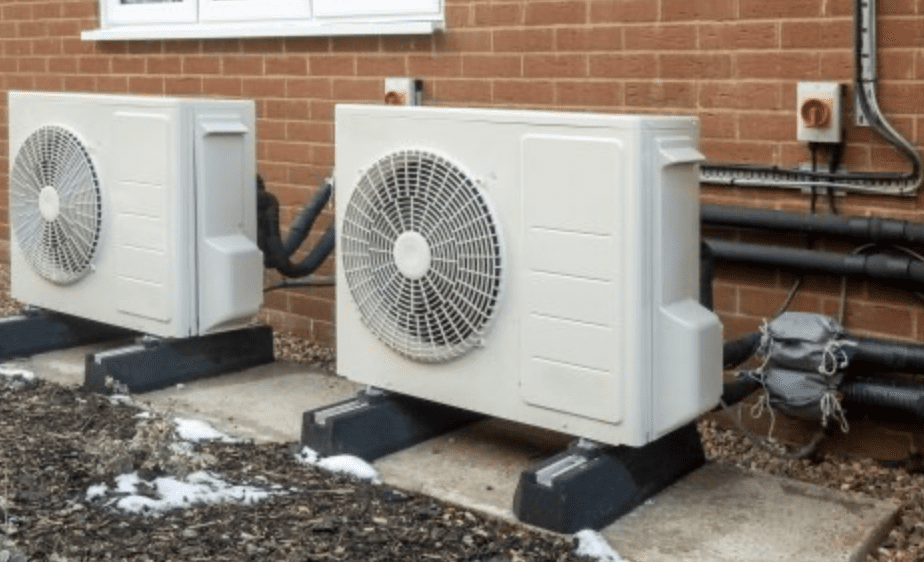
On Sept, 30, 2025, the company announced a partnership with OEM Controls, a manufacturer in Shelton, Connecticut. The companies said the project was “expected to cut the facility’s annual energy use by more than 30%,” with scope covering “a new rooftop solar system with 230 kWdc of capacity, replacement of 18 outdated HVAC units with ultra-high performance models, and extensive LED lighting retrofits” across a 75,000-square-foot site. Connecticut’s commercial electricity rate had reached 23.34 cents/kWh in May 2025—a 20.2% year-over-year increase that Budderfly characterized as “among the steepest in the nation.”
The platform’s grid services dimension took a concrete step forward on June 1, 2025, when Budderfly activated real-time demand response programs across customer sites in CAISO, ISO-NE, PJM Interconnection, and SPP, working with utility partner Evergy and aggregation platform Leap to dispatch HVAC systems in response to electricity market signals. The company describes the dispatch as fully automated—a meaningful structural distinction from conventional demand response programs that depend on real-time customer enrollment and opt-in.
The company backed the platform with a growing IP portfolio, filing 21 patents and receiving 4 grants in 2025 alone, bringing its total to 34 patents and 36 pending applications as of March 17, 2026.
In early March 2026, Budderfly added a separate $100 million debt facility from Nuveen Energy Infrastructure Credit, at that point crossing $1 billion in total capital raised. Don Dimitrievich, Head of Nuveen Energy Infrastructure Credit, said: “Budderfly’s energy management platform is one of the most compelling models we’ve seen for delivering real, scalable decarbonization in the built environment. Its ability to generate predictable cash flows, deliver energy savings for Budderfly’s clients, and serve a largely untapped market segment makes Budderfly a high-impact, high-return investment for Nuveen Energy Infrastructure Credit.”
The new $250 million GIP-led upsizing is another substantial boost. GIP manages over $193 billion in assets under management across energy, transport, digital infrastructure, and water and waste management. Vantage Infrastructure describes itself as holding “an equity and debt infrastructure investment portfolio of over US$4 billion invested in infrastructure assets across Europe, North America, and Australia on behalf of global clients.”
“Global Infrastructure Partners’ commitment, along with continued investment from Vantage Infrastructure, is critical to scaling a capital-intensive business like Budderfly,” Al Subbloie, CEO of Budderfly, said on March 25. “This expansion of our debt facility strengthens our ability to own the upfront investment, manage performance over time, and deliver measurable energy and cost-saving outcomes for our customers. It reflects confidence in our model and positions us to continue removing friction for commercial operators as they modernize and decarbonize their facilities.”
—POWER magazine