
Articles By

-
 O&M
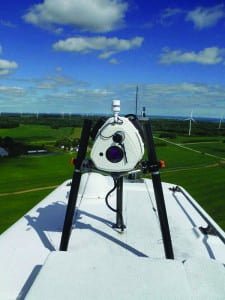
O&MLiDAR Technology Mated with Wind Energy Quickly Becoming an Industry Standard
The profitability of a wind farm depends directly upon reducing uncertainty when wind resources are being assessed and when wind turbines are being fine-tuned. Project risks vary from site to site, depending
-
 O&M
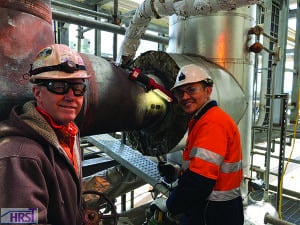
O&MImplementing an ASME Covered Piping Systems Program
Power plant piping with a nominal pipe size of four inches or larger that carries steam or water operating at greater than 750F or 1,025 psi is considered a “covered piping system.” That means the
-
 Commentary
Tax Reform Legislation Drives Increased Focus on Cash Flows
In the wake of the implementation of the 2017 Tax Cuts and Jobs Act (TCJA), many utilities and their holding companies are experiencing increasing pressure on cash flow due to the elimination of bonus
-
 IIOT Power
Network-Level Optimization: The Golden Ticket to the Future of Energy
To remain efficient and profitable, utilities must anticipate the ebb and flow of the market. That means companies must gain visibility into the generation and consumption of energy. With network-level
-
 IIOT Power
How Digital Intelligence Can Be a Difference-Maker for Power Plants
Advanced technology now makes it possible for computers to do many of the monitoring and diagnostic tasks that used to require seasoned experts. Artificial intelligence and machine learning tools are being
-
 O&M
O&MEquipment Showcase: Valves, Piping, and Fittings
Proper valves, pipes, and fittings are important for successful operation of power generation facilities. This equipment includes products with versatile designs to establish effective joining and sealing
-
 IIOT Power
Advanced Process Control for Optimizing Flue Gas Desulfurization
Coal-fired power plants can significantly improve wet limestone scrubbing with advanced process control. One optimization system implemented at a Japanese facility utilized enhanced regulatory control
-
 Commentary
Users’ Groups Provide Value to Plant Operators
If you look up the history of users’ groups, you’ll find that many early organizations focused on computers. While it’s hard to confirm all the details, at least one source suggested that the first
-
 O&M
O&MPrecision and Partnership Spur Innovations for Nuclear Project
Replacing two 40-year-old feedwater heaters at a plant of Oconee Nuclear Station’s size and age was fated to be a complicated project, but through meticulous modeling and planning, and seamless
-
 Renewables
China Sets a New Renewable Portfolio Standard
China in mid-September increased its renewable portfolio standard (RPS) to 35% of electricity consumption by 2030. The country has already heavily invested in wind and solar, and it anticipates more gains will
-
 Legal & Regulatory
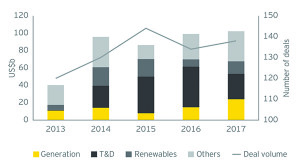
A Legal Guide to Power Generation Mergers and Acquisitions
A myriad of issues come into play when parties execute power industry mergers and acquisitions. Part 1 of this two-part series examines what dealmakers need to know before making any transactions
-
 Nuclear
Big Gains for Tiny Nuclear Reactors
As the hubbub of interest and activity surrounds development of small modular reactors (SMRs) hovering between 60 MW and 300 MW, and medium-sized nuclear reactors of under 700 MW, several nuclear technology
-
 Gas
GasTest Your Knowledge: Competitive Maintenance Strategies
Competitive maintenance uses an analytical process and condition-monitoring tools to select the optimum maintenance strategy for each plant system. For example, the optimum strategy for the plant’s steam turbine will be different than that for its gas turbine, and vastly different than that of its feedwater pumps. How well do you know your maintenance strategies? […]
-
 O&M
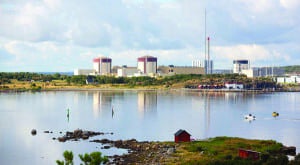
O&MIntense Summer Heatwaves Rattle World’s Power Plants
Scorching temperatures during the summer of 2018 forced a swathe of power plants across the world to reduce power or shut down temporarily, owing to warmer-than-usual temperatures of cooling water and other
-
 IIOT Power
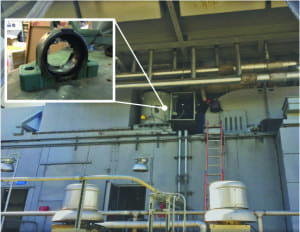
Using Predictive Analytics to Keep Up with Energy Demand
Silicon Valley Power implemented a system using machine-learning technology to monitor critical power plant components. The solution has proven to reduce downtime and save money. Furthermore, its wireless
-
 Commentary
If You’re Not Leading the Pack the View’s Always the Same
We’ve all heard that phrase about leading or following. In today’s energy world, and more so in tomorrow’s, this saying takes on a new meaning that can be summed up in two words: distributed generation
-
 O&M
O&MBest Practices for Welding Critical Power Plant Systems
Innovative welding techniques can produce consistently better-quality joints. Special alloys, appropriate pre- and post-weld heat treatment, and proper weld procedures can all help prevent catastrophic failure
-
 O&M
O&MHow Does the Western Energy Imbalance Market Work?
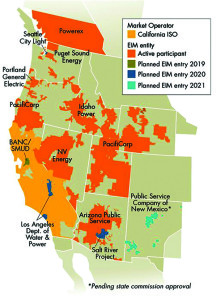
The California Independent System Operator’s Energy Imbalance Market (EIM) is a real-time energy market, the first of its kind in the western U.S. EIM’s advanced market systems automatically find low-cost
-
 Legal & Regulatory
Can Coal and Nuclear Power Plants Be Saved?
It’s no secret that U.S. nuclear and coal-fired power plants are struggling to remain viable in competitive markets. Many plants have been retired for economic reasons long before the facilities reached the
-
 O&M
O&MThe Gamble to Produce Power from a ‘Killer’ Lake
KivuWatt, a 26.2-MW power plant in Kibuye, Rwanda, was conceived to help reduce risk of an overpressure gas outburst at Lake Kivu. The first-of-its-kind integrated methane gas extraction and production
-
 O&M
O&MAftermarket Parts Substitutions Can Shut Down a Power Plant
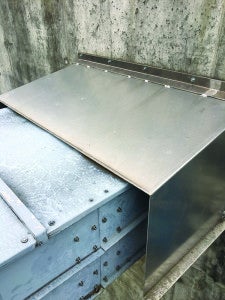
Every power generation facility is unique, as are the functions and maintenance requirements for their equipment. Keeping equipment in working order and avoiding downtime is critical. Plants will sometimes use
-
 O&M
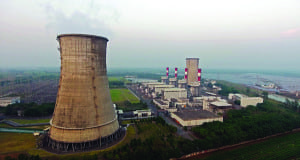
O&MA Modern Gas Power Plant Thrives on Ancient Wisdom
Built and developed in accordance with the principles of vaastu shastra, this 1.5-GW “mega” gas power plant in India imbues positivity and proactivity into all aspects of plant operation. It has resulted
-
 Gas
GasTransparency Instrumental in Successful Power Plant Project
Public perceptions can make or break a project. One municipal utility found that out firsthand. When resistance grew strong against a new power plant it needed, the company rebooted and engaged with local
-
 IIOT Power
Advanced Digital Technology Offers Utilities Profound Changes
Advanced digital technologies, including robotics, artificial intelligence, and machine learning, are transforming the way electric power companies do business, in ways that benefit the companies and their
-
 Renewables
India’s Coal Glut Leaves Producers Teetering on Bankruptcy
At the end of July, India’s Central Electricity Authority (CEA) noted in its annual load generation balance report (LGBR) for the year 2018–2019 that the country will likely have a peak surplus of 2.5% and
-
 O&M
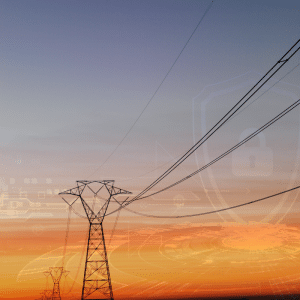
O&MWhat Is Meant by Power Factor?
Low power factor reduces an electrical system’s distribution capacity by increasing current flow. Therefore, having a low power factor is inefficient and expensive. But what is power factor and what affects
-
 O&M
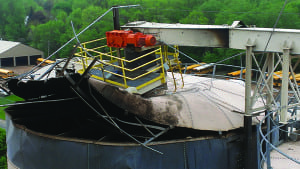
O&MMinimizing Fire and Explosion Hazards in Dusty Systems
Understanding the properties of bulk materials and how they interact with environmental factors is vital to safe operations, but having an honest conversation about the hazards, so risks can be properly
-
 O&M
O&MEquipment Showcase: Corrosion Prevention and Water Treatment
Corrosion products can form quickly in power plant systems if water, air, and metal are allowed to occupy the same space. Localized corrosion can take any of several distinct forms, such as stress corrosion
-
 Commentary
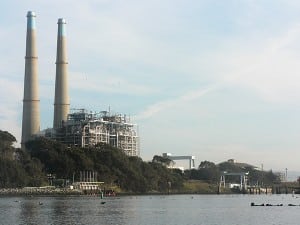
Court Upholds Water Intake Rule, Offering Some Certainty for Power Plants
The U.S. Court of Appeals for the Second Circuit in July issued a long-awaited decision in the case Cooling Water Intake Structure Coalition v. U.S. Environmental Protection Agency (EPA), upholding the EPA’s
-
 O&M
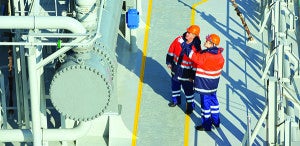
O&MJobsite Safety Check: Mitigating Risk and Improving Safety at Power Plants
Safety should be the top priority on any job site and goes hand in hand with operational excellence. Risk mitigation and safety are exceptionally important for power plants due to the nature of the industry