
Articles By

-
 O&M
O&MPreventing Boiler Code Violations Creates a Safer Work Environment
Nearly 10% of boilers and pressure vessels inspected in the second quarter of 2008 were slapped with violations, which means that the violations put workers and equipment in danger, according to a quarterly report released by the National Board of Boiler and Pressure Vessel Inspectors.
-
Commentary
The Obama Administration’s Energy Challenge
As the Obama administration takes office, energy resource allocation is both the most critical national security issue and the most critical economic issue facing us. It will be difficult to sustain and improve economic growth unless we implement policies that result in the more rational use of energy resources, especially those for which there is a finite supply.
-
 O&M
O&MConverting a Pump to Use Mechanical Seals
Wear and leakage are common maintenance problems that result in pump discharge pressure dropping below optimum levels and reduced pump efficiency. Converting pumps to mechanical seals eliminates fretting or grooving of the shaft and provides for easier pump maintenance. By converting to mechanical seals, a plant also avoids incurring expenses associated with the replacement of sleeves and shafts.
-
 News
NewsA Documenting Calibrator
The latest documenting process calibrator from Beamex is the MC4, a compact-sized device that calibrates various process parameters, such as pressure and temperature, and then automatically stores results in the MC4’s memory. The instrument data can also be sent from computer to MC4, or calibration results can be uploaded from the MC4 to a computer […]
-
 News
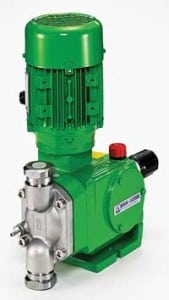
NewsEconomical Positive Displacement Pump
SPX Process Equipment last December introduced the ProCam SMART, a Bran + Luebbe positive displacement pump capable of a wide range of metering duties at a low initial investment. Available in four models offering flow rates ranging from 1.3 gph to 132 gph and suitable for pressures up to 290 psi, the ProCam SMART is […]
-
Engineers Week Is Feb. 15–21
I just renewed my professional society membership dues for the umpteenth year, and while writing the check, I paused to consider if I was getting good value from them. I expect to receive another "suitable for framing" certificate this year, as the number of my membership years ends with a zero, but I wondered if there were other, more tangible benefits.
-
 News
NewsVortex-Shedding Flowmeters
Universal Flow Monitors launched the P420 Series, a set of plastic, vortex-shedding flow rate transmitters designed to process corrosive fluids, water, brine, and low-viscosity fluids in water treatment, chemical, and desalination applications. The series features plastic flowmeters that have no O-ring seals or other moving parts that can stick, bind, or coat processing water or […]
-
-
 News
NewsRepairing Water Pipes with Ice Plugs
Facilities facing emergency plumbing repairs are typically forced to shut down and then drain the entire water system. RIDGID’s new SF-2500 SuperFreeze pipe-freezing unit is designed to avoid this costly and inconvenient process by quickly isolating sections of copper or steel pipe with ice plugs. Plugs are formed in as little as five minutes in […]
-
Legal & Regulatory
Oil—Unsafe at Any Price
A confluence of circumstances promised to make 2008 a transformative year for renewable energy in the U.S. States enacted additional, and more demanding, renewable portfolio standards, promoting accelerated and sustained development of "green" energy resources. Increasing concerns about global warming and climate change prompted some of this activity. However, the unprecedented escalation of oil prices to almost $150 a barrel (translating into prices at the pump in excess of $4) was the largest impetus for demands that this nation end its addiction to fossil fuels.
-
 News
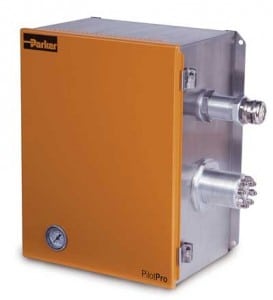
NewsPlant Communication Link
Parker Hannifin’s Instrumentation Products Division introduced Pilot Pro, a new process sample conditioning system communications interface designed to provide a link between plant process control operations and analyzer maintenance networks, regardless of where the two are located. A sensor and solenoid administration module, Pilot Pro is designed to acquire, transmit, and manage real-time sample system […]
-
 Instrumentation & Controls
ISA POWID: Where Power Computing Professionals Meet
Which new and emerging technologies will be essential to your power plant’s success? Our special cover story series gives you a glimpse into the future of advanced distributed controls, wireless applications, and automation technologies.
-
 Instrumentation & Controls
Distributed Control Technology: From Progress to Possibilities
The past decade has seen an explosion of technology that has significantly altered the process control industry. The adoption of commercially available technology driven by desktop computing has allowed suppliers to focus on applications to enhance the process and deliver ever-greater value to the user.
-
 Coal
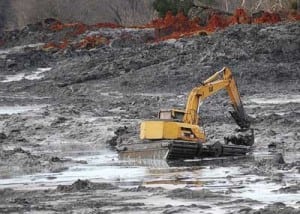
CoalTVA Containment Pond Bursts, Causing Massive Coal Ash Flood
Just after midnight on Dec. 22, 2008, a 40-acre pond holding coal combustion waste for a Tennessee Valley Authority (TVA) steam power plant ruptured, sending a wave of wet ash across 300 acres of rural land in Harriman County, Tenn. It was the largest coal slurry spill in U.S. history — more than three times the size of the Martin Country, Ky., sludge spill of 2000, and about eight times that of the 1972 Buffalo Creek flood in West Virginia. Unlike that flood, which killed 125 people and injured scores others, this one, Tennessee authorities reported, resulted in no serious injuries or hospitalizations.
-
 Instrumentation & Controls
Optimize Your Plant Using the Latest Distributed Control System Technology
Distributed control systems are powerful assets for new and modernized power plants. Thanks to three product generations of technology innovations, these systems now provide new benefits — including improved O&M efficiency, greater plant design flexibility, and improved process control and asset reliability — that help competitive plants advance in the game.
-
 Nuclear
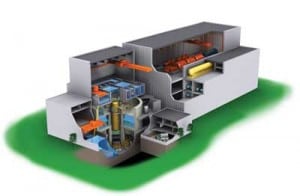
Exelon Drops ESBWR for Victoria Plant, Weighs Options
A year after Exelon Nuclear ceremoniously announced the selection of General Electric-Hitachi’s Economic & Simplified Boiling Water Reactor (ESBWR) design (Figure 2) as its preferred technology for a proposed two-unit nuclear facility in Victoria County, Texas, the operator of the largest nuclear power fleet in the U.S. — and the third-largest in the world — said it had reconsidered its decision. The company said it is now negotiating separately with Toshiba and GE-Hitachi, both vendors of the Advanced Boiling Water Reactor (ABWR), and with Mitsubishi Heavy Industries for its U.S. Advanced Pressurized Water Reactor (US APWR).
-
 Instrumentation & Controls
Power Plant Automation: Where We Are and Where We’re Headed
Over the past decade, power plant control systems have evolved from DCS-centered platforms with proprietary software, to open systems using industry standard hardware and software, and then to totally integrated plant automation systems with almost unlimited connectivity and the ability to interrogate field instruments from many different manufacturers. What’s next?
-
 Nuclear
China’s Nuke Power Boom
China has put its nuclear power plans on a fast track, kicking off a construction frenzy worth billions of dollars. In the latter months of 2008, the nation inaugurated construction of seven reactors, and in 2009, work will begin on another 10.
-
 Coal
CoalDesigning New Composite Stack Liners
The 200-MW Dallman Unit 4 under construction in Springfield, Ill., is expected to cost approximately 20% less to operate per megawatt-hour than the most efficient of the three existing Dallman units. A composite stack liner is one element enabling that cost savings.
-
Coal
Conquering Insurance Obstacles for Carbon Sequestration Technologies
Whatever type of carbon-limiting regulations the U.S. faces in the future, they will affect the ability of the insurance industry to offer economic insurance options to the power industry.
-
 Coal
CoalA New Instrument for In Situ SCR NOx Measurement
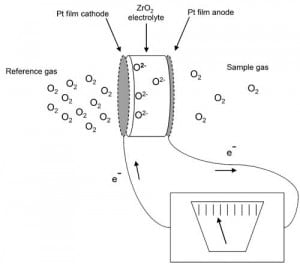
A zirconium oxide sensor technology originally developed for automotive applications could make in situ, simultaneous measurement of O2 and NOx a breeze for coal-fired power plants.
-
 Coal
CoalCustom FRP Trench Drains Speed Up FGD System Installation
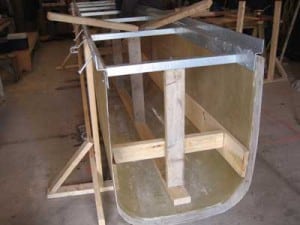
The flue gas desulfurization process requires the use of aggressive liquids that significantly shorten the life of typical construction materials such as metals and concrete. That makes fiberglass-reinforced plastic (FRP) the material of choice for many components in a typical flue gas desulfurization (FGD) system.
-
Commentary
Renewable Projects Hit Brick Wall
Dr. Robert Peltier, PE
One of the key campaign promises made by our new president was that his administration would create five million new “green” jobs by spending $150 billion dollars over the next 10 years. There are serious and substantial reasons that this level of job creation won’t happen in the near future. -
Coal
Nation’s NOx Emissions Continue to Drop While Court Reinstates CAIR
In a major decision aimed at preserving the air quality benefits of the program, a federal court on December 23 modified its July 11 decision to throw out the Environmental Protection Agency’s (EPA’s) Clean Air Interstate Rule (CAIR).
-
 Commentary
Tough Challenges Face the U.S. Power Industry in 2009
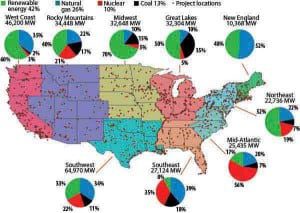
The new U.S. president will have a new set of priorities and regulatory policies that will affect the production and generation of electricity. The specifics of the new administration’s energy policy priorities were scant when this article was written, pre-inauguration, but the industry’s challenges are fairly well defined.
-
Commentary
Avoiding the Green Chill
By Roger Feldman
Public-private partnerships are a key to preventing a chill from settling over the green ambitions of the newly capital-strapped state and municipal public sectors. -
General
Stimulus or political business as normal?
By Kennedy Maize “Stimulus” has become the universal political solvent in Washington since the advent of the Obama administration. No matter what narrow special interest, no matter what piece of local pork or advocacy policy preference, it all gets dissolved and incorporated into the administration’s stimulus package. You call it “stimulus.” I call it “earmarks.” […]
-
News
EPA Puts Hold on South Dakota Coal Plant
A week after the Minnesota Public Utilities Commission (PUC) unanimously approved transmission lines sought for the proposed $1.6 billion Big Stone II coal-fired power plant in South Dakota, the Environmental Protection Agency (EPA) objected to the issuance of a state-granted permit for construction of that project.
-
News
President Signs Orders Aimed at Energy Independence and Economic Recovery
Following a press briefing on Monday morning, President Barack Obama signed new executive orders intended to spur swift action on both U.S. economic recovery and American energy independence.
-
News
New Green-Credentialed Chief at FERC’s Helm
Amid his string of new nominations, President Barack Obama last week named Jon Wellinghoff acting chairman of the Federal Energy Regulatory Commission (FERC). Wellinghoff—a Democrat—has been one of FERC’s five commissioners for the past three years.