
Articles By

-
 Solar
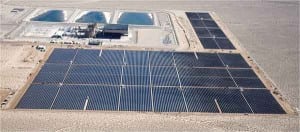
SolarTop Plants: El Dorado Energy’s Solar Facility, Boulder City, Nevada
Sempra Generation has conjured up a market plan for producing merchant photovoltaic (PV) power that is inspired. Working with First Solar, Sempra has developed a finely tuned and standardized 1-MW PV power block that can be replicated as needed. Sempra built the modular PV plant on land adjacent to an existing gas-fired plant to shorten the development period, piggyback the power directly to the grid, and enable existing staff to manage the combined plants’ operation.
-
News
Coal Seam Gas Poised to Explode in Australia
Anglo Coal, one of Australia’s coal mining companies this September opened a 45.6-MW power plant at its Moranbah North mine in northeast Queensland that captures methane-rich coal mine gas and uses it as a fuel to generate power instead of venting it into the air.
-
 Wind
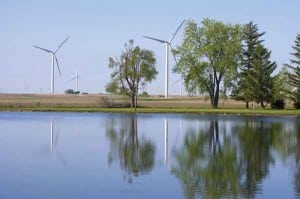
WindTop Plants: Fowler Ridge Wind Farm, Benton County, Indiana
The tractors and combines on Indiana’s farms are getting some competition from a new harvesting technology — powerful turbines that harvest wind. This March the Fowler Ridge Wind Farm opened its first phase, which consists of 222 wind turbines with a total capacity of 400 MW. Phase II is currently under construction and will use 133 wind turbines with a total capacity of 200 MW. A future, third phase will add another 150 MW and give the completed facility a total capacity of 750 MW, which will make it one of the largest wind farms in the world.
-
 News
NewsOcean Power Prototypes Coast Ahead in the UK
Marine energy prototypes in the UK are sailing ahead of entries from the rest of the world, propelled by government backing and public support.
-
 Waste to Energy
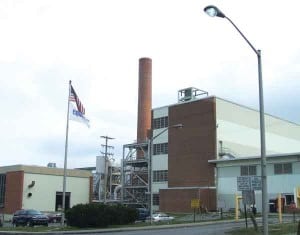
Top Plants: Harrisburg Resource Recovery Facility, Harrisburg, Pennsylvania
After decades of struggling with serious air contamination issues and large financial losses, this Pennsylvania waste-to-energy facility, which was built in 1972, was in need of an extreme makeover. In the wake of an unsuccessful $84 million retrofit attempt in 2005, the faltering facility’s last hope lay with a Covanta project team that took over its operation in 2007. After almost two years of hard work, the facility is now producing up to 17 MW while achieving its environmental compliance goals and earning substantial revenues.
-
 Gas
GasNew-Generation Gas Turbines Steam Ahead
This September, as Siemens Energy wrapped up testing of its H-class SGT5-8000H gas turbine at E.ON’s Irsching 4 gas power plant in Bavaria, Germany, the company raved about what it is calling "the world’s most powerful gas turbine."
-
Business
Despite Economic Downturn, Renewable Energy Development Expected to Move Forward
While the overall economy is down, the effort to add renewable energy resources in the U.S. continues to push project development forward.
-
 Wind
WindTop Plants: Hywind Floating Wind Turbine, North Sea, Norway
In June, the 2.3-MW Hywind facility, the world’s first large-scale floating wind turbine, was towed to a North Sea location with a water depth of about 220 meters (722 feet) and began operation. Over the next two years this turbine will be subjected to strong wind and waves in a harsh ocean environment in an effort to thoroughly test the innovative technology.
-
-
 Waste to Energy
Top Plants: Rio Bravo Rocklin Power Station, Lincoln, California
By 2008, the 19-year-old wood-fired Rio Bravo Rocklin Power Station’s operating performance had been significantly degraded by boiler erosion and corrosion caused by (among many other problems) poor fuel. After much consideration, the plant owners elected to invest in a comprehensive upgrade to restore the plant to its as-built performance. Today, the plant operates very reliably. A newly implemented predictive maintenance program should continue to drive down operating costs and further reduce the number of forced outages.
-
O&M
Halar-Lined Chimney Remains Maintenance-Free
A fiberglass-reinforced plastic (FRP) Halar stack liner was installed at Vattenfall’s 300-MW Unit 2 at the Nordjylland Power Station in 1995. The 112-meter-high (367-ft) stack, protected from corrosion by the ECTFE liner, is still in excellent condition and has not required any repairs during more than 13 years of service. (ECTFE is short for ethylene chlorotrifluoroethlyene polymer, marketed under the brand name Halar ECTFE [Halar] by Solvay Solexis.)
-
-
 News
NewsAutomated Tube Bundle Water Jet System
The ATL-5000 — a new, fully automated water jet system from NLB Corp. — cleans tube bundles three times faster than manual methods and features an adjustable lance stroke that allows the system to be configured for bundles of various lengths, up to 30 feet. The diesel-powered system has five rigid lances, each with a […]
-
 Solar
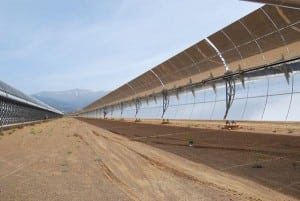
SolarThe Power of Light: U.S. Solar Energy Trends
For decades, the solar energy industry has struggled to become cost-competitive with other sources of power generation. Recent technology innovations and creative ways of installing solar generation are beginning to enable solar power to increase its share of the electricity market.
-
 News
NewsScavenger Conveyor System
Martin Engineering introduced the Carryback Capture System, a scavenger conveyor system that transfers belt-cleaning residue back into the material stream, avoiding cleanup labor, injury potential, and dust hazards associated with buildup. The 13-inch-high system’s modular design uses an electrically driven hydraulic cylinder to push a steel cleaning blade — or, in a longer scavenger, a […]
-
 Geothermal
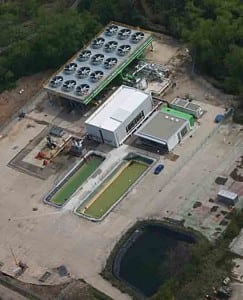
Assessing the Earthquake Risk of Enhanced Geothermal Systems
Enhanced geothermal systems (EGS) deliberately induce seismicity — earthquakes — in order to access hot, subsurface rocks for use in geothermal power generation. Recent quakes around the world have frightened those living near EGS sites and sparked controversy over the technique. We asked experts to provide EGS technical details and to evaluate the seismic risk the process poses.
-
 News
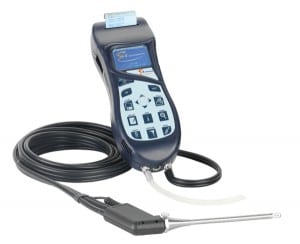
NewsPortable Combustion Analyzer
The updated E2200 Portable Combustion Analyzer from E Instruments is an all-in-one unit for boiler, burner, engine, turbine, furnace, and other combustion applications. Precalibrated and field-replaceable sensors allow for easy diagnostics and replacements to reduce downtime and costly repair charges. The analyzer includes sensors for oxygen (0% – 25%), carbon monoxide (0 – 8,000 ppm), […]
-
 News
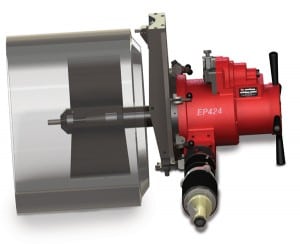
NewsEnd-Prep Machine Tool
The new Wachs EP 424 with the new Speed Prep feed system is a precision I.D.-mount end-prep machine tool designed to bevel, compound-bevel, J-prep, face, and counterbore pipe, fittings, and valves. The system uses a new Wachs mechanism that feeds simultaneously in the axial and radial planes. Wachs claims that the system is able to […]
-
News
Belgium, Germany Edge Toward Nuclear Future
A host of European countries have recently made concessions on long-standing nuclear policies. In February this year, for example, Sweden proposed to lift a nearly 30-year-old ban on nuclear power and annulled its nuclear phase-out. And in May 2008, Italy announced it would resume building nuclear plants—two decades after public referendum banned nuclear power and the nation deactivated all of its reactors.
-
Commentary
Power Politics: Enron Lives!
As director of public policy analysis in my last seven years at Enron, I participated in many legislative and regulatory debates involving electricity, although the public policy thrust of the company was the opposite of what I believed. While I favored free markets, the business model of Ken Lay (a PhD economist with years of Washington regulatory experience) centered on special government favor. Enron, for example, had seven profit centers geared to government pricing/rationing of carbon dioxide (CO2) emissions. And in the 1990s, the company was squarely behind a Btu tax. Today, Enron would be pushing cap and trade.
-
Coal
What Is BACT for CO2?
Assume, for the moment, that the U.S. Congress is unable to agree on legislation aimed at reducing carbon emissions from industry, vehicles, and power plants (the carrot approach). Further, assume that the Environmental Protection Agency (EPA) eventually promulgates rules that require power plants to reduce carbon emissions (the stick approach). Have you given any thought to the range of possible best available control technologies (BACT) that the EPA might require under the Clean Air Act (CAA)?
-
 Nuclear
NRC Concerns About AP1000 Structural Strength Could Delay Projects
Concerns raised by the U.S. Nuclear Regulatory Commission (NRC) about the structural strength of Westinghouse Electric Co.’s AP1000 reactor could cause delays for several nuclear plants that planned to use the design in the U.S. — and it raises questions for new builds started or proposed in China and the UK.
-
General
Will the Smart Grid Compromise Privacy?
By Kennedy Maize WASHINGTON, Nov. 19, 2009 — This blog has highlighted my concerns about the security of the smart grid for many months. Now, there’s a new potential problem with the smart grid: privacy. Washington Post technology security writer Brian Krebs, in a recent posting, notes that “privacy experts are warning that the so-called […]
-
News
Brownfield Conference Encourages Renewable Energy Projects on Contaminated Sites
Held in New Orleans from Monday through Wednesday, the Brownfields 2009 Conference is the largest conference in the U.S. focused on environmental revitalization and economic redevelopment of contaminated land, which are known as brownfields. This year’s conference focused several sessions on the topic of placing renewable energy projects such as wind farms and solar energy facilities on brownfields and old mining sites in order to make these sites productive again.
-
News
USDA and DOE Pick Projects for $24.4 Million in Biomass Research and Development Grants
On Nov. 12, the U.S. Department of Agriculture (USDA) and the U.S. Department of Energy (DOE) announced projects selected for more than $24 million in grants to research and develop technologies to produce biofuels, bioenergy, and high-value bio-based products. For this program, the DOE plans to invest up to $4.9 million and the USDA intends to contribute up to $19.5 million. Advanced biofuels produced through this funding are expected to reduce greenhouse gas emissions by at least 50% compared to fossil fuels.
-
News
FERC Clears Reliability Penalty Orders Filed by NERC
On Friday, the Federal Energy Regulatory Commission (FERC) cleared 564 enforcement cases submitted in an omnibus filing by the North American Electric Reliability Corporation (NERC), the Commission-approved reliability organization.
-
News
President Obama Promotes Clean Energy Partnerships with China
Several clean energy and climate change–related agreements resulted from President Barack Obama’s trip to China. The three main areas addressed by the agreements are coal, energy efficiency, and electric vehicles.
-
News
Top CEOs Drive the Launch of New Electrification Coalition
On Monday, a number of leading U.S. business executives ─ including Carlos Ghosn, president and CEO of Nissan Motor Company; David W. Crane, president and CEO of NRG Energy; and Frederick W. Smith, chairman, president, and CEO of FedEx Corporation ─ convened to announce the formation of the Electrification Coalition. The coalition describes itself as a nonpartisan, not-for-profit organization committed to promoting policies and actions that will facilitate the deployment of electric vehicles on a mass scale in order to combat the economic, environmental, and national security vulnerabilities caused by our nation’s dependence on petroleum.
-
News
Senators Unveil Bipartisan, Nuclear-Heavy Climate and Energy Legislation
Senators Lamar Alexander (R-Tenn.) and Jim Webb (D-Va.) on Monday introduced a climate and energy bill that proposes to spend $20 billion over the next 20 years to fund a series of nuclear-oriented provisions. These include nuclear loan guarantees, workforce development, and reactor-lifetime extensions.
-
News
EIA Report: U.S. Electric Generation Down for 13th Consecutive Month
The current sluggish U.S. economy is now being reflected in the country’s overall production of electricity. On Nov. 13, the Energy Information Administration (EIA) released a report that concludes net generation of electricity in the U.S. was down for the 13th consecutive month compared to the same calendar month in the prior year.