
Articles By

-
 Waste to Energy
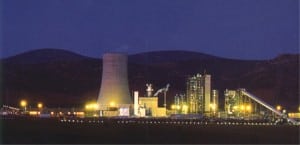
Top Plant: Kajang Waste-to-Energy Plant, Semenyih, Malaysia
At Malaysia’s first waste-to-energy plant, municipal solid waste (MSW) is converted into refuse-derived fuel for use in an integrated steam power plant. This facility was designed to achieve the twin objectives of environmentally friendly MSW disposal and generating renewable power.
-
Commentary
While Congress Bickers, Solar Industry Holds Its Breath
Energy is the most regulated sector of the American economy, making public-private partnerships essential to scaling the solar industry. Such partnerships have helped other energy sectors to reach scale over the past hundred years.
-
 Coal
CoalSpain Makes Headway in CCS Efforts
A 14-MW pilot plant built by energy firm ELCOGAS at its 335-MW integrated gasification combined-cycle (IGCC) facility at Puertollano in Spain in September captured its first metric ton of carbon dioxide. Now the company plans to begin tests to procure more technical and economic information about carbon capture and storage (CCS), including how efficient it is to co-produce hydrogen and power with carbon capture processes.
-
 Waste to Energy
Top Plant: Kaukaan Voima Oy Biomass-Fired Power Plant, Lappeenranta, Finland
Located in the heavily forested country of Finland, the Kaukaan Voima biomass-fueled power plant produces process steam and electricity for UPM’s Kaukas pulp and paper mill as well as electricity and district heating for Lappeenrannan Energia, a city-owned power company. Launched in 2009, the plant can provide 125 MW of electricity, 110 MWth of district heat, and 150 MWth of process steam thanks to one of the world’s largest wood-fired fluidized bed boilers.
-
News
EIA: 2009 Had Largest Decline in Power Generation in Six Decades
Economic and environmental developments markedly affected electricity markets in 2009, driving generation down 4.1% to 3,950 million MWh from 4,119 million MWh in 2008—the lowest level since 2003 and the largest decline in six decades, the U.S. Energy Information Agency (EIA) said in its recently released “Electric Power Annual” report.
-
 Gas
GasTurkey Opens Record-Breaking Combustion Gas Engine Plant
Turkey, a country that has seen rapid economic growth since the 1980s, largely spurred by a shift in governmental strategy to open up markets and increase private participation, has been actively overhauling its power infrastructure to meet soaring electricity consumption. According to grid operator Turkish Electricity Transmission Co., national consumption increased to 17 billion kWh this September—an 11% increase over the 15.3 billion kWh consumed in September 2009.
-
 Wind
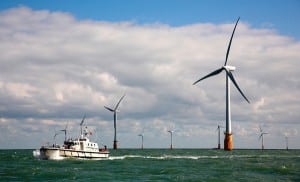
WindTop Plant: Thanet Offshore Wind Farm, Isle of Thanet, UK
In September, the 300-MW Thanet Offshore Wind Farm, the world’s largest offshore wind energy facility, began operation off the southeastern coast of England. The wind farm has 100 3-MW turbines manufactured by Vestas. The facility will generate electricity equivalent to the annual consumption of more than 200,000 British households.
-
News
Illinois House Approves Tenaska’s Taylorville IGCC Project
The Illinois House on Tuesday approved plans to build Tenaska’s $3.5 billion proposed integrated gasification combined cycle (IGCC) plant with carbon capture and storage (CCS) in Taylorville, Ill. The state Senate is expected to vote on the 602-MW plant later today.
-
General
House GOP: There Will Be Blood
By Kennedy Maize Washington, D,C., November 23, 2010 — Republican blood is flowing in the halls of Congress as the GOP works to establish leadership and jurisdiction of its new House majority. The territory at stake involves energy and environment. In the House, where the gore is great, a gun fight is underway over who […]
-
News
EPA Issues GHG BACT Guidance
The Environmental Protection Agency (EPA) last week issued a long-awaited document that provides policy guidance to state agencies on how to start issuing permits to power plants and other stationary sources of greenhouse gases (GHG) when the rules take effect on Jan. 2. The document also provides technical information on how to implement the “Best Available Control Technology” (BACT) requirement for GHG sources applying to Prevention of Significant Deterioration (PSD) permits under the Clean Air Act—though it stops short of prescribing BACTs.
-
News
FirstEnergy Shelves Biomass Plans, Plans to Shutter Burger Units
FirstEnergy Corp. today announced it would permanently shut down units 4 and 5 at its R.E. Burger Plant in Shadyside, Ohio, by Dec. 31, abandoning plans to repower the coal units with biomass. The Akron-based company cited a significant plunge in market prices of electricity, saying that they “no longer support a repowered Burger Plant.”
-
News
UK Green Lights Construction of 900-MW CCGT Plant, Cites Energy Security
The UK’s Department of Energy and Climate Change (DECC) on Thursday approved a 900-MW combined cycle gas turbine (CCGT) power station in Spalding, Lincolnshire, in an effort to boost the nation’s energy security. The consent was given on the condition that the plant reserves enough space to allow for a future retrofit of carbon capture technology.
-
News
Exelon to Invest $5B in Nuclear Uprates, Smart Grid, Coal Plant Closures
Exelon plans to invest nearly $5 billion in what it called “cost-effective, clean energy projects” starting this year. The investment will pay for energy efficiency and smart grid programs and renewable energy projects, though a majority of funds—up to $3 billion—will be spent on increasing output at the company’s nuclear plants.
-
News
DOI Approves 500-MW Solar Plant in Nevada
The Department of Interior on Monday gave its approval to Solar Millennium’s 500-MW Amargosa Farm Road Solar Project, the second large-scale solar power project on U.S. public lands in Nevada.
-
News
Report: Energy Storage Technology Development Critical for National RES
Policymakers must focus more on developing new energy storage technologies as they consider a national renewable electricity standard, recommends the American Physical Society’s (APS) Panel on Public Affairs (POPA) in a new report that examines scientific and business perspectives on how to best integrate renewables into the U.S. grid.
-
News
Ohio Smokestack Demolition Sends Spectators Scrambling
The demolition of a 275-foot smokestack at Springfield’s former Mad River Power Plant went awry last week as the tower collapsed in the wrong direction. Instead of landing in an empty clearing in the east, the tower fell southeast, knocking out 12,500-volt power lines and smashing a building that held backup generators.
-
General
GOP Won’t Cut Federal Spending
By Kennedy Maize Washington, D.C., Nov. 11, 2010 — Pardon my cynicism, but I don’t for a minute believe that the Republican electoral sweep earlier this month will result in significant cuts in federal spending anytime soon. Am I charging that Republican electoral doctrine is a tissue of hypocrisy? Yes, I am, and we will […]
-
News
Feds Invite Bids for Wind Farms Offshore of Maryland’s Coast
The Bureau of Ocean Energy Management, Regulation and Enforcement (BOEMRE), a body that controls the Outer Continental Shelf, on Monday invited bids to put up wind turbines off Maryland’s coast.
-
News
Entergy Seeks Interested Buyers for Vermont Yankee as Leak Shuts Reactor Down
Days after Entergy Corp. announced it was considering selling its 605-MW Vermont Yankee nuclear power plant in Vernon, Vt., the New Orleans–based company on Sunday temporarily shut down the plant after discovering a leak of radioactive water.
-
News
CCS News from Alberta, The Netherlands, and North Dakota
This week brought some important news about carbon capture and storage (CCS) technology from around the world. Canada’s province of Alberta is considering a bill that would allow it to accept long-term liability for injected carbon dioxide; a key project to capture the greenhouse gas in Barendrecht, the Netherlands was shelved mostly due to public opposition; and a U.S. Department of Energy (DOE) field test shows it is possible to store carbon dioxide in unmineable lignite seams.
Alberta Proposes to Take Up CCS Liability | Key CCS Project Shelved in The Netherlands | Field Tests Suggest Carbon Storage Possible in Lignite Seams
-
News
AWEA: Midterm Election Results Seen as Favorable for Wind Industry
The results of the 2010 midterm elections bode well for the struggling U.S. wind sector, according to the American Wind Energy Association (AWEA). The industry group’s president, Denise Bode, made the statement during a live webcast on Friday.
-
News
DTE to Convert California Coal/Petcoke Plant to Biomass
DTE Energy on Monday said it would buy a significant interest in the 49.5-MW Mt. Poso Cogeneration Co. power plant near Bakersfield, Calif., and convert it entirely to biomass. After the conversion, the plant will operate on wood fuel, primarily derived from urban wood waste, tree trimmings, and agricultural residues.
-
News
APS to Buy SCE’s Stake in Four Corners and Shutter 27% of Plant’s Capacity
Arizona Public Service Co. (APS) is to buy Southern California Edison’s (SCE’s) 48% stake in Units 4 and 5 of the coal-fired Four Corners Power Plant near Farmington, N.M, if state and federal regulators agree. Arizona’s largest utility said on Monday that if the deal goes through, it would also shut down the plant’s “older, less efficient” Units 1, 2, and 3, and install more emission controls on the remaining units at the 2,040-MW five-unit power plant.
-
General
Does EPA Departure Signal Climate Change?
By Kennedy Maize Washington, D.C., Nov. 5, 2010 – It could be a sign of the times, or merely a temporal coincidence. Liza Heinzerling this week announced she is leaving the Environmental Protection Agency, where she has been a hard-charging policy chief, to return to teaching at the Georgetown University law school. The departure came […]
-
General
EPR: Reactor in Crisis
By Kennedy Maize Washington, D.C., Nov. 4, 2010 — Here’s another major blow to the increasingly problematic nuclear renaissance: France’s “European Pressurized Water” (EPR) reactor design is “in crisis,” according to a new analysis by a British economist and nuclear energy policy analyst. The problems with the “Generation III+” reactor are so serious that they […]
-
News
New Mexico Regulators Approve Cap-and-Trade Plan
On Tuesday, while voters rejected many politicians who supported cap-and-trade legislation, the New Mexico Environmental Improvement Board (EIB) adopted what it said are the most comprehensive greenhouse gas regulations in the U.S.
-
News
California’s ARB Releases Proposed Cap-and-Trade Rules as AB 32 Stands with Voters
Days after California’s Air Resources Board (ARB) released its proposed greenhouse gas cap-and-trade regulation, voters on Tuesday rejected a controversial proposition to suspend the state’s landmark greenhouse gas reduction law.
-
News
EU Proposal Calls for Binding Rules on Nuclear Waste
A set of common standards proposed by European Union (EU) Energy Commissioner Guenther Oettinger today could force utilities in the 27-nation bloc to abide by binding rules for the long-term storage of nuclear waste. The proposal chiefly calls for construction of long-term deep geologic storage repositories.
-
News
Judge Orders SWEPCO to Halt Some Construction at Turk Site
A U.S. district court judge last week ordered Southwestern Electric Power Co. (SWEPCO) to cease work on a small tract of land designated as jurisdictional wetlands where the utility is building the $1.7 billion John W. Turk., Jr. power plant—the nation’s first ultrasupercritical pulverized coal power plant.
-
News
USEC: DOE Moving to Next Stage in Loan Guarantee Process for Centrifuge Plant
Nuclear plant enriched uranium supplier USEC on Tuesday said it was in discussions with the Department of Energy’s (DOE’s) Loan Guarantee Program office to proceed to the next step toward obtaining a $2 billion conditional loan guarantee commitment for its American Centrifuge Plant (ACP).