
Articles By

-
News
Black Hills to Shutter Coal Plants, Build Gas-Fired Facility in Coal-Rich Wyo.
Black Hills Corp. will build and begin operating a natural gas–fired power plant in Wyoming and shutter three aging coal plants in the state by 2014 as part of a “future compliance” plan to meet growing power demand as federal environmental rules go into effect.
-
News
Environmental Groups Seek Federal Court Review of EPA Avenal PSD Permit
Several environmental groups have asked a federal appeals court to review the Environmental Protection Agency’s (EPA) decision to grant a Clean Air Act Prevention of Significant Deterioration (PSD) permit to the 600-MW gas-fired Avenal Energy Project proposed for construction in California’s San Joaquin Valley. The groups contend that the agency exempted the project from several key air pollution standards.
-
News
IEA: Bold Change of Policy Direction Needed for Sustainable World Energy Future
Without a bold change of policy direction, the world will lock itself into an insecure, inefficient, and high-carbon energy system, the International Energy Agency (IEA) warned as it launched the 2011 edition of the World Energy Outlook (WEO) today in London.
-
News
White House Threatens to Veto CSPAR-Blocking Senate Resolution
If the Senate votes on a measure this week to overturn the Cross-State Air Pollution Rule (CSAPR) using the Congressional Review Act, as has been spearheaded by Sen. Rand Paul (R-Ky.), President Obama would veto the resolution.
-
News
EPA Moves Forward with GHG Regulations for Power Plants
The Obama administration on Tuesday posted a notice on the White House Office of Management and Budget (OMB) website that indicates the Environmental Protection Agency (EPA) has filed a copy of proposed rules to limit greenhouse gas (GHG) emissions from new, modified, and existing power plants.
-
News
Bluff Collapse at Wisconsin Coal Plant Sends Coal Ash into Lake Michigan
The collapse of a retaining bluff near We Energies’ coal-fired Oak Creek Power Plant on Monday morning sent debris, dredging equipment, and parts of a ravine filled with coal ash more than 50 years ago spewing into Lake Michigan.
-
News
NRC Certifies Amended ABWR Design
The Nuclear Regulatory Commission (NRC) on Tuesday certified an amended version of the Advanced Boiling Water Reactor (ABWR), the third-generation reactor design offered separately by GE-Hitachi and Toshiba, which has been chosen for new nuclear builds at the South Texas Project (STP) site. The NRC’s decision means that nuclear developers in the U.S. can use the reactor in proposed projects.
-
News
EPA Grants First Ever Single-Source Petition; Finds for N.J., Against Penn. Coal Plant
GenOn’s coal-fired 400-MW Portland Generating Station in Pennsylvania’s Northampton County must significantly cut its sulfur dioxide (SO2) emissions with three years because they are adversely impacting air quality in Warren, Sussex, Morris, and Hunterdon counties in New Jersey, the U.S. Environmental Protection Agency (EPA) ruled on Monday as it granted its first-ever single source petition.
-
News
Coal Bunker Fire Sends Workers to Hospital for Carbon Monoxide Poisoning
A fire that ignited in three of four steel coal bunkers at the 503-MW John Twitty Energy Center in Springfield, Mo., has sent three City Utilities (CU) of Springfield employees to the hospital for carbon monoxide poisoning. Investigation into what caused the fires is ongoing.
-
News
EIA Report: Clean Energy Standard Could Boost Renewables But Drastically Increase Power Prices
A new Energy Information Administration (EIA) report analyzing the economic impacts of a proposed national Clean Energy Standard (CES) projects that in 2035, a CES could increase power generation costs by almost 30% nationwide.
-
News
Bankrupt Beacon Power Disputes Parallels with Solyndra
Beacon Power, a much-watched flywheel energy storage developer that last year received a $43 million loan guarantee from the Energy Department, on Sunday filed for bankruptcy to allow the company to operate its business “without interruption.”
-
News
TEPCO Finds Fission By-Products at Fukushima Daiichi
Fresh concerns surfaced for Tokyo Electric Power Co. (TEPCO), the embattled owner of tsunami-hit Fukushima power plant, on Tuesday. TEPCO, which is struggling to bring reactors at the plant to cold shutdown by the end of the year, detected substances from a nuclide analysis of gas emitted from Daiichi 2 that showed a fission reaction had occurred.
-
 Wind
WindAMSC Former Employee Convicted in Sinovel Intellectual Property Case
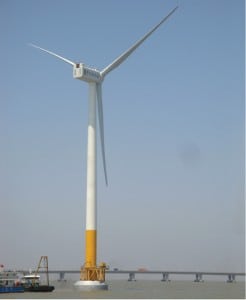
An intellectual property battle between Massachusetts-based American Superconductor Corp. (AMSC) and China’s giant wind turbine maker Sinovel in late September culminated with an Austrian court conviction of a former AMSC employee, who was arrested in Austria and who pled guilty to corporate espionage charges. The court charged Dejan Karabasevic, a 38-year-old Serbian engineer, with stealing AMSC’s software, modifying it, and secretly selling it to Sinovel.
-
 Nuclear
Siemens Joins Trend to Quit Nuclear
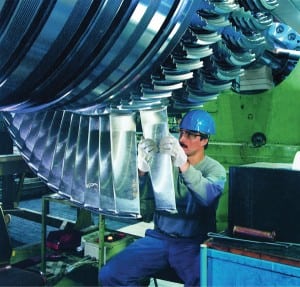
The number of companies pulling out of the nuclear business continues to grow. Just weeks after Louisiana-based engineering firm The Shaw Group announced it would sell its 20% stake in the nuclear company Westinghouse back to partner Toshiba, German engineering conglomerate Siemens said that, prompted by the German government’s decision to phase out nuclear power by 2022, it would quit the nuclear business.
-
Nuclear
German Court Questions Legality of Nuclear Tax
A German finance court in September questioned the constitutionality of a controversial tax on fuel used in nuclear power plants, a decision that could influence rulings in various finance courts around the country that are reviewing complaints by nuclear operators regarding the levy.
-
Commentary
The Lesson of Procrustes
Procrustes the metal worker—not to be confused with Krusty the Klown—was an important figure in Greek mythology. A son of Poseidon, Procrustes was an iron smith, thief, murderer, and inn keeper. He offered hospitality to strangers passing his place on the sacred byway between Athens and Eleusis. For a price.
-
 Nuclear
ITER Gets New Life
The International Thermonuclear Experimental Reactor (ITER) in southern France, the world’s biggest nuclear fusion research project, is seeing a revival. After a budget shortfall last year and cost projections that continue to escalate, in September, the project got the European Parliament’s (EP’s) backing for an autonomous budget that seeks to guarantee transparent and reliable financing while limiting cost overruns. Japan also announced that it would increase its budget for ITER by 50% (the current ITER director-general is Japanese). Also in September, scientists announced that after an 18-month shutdown to upgrade the Joint European Torus (JET)—the world’s largest magnetic fusion device—the machine is ready to test materials to be used inside ITER (Figure 5).
-
Legal & Regulatory
TREND: Aches and Pains of Aging Nukes
As less is heard about the promise of new nuclear reactors in the U.S., more is being heard about the problems of the geriatric atomic set.
-
Business
POWER Digest (November 2011)
Wärtsilä to Provide Rwanda with Engines for Lake Methane Power. Wärtsilä on Sept. 30 said it was awarded a contract by KivuWatt, a subsidiary of the New York–based international power company ContourGlobal, to supply a power plant to the Republic of Rwanda. The turnkey project is of particular significance because the power plant will utilize […]
-
 O&M
O&MCondenser Tube Failure Mechanisms
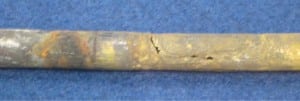
The operating environment within a condenser is extremely harsh, and in spite of the designer’s best intentions, sometimes tubes made of the best materials fail. The most important tube failure mechanisms typically result from different forms of corrosion and erosion. When it’s time to select new condenser tube material, you’ll need to consider the projected operating environment and failure mechanisms that material will be subjected to.
-
Finance
Public Power Challenges Moody’s Proposed New Metrics
Public power utilities depend upon access to capital at favorable rates. So the munis pay special attention when Wall Street rating agencies talk about tinkering with how they establish bond ratings for municipal utility projects. Thus, recent moves by Moody’s Investors Service has drawn some fire from public power.
-
Nuclear
THE BIG PICTURE: Reactors Under Construction
For seven years in a row, the number of new nuclear construction starts increased markedly. Then the accident at Japan’s Fukushima Daiichi plant occurred, prompting shutdowns of existing plants and a rethinking of future plans in many countries. Nevertheless, the International Atomic Energy Agency (IAEA) expects “continuous and significant growth” in the use of nuclear […]
-
 O&M
O&MCondenser Retubing
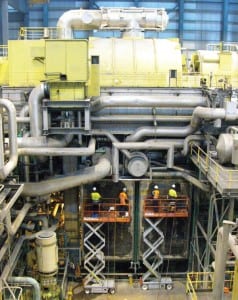
Once the condenser tubes are designed, selected, and purchased, the final step in a retubing project is to remove the old tubes and install the new ones. The success of this project is very dependent upon attending to quality control, following proper procedures, using the right tools, and having a highly skilled workforce.
-
O&M
Improving Condenser O&M Practices
Losses attributed to condenser tube leaks, fouling, and failures continue to climb, costing the power generation industry an estimated half-billion dollars annually in maintenance costs and loss of production. Investing in an effective condenser maintenance program will reduce those expenses in short order.
-
Finance
Solar Power’s Elephant in the Living Room
Understanding the reliability and failure mechanisms of photovoltaic modules is crucial to understanding how well they will perform over time. But today there are no test standards in place to judge this crucial issue.
-
 O&M
O&MSteam Turbine Cleaning Using Chemical Foams
In the May issue, we discussed the importance of either preventing copper plating of the high-pressure (HP) steam turbine rotor or finding a good foam or mechanical removal means of restoring lost efficiency. In that article we noted that “copper deposits typically form on the stationary nozzle block or first-stage stationary blades” and that those deposits usually result in a steam turbine loss of capacity at a rate of about 2 to 3 MW per month. We also stated that the “general rule of thumb is that there is a reduction of about 1 MW of generating capacity for each 1 to 2 pounds of deposit that accumulates on the HP turbine.
-
 Gas
GasNordic Nations Provide Clean Energy Leadership
In the past few years, nuclear concerns, rising oil prices, and a growing understanding of our environmental impact has given energy issues a higher profile worldwide. In this report on the Continental Nordic countries, we look at the efforts being made in much of the Nordic region to secure a sustainable energy supply for the future and at the extent to which the innovative solutions of these countries can be exported around the globe.
-
 News
NewsCombustion Gas Analyzer
Building on the success of the Fluegas 2700 combustion gas analyzer, the new SERVOTOUGH FluegasExact integrates Servomex’s unique Flowcube flow sensor technology to give users even more confidence in their combustion gas measurements. The analyzer features a patented zirconium oxide cell for oxygen measurement and a thick film catalytic sensor for measuring carbon monoxide (CO) […]
-
Business
Legal Issues That Float in the Cloud
Cloud computing is a growing phenomenon for many businesses, large and small, promising significant efficiencies and cost savings. But, as with anything new, computing in the cloud poses some unforeseen legal issues.
-
 O&M
O&MPredictive Maintenance That Works
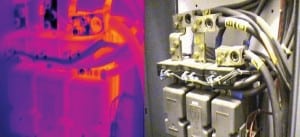
This is the fourth in a series of predictive maintenance (PdM) articles that began in the April “Focus on O&M” with an introduction to PdM as a process whereby maintenance is performed based on the condition of the equipment rather than on a predetermined interval. In the May and July issues, we began exploring specific PdM techniques, such as motor-current signature analysis and oil analysis.