
Articles By

-
 Coal
CoalEPA Stalls on Coal Combustion Residuals
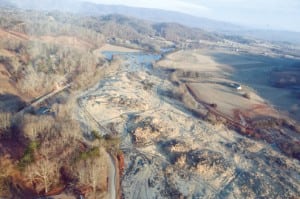
In 2010, the U.S. Environmental Protection Agency (EPA) proposed federal rules regulating coal combustion residuals (CCRs) for the first time to address the risks posed by coal-fired power plants’ disposal of such waste byproducts. The need for new regulations remains a topic of debate, heightened by the EPA’s reticence to release the rule. The EPA says that it will release the new rule by the end of this year–over two years late.
-
News
Hollow Victory
Cato Institute senior fellows Jerry Taylor and Peter Van Doren in an Aug. 31 Forbes website blog suggest that the Environmental Protection Agency’s (EPA’s) carbon pollution standard for new coal-fired power plants (Standard) is a meaningless skirmish in President Obama’s “war on coal.” The Standard may have no tangible impact on the industry in the future, but it has great strategic benefit to the administration.
-
 News
NewsPower Supply Signal Conditioning
Pepperl+Fuchs’ new KFU8-VCR-1 Transmitter Power Supply Signal Conditioners feature various inputs for standard voltage and current inputs. These 1-channel signal conditioners offer maximum installation flexibility to suit a wide range of application needs. Input and output signal ranges are selected by switches located on the front of the device. This enables fast, easy setup and […]
-
 Coal
CoalGermany’s Reliance on Coal Grows
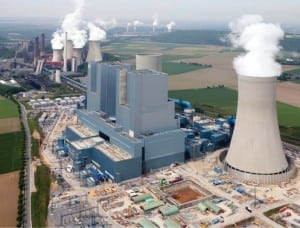
This August, instead of the usual fanfare at the official commissioning ceremony of RWE’s twin-unit 2.2-GW coal-fired BoA Units 2 and 3—a $3.3 billion lignite-fired power plant in Grevenbroich-Neurath near Cologne (Figure 1)—Germany’s premier of the state of North Rhine–Westphalia, Hannelore Kraft, and the newly installed federal minister of the environment, Peter Altmaier, requested a rapid cutback in power production. As 400 guests watched, the output of one unit was reportedly reduced by more than 150 MW in five minutes, and then restored just as fast. The demonstration was to show how quickly the plant could offset the intermittency of wind and solar power, the officials said, proclaiming the plant an “important element” of Germany’s energy strategy.
-
 News
NewsMotor Control Center Addresses Arc Flash Incidents
ABB says its newly introduced MNS-MCC motor control center is the first in the industry to address the causes of arc flash incidents while providing superior equipment and personnel protection. The product uniquely allows operators to remove a unit with the door closed, with no tools, and without disconnecting any wires. This easy “bucket removal” […]
-
 News
NewsPowering Curiosity on Mars—And Beyond
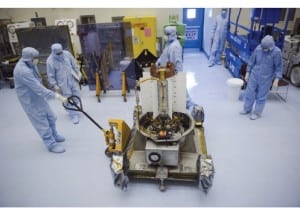
With the precarious descent of NASA’s Mars rover Curiosity into the Red Planet’s Gale Crater a success, NASA now plans to gather geological and environmental data from the Martian surface to determine whether the planet has ever offered environmental conditions favorable for life—and collect data for a manned mission.
-
 News
NewsRubber Disc Return Rollers
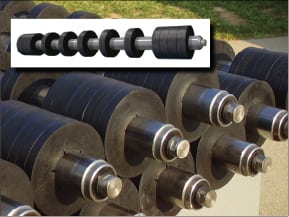
New Rubber Disc Return Rollers from Elite Roller Manufacturing feature four tapered roller bearings (two in each hub) for smooth operation and a service life that is up to three times longer than traditional two-bearing roller designs. The patented “quad bearing” design also withstands more severe applications than traditional rollers, and it allows the reuse […]
-
 Nuclear
South Korea Connects Two New Reactors to the Grid
3. An atomic leap. South Korea is looking to boost nuclear capacity to 43.4% of its total power profile by 2020. Two new reactors became commercially operational this summer, the 960-MW Shin Kori 2 plant near Nae-ri and the Shin Wolsong 1 (shown here) in the southwest city of Gori. Courtesy: Korea Hydro and Nuclear […]
-
Legal & Regulatory
New Approaches to Project Mitigation
The First Law of Thermodynamics holds that the amount of matter and energy in the universe is constant and that no new matter or energy can be created. The corollary Second Law is that when energy is put to use, unusable energy or entropy results. One lesson—other than to beware of lawyers purporting to lecture on physics—is that everything we do has a consequence. -
 News
NewspH-Measuring App
California-based Sensorex has developed an industry-first mobile accessory for pH measurements. Compatible with Apple iPod, iPhone, and iPad devices, the PH-1 pH meter accessory measures and records pH values in the lab or field for use in environmental, education, and industrial applications. The patent-pending PH-1 accessory plugs into the standard Apple dock connector and uses […]
-
 Nuclear
Plant Vogtle Moves Forward, as Do Costs and Schedules
At Plant Vogtle in Georgia, where Southern Co. subsidiary Southern Nuclear is building two new 1,100-MW AP1000 units for Georgia Power and co-owners Oglethorpe Power Corp., the Municipal Electric Authority of Georgia, and Dalton Utilities, work on the first new nuclear units built in the U.S. in 30 years is progressing—albeit with hiccups.
-
 Coal
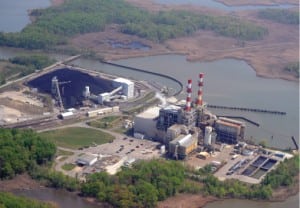
CoalTOP PLANT: C.P. Crane Generating Station, Middle River, Maryland
A desire to do things right led Constellation Energy to invest $70 million to convert its 400-MW C.P. Crane Generating Station to burn Powder River Basin coal and develop the culture critical to making that conversion a success. In addition to being named a 2012 POWER Top Plant, the PRB Coal Users’ Group recognized the plant for its efforts with its Plant of the Year Award
-
 News
NewsCryogenic Mass Vortex Flow Meter
Sierra Instruments launched a new cryogenic version of its InnovaMass 240 multivariable mass vortex flow meter for advanced, more reliable measurement of liquefied gases, including liquid nitrogen, liquid oxygen, liquefied natural gas, and liquefied petroleum gas, down to –330F. The InnovaMass contains no moving parts that will wear out or require service. This new meter […]
-
O&M
Unit Cycling Makes the Impossible the Ordinary, EUCG Members Say
Low natural gas prices and still-soft electricity demand are forcing low-load and cycling operations at traditionally baseloaded coal units across the country. The resulting challenges were top of mind at the Electric Utility Cost Group’s (EUCG’s) fall meeting in Denver last week. One member of the EUCG’s fossil generation committee from an Ohio Valley utility said that cycling and low-load operations pose challenges for one of his company’s 1,300-MW coal-fired plants that “two years ago we wouldn’t have considered possible.â€
-
Nuclear
FPL Gets NRC OK for 10% Extended Uprate of St. Lucie Unit 2
Florida Power & Light (FPL) on Monday got the Nuclear Regulatory Commission’s (NRC’s) approval to increase power¬¬¬ output of St. Lucie Unit 2 by 17%, from 853 MWe to 1,002 MWe. The regulator had in July approved a similar uprate for St. Lucie Unit 1, and its decision on Monday means FPL can fully proceed with its $3 billion plan to boost nuclear output and save on future fossil fuel costs.
-
Nuclear
NRC Says Wolf Creek’s January Loss of Power Was of Substantial Safety Significance
An inspection has shown that loss of offsite power at the Wolf Creek nuclear power plant near Burlington, Kan., in January had substantial safety significance and will result in additional inspections and regulatory oversight, the Nuclear Regulatory Commission (NRC) said on Friday.
-
Nuclear
Three Mile Island Trips Due to Flow Imbalance in Coolant Pump
Exelon’s 852-MW Three Mile Island Generating Station near Harrisburg, Pa., on Thursday automatically tripped owing to a flux to flow imbalance of the "C" reactor coolant pump, a filing with the Nuclear Regulatory Commission (NRC) shows.
-
Solar
California’s Streamlined DG Interconnection Process Bodes Well for Solar
The California Public Utilities Commission (CPUC) last week approved a deal involving the state’s major utilities and renewable energy advocates that is aimed at streamlining the process for connecting distributed generation (DG) resources to the grid. The CPUC’s action will make it easier for small amounts of distributed resources—such as rooftop solar photovoltaic (PV) systems—to connect to the grid. The agreement also revises upward the amount of DG that can be connected to a specific power line segment without the need for supplemental studies.
-
Nuclear
GE-Hitachi’s Global Laser Enrichment Plant Gets NRC OK, Other Projects Falter
A license issued by the Nuclear Regulatory Commission (NRC) on Tuesday greenlights operation of a proposed plant that will use laser technology to enrich uranium for fuel in commercial nuclear power reactors. If built as proposed on a 1,600-acre site at General Electric–Hitachi Global Laser Enrichment’s (GLE’s) global headquarters in Wilmington, N.C., where GLE currently operates a fuel fabrication plant, the facility would be one of two new enrichment plants expected to be operational by 2020, even though several others have received NRC approval and federal government funding.
-
Coal
House Passes Legislative “Stop the War on Coal Act” Package, Takes Aim at Carbon, Coal Ash Rules
In its last legislative act before the November election, the U.S. House of Representatives on Friday passed by a vote of 233 to 175 the controversial "Stop the War on Coal Act," a legislative package of measures that seeks to bar the Environmental Protection Agency (EPA) from promulgating carbon emission rules, calls for an analysis of the cumulative economic impacts of certain environmental rules, and would create a state-based program to regulate coal ash.
-
Nuclear
New Bill to Limit Timespan for Reactor License Renewal Applications
A bill introduced by U.S. Reps. John Tierney and Ed Markey on Wednesday could prevent the Nuclear Regulatory Commission (NRC) from granting operating license renewals to reactor owners that apply more than 10 years before a current facility license expires.
-
Instrumentation & Controls
Chinese Hackers Blamed for Breach of Telvent’s SCADA-Related Network
Cyber attacks on the utility industry are no longer theoretical. According to multiple sources, smart grid technology vendor Telvent told U.S., Canadian, and Spanish customers on Sept. 10 that hackers had broken through its firewall and accessed “project files” related to its OASyS SCADA system. On Wednesday, reports surfaced that, based on the perpetrators’ “digital fingerprints,” the attack appears to be the work of a well-known Chinese hacker group.
-
General
Is San Onofre Ever Coming Back?
By Thomas W. Overton, JD As unlikely as it might have seemed a few months ago, recent developments in the ongoing saga over the beleaguered San Onofre Nuclear Generating Station (SONGS) have begun to raise the previously unthinkable possibility that the plant may never restart. Publicly, of course, the authorities are saying nothing of the […]
-
 O&M
O&MGive Your Plant a Dust Control Tune-Up
Because Powder River Basin (PRB) coal is smaller, more friable, and contains more fine particulates than bituminous coal, controlling the fugitive dust generated as PRB coal moves from bunker to burner tip is problematic. The challenge for material-handling systems at power plants that have switched coals is to minimize this dust and capture it cost-effectively and without compromising safety.
-
Commentary
War Against Coal Is Hurting America
The Boilermakers union has been a leader among the labor and business organizations that seek to shepherd the coal-fired energy sector through the worst effects of these forces. And we continue in those efforts.
-
Commentary
Leave Energy Upgrades to the Businesses
President Obama’s Executive Order on industrial energy efficiency is another incursion of the federal government into the day-to-day operations of American industry. The symbol of a free enterprise is autonomy in determining how to efficiently invest capital, an activity that the government has proven inept time and again.
-
Commentary
Act Your Age
The American Wind Energy Association’s number one priority is renewal of the production tax credit in order to protect industry jobs. But wind isn’t the only industry sector that’s scrambling to protect jobs.
-
Coal
Reactions to Federal Court Striking Down CSAPR
In a landmark ruling that has been seen as a major victory for thermal generators, the U.S. Court of Appeals for the District of Columbia Circuit vacated the Environmental Protection Agency’s (EPA’s) Cross-State Air Pollution Rule (CSAPR) in August, finding that it violated federal law. The EPA must now continue implementation of the Clean Air Interstate Rule (CAIR) until it can promulgate a replacement, which likely will not happen until at least 2014.
-
Coal
Coal to Gas Once More for Dominion
Dominion Virginia Power plans to convert its oldest coal-fired power plant, the 227-MW Bremo Power Station near Bremo Bluff, Va., to natural gas, the company announced earlier this month. The two-unit plant would be the ninth in its fleet to be closed or converted to alternative fuels.
-
Coal
CO2 Injection Begins at Fully Integrated Coal-Fired CCS Project
Injection of carbon dioxide has begun at one of the world’s first fully integrated coal-fired carbon capture, transportation, and geologic storage projects.