
Articles By

-
O&M
Dusty Trail: The Movie
The season’s blockbuster includes white-hatted heroes, good-natured regulatory sidekicks, bar fights, and a lurking menace named Fugitive Dust.
-
Legal & Regulatory
When Successful Procurement Policies Fail
California is approaching a tipping point with respect to the near-term economic viability of existing non-utility generation. The procurement policies and practices implemented in response to the statewide energy crisis over a decade ago have evolved into market conditions that do not offer “uncontracted” existing resources with sufficient and stable enough revenue streams to recover going-forward costs. Continued adherence to these policies will subject such resources to an increasing risk of economic retirement, threatening long-term reliability and potentially costing electric consumers billions of dollars.
-
 Gas
GasGas Glut Drives Action in Combined Cycle Power
A diverse range of speakers reviewed the state of gas-fired generation at ELECTRIC POWER, but there was one constant: flexibility
-
 Coal
CoalOptimizing Catalyst Performance Lowers O&M Costs
Santee Cooper’s Cross Station has implemented a catalyst optimization program that reduces catalyst replacement cost while maximizing catalyst performance. This case study illustrates the economic advantages of taking a holistic approach to optimizing unit catalyst performance by controlling slag, fouling, sulfur trioxide, and ammonium bisulfate—key factors that lead to premature shortening of catalyst life. With catalyst costing $2 million a layer and up, there is plenty of economic motivation to find ways to improve its life.
-
 News
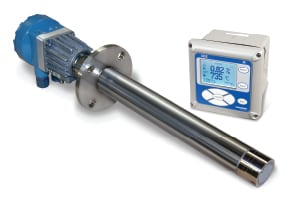
NewsFlue Gas Analyzer
Emerson has launched the latest solution for combustion flue gas analysis, the Rosemount Analytical 6888 in-situ oxygen analyzer. The 6888 analyzer provides accurate measurement of oxygen remaining in flue gases coming from combustion processes such as boilers, incinerators, kilns, process heaters, and industrial heating furnaces. By maintaining the ideal level of oxygen in the flue […]
-
 News
NewsUpgraded Thermal Imaging Camera
IDEAL INDUSTRIES released an upgraded version of its popular HeatSeeker handheld thermal imaging camera. The new model features twice the resolution of legacy models and a wider field-of-view to improve troubleshooting efficiency. Engineered with a powerful 320 x 240 2MP sensor that captures 76K pixels, the new HeatSeeker 320 can be used for a wide […]
-
 News
NewsPortable Video Camera for Borescopes
The new Luxxor Portable Video Camera quickly and easily attaches to any Hawkeye Rigid or Flexible Borescope, and most other major borescope brands as well, transforming them into a videoscope. Designed and manufactured by Gradient Lens Corp., the new Luxxor camera allows users to view internal visual inspection images on portable or benchtop video monitors, […]
-
News
MACT Attack
The Utility MACT Rule, the most recent skirmish in the U.S. Environmental Protection Agency’s (EPA’s) war on coal, is based on flimsy scientific evidence of actual health effects and again demonstrates the agency’s indifference to conducting rigorous scientific inquiry. The end justifies the means is not science.
-
 News
NewsFlame-Retardant Clothing
ESAB Welding & Cutting Products introduced a new addition to the Weld Warrior line of personal protection equipment. The company’s FR Line of flame-retardant clothing is designed to give maximum protection to the professional welder while providing comfort in the most demanding environments. The new FR Line includes The Jersey—a lightweight pullover that is perfect […]
-
 Business
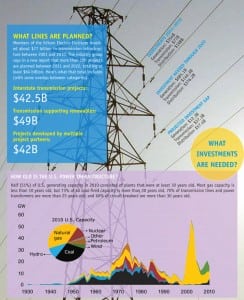
THE BIG PICTURE: Infrastructure
Aging infrastructure ranks at the top of the U.S. electric power sector’s concerns, flanked by the exorbitant investment needed to keep the system in good repair.
-
Commentary
Incentives Provide Boon to Hydropower Industry
The U.S. hydropower industry has undergone a renaissance in recent years. One of the major drivers of the industry’s growth, the establishment of the production tax credit (PTC) for hydro, has seen strong policy support from our elected officials in Washington, D.C. More than any other federal policy, tax incentives, particularly the PTC, have sparked a level of growth in the industry not seen in nearly two decades.
-
 Distributed Energy
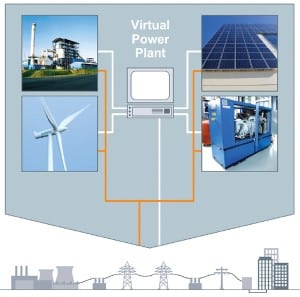
The Rise of the Virtual Power Plant
Siemens Infrastructure & Cities and Munich city utility Stadtwerke München (SWM) this April put into operation a virtual power plant (VPP), linking several small-scale distributed energy sources and pooling their resources so they can be operated as a single installation (Figure 1). The project comes on the heels of a February 2012 expansion of a […]
-
 Nuclear
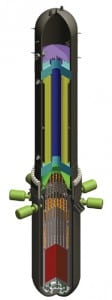
Small Modular Reactors Vie for DOE Funding
Within the two months since the Department of Energy (DOE) flourished $452 million in cost-shared federal funding to support engineering, design certification, and licensing from the Nuclear Regulatory Commission (NRC) for up to two small modular reactor (SMR) designs over five years, four developers of reactors under 300 MW have submitted applications: Westinghouse, Babcock & […]
-
 Coal
CoalPower in India: Opportunities and Challenges in a Fast-Growing Market
India’s long-term annual economic growth rate is projected at over 7%, and the country is investing in its hydroelectric, nuclear, and renewable resources. However, the primary fuel used to produce electricity remains coal, and the government has ambitious plans to significantly increase coal-fired capacity. Those plans have been challenged by a number of unexpected factors that threaten to stifle India’s economic growth. India’s long-term annual economic growth rate is projected at over 7%, and the country is investing in its hydroelectric, nuclear, and renewable resources. However, the primary fuel used to produce electricity remains coal, and the government has ambitious plans to significantly increase coal-fired capacity. Those plans have been challenged by a number of unexpected factors that threaten to stifle India’s economic growth.
-
 Coal
CoalConsortium Tests Alloys for Advanced Ultrasupercritical Boilers
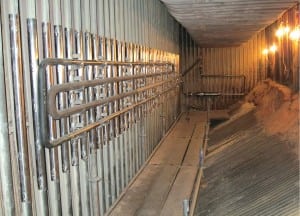
A two-year project begun this April by Southern Co. and a consortium of partners including boiler vendors Alstom, Babcock & Wilcox, Foster Wheeler, and Riley Power; the Electric Power Research Institute (EPRI); and the Oak Ridge National Laboratory will gather data on the performance of alloy materials under advanced ultrasupercritical (USC) temperatures of about 1,400F. […]
-
 Gas
GasPerformance-Based Cooling Water Treatment
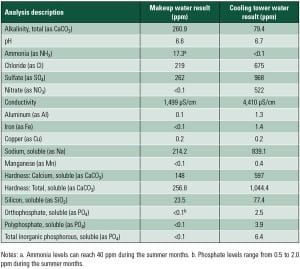
A West Coast combined cycle plant that uses reclaimed water found that cycling 300 times a year caused disruptions to the plant’s cooling water chemical treatment program. The solution was a performance-based monitoring and control system that uses available plant operating data plus algorithms to measure corrosion rates and fouling factors, which in turn allows the plant to trim chemical feed rates so they correlate with a specified corrosion rate, rather than a suggested chemical residual.
-
 Solar
SolarLarge Thin-Film CIS Plant Goes Online in Germany
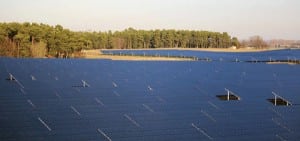
In May—as a trade war raged between Chinese solar panel manufacturers and exporters and their counterparts in the U.S. and the European Union concerning the world’s plummeting crystalline silicone photovoltaic module prices—a 28.8-MW thin-film copper indium gallium (di)selenide (CIGS or CIS) solar power plant came online. Developers Solar Frontier, the world’s largest manufacturer of CIS […]
-
 Business
Allocating Project Risk
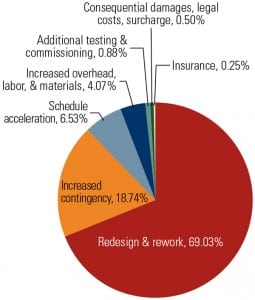
Power generators typically allocate construction risks through the process of aversion. Owners have a tendency to shift risk to a project’s primary contractor, who in turn pushes it to lower-tier parties in the contracting arrangement. Research by the Construction Industry Institute has found that there are more equitable ways to allocate project risk.
-
 Environmental
South Korea Enacts Cap-and-Trade Program
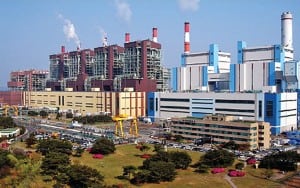
The Republic of Korea’s National Assembly on May 2 passed legislation that will mandate cuts in greenhouse gases (GHGs) starting in 2015. The Act on Allocation and Trading of Greenhouse Gas Emissions Allowances passed with a near unanimous vote of 140-0, with three abstentions. It follows the country’s voluntary GHG emissions reduction target of 30% […]
-
 Coal
CoalInnovation Required as Gas Displaces Coal
Panelists at the ELECTRIC POWER Keynote and Roundtable Discussion in Baltimore in May wrestled with a range of issues. But despite calls for a “balanced portfolio,” an “all-of-the-above” energy strategy, and predictions of “more changes in the next 10 years than in the last 100,” the focus of attention appears to be the decidedly mundane displacement of coal by natural gas.
-
 Gas
GasGeorgia Power Adds Second 840-MW Gas Unit
The second of Georgia Power’s three natural gas combined cycle units at Plant McDonough-Atkinson in Smyrna, Ga., came online on April 26 (Figure 7). The first unit at the plant became operational in December 2011, and the third unit, currently under construction, is expected to come online in November 2012, increasing the plant’s capacity from […]
-
 Hydro
HydroUtility Perspectives on Ramping Up Renewable Power
Panelists at ELECTRIC POWER discussed how U.S. utilities choose renewable power generation technologies based on their geographic locations, state requirements, economics, and other criteria—including reliability and federal regulations.
-
Business
POWER Digest (July 2012)
UK Unveils Draft Energy Reform Bill. A draft energy bill unveiled by the UK’s Department of Energy and Climate Change on May 22 seeks to attract £110 billion ($168 billion) of investment to build new nuclear, renewables, and carbon capture and storage (CCS) plants to replace nearly a fifth of the country’s total power capacity, […]
-
 Coal
CoalNew Technologies Advance Biomass for Power Generation
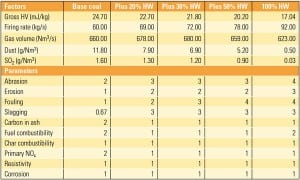
As U.S. utilities seek to increase the percentage of carbon-neutral biomass used in their generation portfolios, they must deal with a number of complex challenges unique to this fuel source. Several breakthrough technologies are poised to help promote greater use of biomaterials.
-
Hydro
FERC Rule 1000: What Does It Mean?
The Federal Energy Regulatory Commission (FERC) has the responsibility for ensuring just and reasonable rates and preventing undue discrimination by public utility transmission providers. Last year FERC defined a new framework for public utilities and regional transmission organizations planning new transmission networks. The framework is provided in Order No. 1000—Transmission Planning and Allocation by Transmission Owning and Operating Public Utilities. The Final Rule was issued on July 21, 2011, and reaffirmed by Order No. 1000-A on May 17, 2012.
-
 Coal
CoalClean Air, Dirty Water
Efforts by power producers to meet clean air rules mean that wastewater effluent streams now face revised EPA regulations. A skirmish involving a New Hampshire power plant could set the tone for the next battle over regulations.
-
News
Supreme Courts Denies Review of FERC Market-Based Rate Case
The U.S. Supreme Court on Monday denied review of a case in which several states and citizen groups contend that the Federal Energy Regulatory Commission’s (FERC’s) Order 697—issued in 2007 to improve market-based rate regulations—exceeds FERC’s authority under the Federal Power Act (FPA).
-
News
Federal Court Rejects Challenges to EPA Industrial, Automotive GHG Rules
A three-judge panel of the U.S. Court of Appeals for the D.C. Circuit on Tuesday ruled that the U.S. Environmental Protection Agency (EPA) was "unambiguously correct" in its interpretation of the Clean Air Act (CAA) to regulate carbon dioxide emissions. The federal agency’s endangerment finding that greenhouse gases (GHG), including carbon dioxide, are a threat to public health and welfare, and its decision to set limits for industrial and automotive emissions of GHGs, was "neither arbitrary nor capricious," the court ruled. The court, however, found that it lacked jurisdiction to review the timing and scope of the GHG rules that affect larger stationary sources, including new coal-fired power plants.
-
News
Federal Appellate Court Finds for the NRC, Entergy in Vermont Yankee Licensing Case
The State of Vermont "repeatedly failed" to present to the Nuclear Regulatory Commission (NRC) objections that Entergy Corp., owner of the controversial Vermont Yankee Nuclear Power Station, lacked a necessary state water permit before the commission granted the reactor a 20-year operating license extension, a federal court ruled on Tuesday as it threw out the state’s legal challenge against the NRC.
-
News
Plan to Lower Hydroelectric Dam and Mitigate Flooding Vetted Fairly, Court Says
The U.S. Army Corps of Engineers properly followed permitting procedures when it verified that Puget Sound Energy (PSE) could lower a dam in the single narrow channel above Washington State’s landmark Snoqualmie Falls to mitigate flooding issues upstream, the U.S. Court of Appeals for the Ninth Circuit ruled on Tuesday.