
Articles By

-
Nuclear
NRC Vets SCE’s SONGS Restart Plan, Warns Final Restart Approval Is “Months Away”
While announcing that staff would meet with Southern California Edison (SCE) representatives on Dec. 18 to discuss the utility’s proposal to restart the San Onofre Nuclear Generating Station’s (SONGS’) Unit 2, the Nuclear Regulatory Commission (NRC) warned that the meeting was "only one step in a long process," and that "a final decision on whether […]
-
Wind
New DOE Grants Buttress Seven Offshore Wind Demonstration Projects
A new report commissioned by the Department of Energy (DOE) surveying offshore wind potential in the U.S. finds that establishing an offshore wind sector could drive more than $70 billion in annual investments by 2030. Citing that report, the DOE on Wednesday announced awards for seven offshore wind demonstration projects in Maine, New Jersey, Ohio, Oregon, Texas, and Virginia as part of efforts to launch a U.S. offshore wind industry and support offshore installations in state and federal waters for commercial deployment by 2017.
-
Solar
DOE Announces $29M to Bring Down Costs for Solar Installation
The Department of Energy (DOE) on Friday announced a $29 million investment in four solar projects aimed at improving grid connection and reducing installation costs through plug-and-play technologies and reliable solar power forecasts. The awards are part of the agency’s SunShot Initiative, which is working to make solar energy competitive with other forms of energy without subsidy by the end of the decade.
-
Nuclear
NRC to Amend Waste Disposal Regulations
The Nuclear Regulatory Commission (NRC) on Friday announced it was proposing to amend rules that govern low-level radioactive (LLR) waste disposal facilities. The proposal, published in the Federal Register, requires new and revised site-specific analyses and would permit the development of criteria for waste acceptance based on the results of those analyses.
-
Coal
Silicon Valley Funds Ontario Inventor’s Atmospheric Vortex Engine
Maybe it’s time to start talking about the “POWER bump.” Over two years ago, POWER magazine published a story about a new concept for generating power from waste heat. Today, Sarnia, Ontario’s AVEtec Energy Corp. announced that Silicon Valley entrepreneur and venture capitalist Peter Thiel will fund a prototype Atmospheric Vortex Engine (AVE) invented by the company’s president, Louis Michaud. The technology holds promise for low-cost thermal plant efficiency gains by generating power from waste heat.
-
Nuclear
UK Approves Final Design Certification for AREVA/EDF EPR
After a four-year analysis, UK nuclear regulators on Thursday approved the generic nuclear design of the UK EPR proposed by France’s EDF and AREVA, confirming that it meets regulatory expectations on safety, security, and environmental impact. The decision paves the way for EDF to begin construction on two EPRs at Hinkley Point in Somerset.
-
Wind
In Bid for Immediate Extension, AWEA Proposes Gradual Phase-Out of Wind PTC
The American Wind Energy Association (AWEA), an industry trade group that has forcefully been lobbying for an extension of the production tax credit (PTC) that is set to expire on Dec. 31, on Wednesday asked congressional lawmakers to instead consider a future phase-out of its primary federal incentive. The group said that even if temporary, an extension of the performance-based market mechanism was critical "to allow the industry to invest in the cost-saving technologies required to finish the job."
-
Coal
Reserve Margins in Texas Barely Healthy Again, ERCOT Says
Texas could again see tight power supplies in the summer of 2013 and beyond—with reserve margins dropping to 2.8% by 2022—even though the outlook has improved, the Electric Reliability Council of Texas (ERCOT) warned in its latest long-term outlook released on Monday.
-
Coal
Report: Fuel for Power Generation to Lead Energy Growth Through 2040
Fuel for power generation will account for about 55% of demand-related energy growth through 2040, ExxonMobil forecasts in its freshly released annual energy forecast. Like several other forecasters, the Irving, Texas–based oil and gas company also predicts that natural gas will emerge as the leading source of electricity generation by 2040. Among key findings in […]
-
Solar
New Batteries and Energy Storage Hub Aims to Improve Grid and EV Performance
U.S. Secretary of Energy Steven Chu announced on Oct. 30 that a multi-partner team led by Argonne National Laboratory in Illinois has been selected for an award of up to $120 million over five years to establish a new Batteries and Energy Storage Hub.
-
Coal
NRDC Urges EPA to Cut GHGs from Existing Fleet via Flexible Approach
The Natural Resources Defense Council (NRDC) on Monday made public a proposal that calls for the Environmental Protection Agency (EPA) to use its authority under the Clean Air Act (CAA) to set greenhouse gas (GHG) emissions standards for existing power plants. The NRDC approach would have the EPA create “systemwide standards” rather than ones based on individual generating units.
-
Coal
Report: LNG Exports to Have Net Economic Benefits, Impact Domestic Power Sector
Allowing unlimited U.S. exports of liquefied natural gas (LNG) would increase marginal costs of supply and raise domestic natural gas prices, but it would have "net economic benefits" across a range of scenarios ranging from relatively normal conditions to stress cases with high costs of producing natural gas in the U.S. and exceptionally large demand for U.S. LNG exports around the world, a report prepared for the Department of Energy and released on Wednesday suggests.
-
Nuclear
Enel Drops Participation in Flamanville EPR as Project Costs Soar by $2.6B
A day after French utility EDF released a cost update for its Flamanville EPR reactor under construction in Normandy, France, claiming increases of a stunning $2.6 billion—bringing overall estimated costs for the advanced reactor to $10.5 billion—Italian power giant Enel formally withdrew its participation from that project and five other French EPR projects.
-
Coal
NRG Abandons Plans to Build New 744-MW Coal Unit at Limestone Plant
NRG Energy has given up a $1.2 billion plan to add a 744-MW pulverized coal unit to its Limestone Electric Generating Station near Jewett, Texas, saying low natural gas prices had rendered the project uneconomic.
-
Coal
Coal Ash Recycling Rate Is Lagging, Says Industry Group
Regulatory uncertainty concerning the disposal of coal ash has stalled coal ash recycling in the U.S. and kept levels below those reported in 2008 for a third consecutive year, suggests a new report from the American Coal Ash Association (ACAA).
-
Coal
EIA Projects Faster Growth of Natural Gas Production, Gas Generation
Compared to projections from last year, an Early Release Overview of the Energy Information Administration’s (EIA’s) Annual Energy Outlook 2013 (AEO2013) released on Wednesday foresees higher gas production and, with it, a higher share of gas generation by 2040. The outlook also projects a growing share of renewable and nuclear power, but dampened future coal use.
-
Wind
DOI Unveils First-Ever Competitive Lease Sales for Wind Energy Along Atlantic Coast
The Department of the Interior (DOI) on Friday announced that the nation’s first competitive lease sales on the Outer Continental Shelf (OCS) for wind energy will be held next year. The lease sales cover 277,550 acres in two wind energy areas (WEAs) over federal waters along the Atlantic Coast that have a high wind resource potential.
-
Business
Shale Gas: A Jobs Engine Trumps Competition in Electricity Supply?
Despite controversies over macro energy policies, it looks to be a sure bet that the need for job creation will foster continued state and federal support for shale gas development.
-
Distributed Energy
Improving Grid Resiliency After Superstorm Sandy
For the power generation and delivery industry, the lesson of Hurricane Sandy was how fragile much of the grid is. Distributed generation, smart grid technology, and combined heat and power offer cost-effective ways to improve grid resiliency. -
Business
The Great Wall: The Barriers to Shale Gas in China and Why Shales Worked in the U.S.
China has enormous shale reserves and a power-hungry populace that needs the gas. But there are good reasons to think that China may not experience a U.S.-style shale gas boom any time soon. -
Distributed Energy
Is CHP Ready for Prime Time?
Long the redheaded stepchild of North American power generation, combined heat and power (CHP) may finally be poised for a big leap forward.
-
Distributed Energy
UBC Generates Heat, Power, and Buzz with Renewable CHP
Already in the midst of a drive to cut its greenhouse gas emissions, the University of British Columbia didn’t just look to clean energy for its new combined heat and power system. Instead, it decided to combine research with cutting-edge green power.
-
Distributed Energy
Feds and States Join Forces to Push CHP
Though subsidies and incentives for wind and other renewables have grabbed the headlines, federal and state initiatives are quietly building some momentum behind combined heat and power.
-
Business
TransAlta and MidAmerican Form Partnership for Canadian Gas Power
Signaling a solid future for gas power, two of the biggest names in North American power generation are joining forces to build a new fleet of gas-fired plants in Western Canada. -
Coal
Economics Favor Natural Gas Even as Coal Burn Rebounds
The wave of coal-to-gas switching in 2012 is giving way to a coal rebound in 2013, according to a number of coal and generating companies. Nevertheless, the long-term trend toward gas is likely to continue. -
Business
FERC Doubles Down on Gas-Electric Coordination
Following up on its series of conferences on gas-electric coordination this past summer, the Federal Energy Regulatory Commission appears ready to find some real solutions in 2013.
-
 Solar
Solar14-MW Solar PV Plant Completed at Naval Station
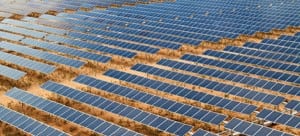
The U.S. Navy in late October saw the completion of its largest solar generation system, a 13.78-MW (DC) solar photovoltaic (PV) power system at Naval Air Weapons Station China Lake (NAWS China Lake) in California.
-
 Coal
CoalChina Leads the Global Race to Cleaner Coal
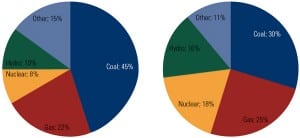
Coal used for power generation has been the cornerstone of economic development, social progress, and a higher quality of life around the globe and is now fueling the 21st-century economic miracle rapidly unfolding in China. Meanwhile, China is leading the world in coal-fired plant efficiency and the deployment of clean coal technologies.
-
Nuclear
Too Dumb to Meter, Part 6
As the book title Too Dumb to Meter: Follies, Fiascoes, Dead Ends, and Duds on the U.S. Road to Atomic Energy implies, nuclear power has traveled a rough road. In this POWER exclusive, we present the eighth, ninth, and 10th chapters, “Flightless Birds and Flying Elephants,” “The Devil Flies Nukes,” and “Flatulence in Space,” the concluding chapters of the “Up in the Air: Flights of Radioactive Fancy” section.
-
Business
POWER Digest (December 2012)
Georgia Power Completes 2,500-MW Coal-to-Gas Conversion. Southern Co. subsidiary Georgia Power on Oct. 28 put online the third and final 840-MW natural gas combined cycle unit at Plant McDonough-Atkinson in Smyrna, Ga. The first gas plant went online in December 2011 and the second on April 26. Bringing the plant’s capacity to 2,500 MW, the […]