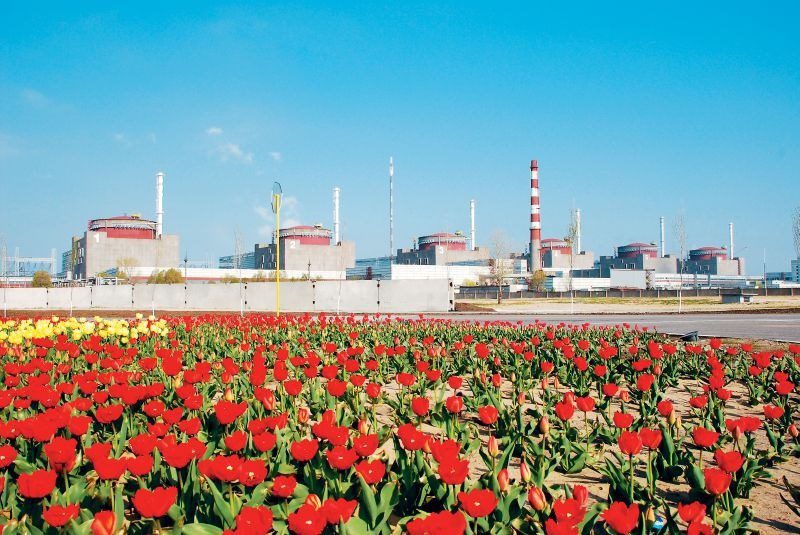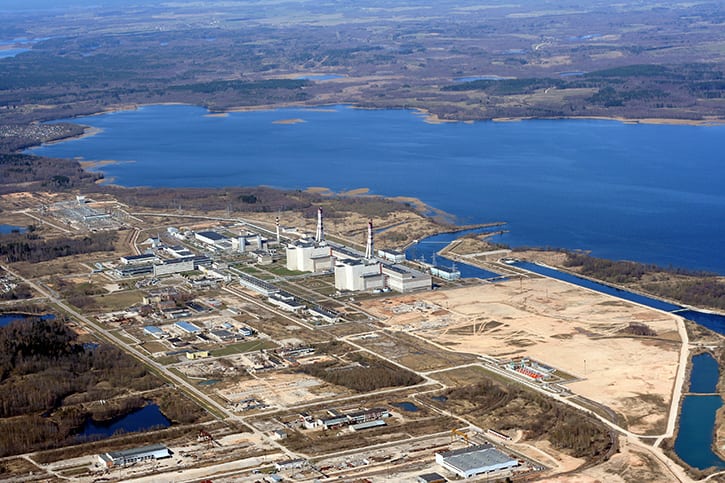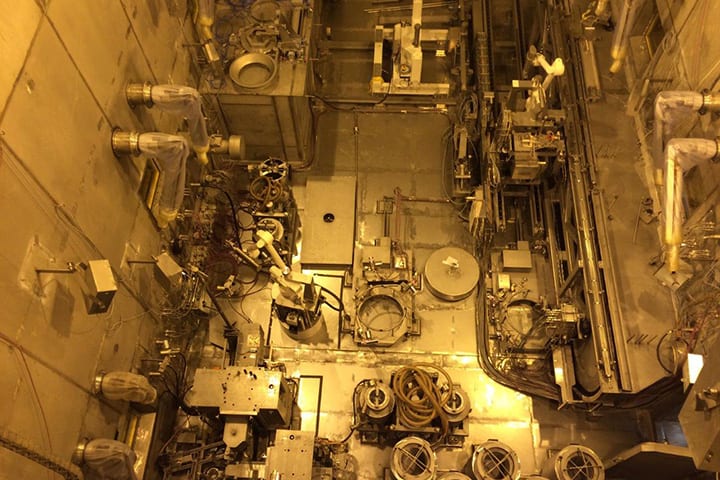
On the 40th anniversary of the Chernobyl disaster, POWER sent a freelance photographer and correspondent to the site in Ukraine to document the massive decommissioning effort still underway—and the new threats that have complicated it.
At 1:23 a.m. local time on April 26, 1986, a sudden and uncontrollable power surge destroyed Unit 4 of the Chernobyl Nuclear Power Plant, located about 130 kilometers (km, 81 miles) north of Kyiv and just 20 km (12.5 miles) south of the Belarusian border. The explosion—followed by fires that burned for 10 days—released up to 5% of the radioactive reactor core into the atmosphere, scattering contamination across Belarus, Ukraine, Russia, and much of Europe. It remains the only accident in the history of commercial nuclear power reactors where radiation-related fatalities occurred, and its consequences—human, environmental, political, and technical—continue to reverberate four decades later.
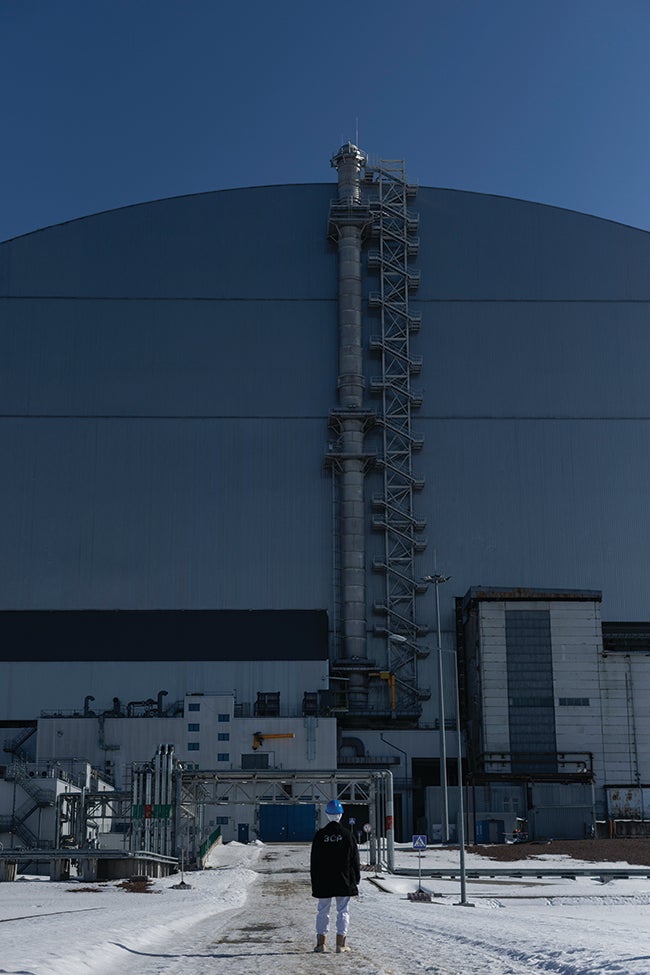
The 40th anniversary arrives at a moment when the Chernobyl site is anything but a static memorial. Decommissioning of the plant’s three undamaged reactors is underway. A massive dry spent fuel storage facility—the largest of its kind in the world—is in the midst of a multi-year fuel transfer campaign. And the New Safe Confinement (NSC, Figure 1), the enormous arch-shaped structure that took more than a decade to design and build, sustained significant damage from a drone strike in February 2025, raising urgent questions about the long-term security of the site in a country still at war.
 |
|
1. The immense steel arc of the New Safe Confinement (NSC) towers above surrounding industrial structures as Chernobyl’s Category 1 specialist in public and press relations, Hanna Pidhaina, surveys the scene. Source: Jack Goras |
To mark the anniversary, POWER dispatched a freelance photographer and correspondent to the Chernobyl site for an exclusive look at the ongoing work and the people who carry it out every day. What follows is the story of how the world arrived at this point—and what our team on the ground found at the site.
A Flawed Reactor, a Fateful Test
Chernobyl Unit 4 was an RBMK-1000, a Soviet-designed graphite-moderated, boiling light-water reactor with a thermal output of 3,200 MW. The design possessed a critical vulnerability: a positive void coefficient, meaning that a loss of coolant water—or its conversion to steam—could accelerate the nuclear chain reaction rather than slow it down. At low power levels, below about 20% of rated capacity, this characteristic made the reactor inherently unstable and prone to sudden power surges. Western reactor designs, by contrast, are engineered with negative void coefficients that cause the reaction to naturally diminish when coolant is lost.
In This Issue
Full issueOn April 25, the Unit 4 crew began preparations for a routine shutdown, during which they planned to test whether a coasting turbine could supply enough electrical power to run the reactor’s cooling pumps during the brief interval between a loss of grid power and the startup of emergency diesel generators. The test had been attempted before with inconclusive results. Critically, the test was treated as a non-nuclear electrical exercise, and there was no proper coordination between the testing team and the reactor safety staff. The operating personnel were never made aware of the nuclear safety implications of the procedures they were about to follow.
A series of operator actions compounded the danger. The emergency core cooling system was disabled. An operational error caused power to plummet to about 30 MW thermal—deep into the zone where the positive void coefficient dominated. Operators manually withdrew nearly all control rods in an attempt to restore power, leaving only six to eight inserted against a minimum safety requirement of 30. By the time they attempted to initiate a shutdown in the early hours of April 26, the reactor was in a condition that virtually guaranteed disaster. A peculiarity in the design of the control rods actually caused a momentary increase in reactivity as they were inserted, triggering an explosive power surge.
The interaction of superheated fuel with cooling water produced a violent steam explosion that lifted the 1,000-tonne reactor cover plate, rupturing fuel channels and jamming the control rods partway down. Seconds later, a second explosion—likely driven by hydrogen generated from zirconium-steam reactions—ejected fragments of fuel and an estimated quarter of the reactor’s 1,200 tonnes of graphite. The incandescent debris ignited fires across the reactor building and turbine hall, and radioactive materials began pouring into the atmosphere. The releases would continue, at varying rates, for 10 days.
The Human Toll
Two plant workers died in the explosions. The firefighters who responded to the blaze on the turbine building roof received extraordinarily high radiation doses—estimated in some cases at 20,000 milligrays, far exceeding the universally fatal threshold of 8,000 to 10,000 milligrays. Within weeks, 28 of the emergency responders and plant personnel died of acute radiation syndrome (ARS). In total, ARS was confirmed in 134 individuals among those onsite and involved in the immediate cleanup.
The next wave of exposure fell upon the “liquidators”—the roughly 600,000 workers drawn from across the Soviet Union who were mobilized for emergency response and cleanup operations over the following years. About 200,000 of these liquidators worked in 1986 and 1987, and received doses averaging about 100 millisieverts (mSv), with some receiving 250 mSv or more. A smaller group of approximately 1,000 emergency workers and onsite personnel absorbed the highest doses during the first chaotic day.
The civilian population was not spared. The operators’ town of Pripyat, home to 49,000 people just 3 km (1.86 miles) from the reactor, was evacuated on April 27—more than 36 hours after the explosion. Within three weeks, approximately 115,000 people living within a 30-km (18.6-mile) radius were relocated. Over subsequent years, an additional 220,000 were resettled from contaminated areas. In all, some 335,000 people were displaced. The initial 30-km exclusion zone—about 2,800 km2 (1,081 square miles)—was later expanded to encompass roughly 4,000 km2 (1,544 square miles)—almost exactly the size of Rhode Island.
The most significant long-term public health consequence has been thyroid cancer among those who were children at the time of the accident. Many drank milk contaminated with radioactive iodine-131, which delivered substantial doses to their thyroid glands. According to a 2018 United Nations Scientific Committee on the Effects of Atomic Radiation (UNSCEAR) report, approximately 20,000 thyroid cancer cases were diagnosed between 1991 and 2015 among patients who were 18 or younger at the time of the accident, with about a quarter of those cases—roughly 5,000—probably attributable to radiation exposure. Thyroid cancer is highly treatable when caught early; of the cases diagnosed between 1991 and 2005, 15 proved fatal. Beyond thyroid cancer, the available evidence has not demonstrated a statistically significant increase in leukemia or other solid cancers among the general population, though a 2015 study of emergency workers did find elevated relative risk of solid cancer incidence and mortality in that cohort.
Perhaps equally devastating have been the psycho-social effects. Multiple studies have documented elevated rates of depression, alcoholism, and anxiety among affected populations. As the Organisation for Economic Co-operation and Development (OECD) Nuclear Energy Agency’s (NEA’s) assessment notes, the accident generated a “feeling of distrust” compounded by the fact that radiation is imperceptible to human senses, and governments’ contradictory recommendations about food safety only deepened public fear. The Chernobyl Forum report concluded that a “paralysing fatalism” had taken hold among residents of affected areas, driven by myths and misperceptions about radiation’s threat, contributing to what it described as a “culture of dependency.”
Containment: From Sarcophagus to Safe Confinement
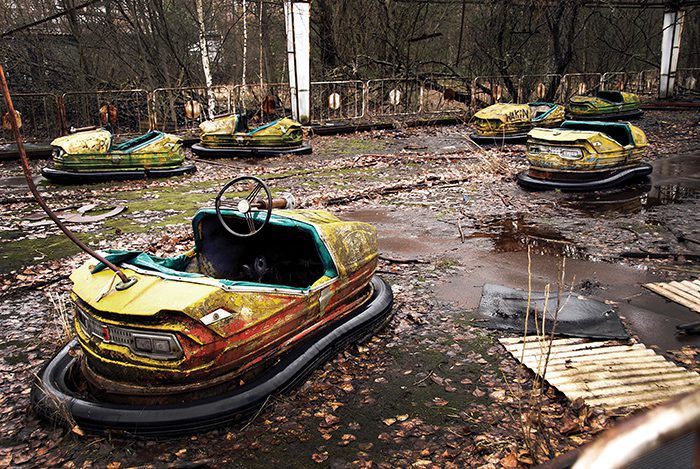
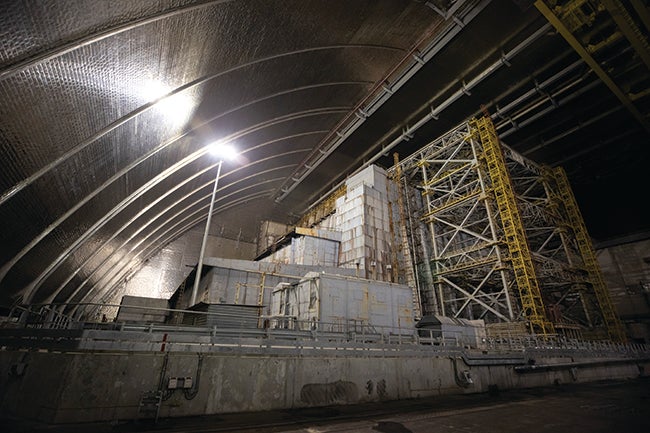
The immediate priority after the accident was to stop the release. Over the first 10 days, helicopters dropped some 5,000 tonnes of boron, dolomite, sand, clay, and lead onto the burning core. By October 1986, a massive concrete shelter—the “sarcophagus”—had been erected around the destroyed reactor in a remarkable feat of emergency construction (Figure 2). But the structure was never intended to be permanent. Built hastily under extreme radiation conditions, it was designed for a service life of 20 to 30 years. About 200 tonnes of highly radioactive fuel-containing material remained entombed within it, and as years passed, concerns grew about the sarcophagus’s structural integrity under the relentless assault of high radiation levels.
 |
|
2. A concrete object shelter was built quickly over the Unit 4 reactor following the disaster in 1986. It is now enclosed itself within the NSC. Source: Jack Goras |
In 1997, the G-7 nations, the European Commission, and Ukraine agreed to fund the Chernobyl Shelter Implementation Plan, managed by the European Bank for Reconstruction and Development (EBRD). The centerpiece was the NSC—a colossal arch-shaped steel structure spanning 260 meters (m, 853 feet), standing 110 m (361 ft.) high, and stretching 165 m (541 ft.) long. At 36,000 tonnes, it became the largest moveable land-based structure ever built. To protect construction workers from radiation, the NSC was assembled on rails adjacent to the reactor and then pushed 327 m (1,073 ft.) into position over the sarcophagus in November 2016. It was formally transferred to Ukrainian authorities in 2020, with a designed service life of at least 100 years. The overall cost of the Shelter Implementation Plan reached approximately €2.15 billion, funded by 45 donor nations and the EBRD itself.
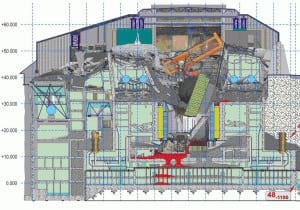
The NSC is equipped with internal cranes and remote handling equipment designed to eventually allow engineers to dismantle the original sarcophagus and remove the fuel-containing materials from the bottom of the reactor building—the most critical remaining step in eliminating the nuclear hazard at the site. In December 2023, the license for radioactive waste storage within the original shelter was extended through October 2029, with the deadline for completing the dismantling of unstable structures pushed back due to funding shortfalls, the COVID-19 pandemic, and the ongoing conflict.
A Site Still at Work—and Under Threat
Although the last operating reactor at Chernobyl—Unit 3—was shut down in December 2000, the site remains a sprawling industrial operation. The decommissioning of Units 1, 2, and 3 is progressing under a phased plan approved in 2014 that envisions placing the reactors into safe storage condition by 2028, further equipment removal through 2046, and final demolition by 2064.
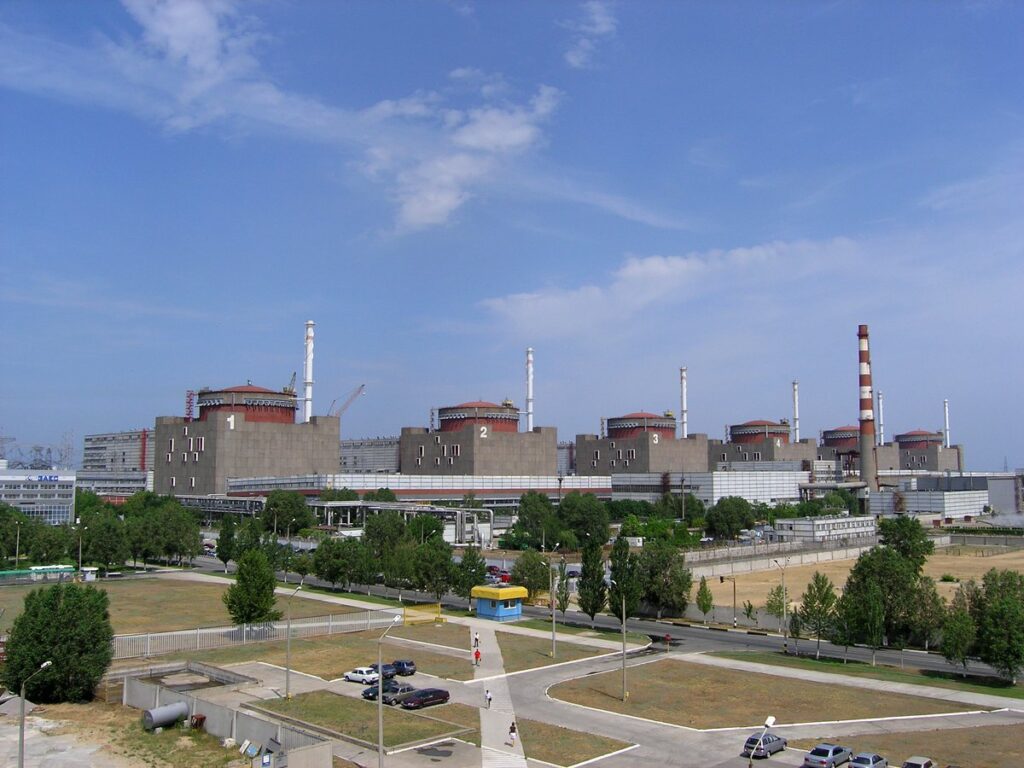
A major milestone was achieved with the commissioning of ISF-2, the Interim Spent Fuel Storage Facility built by Holtec International. Completed in January 2020 and fully operational since July 2021, ISF-2 is the world’s largest dry used fuel storage facility, designed to accommodate 21,217 RBMK fuel assemblies for a service life of at least 100 years. The facility includes a processing plant—the first of its kind for RBMK fuel—that cuts the assemblies, places the material in double-walled canisters filled with inert gas, and welds them shut for storage in concrete dry vaults. By late 2025, about a quarter of the spent fuel assemblies had been transferred from the older wet storage at ISF-1, with the full campaign expected to take about a decade.
The site’s mission extends beyond its own legacy waste. A separate Central Spent Fuel Storage Facility (CSFSF), also built by Holtec within the exclusion zone, began full operation in December 2023. It stores used fuel from Ukraine’s fleet of VVER pressurized water reactors, eliminating the country’s former dependence on Russia for spent fuel management—a strategic consideration that took on new urgency after Russia’s full-scale invasion of Ukraine in February 2022.
That invasion brought the war directly to Chernobyl’s gates. Russian forces seized the site on Feb. 24, 2022, the first day of the full-scale invasion, and held it for more than five weeks. During the occupation, the plant lost grid connection on March 9, forcing reliance on backup diesel generators. Staff were unable to rotate for weeks. Although the International Atomic Energy Agency (IAEA) assessed that radiation levels remained low throughout the occupation, the episode underscored the vulnerability of nuclear facilities in conflict zones. After Russian withdrawal on March 31, the IAEA established a permanent rotating mission at the site, with nuclear safety and security experts stationed there continuously since early 2023.
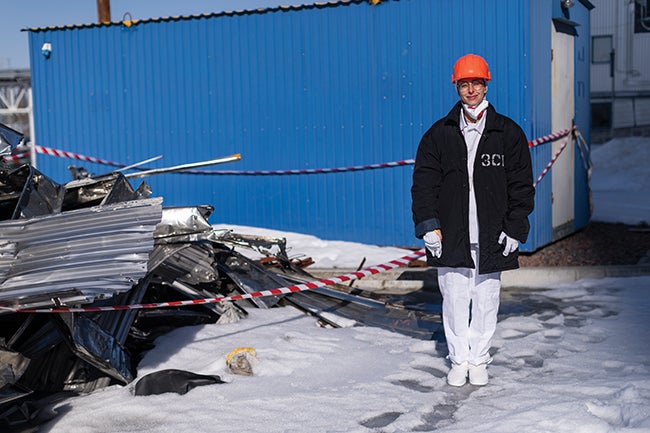
Then, on Feb. 14, 2025, a drone struck the roof of the New Safe Confinement, breaching both the external and internal steel cladding (Figure 3), and creating a hole approximately 6 m (19.7 ft.) in diameter. A fire broke out in the insulation layer between the cladding sheets and smoldered for nearly three weeks before being extinguished on March 7. Radiation levels remained normal throughout the incident. However, a December 2025 IAEA safety assessment confirmed that the NSC had lost its primary confinement capability as a result of the breach, though the load-bearing structure and monitoring systems were undamaged. The EBRD has estimated that repair costs could exceed €100 million, and the structure may not be fully restorable to its original design condition. Temporary repairs are planned this year.
 |
|
3. Alice Marchuk, a local producer and interpreter, stands beside twisted metal panels in a taped‑off area near the NSC, debris left behind after a February 2025 drone strike that breached the structure and ignited a fire. Source: Jack Goras |
On the Ground at 40
Forty years on, the Chernobyl site is a place where the deep past and the volatile present collide. The exclusion zone, once home to more than 100,000 people, has become an unintended wildlife sanctuary where mammal populations thrive in the absence of human habitation—even as it simultaneously serves as the front line of an active industrial decommissioning campaign and a focal point of wartime vulnerability. Former Soviet President Mikhail Gorbachev once said that Chernobyl was a more important factor in the fall of the Soviet Union than Perestroika itself. The accident’s reverberations in global nuclear safety culture, emergency preparedness, and international cooperation have been equally profound.
To understand what the anniversary means in practice—not as a historical abstraction but as a lived daily reality—POWER traveled to the site to speak with the workers, engineers, and experts who continue the painstaking work of making Chernobyl safe. What they told us offers a window into one of the most complex decommissioning challenges the nuclear industry has ever faced, now further complicated by a war that shows no signs of ending.
The People Who Stayed
About 500 people work at the Chernobyl site on any given day. They operate confinement systems, manage liquid radioactive waste, maintain the industrial complex, and monitor radiation safety. Most live in Slavutych, a satellite town about 30 km (18.6 miles) away that was purpose-built for plant workers after the 1986 disaster. Before the war, staff commuted daily by train, but the rail line passes through Belarusian territory and was damaged during the 2022 Russian invasion. Though the distance is fairly short, the journey now takes up to six hours by road because there is no direct route, key bridges have been destroyed, and multiple military checkpoints require repeated document screening. Winter conditions add more time on roads that are not properly maintained. As a result, workers live on-site during 13-day rotations before returning home for 11 days off.
The rotation schedule takes a psychological toll. Workers describe the first week as manageable, but say that after about 10 consecutive days, a kind of cognitive dullness sets in—a state of operating on reflex rather than clarity. Those with monotonous office duties find the effect worse than those who move between tasks and interact with people. Several workers said 11 days off is often not enough time to fully recover before the next rotation begins.
Outsiders are often surprised by the scale of activity. “People ask, why do you stay there?” Hanna Pidhaina, a Category 1 specialist in public and press relations with the Department of International Cooperation and Information, Chornobyl Nuclear Power Plant, told POWER. To answer the question, she said, “There is much work to do.” The site feels neither dangerous nor dramatic to her. “This place is abandoned. It feels peaceful. Someone might feel danger here, but for me, it’s industrial—and nature has captured this place,” Pidhaina said.
Monitoring the Invisible
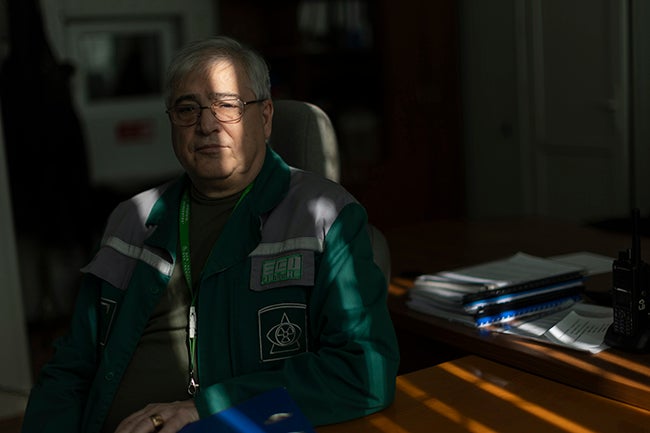
The task of tracking what cannot be seen or felt falls to the State Specialized Enterprise EcoCenter, which traces its origins to the External Dosimetry Laboratory established at the Chernobyl plant in 1986. Its director, Mykola Vasylovych Bespaly (Figure 4), has worked there since Aug. 1, 1986—just months after the explosion—and at age 62, he has spent nearly his entire adult life measuring the accident’s radiological fingerprint.
 |
|
4. Mykola Vasylovych Bespaly, director of the Radiation Dosimetry Measurement Center, sits in his office at the EcoCenter. Nearly 40 years after the disaster, Bespaly and his team continue monitoring radiation levels across the Exclusion Zone. Source: Jack Goras |
The monitoring infrastructure is extensive. An automated network of 38 gamma sensors is distributed throughout the Exclusion Zone, transmitting real-time data to a central dispatch unit. Eighteen stationary monitoring posts pump air through filters for laboratory analysis of radionuclide composition, and five control-dosimetric checkpoints equipped with portal monitors automatically scan every vehicle leaving the zone. If radiation levels exceed thresholds, audible and visual alarms trigger manual inspection by a dosimetry specialist, followed by decontamination if contamination is confirmed.
The EcoCenter’s spectrometry laboratory collects approximately 4,500 samples each year—soil, water, air filters, biomaterials, and even local organisms such as mushrooms and crayfish—and performs about 9,000 analyses annually, using gamma, alpha, and beta spectrometry. The isotopes of primary concern are cesium-137 and strontium-90, both with half-lives of approximately 30 years, along with far more persistent radionuclides including plutonium-239, which has a half-life of 24,500 years, as well as americium-241 and residual uranium from the original fuel. By one EcoCenter calculation—applying a safety factor of 10 times the dominant half-life—Pripyat could theoretically become habitable again in approximately 249,000 years.
Overall, radiation levels across the zone have been declining, but the picture is far from uniform. Contamination falls in irregular patches, and levels can change sharply over very short distances. The 10-km (6.2-mile) zone surrounding the plant remains the most heavily contaminated area, with radioactive fallout distributed unevenly after the explosion. During the first two to three weeks after the accident, iodine-131 was present before decaying away, but the longer-lived cesium, plutonium, and strontium persist.
Scars of Occupation
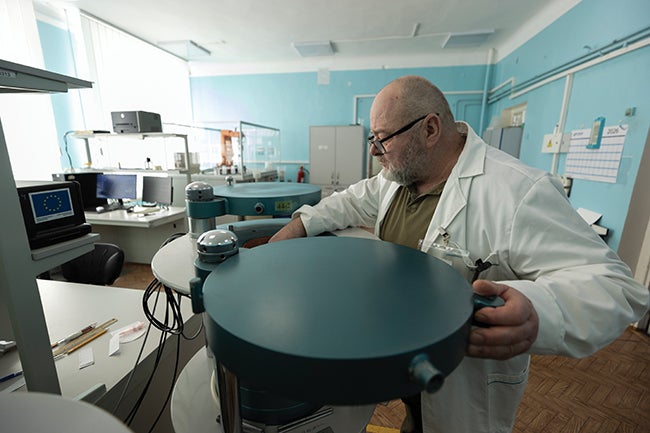
The five-week Russian occupation in early 2022 left physical and institutional scars that are still being repaired. The EcoCenter’s spectrometry laboratory (Figure 5), which had been established in 2015 with European Union (EU) support, was effectively destroyed. Russian troops scattered computers and hard drives across the floor and disabled the facility’s robotic equipment. Monitors and screens were smashed. By all accounts, the occupying forces had little understanding of what they were damaging or of the radiation risks surrounding them—though, notably, no grenades were used, apparently because the soldiers did not know what was stored beneath the facility. Every monitoring system in the laboratory required full restoration. A second phase of EU assistance has since re-equipped the lab with European-manufactured instruments from Canberra and Ortec.
 |
|
5. The head of the EcoCenter laboratory, Leonid Mikhailovych Bogdan, works with European Union–funded equipment installed as part of the restoration of the lab following its destruction during the 2022 Russian occupation. Source: Jack Goras |
When Russian forces seized Chernobyl, approximately 150 plant workers remained on-site and continued to operate critical systems for an entire month without rotation. The first staff exchange came on March 24, when Ukraine negotiated with Russia to allow about 100 workers to rotate out, with roughly 40 replacement personnel permitted to enter. Anyone in a supervisory or safety-critical role was required to stay. The occupation also swept up 176 Ukrainian soldiers stationed at or near the site, who were taken as prisoners of war. As of POWER’s visit, six of those soldiers had still not been returned.
The physical evidence of the occupation is still visible. Russian trenches and fortifications—built from sandbags, gabions, and debris—line roads near the site, partially concealed by snow cover but still identifiable. POWER’s correspondent learned that a copy of the Russian newspaper Komsomolskaya Pravda was found within one of the sandbag structures, evidence that fresh press was being delivered to troops even during the occupation. It contained an article about alleged “biolaboratories in Ukraine,” complete with claims about “dirty bombs” and a map purporting to show laboratory locations. Sandbags at the fortifications were made from flour sacks traced to a mill in Kursk, Russia.
The Remains
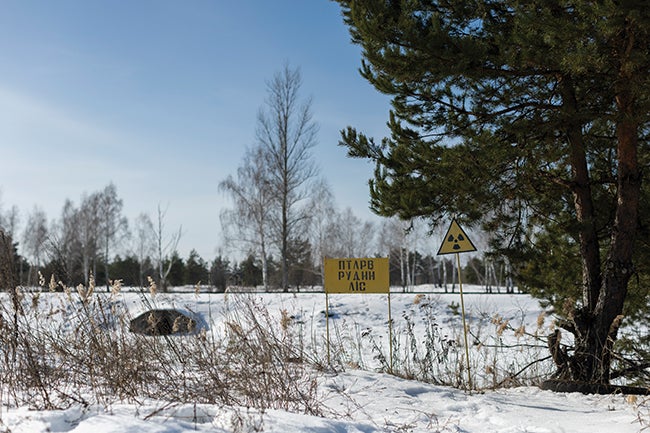
One of the most striking sights in the Exclusion Zone is the lush green forest that now stands where the so-called Red Forest once was. After the 1986 explosion, winds carried radionuclides westward into a stand of coniferous trees that were particularly efficient at absorbing radioactive particles. The pine needles turned yellow, then red, giving the forest its grim name (Figure 6). Military engineering equipment was deployed to uproot the contaminated trees and bury them on-site, creating what was designated a temporary radioactive waste localization site. In the decades since, a new forest has grown over the burial grounds. Visitors are often startled to see vibrant greenery in what they expect to be a wasteland—unaware that the contaminated trees lie buried just beneath the surface.
 |
|
6. A Soviet-era sign marking the “Red Forest,” one of the most radioactive areas inside the Chernobyl Exclusion Zone, contaminated during the Unit 4 disaster. Nature has since reclaimed much of the area. Source: Jack Goras |
Nearby, the village of Kopachi—one of the closest settlements to the plant—tells a different story of failed decontamination. After cleanup efforts proved ineffective, authorities demolished the village’s houses and buried them where they stood. A kindergarten, village council building, and collective farm were destroyed. Only three structures remain, possibly used as a headquarters for liquidators. In the chaotic days after the explosion, cows in the village continued to be milked for several days, and the contaminated milk was delivered to a cheese factory in Chernobyl. The products reached consumers, according to sources POWER spoke with in the local area.
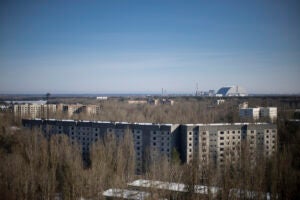
Pripyat itself is a haunting time capsule. Founded on Feb. 4, 1970, the city was only 16 years and 82 days old when the disaster struck. At its peak, it was home to more than 49,000 adults and about 17,000 children—a young city with an average resident age of just 26, growing by 500 to 600 people per year.
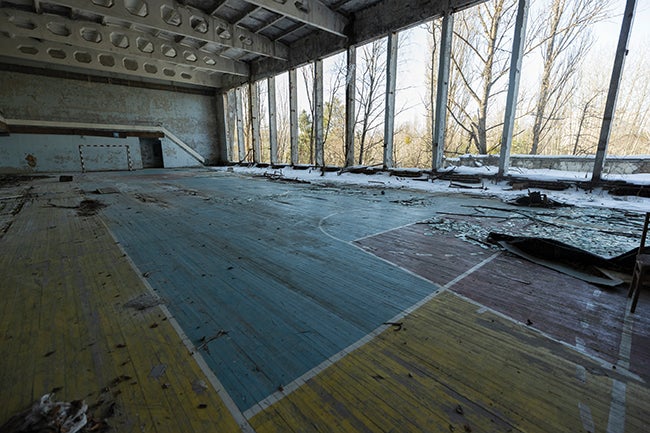
By Soviet standards, it was a privileged place. There were no shortages of food or consumer goods, furniture could be obtained without the interminable waiting lists common elsewhere, and career advancement was readily available. The city boasted more than 30,000 rose bushes, earning it the nickname “the city of roses.” The “Energetik Palace of Culture” (Figure 7) featured a concert hall with advanced stage lighting and even hosted a disco that played foreign music, which was officially banned elsewhere in the Soviet Union. Five residential districts, each with three kindergartens and large schools, were planned to support a population that was projected to reach 80,000.
 |
|
7. Among the modern facilities built for workers in Pripyat was the Energetik Palace of Culture, which included a basketball court, swimming pool, and other recreational amenities. Since the disaster, the site has been vandalized and stands in a state of decay. Source: Jack Goras |
The evacuation, when it finally came more than 36 hours after the explosion, required more than 1,200 buses, dispatched to every residential building based on a calculation of the population. Yet, Pripyat did not become completely uninhabited. Firefighters, police, municipal utility workers, and medical staff remained to maintain basic infrastructure. Later, large-scale decontamination was carried out by chemical troops, who removed layers of topsoil and laid new asphalt. Looting occurred in the first years. Today, after 40 years of decay, the buildings are in advanced deterioration. The roses have reverted to wild rosehip. Soviet street names remain in place—decommunization has not reached the Exclusion Zone.
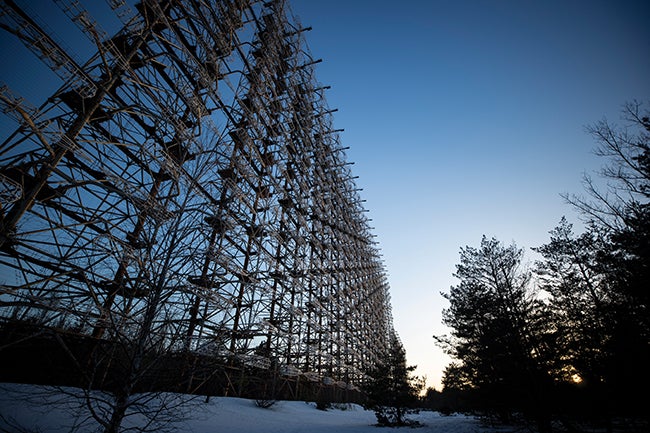
Another Cold War artifact endures within the zone: the Duga radar, a massive Soviet over-the-horizon early-warning system designated 5N32, built between 1972 and 1976 in the secret military town of Chornobyl-2. The system’s two phased-array antennas—the larger standing 150 m (492 ft.) high and stretching 2 km (1.24 miles) long—were powered by the Chernobyl nuclear plant and designed to detect U.S. missile launches at ranges of 900 to 3,000 km (559 to 1,864 miles). Known internationally as the “Russian Woodpecker” for the repetitive tapping signal it broadcast, which interfered with civilian aviation and drew protests from the U.S., the UK, and Canada, the system was abandoned after the 1986 accident. The towering antennas remain (Figure 8), a rusting monument to the overlapping Cold War and nuclear histories embedded in this landscape.
 |
|
8. The Duga radar, a massive Soviet early warning defense system, stands inside the Chernobyl Exclusion Zone. The once-classified Cold War installation is now one of the zone’s most recognizable landmarks. Source: Jack Goras |
Safety First, Last, and Always
Asked what lessons from Chernobyl remain most urgent for the global nuclear industry, the plant workers POWER spoke with gave answers that were striking in their directness. “Safety rules must always come first,” one said. “Financial or political pressures must never override safety. All safety rules need to be followed, and there shouldn’t be personal or political goals” influencing decisions. It was a message delivered without abstraction by people who live with the consequences of what happens when those principles are violated.
One persistent misconception that workers wanted to correct is the assumption that the entire site is lethally irradiated. In reality, radiation safety protocols are well established, and it is safe to work in many areas under controlled conditions. The danger, they stressed, lies not in an imagined blanket of radiation but in the uneven distribution of contamination—hot spots that can shift over short distances—and in the sheer duration of the hazard posed by long-lived isotopes.
The immediate priority for the site is the restoration of the NSC following the February 2025 drone strike. Operations are funded by the Ukrainian government, but major capital projects, including the arch repairs, depend on European partners. The decommissioning work itself proceeds at a pace that can only be described as painstaking: each piece of equipment must be individually dismantled and decontaminated, a process that has been underway for decades and will continue for decades more. Ukrainian guards now secure the perimeter, and the IAEA maintains its permanent rotating presence.
Despite everything, the workers expressed cautious optimism about the future. They envision the Exclusion Zone eventually hosting additional scientific laboratories and radioactive waste facilities, drawing researchers and specialists to a landscape that, for all its hazards, offers an unparalleled natural laboratory for studying the long-term effects of radiation on ecosystems. The decommissioning, they hope, will proceed smoothly, though no one at Chernobyl holds fantasies about rapid timelines.
Forty years after a flawed reactor design, a mismanaged safety test, and a chain of operator errors combined to produce the worst nuclear accident in history, Chernobyl endures as both a warning and a workplace. The 500 people who rotate through its gates carry no illusions about what happened here, but they carry on. The arch may be damaged, the timeline uncertain, and the war unresolved, but the lights stay on, the dosimeters keep reading, and the slow, methodical work of decommissioning continues. In a place defined by catastrophe, that persistence may be the most consequential story of all.
Click through the slideshow below to view 40 exclusive images from inside the Chernobyl Exclusion Zone. (Photos by Jack Goras)

—Alice Marchuk is a Ukrainian producer and interpreter, Jack Goras is a freelance photographer, and Aaron Larson is POWER’s executive editor.