The Williamson Free School of Mechanical Trades near Philadelphia has been training power plant operations professionals for 112 years, and its graduates hold top positions at many major gencos, refineries, equipment suppliers, and design and construction companies. Testimonials indicate that it provides one of the best models for training tomorrow’s plant operators.
Workforce training and transition are colossal concerns for the U.S. electricity industry. The average age of power plant craft workers is 50 (the highest of any industry), and 30% of them are expected to retire within the next 10 years. Since our report on the aging workforce a year ago (POWER, June 2005), the issue has gained currency at many utilities. The problem and possible solutions to it have been the subject of many recent conferences, white papers, consulting offers, and magazine articles. But the sad truth for our industry is this: There already aren’t enough competent operations personnel to go around, and the shortfall is growing.
 |

In free markets, every trend provokes a response, and the labor market for plant O&M workers is no different. Over the past decade, as utilities cut costs to become leaner and meaner competitors, openings for experienced operators dwindled while those for entry-level positions approached zero. But with the rollback of deregulation and an urgent need for new generating capacity in many states, the supply/demand pendulum has swung back. Many operations managers in the power industry say they are now actively courting highly experienced O&M professionals with annual salaries between $50K and $100K. Opportunities for entry-level workers have grown as well.
Ten years ago, the recruiting process for many O&M organizations consisted solely of interviewing ex-Navy techs as they came down the gangplank. Selling them on working at a power plant was easy, because the job would be on terra firma, where they could put down roots and start a family. As you likely know, military veterans loom large in the ranks of O&M shops; at several, more than half the staff cut their teeth in the U.S. Navy.
However, over the past decade the shrinking of the American fleet and higher reenlistment rates have shrunk that talent pool. To fill their skilled-worker pipelines, some utilities have partnered with community colleges and high schools. Others hire based on aptitude and a promise to develop the skills an operator or technician will need through a combination of class work and on-the-job training. Some utilities are even offering retirees the opportunity to “double-dip” on their pensions by doing part-time work. The urgency of the situation demands innovative approaches to recruiting. Gone are the days of just posting a classified ad and sorting through the resumes.
The rigor required to become an O&M professional is exemplified by the intense, three-year training program of the Williamson Free School of Mechanical Trades, which offers an associates degree in power plant technology. The program is designed to be hands-on from orientation through graduation. Students are guided by experienced instructors who typify the traits espoused by Isaiah Williamson when he founded the school (see sidebar).
 |

Inside the program
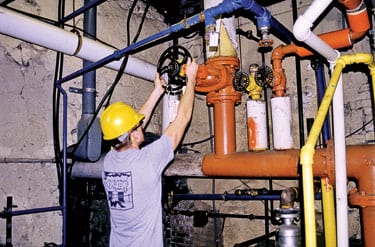
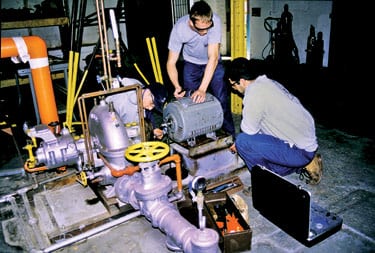
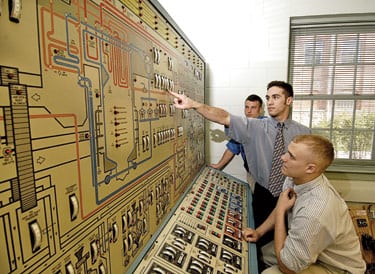
At Williamson, classroom and laboratory learning are complemented by work in the on-campus power plant and supplemented by summer and inter-semester internships and co-op positions with local gencos. Williamson is no “party school.” Each weekday begins with a lineup and a recitation of the Pledge of Allegiance around the flagpole at the main building at 6:45 a.m. and ends with lights-out at 10:30 p.m. A typical day consists of a four-hour block of academics and a four-hour block of shop work, unless you are on shift that day. Power plant technology students, who are responsible for the 24/7 operation of the school’s steam heat system, take turns standing a four-hour watch on the school’s two firetube boilers.
The school stresses traditional values such as faith, integrity, diligence, excellence, and service and incorporates them into the curriculum whenever appropriate. Williamson’s unique combination of hands-on technical training, academic study, character development, and values education has given thousands of students the foundation they need to succeed in the power industry or any other career they choose.
Last year, Williamson’s 60-plus power plant technology students worked on a number of on-campus projects that should sound very familiar:
- Installing and calibrating instruments for remote monitoring of pressure readings.
- Putting in a new feedwater tank and pump for the kitchen boiler.
- Setting up procedures for daily monitoring of boiler emissions.
- Repairing and replacing a condensate return pump.
- Completing a new tunnel light with remote indication.
- Adding a filter tank for the campus shops’ hot water loop system.
- Helping students in Williamson’s Machine Tool Technology program label boiler-room equipment.
Lock out-tag out (LOTO) procedures are constantly under review at many plants, and Williams is no different. One current project is reviewing operating and LOTO procedures for boiler start-ups and shutdowns, including the updating of plant drawings. Sounds like a day in the life of a typical power plant to me.
Get your hands dirty
Book learning will get you only so far in the world of power plant operations. Williamson’s instructors understand that gencos want well-rounded graduates able to hit the ground running. One of the best ways to cultivate “can do” and “no excuses” attitudes in students is to give them a taste of pressure situations via three-week co-op work opportunities during semester breaks. This year found seniors working at Exelon Corp.’s Limerick Nuclear Generating Station and underclassmen working at Montenay Power Corp., a solid waste–to-steam plant. Last summer, most juniors benefited from 10-week internships with several top companies in the industry.
 |

According to John Beaudry, director of the Power Plant Technology program, every 2005 graduate of the program found a job, and each was able to choose from among multiple offers. One of the top recruiters was Premcor Inc. (since acquired by Valero Energy), which hired four students as instrumentation and controls technicians for its refinery in Delaware City, Del. Others included PPL Corp. (Allentown, Pa.), which hired two graduates as linemen, and Florida Power & Light Co., which also added two new alumni. Exelon and Raleigh-based Progress Energy also continued to add graduates to their operating staffs.
The outlook for the class of 2006 looks just as bright, said Beaudry. “Our challenge is great, though. The companies that hire our graduates are counting on us to increase our educational requirements. They want to hire workers who don’t require additional training. We’re up to the challenge, though. In fact, we’re going to intensify our hands-on training once we finish disconnecting our power plant from the local grid” (see sidebar).
Back to the future: Williamson campus will once again be an energy island
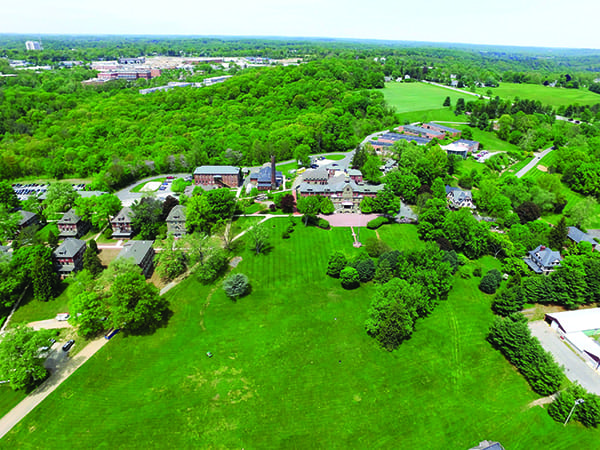
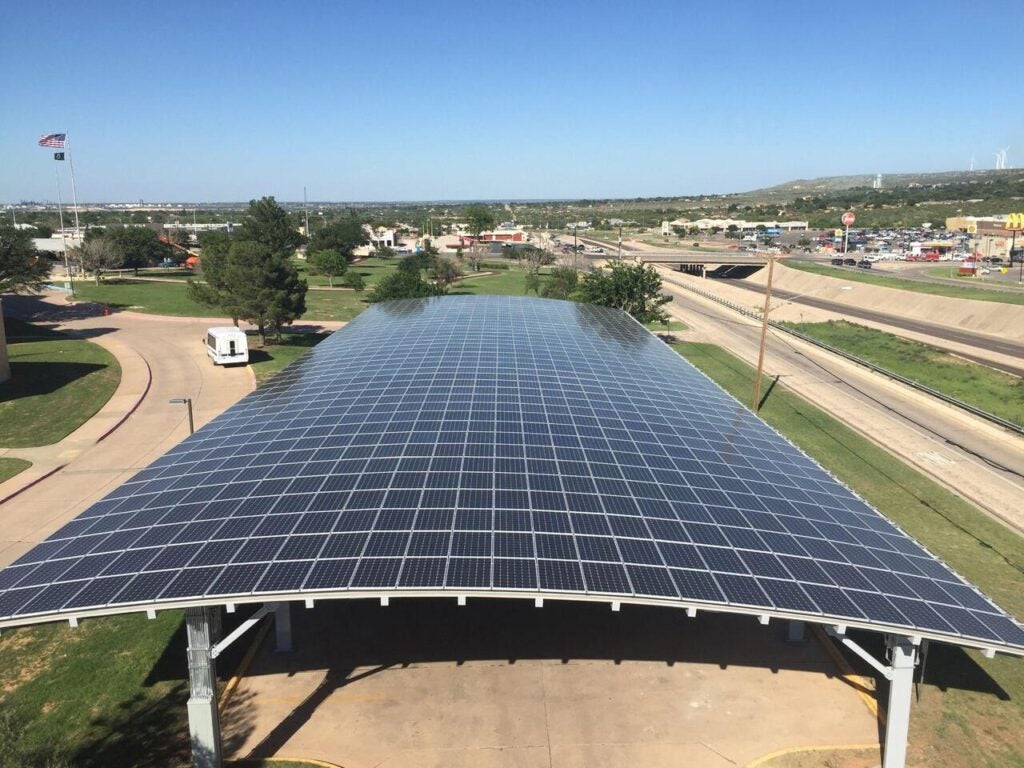
For its first 90 years, ending in the 1980s, the Williamson campus was a self-sufficient “energy island” (Figure 1). A small on-site power plant converted coal to steam for electricity production and heating, with diesel engine-generators providing backup. The combined heat and power plant also served as a “living laboratory” for students, providing opportunities to learn first-hand the O&M principles and techniques that make modern utility power plants tick.
There’s no better way to learn the fundamentals of thermodynamics, the chemistry of combustion, water treatment, and electrical systems than to see them at work. The Williamson campus even has its own “mini grid,” which students use to learn tricky techniques such as synchronizing multiple generators.
In the 1980s, economic considerations dictated that Williamson switch to buying its power from the local utility, Philadelphia Electric Co. Now, however, plans are being actively developed to disconnect the campus from the Philly Electric grid, making the Williamson campus an energy island once again. The fuel of choice for the 750-kW project remains coal, with pulverized coal or fluidized bed combustion technologies being considered. Working at the miniature utility plant, which will include all the expected components and environmental controls, will give Williamson students an unparalleled education.

1. Escape to Energy Island. Williamson Campus operated as an energy island for the first 90 years of its existence and is working to once again go off-grid. The power house will be operated by students as the ultimate hands-on training program. Courtesy: Williamson Free School of Mechanical Trades
Rave reviews
“Today, at Reliant, I take pride in recruiting and hiring Williamson graduates,” Cabala continued. “Recent graduates have the same attributes and educational background that I received from the Williamson School 36 years ago. Impressively, most Williamson seniors or graduates I interview can talk very knowledgably about boilers, feed pumps, controls systems, electrical circuits, and other equipment, because they’ve actually operated them. Among power companies and equipment suppliers, the competition to land graduates of the Power Technology program at Williamson is stiff, because the word has gotten out that they have ‘the right stuff.’ ”
Florida Power & Light’s Ken Lutz agrees that Williamson graduates are very valuable assets. “Our parent’s Marcus Hook power plant in Pennsylvania has six Williamson graduates on staff. We’re now working with Williamson to form a summer intern program at Marcus Hook to help seniors acquire the experience they need to thrive in the fast-growing U.S. power industry.”
From a plant owner’s point of view, A.J. Smith III—VP of asset operations-fossil/hydro generation for Duke Energy—summed up employers’ sentiments by noting, “I have found Williamson to be a reliable source of new talent that our industry desperately needs today.”
Smith said that Williamson graduates’ blend of academic and real-world experience is what sets them apart. “The school’s curriculum, laboratories, and on-campus power plant combine to give students the knowledge and skills they need and employers want. But the added intangible from Williamson is character development. With a Williamson graduate you get a mature, educated, job-ready professional with a good work ethic and the seasoning to take on any assignment.”
Best of class
It has been well over a hundred years since Isaiah Williamson founded the school that bears his name. But the school’s guiding principles remain unchanged: “Every able-bodied, healthy young man who has learned a good mechanical trade, and is truthful, honest, frugal, temperate, and industrious, is certain to succeed in life, and to become a useful and respected member of society.” Not many colleges would dare to set their goals that high.