“If you build it, they will come” has proven a risky strategy for some smart grid projects. One of California’s largest investor-owned utilities faced the opposite challenge—customers whose behaviors necessitated a smarter grid. Customer involvement in and support for smart grid plans is a major reason SDG&E’s smart grid efforts continue to garner accolades, including the 2012 POWER Smart Grid Award.
 |
| Courtesy: SDG&E |
When POWER introduced its new Smart Grid Award in early 2011, money from the American Recovery and Reinvestment Act was still flowing, and there was a lot of industry chatter about smart grid projects, though the vast majority of them just involved meter change-outs. Our inaugural year Smart Grid Award went to Vermont Electric Cooperative (VEC), which demonstrated how a small team of savvy professionals can develop and implement a successful smart grid vision with what many would consider meager resources and industry visibility.
This year, the winner is at the opposite end of the size spectrum and the other side of the country. San Diego Gas & Electric (SDG&E), a Sempra Energy company, serves 3.4 million consumers through 1.4 million electric meters and more than 850,000 natural gas meters in San Diego and southern Orange Counties—a service territory covering 4,100 square miles. SDG&E is making its mark as one of the most comprehensive large-scale smart grid ecosystem developers. The utility has already garnered numerous smart grid awards, but that’s not why we chose it for the POWER Smart Grid Award.
The People Led, the Leaders Followed
Just as VEC proved that a small cooperative can achieve benefits that many larger utilities of all stripes have not, SDG&E’s smart grid experience has also turned accepted wisdom on its head. Large investor-owned utilities (IOUs) in particular have been accustomed to a top-down approach that might glibly be called “Father Knows Best.” For SDG&E’s smart grid plan, the motto is more like “When the people lead, the leaders will follow.”
Obviously, like any other utility that answers to shareholders, SDG&E doesn’t do anything simply because customers ask for it, whether the ask involves more renewable generation or lower bills. Nevertheless, unlike some utilities that have faced heated opposition to the introduction of advanced metering infrastructure (AMI, digital meters with wireless communications capabilities), SDG&E’s customers have largely welcomed its smart grid efforts and are a major, if indirect, driver of them.
SDG&E’s “Smart Grid Deployment Plan 2011–2020” (SGDP) notes that many utilities are taking a wait-and-see approach to smart grid technology deployment. “For the San Diego region and SDG&E, however, waiting is not an option,” it says, because:
- Its customers and many stakeholders have shown consistent support for new renewable legislation, generation technologies, and projects.
- Its customers have installed more megawatts of rooftop solar in San Diego than utility customers in any other U.S. city. By the end of 2011, more than 13,000—more than 1%—of SDG&E customers had installed photovoltaic systems totaling over 100 MW of capacity. (As of June this year, the total was 135 MW, and the forecast for 2015 is 300 MW to 400 MW.)
- Its customers are already taking delivery of Nissan Leaf and Chevrolet Volt electric vehicles, and more Leafs are being sold in San Diego than anywhere else in the country. Ford, Mitsubishi, and BMW have also targeted the San Diego region for their plug-in electric vehicle (PEV) release in late 2011 to early 2012.
- Its customers already have access to interval usage data, and thousands signed up for Google PowerMeter (before it was killed by Google in 2011), and more than 7,500 are using the Green Button (see sidebar).
Push-Button-Easy Energy Efficiency
Enhancing communications with customers is an integral part of the smart grid. To this end, SDG&E was an ardent early supporter of the “Green Button” initiative. By clicking on the Green Button—an online energy usage data tool—customers can access up to 13 months of their detailed energy consumption data and learn when they use energy and how much they are using. To date, more than 7,500 SDG&E customers have downloaded this data.

Customers can then provide the data to third parties or do research themselves to see where they can conserve and reduce their energy use. Instead of waiting to get a bill at the end of the month, customers can access the information to be more proactive about how they use energy and, hopefully, take action to find new ways to conserve.
As with so many smart grid projects, the details evolve over time. Though SDG&E originally used Itron to help support the Green Button “and get it launched quickly, we now are using Aclara in this role as part of our broader enterprise focus to engage the customer,” said Lee Krevat, the utility’s smart grid director.
Later this year, SDG&E intends to take the Green Button a step further and launch “Green Button Connect,” a tool that will allow customers to share their energy usage data with third parties of their choice on an automated and daily basis. This will open up a new market for private companies to offer innovative services to customers that help them better manage their energy use and conserve. With access to this daily energy usage data, private companies may in the near future develop applications that provide this information to customers in new ways, perhaps through a cell phone app or a personalized web portal. Third parties have already developed 64 Green Button apps, according to the website Open Energy Information.
Integrating a large number of small, distributed renewable generation sources—along with the utility-scale ones necessary to meet state mandates—plus new load types that can also serve as energy storage devices is difficult enough with aging infrastructure. When you add the desire to use energy efficiently and provide incentives for doing so, you’re going to need a smarter grid.
One reason SDG&E has garnered accolades for its smart grid efforts is that the scope of those efforts is broader than at most utilities. Utility grid modernization goals are bound to vary for a variety of reasons, including generation portfolio options, existing infrastructure status, population density and growth patterns, and more. That caveat aside, the most basic smart grid plan would entail equipping the system’s devices with bidirectional communication capabilities and integrating information technology into grid operations and back office systems to enable more timely, wireless, remote access to and action on energy usage and grid health. SDG&E is going beyond the basics.
The Challenge of Phased Implementation
One conundrum any utility faces if it aims to develop a grid modernization program that touches end users’ premises is how to balance a vision of the “end state” benefits with necessarily phased implementation. Just installing smart meters doesn’t enable access to real-time energy usage data, for example. Nor does it necessarily ensure faster outage response. Getting customers on board to support each incremental step in developing a smarter grid requires them to understand the big picture while the utility delivers substantive, incremental improvements.
One way SDG&E addressed this challenge was to develop the SGDP. Its details include spelling out what customer groups the utility plans to equip with what tools and services each year. Another strategy was to enlist customer input from the start of the AMI planning process. Three areas of interest stood out as the highest priorities in these discussions: customer behavior/education, demand response, and rate design. One finding that emerged is that one size does not fit all when it comes to educating customers about smart grid technology changes.
To say that customers have supported SDG&E smart grid efforts is not to suggest that all customers have. As among any large group of individuals, some are opposed to any new ideas. For SDG&E’s smart meters, though, fewer than 1,000 customers have opted out of its total 2.3 million installations to date (0.0004%). The California Public Utility Commission (CPUC) ruled in March that state IOUs could charge up to $75 per customer initially plus $10 a month for smart meter opt-outs to compensate for the extra labor required for meter reading, maintaining two types of meters, and duplicating back office systems. In the words of the CPUC, “This opt-out option is a service because the standard for metering has been transitioned throughout the country and, for the most part, the world” to wireless digital meters.
What’s Driving SDG&E’s Smart Grid?
As noted earlier, drivers of PEVs and homeowners with rooftop generation are among the reasons SDG&E needs a modernized grid. But California’s Renewables Portfolio Standard (RPS) is driving the lead bus. Without a more robust and responsive grid from end to end, it will be virtually impossible for California’s IOUs to feed 33% renewables onto the wires by 2020 (see sidebar).
Adding Lots of Renewables Requires a Smarter Grid
With more than 17,200 rooftop solar installations (for a total capacity of 135 MW as of mid-2012), San Diego has one of the highest rates of solar panel installation in the country. That’s a lot, but it won’t get the utility to its 2020 goal, which is where imports and new California renewable projects come into play—along with new transmission, like the Sunrise Powerlink, which was brought online in mid-June.
Lee Krevat, SDG&E’s smart grid director, said, “We are making great strides in securing contracts with larger utility-scale renewable projects, which will leverage the ideal solar, geothermal, and wind resources that can be found in the San Diego and Imperial Counties and Baja California region. In 2011, SDG&E signed 17 new renewable energy contracts for a combined total of 1,482 MW. These contracts range from 299 MW of wind from Pattern Wind, to two contracts with Tenaska Solar Ventures for 270 MW of photovoltaic (PV) solar power, all located in the Imperial Valley. These efforts will help us attain California’s mandates for utilities to secure 33% of their energy from renewable energy resources [Figure 1] and reduce greenhouse gas emissions to 1990 levels by 2020 (SDG&E committed to the former goal in November 2008, more than two years prior to it being signed into law).”
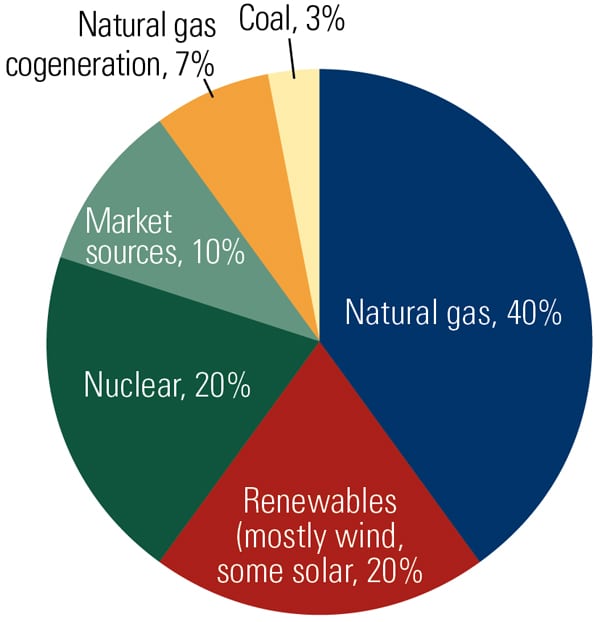 |
| 1. Seeking to make renewables a bigger piece of the pie. Although its power supply mix varies from year to year—and the closure during at least much of this summer of the San Onofre Nuclear Station will mean a lower percentage for nuclear than anticipated—San Diego Gas & Electric’s supply for 2012 is roughly 20% renewables. Getting to 33% renewables by 2020 will require a set of robust and time-sensitive information and communications tools that are integral to a smarter grid. Source: SDG&E |
As Senior Vice President for Power Supply James Avery told POWER, one way the smart grid will “ensure continued power quality despite the intermittent nature of renewable energy sources [is] through new technology that senses and accounts for any variability in real time. For example, we are adopting smart sensors that can tell us if we have a drop in voltage or an excess of energy anywhere on the grid. Smart inverters will then engage to keep the power in a state of equilibrium.
“In order to do this, information has to be conveyed and analyzed very quickly with enhanced communications systems that can then tell the inverters, capacitors, and switches to make sure the grid maintains a high level of integrity throughout. Let’s say a cloud moves in front of the sun and causes many solar panels to stop producing energy. Sensors would pick up the drop in solar energy and immediately switch to battery power to keep power flowing. If the cloudy weather continues for a greater length of time, perhaps natural gas peaker plants would kick in and maintain energy flow, while the batteries move into recharge mode. This whole process needs to happen within seconds. That’s why the smart grid is crucial to integrating renewable energy and will continue to be an operational focus of ours going forward.”
Energy storage is often mentioned as an aid to integrating higher levels of renewables, but Avery notes that “Energy storage has also posed several challenges, including finding technology that can pass quality tests, identifying proper locations for installation, and purchasing it for a reasonable price. Energy storage offers many potential benefits if we can reduce the cost of this technology to encourage larger investments.”
In 2012, the utility is installing eight energy storage devices—six small units in the community and two large units at SDG&E substations—designed to “smooth out” renewable intermittency issues.
Avery noted that SDG&E is also deploying a dynamic VAR device that will soon be installed on a circuit with a large PV system that is already causing fluctuations in that portion of the grid. “This new system will inject energy to level out the swings in supply caused by this PV system.”
In addition, SDG&E was awarded a patent and is investing in smart transformers (see the web supplement mentioned at the end of this story) that can measure the fluctuations of power on the grid and control various loads to keep that power within manageable levels. “An example of how this technology can improve the grid is electric vehicle (EV) integration,” Avery explained. “EVs consume a large amount of power when they are recharging. If too many vehicles charge at the same time, they can put stress on the grid. The smart transformer will be able to receive signals and manage this demand by communicating with the EVs or their charging equipment to charge at a later time, when power is plentiful, or take turns in charging. This will help integrate EVs into the system and create a more flexible and responsive grid overall.”
The Southern California utility’s customers have supported state policies that help drive smart grid development. Beyond the RPS, those policies include Senate Bill 17, Assembly Bill 32, the state’s distributed generation goals, its demand response (DR) mandate, improved building and appliance efficiency standards, implementation of the electric procurement loading order, and national security standards such as the North American Electric Reliability Corp.’s Critical Infrastructure Protection program.
For the reasons already listed, SDG&E was an early smart grid pilot program player. Over the years, its early mover status and the size of its customer base have made it a valuable contributor to the development of smart grid standards and a highly visible member of national smart grid organizations, including the Gridwise Alliance, Open Smart Grid users group, and the IBM Intelligent Utility Network Coalition.
A Three-Part Vision
According to its SGDP, “The Smart Grid empowers customers, increases renewable generation, integrates plug-in electric vehicles (PEVs) and reduces greenhouse gas (GHG) emissions while maintaining and improving system reliability, operational efficiency, security and customer privacy.” Those may not be the exact goals that every U.S. utility would have for its smart grid efforts, but they’re smart ones for the San Diego area’s realities.
SDG&E has a tripartite vision of:
- A “smart customer” empowered with reliability, choice, control, and convenience.
- A “smart utility” capable of coordinating resource operation from central station generation to distributed energy and demand resources sited on the distribution system that can provide customers with “more timely and relevant information on their energy usage, market prices and system conditions.”
- A “smart market” for customers and all grid stakeholders enabled “by creating a utility platform that ensures reliability and allows resources to respond to accurate and timely price signals and system event conditions” and strengthened efficiency, transparency, and security of the grid.
Achieving some of these goals depends upon future standards development and new technology implementation.
Nine Program Areas
Both to serve its customers and meet the state’s ambitious energy policy goals, SDG&E’s smart grid plan focuses on nine program areas: customer empowerment; renewable growth (Figure 2); electric vehicle growth; reliability and safety; security; operational efficiency; smart grid research, development, and demonstration; integrated and cross-cutting systems; and workforce development.
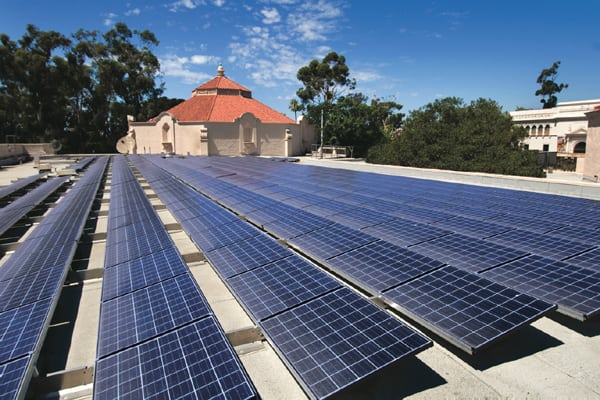 |
| 2. Sun power for science center. SDG&E is contributing to the growth of renewable generation in multiple ways, including through its Sustainable Communities program. These solar panels were installed on the Reuben H. Fleet Science Center in Balboa Park as part of that program. Courtesy: SDG&E |
SDG&E approaches each of these from a cost-effectiveness perspective to determine whether each project’s costs are outweighed by its benefits. This analysis has been applied to all projects in the SGDP, whether they are required to meet state or federal policy requirements or support customer choice and preferences. SDG&E says in its SGDP that it “will not request authorization for funding of projects not necessary to comply with policy unless the benefits exceed the associated costs or where they are required to effectively communicate with customers.”
That position alone is worth adopting nationwide. That’s not to say that the utility has a crystal ball. SDG&E acknowledges that, because much of the technology is new, future costs could vary from initial estimates. As Senior Vice President for Power Supply James Avery told POWER when asked about the biggest smart grid implementation challenges SDG&E has faced, “The nascent nature of the technology continues to surprise us. Whenever new technology is adopted for the first time, a learning curve ensues. However, we expect our industry to continue its transformation into a more technologically focused one that embraces innovation.”
As the SGDP explains, “Where technology innovations or energy markets are not mature enough to support a full deployment of a new or potentially promising Smart Grid investment, SDG&E’s strategy is to leverage pilot and demonstration projects to improve the utility’s understanding of likely costs and benefits before a full deployment decision is proposed.”
Two examples of this approach are its careful testing of home area networks (HANs), discussed later, and the Borrego Springs Microgrid project (see sidebar below).
Microgrid Puts the Pieces Together to Study Integration Issues
San Diego Gas & Electric is creating a new $25 million microgrid in Borrego Springs with the help of $10 million in grants from the Department of Energy and California Energy Commission. SDG&E’s Borrego Springs Microgrid will be the largest project of its kind in the nation and will integrate solar power, battery energy storage, automated switching, and active customer participation. The microgrid will interconnect these elements to create a more robust, self-sustaining grid that can better manage outages and enhance local reliability.
Borrego Springs residents have installed numerous rooftop solar arrays, and SDG&E has installed traditional generators for the microgrid project. The utility also installed a 1.5-MWh battery energy storage device at the local substation in June that is expected to be operational in July (Figure 3).
 |
| 3. Banking energy. A 1.5-MWh battery energy storage component for the Borrego Springs Microgrid was installed in June. The ability to store energy, from renewable generation sources in particular, provides grid operators flexibility for handling unexpected condition changes. Courtesy: SDG&E |
The utility is recruiting 125 residential and small commercial customers in Borrego Springs to be part of the Microgrid Energy Manager pilot program for testing home area networks. This new technology will provide simulated real-time pricing signals and “reduce your use” requests, and will offer incentives to customers for participating and actively managing their energy usage to reduce peak load. That pilot is expected to launch in the second half of 2012.
SDG&E also worked with the University of California at San Diego as it developed a microgrid on the La Jolla campus (see “Smart Power Generation at UCSD” in the Nov. 2010 issue of POWER). For more information on the value of microgrids to larger smart grid efforts, visit https://www.powermag.com and search for “microgrid.” In particular, see “The U.S. Military Gets Smart Grid” in the Jan. 2012 issue and “The Smart Grid and Distributed Generation: Better Together” in the April 2011 issue.
Many of the nine program areas, and the smart grid project deployments that support them, overlap. Later sections look at what SDG&E has achieved to date with just some of the more than 60 projects that support its multiple goals.
The Cost/Benefit Bottom Line
SDG&E smart grid program cost estimates for 2006–2020 are “approximately $3.5 to $3.6 billion and include previously authorized investments.” Overall estimated benefits are higher, it says, “between $3.8 and $7.1 billion,” including “estimated societal and environmental benefits of $760 million–$1.9 billion based on avoided emissions through the integration of renewable energy and PEVs as well as the estimated avoided fuel costs PEV owners realize by the successful integration of PEVs.”
Though such benefits may be a harder sell in some parts of the country, they are in a sense “mandated benefits” ultimately deriving from state requirements. Utilities without such aggressive RPS goals may be able to invest less for comparable returns on investment.
Avery said that “SDG&E will seek to fund its Smart Grid effort primarily through the normal CPUC and Federal Energy Regulatory Commission rate-making process. Other funding opportunities through the Department of Energy and California Energy Commission or other avenues will be utilized on a case-by-case basis.”
Addressing Security and Privacy Concerns
Before looking at some of the actual projects and their results, it’s worth noting SDG&E’s attention to what may be the hottest hot button smart grid issues for end users: security and privacy. SDG&E’s “Smart Grid Deployment Plan 2011–2020” runs 354 pages, and 20% of those pages are devoted to grid and cybersecurity strategies, including customer privacy.
Although most of the media coverage of grid security focuses on the new challenges that smart grid technologies pose, new technologies also provide opportunities. For example, new communications and control technologies can help “prevent or isolate the impacts of any physical or cyber threats to one or multiple portions of the Smart Grid to maintain system reliability in the event of a threat.”
As for consumer privacy, the Southern California utility is using both the National Institute of Standards and Technology’s four dimensions of privacy and the seven “Privacy by Design” foundational principles as guidance for its privacy program. Developed by Dr. Ann Cavoukian, information and privacy commissioner of Ontario, Privacy by Design was recently made an international standard.
In March, SDG&E announced the incorporation of Privacy by Design into its smart grid initiative. This partnership is the first of its kind in the U.S. and, the company said, “emphasizes the commitment of the company in designing, building and operating a secure, reliable and trustworthy smart grid that safeguards customer privacy from the start.” Specifically, that means, for example, ensuring that privacy is the default position of all programs and incorporating privacy end-to-end throughout the life cycle of any personal information.
Smart Meters Are the Foundation
SDG&E has nearly completed installation of all 1.4 million smart meters and advanced communications upgrades to about 850,000 gas meters in its service territory. As of June 10, electric meter change-outs were 97.9% complete.
“Smart meters are foundational,” said the utility’s smart grid director, Lee Krevat, “enabling technology that leads to greater energy efficiency and more options for customers. This includes home area network functionality, which will allow electric appliances, thermostats, and other devices to receive event and price signaling information and enable them to automatically conserve when electricity rates are highest and activate when they are lower, such as at night. This enhanced efficiency reduces stress on the grid and lowers emissions.”
Via the Zigbee HAN chip in the meter, smart meters “are the most cost-effective way for customers to get near-real-time energy consumption data,” said Krevat. The smart meters provide the hourly data that makes Green Button (see sidebar) and other energy efficiency efforts possible.
For example, the utility is developing its own app that will provide usage information and other options, such as texts that will inform customers when they are going above a self-identified usage maximum. “We will also offer customers a carbon footprint calculator, which will provide even more information for customers interested in preserving the environment,” said Krevat. “All of these innovations would not be possible without smart meters that provide the real-time energy information that allows customers to save money and/or conserve energy.”
The utility has launched several pilot programs with HANs. Currently, approximately 700 HAN devices supplied by Tendril are connected directly to smart meters. An additional 500 devices were expected to be deployed in July in a second pilot program. SDG&E is working with the CPUC and the other California utilities on a common process for integrating HANs into the retail market, which will allow this technology to become broadly available to customers.
Peak Load Reduction
The new meters and HANs could be essential to energy conservation this summer, especially for as long as the San Onofre Nuclear Generating Station, located just north of San Diego, remains offline.
One efficiency program that aims to be a win-win for the utility and its customers is the “Reduce Your Use” campaign, which is offered to most residential and small business customers. Eligible customers are encouraged to set up email or text alerts by visiting the program website so that they can be notified the day before a Reduce Your Use day occurs, enabling them to plan ahead for steps that save the most energy and maximize their reward. The utility and customers both win if peak demand drops sufficiently to avoid local reliability issues. The smart meters provide the real-time energy usage information that allows SDG&E to see how much customers conserved.
Participating customers who respond by reducing their energy use from 11 a.m. to 6 p.m. on Reduce Your Use days will see a credit of $0.75/ kWh on their next energy bill and can log on to the website to view their conservation goal. The online tool will also display how much energy they used and saved during the Reduce Your Use day.
Last summer’s Reduce Your Use Pilot for 3,000 customers yielded the following results:
- Average load reduction for customers who reduced was 4.5 kWh per event (or 22.5 kWh over the pilot period) for a $3.50 savings average per event date (approximately 5% savings on the average bill).
- SDG&E rebated a total of $24,000 to customers.
- On average, customers who reduced got $17.50 back over the course of the pilot.
- On average, each of the 3,000 customers got $8 back over the course of the pilot.
Smart meters will also help if there is any sort of outage. They will be able to send outage notifications through the utility’s new outage management system (OMS), which will be operational this summer. The OMS will help SDG&E “identify outages more quickly and accurately by removing the need for customers to call us about suspected outages in most situations. We will already know a problem exists and won’t need our customers to be our ‘eyes’ on the ground,” Krevat noted.
The OMS, Avery explained, includes smart grid technologies such as sensors, switches, and communications elements to restore service to customers quicker “by moving load throughout our system more efficiently. Our new geographical information system contains all of our assets with current location data and other information.”
Multiple Returns on Investments
Avery said smart meters have provided the best return on investment to date. They provide the data to implement energy-saving programs and billing initiatives such as time-of-use rates for PEVs that, he says, have helped shift most charging for participants to super-off-peak time periods. What’s more, “We believe that we can leverage the meter data for even more functionality and benefits in the future, including greater understanding of the grid through enhanced information collection, demand response, and customer direct savings and participation.”
Another benefit: “SDG&E has avoided more than 250,000 truck trips to service older meters and provide other customer assistance and reduced related greenhouse gas emissions due to the implementation of smart meters.”
Other benefits are being realized, Avery said, from the utility’s implementation of condition-based monitoring for “large, expensive transformers and other equipment in the field.” They are “already gaining benefits in dollars and reliability.”
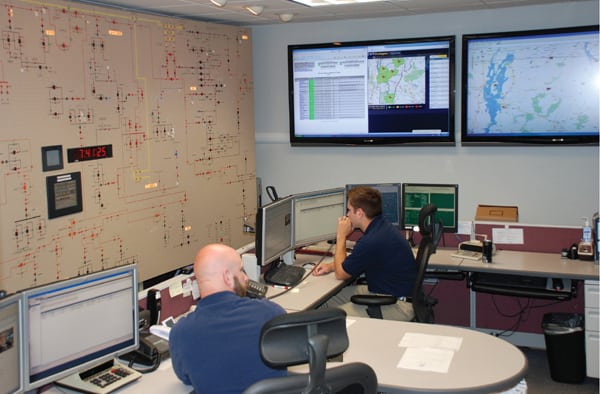
SDG&E also has installed supervisory control and data acquisition (SCADA) systems throughout its electric grid, “which has had a very positive impact on reliability,” according to Avery. “This system provides wireless connections that automatically control switches and circuit breakers and provides greater situational awareness of the grid. We have installed SCADA systems on 98% of our transmission and 70% of our distribution infrastructure. This and many other efforts have enhanced reliability and helped SDG&E receive the ReliabilityOne award from PA Consulting Group for six years in a row for the Western region.”
Later this summer, SDG&E will complete installation of its OMS, which uses SCADA and smart meters to sense the condition of the distribution system in real time, “which eliminates redundancies and improves efficiency,” said Avery. “This system will benefit the entire region by reducing the length of outages and improving restoration times.”
Avery noted that “widespread use of SCADA for both the transmission and distribution system, coupled with outage management and energy managements systems, were crucial for the rapid restoration” following the Southwest blackout of 2011, which was triggered outside SDG&E’s territory. “Widespread deployment of phasor measurement units; the SDG&E wireless ‘grid communication’ system; improved visualization tools for both the SDG&E grid and beyond that increase the transparency of the current grid condition; and state-of-the-art distribution management systems would make our system less vulnerable to large outages,” Avery added.
Charging Ahead with PEVs
There were more than 1,500 PEVs in San Diego by mid-2012, and experts predict there will be more than 200,000 in the greater San Diego area by 2020. Charging at home is relatively straightforward, but it’s not enough, so SDG&E is collaborating with ECOtality and Nissan on The EV Project, the largest U.S. electric vehicle charging infrastructure build-out project so far. This effort will deploy charging facilities in the greater San Diego region to serve the needs of all PEV consumers in the area.
The utility is also supporting the adoption of PEVs by residential customers by offering two experimental PEV rates that will save customers money when they charge their vehicles at off-peak time periods, when energy costs are lowest and capacity is plentiful.
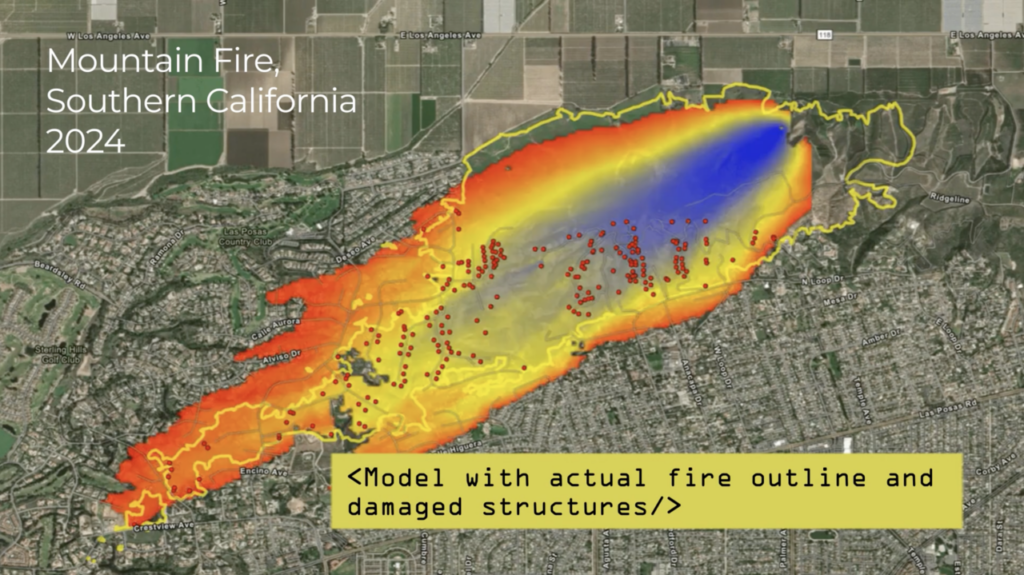
SDG&E has already installed 21 PEV chargers for its fleet of 13 PEVs (see the opening photo) and has five PEV chargers designated specifically for the 30 electric vehicles owned by employees. More than 1,500 metric tons of greenhouse gas emissions are removed from the atmosphere each year for every 1,000 passenger cars replaced by PEVs.
Other Smart Systems
In addition to the SCADA, OMS, and other smart-technology-enabled systems previously mentioned, SDG&E is blazing a trail with other grid-related systems.
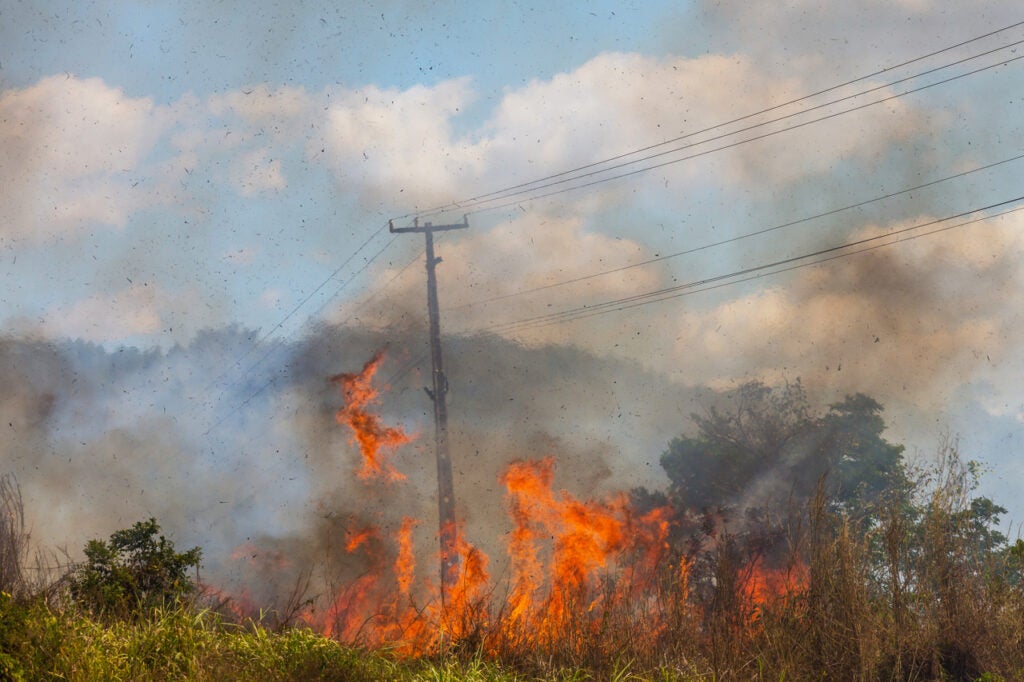
For example, SDG&E has what Avery dubbed “one of the largest and most sophisticated weather sensor networks in the nation. We have installed 128 weather stations throughout our service territory to measure everything from temperature and humidity to wind speed and solar radiation, all of which provides a greater awareness of the state of our grid. This advanced weather network provides SDG&E real-time situational awareness for better operational decision making, thereby preparing us for the wildfire season and enhancing the reliability of our electric system overall. The utility also is receiving information on solar and wind generation capabilities at specific sites throughout the region, which assists us in planning for rooftop solar integration. We have invested approximately $1.5 million in this program.”
SDG&E has received nearly $30 million in state and federal grants toward the creation of a powerful wireless communications network to support the many interconnected aspects of the smart grid. As a key part of this effort, SDG&E has purchased its own wireless communications spectrum to manage the increased amount of data, which will form the communications backbone of the smart grid. “We are one of the first utilities in the nation to make such an investment,” Avery noted, “which will total approximately $60 million upon completion of the project. We have installed eight pilot sites in this network and will have 250 installed by the expected completion date of 2014.”
SDG&E also has developed new smart grid wireless sensors that are being deployed to provide monitoring of important electrical infrastructure. These new sensors enable, for example, wireless monitoring of overhead and underground cables that allow quick identification of failures and monitoring of the condition of aerial warning lights on electric towers and poles. These sensors allow faster identification and location of problems, resulting in improved reliability for customers, fewer outages, and enhanced safety, Avery explained. The new sensors will leverage part of the wireless communication system described above and represent an investment of approximately $16 million.
Smart People
“We must behave more like a competitive company with a dedicated focus on our customers and what they value and need and less like a traditional utility provider,” Avery acknowledged. In addition to an internal initiative designed to spur innovation, the company is recruiting new hires that have “blended skill sets” that include information technology and engineering.
“We’ve increased our college recruiting and intern program, including adding an intern to our Borrego Springs Microgrid team. This gets these students interested in the energy industry and channels them into positions at the utility at the ground level,” Avery explained. “We are also working with universities to encourage them to develop and teach smart grid–related curriculum.”
Get Smarter
There is far more detail about SDG&E’s smart grid plans and achievements than we can possibly present in a single article, so anyone interested in smart grid programs should download the pdf of its Smart Grid Deployment Plan from http://bit.ly/KKBBsF. Additional, more recent details and graphics can be found in the web supplement PowerPoint file, “SDG&E Smart Grid Information Graphics."
Congratulations to everyone involved in San Diego Gas & Electric’s smart grid programs—the utility, its customers, and its implementation partners.
— Dr. Gail Reitenbach is POWER’s managing editor.