A famous aphorism goes like this: “Doing the same thing over and over, and expecting a different result, is one definition of insanity.” In the world of electricity transmission, there is a direct corollary: adding more capital expense to a system that is already inherently broken doesn’t improve it or make it more reliable.
That’s where we are with high-power alternating current (AC) transmission lines, which have been around since the mid-1800s and are showing just how dated they are … precisely as voracious new electricity demands come down the line (pun intended).
COMMENTARY
Earlier this month, the state of California confirmed that Southern California Edison (SCE) transmission equipment was responsible for the Eaton Fire of January 2025, which left 19 people dead and burned more than 9,000 structures. Normal maintenance procedures could have prevented that, as brush under the towers that caused the fire had not been cleared out in years. To make matters worse, the National Weather Service had issued an urgent notification that “life-threatening” winds were expected that day, and Gov. Gavin Newsom had issued a state of emergency for the earlier Palisades Fire over the same wind and heat issues.
What went wrong? High-powered AC transmission lines slapping together in high winds, sparking the underbrush beneath the towers and igniting the conflagration that followed. This is the same pattern that causes most of California’s forest fires.
One might think the solution is to bury all of the state’s high-power transmission lines. That is impractical, as it would cost tens of billions of dollars (some estimate as much as a trillion or more). For far less than that, the problem could be solved by increasing renewable energy sources, not reducing them. In fact, all of California could transition off the grid within 10 years or less for less than the current cost of maintaining the existing broken system, solving both safety and reliability concerns.
The North American Electric Reliability Corporation (NERC) has observed rapid electricity demand increases are coming from the accelerating development of massive data centers (1,000 GW of additional demand currently requested), the accelerating purchase of new electric vehicles, the mandatory conversion away from natural gas in some jurisdictions (e.g., California for home appliances), and the adoption of new manufacturing techniques that rely more heavily upon electricity availability. Given that the Eastern and Western interconnections together have only about 1,000 GW of capacity, this spike represents roughly a doubling of electricity demand.
Similarly, the Texas grid (ERCOT) is forecasting a doubling of industrial demand from today’s levels by 2032. Add to these factors the constant increase in daily electricity use by the average homeowner, and you can understand the type of crisis we are entering. In this context, NERC has also identified the additional issue of major grid instability arising from extreme heat-induced seasonal capacity shortfalls.
It should be obvious to all neutral observers that the two major national grids, and ERCOT, have already reached their respective limitations. We face constant electrical shortfalls and Public Safety Power Shutoffs (PSPS), particularly in California, along with reliability concerns across the country. Clearly, the various grids are “creaking” toward a slow deterioration even as we add hundreds of thousands of light-duty EVs, massive new data centers for commerce (e.g., Amazon, Walmart, etc.), and additional massive data centers for developing artificial intelligence (AI) technology.
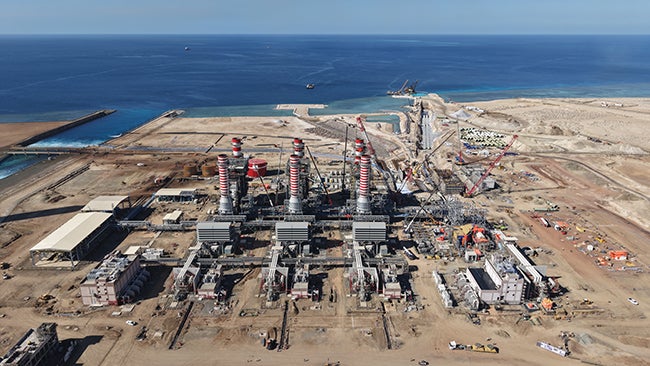
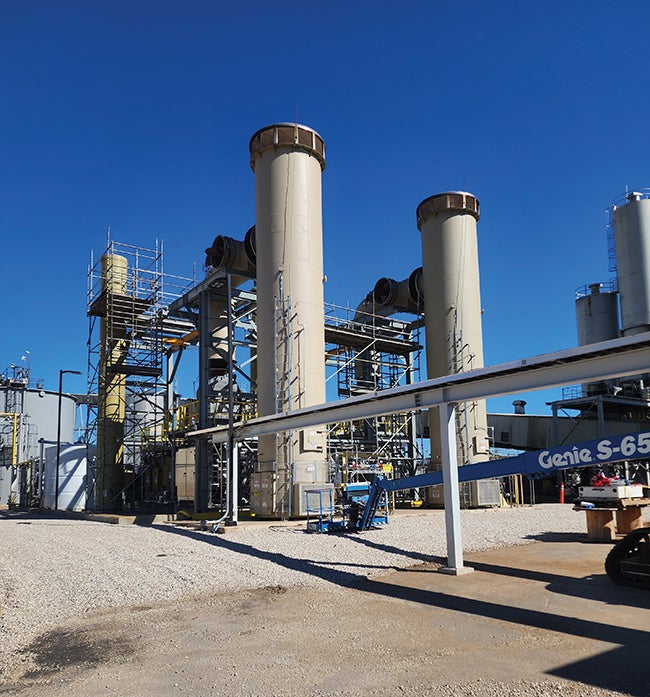
We must discuss the speed and cost of addressing these manifold challenges. Building distributed energy resources (DERs) can be accomplished in a matter of months, depending on scale. In contrast, large industrial power plants require many years, and, in some cases decades, to bring online. We simply don’t have that kind of time to wait.
The insanity of continuing to plan for, capitalize, and build large power plants at distant locations, and then moving that energy over great distances to customers, is precisely how we got into this situation in the first place! It is time to recognize the inevitable solution: capture energy where it is used and avoid the AC trap. That is exactly what a DER, which are a key part of microgrids, does.
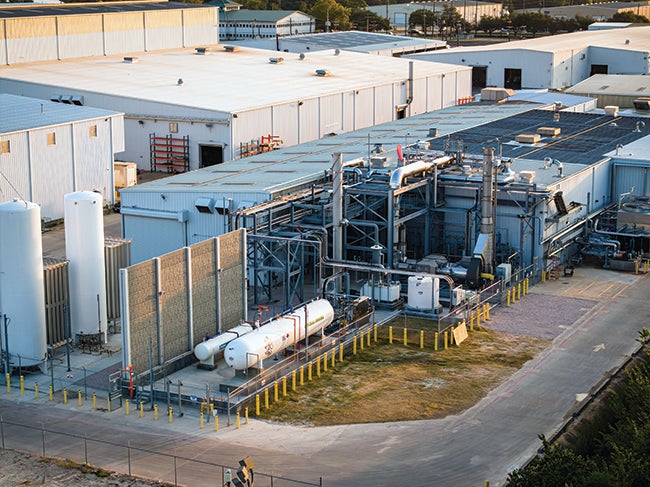
The growing advantages of DERs and the use of microgrids to solve our broken energy-system challenges have been published for years in numerous places. Those writing about the topic have laid out the fundamentals of how microgrids can incrementally, cost-effectively replace our outdated electrical system, with vastly higher reliability and resilience, and without the risk of transmission-line fires. In fact, for almost a decade now, data centers that need to keep their energy flowing smoothly without “line spikes” or other issues have turned to fuel cells and battery backups, which serve as the foundational building blocks of any microgrid system.
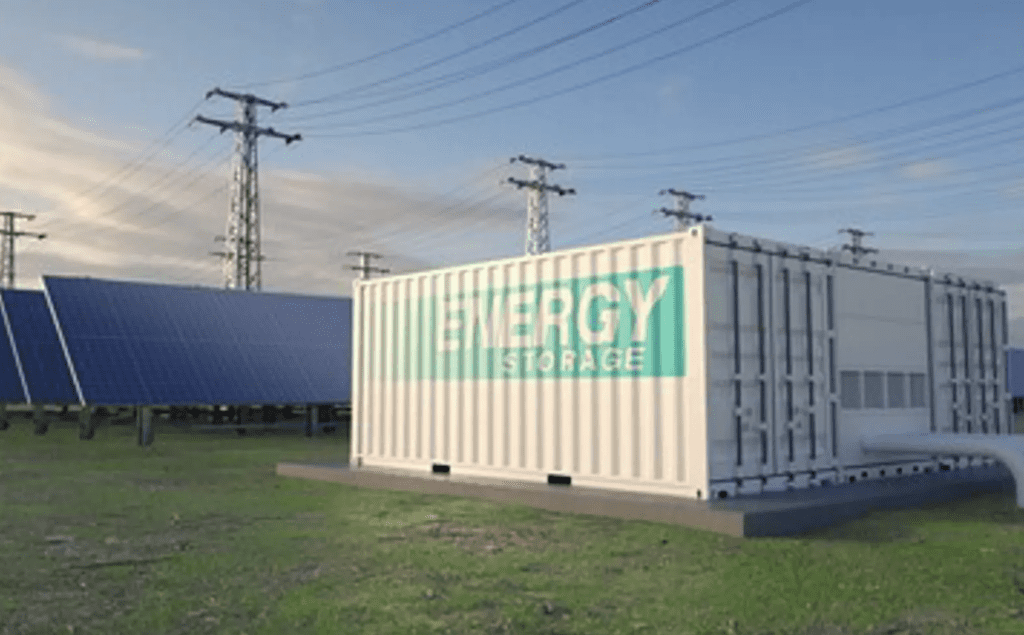
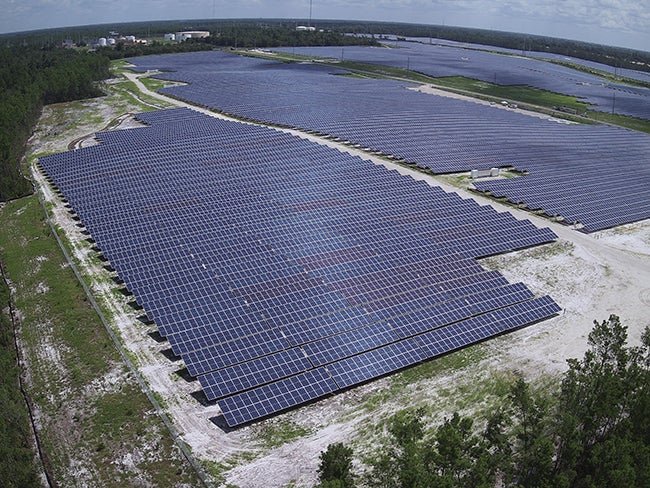
A microgrid basically captures the energy already present in any local geography. In some cases, that can be solar, wind, and also increasingly geothermal, hydro, or other renewable energy sources naturally occurring at the microgrid site. It then distributes direct current (DC) to the local users.
In California, solar energy is widely available at less than 5¢ per kilowatt-hour. We also know that we can pay 39¢ per kilowatt-hour for grid-delivered energy. Why? The grid is a monopoly in every part of the state (as is true for most of the country), with monopoly pricing an unavoidable consequence!
How do you respond to the shibboleth that seeks to defeat the enormously favorable economic and practical aspects of renewable energy (not to mention the reduction in greenhouse gas emissions that will occur) when they ask, “Well, what do you do when the wind doesn’t blow, and the sun doesn’t shine?” You tap your battery backup or turn on your fuel cell—both are simple, reliable, and safe solutions. There’s really nothing more to it than that.
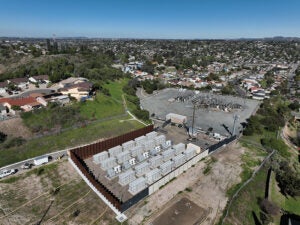
Best of all, microgrids arranged like individual cells in a honeycomb can port power to any adjacent microgrid, which can then transfer it to any other cell. That’s precisely what happened with the UC-San Diego microgrid, which was able to port 10 MW of electricity to San Diego Gas & Electric within seven minutes to keep it from failing during a fire incident in 2007. And, in the rare instance where there is no adjacent microgrid, one can use a backup hydrogen fuel cell. This latter configuration is referred to as a “fuel cell-assisted microgrid.” Fortunately, no place in California is further than a short drive from a source of hydrogen, so it won’t “run out” no matter how long the power cut-off lasts.
One last point must be made. As recently demonstrated by the Iranian attack on U.S. municipal water supplies, the grid is perilously vulnerable as a target for cyber warfare and even sabotage. All single interconnected systems of that type rely, as they must, on common computer control systems, which are an open invitation to any enemy of the USA—foreign or domestic. These are risks we cannot continue to tolerate. DERs can be configured with fully distributed control systems that eliminate this dangerous condition.
The good news embedded in this massive shift off the grid in favor of renewables is that it will be economically beneficial to all who choose to participate in this new distribution configuration. SCE can continue to make appropriate profits by distributing electricity locally as it does now, except that the electricity comes from a DER or microgrid rather than from a grid connection.
Similarly, Southern California Gas can continue to make an appropriate profit by distributing hydrogen to those fuel cell-assisted microgrids, as well as to other end users (e.g., vehicles, ferry boats, hard-to-abate manufacturing sectors, and more). In a similar vein, suppliers of traditional power plant equipment can continue to fabricate what they will require during the transition, giving the industry plenty of time to begin fabricating new power capture and generation equipment, supported by the enormous financial support the conversion off the grid will provide.
This is clearly a “win-win-win” solution waiting in the wings to benefit the existing power generation and distribution market, as well as the public at large through better pricing and a better environment, for all the obvious reasons. That is no small feat in this very challenging world of 2026.
—Rinaldo Brutoco is founding president and CEO of the World Business Academy.