
For years, virtual power plants (VPPs) were treated by much of the power industry as a promising but niche experiment. A way to aggregate a modest pool of rooftop solar and residential resources and call it a grid resource.
That framing no longer holds. In 2025 and through 2026, VPPs have moved much further into the mainstream of grid planning, and the resources they aggregate, the technology stack behind them, and the operators relying on them have all changed considerably.
COMMENTARY
For utilities and grid operators managing rising demand alongside a rapidly decentralizing generation mix, that shift matters. VPPs are no longer a bolt-on pilot program; they are becoming a genuine flexibility resource that needs to be planned early, dispatched, and integrated alongside any other asset on the system.
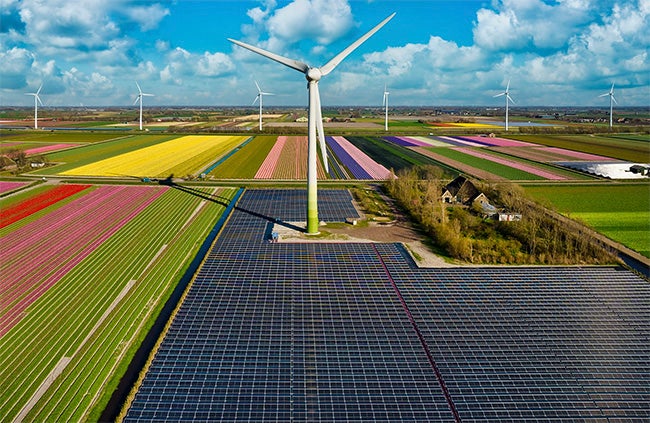
The first generation of (residential) VPPs drew almost entirely on rooftop solar and, later, paired with other home resources. That pool has broadened considerably. Managed EV charging providers are partnering with established rooftop solar aggregators and smart energy ecosystem providers, bringing charging infrastructure and the vehicles themselves into the resource mix alongside photovoltaics.
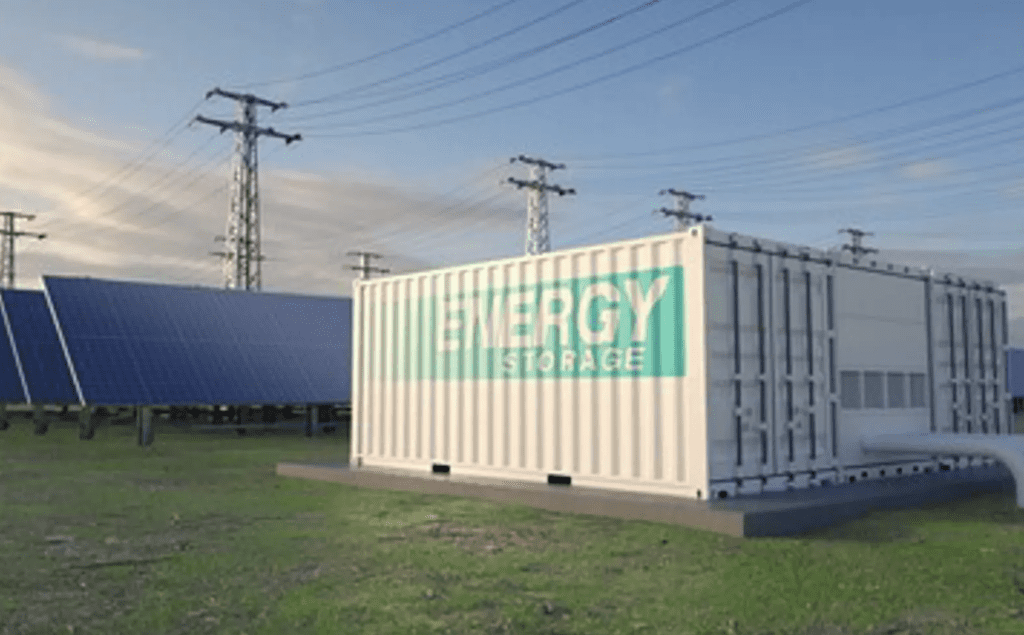
Battery energy storage systems (BESS), now a fast-growing distributed energy resource (DER) category in their own right, are developing in parallel and increasingly feeding directly into VPP portfolios. Sunrun, Tesla Energy, and Renew Home recently announced a partnership to aggregate more than 16 GW of residential batteries and smart thermostats. This project uses OpenADR 2.0b to communicate demand response signals and will sell capacity directly to hyperscale data center operators.
Commercial building management is following a similar trend. After playing a central role in the growth of utility demand response programs roughly two decades ago, the category is experiencing a new boost, driven by tighter integration between grid-interactive efficient buildings and utility operations. Modern implementations typically involve an edge gateway installed in a building’s server room (and the cloud), connected to the controls network, that identifies every device on standard building operational technology, or OT, protocols such as BACnet and Modbus. Artificial intelligence (AI)-assisted classification then builds a data model with granularity down to one- to 15-minute intervals.
What makes this new generation of VPPs different from earlier deployments is the software layer. Advanced cloud-based platforms, combined with AI-driven forecasting and load balancing, are what allow a portfolio spanning solar, storage, EV charging, heat pumps, and commercial building loads to be monitored, forecast, and optimized as a single coordinated resource with bi-directional communication between and among components rather than one-way curtailment signals. This tightens up the systems for the grid operators.
For power generation and transmission and distribution professionals, this is an opportunity and a challenge. A VPP is only as useful as a grid resource as its ability to communicate reliably with the systems dispatching it. That is where open, interoperable standards do the essential work: ensuring that a signal sent by a utility or an independent system operator, or ISO, is understood the same way regardless of which vendor’s battery, thermostat, or charging station is on the receiving end. As the resource mix diversifies further, that interoperability becomes the difference between a VPP that scales at a reasonable price and one that remains a collection of incompatible pilots. Stranded assets are less of a concern in this case.
The market’s growth is being reinforced from multiple directions. Long-established solar panel manufacturers are adding storage to their portfolios and actively working out how to connect and communicate directly with utilities as grid resources rather than as behind-the-meter equipment alone. New entrants from Europe and Asia are bringing additional VPP and DER management approaches into the U.S. market. And regulatory requirements are playing their part too: California’s 2023 compensation rule changes for Community Choice Aggregators (CCAs), for example, have already prompted CCAs to explore how VPPs can create new value for the buildings they serve while supporting grid reliability.
Within our own membership at the OpenADR Alliance (utilities, device manufacturers, and providers of renewables and EV charging infrastructure), VPP companies are now surfacing more often, which is itself a reasonable sign for where the industry’s attention is heading.
For power generation and grid operations professionals, the practical takeaway is that VPPs deserve the same planning discipline as any other flexible capacity resource: clear visibility into what is being aggregated, confidence in the communication standards tying it together, and realistic expectations about dispatchability. The technology and the resource base have both matured well beyond the early rooftop-solar-and-battery model. The question for utilities now isn’t whether VPPs belong in the resource mix, but how quickly they can be integrated with the rigor the rest of the grid already requires.
—Rolf Bienert is technical and managing director of the OpenADR Alliance.