
Over the past two decades, utilities have invested billions of dollars building a smarter grid—deploying sensors, automated substations, and advanced analytics platforms capable of monitoring system performance in real time. These technologies have significantly improved the industry’s ability to manage power flows, detect faults, and optimize operations.
Yet one critical component of grid intelligence remains surprisingly underdeveloped: our digital understanding of the physical infrastructure that supports the distribution network.
COMMENTARY
While the power sector has made enormous progress digitizing grid operations, many of the physical assets that deliver electricity—poles, conductors, and attachments—remain only partly represented in engineering databases. This gap points to a missing component in modern grid architecture: a physical intelligence layer that accurately represents the infrastructure itself.
As electrification accelerates and utilities expand distribution networks to accommodate new loads, improving visibility into the physical grid is becoming increasingly important.
The Foundation of the Grid
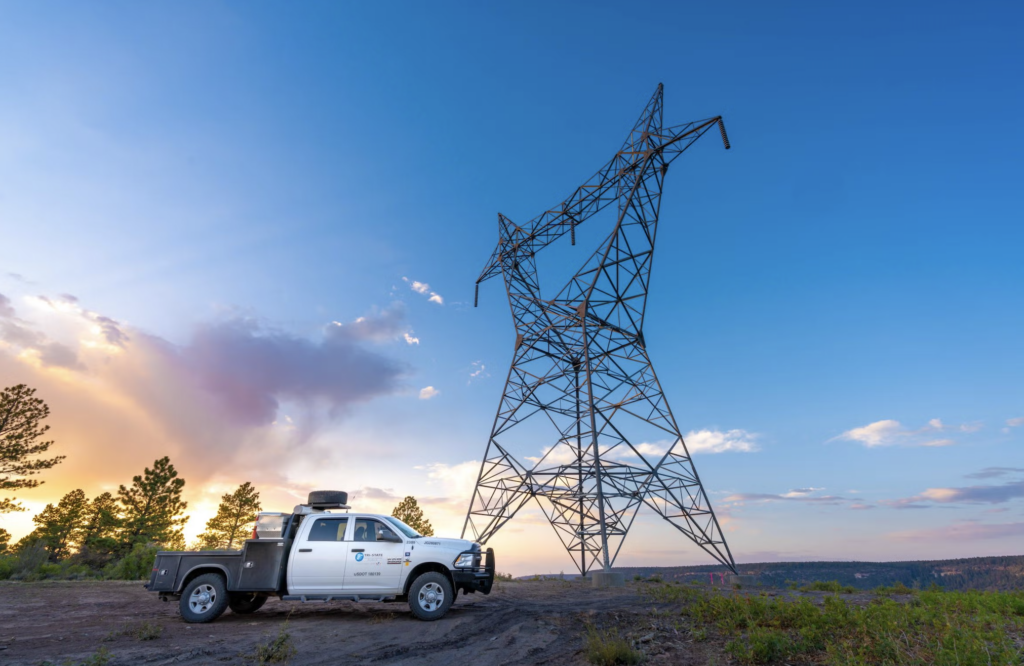
The distribution grid is built upon a vast network of physical assets. Across North America, hundreds of millions of utility poles support the wires, transformers, telecommunications equipment, and other infrastructure delivering electricity to homes and businesses.
These structures form the backbone of the distribution system, yet much of the information about them remains incomplete or outdated. Historically, utilities have relied on inspection records, asset databases, and manual documentation to track infrastructure conditions.
While these systems provide valuable information, they often depend on periodic field inspections and manual updates. Over time, as equipment is added, removed, or modified in the field, infrastructure records can drift away from real-world conditions.
For engineers responsible for planning and reliability, this disconnect can create uncertainty about the true state of infrastructure in the field.
When Mapping Isn’t Enough
In recent years, utilities have significantly improved asset visibility through geospatial technologies such as LiDAR mapping, aerial imagery, and GIS-based asset inventories. These tools have greatly enhanced our understanding of where infrastructure is located. However, location alone does not provide the structural insight required for engineering analysis.
For example, pole load analysis depends on detailed information about conductor tension, attachment heights, crossarm orientation, and equipment placement. These structural attributes determine whether a pole can safely support additional infrastructure.
Without accurate structural data, engineers must often rely on assumptions or additional field measurements before performing analysis. This gap between mapped infrastructure and structurally understood infrastructure highlights the absence of a comprehensive physical intelligence layer.
As utilities invest in grid modernization, resilience, and electrification initiatives, many are discovering that these efforts depend heavily on accurate structural information about existing infrastructure. Planning new circuits, integrating distributed energy resources, hardening systems against extreme weather, and expanding capacity all require a clear understanding of what current infrastructure can safely support. In many cases, the limiting factor for modernization is no longer analytics or communications technology, but the industry’s incomplete digital understanding of the physical infrastructure itself.
Toward Infrastructure Intelligence
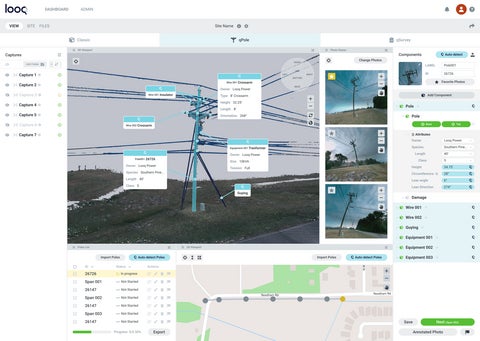
Emerging technologies are beginning to bridge this gap. Advances in reality capture, computer vision, and automated modeling now allow infrastructure assets to be reconstructed directly from field imagery.
Modern systems can generate detailed 3D representations of poles and other infrastructure components, identifying geometric relationships such as attachment locations, conductor spans, and equipment placement. These models transform raw visual data into structured engineering information that can support analysis and planning workflows.
Rather than relying solely on manual measurements or legacy inspection records, engineers can increasingly work with digital models that more accurately represent infrastructure as it exists in the field. This capability represents a significant shift in how utilities can document and understand the physical grid.
Building a Living Infrastructure Model
The long-term potential of these technologies lies in their ability to create continuously updated infrastructure models. Instead of relying on static asset records that are updated periodically, utilities could maintain dynamic digital representations of infrastructure conditions. Each inspection or capture event would update the model, allowing engineers to track changes over time and detect emerging risks earlier.
Such models could support predictive maintenance programs, improve structural compliance monitoring, and enable more accurate planning for infrastructure upgrades. As utilities expand EV charging infrastructure, integrate distributed energy resources, and strengthen networks against extreme weather events, the need for reliable infrastructure intelligence will only grow.
In this environment, the ability to maintain an accurate digital understanding of the physical grid may become a foundational capability for modern utility operations.
Completing the Smart Grid
The vision of the smart grid has long focused on sensors, communications networks, and advanced analytics platforms. But the intelligence of the grid ultimately depends on the accuracy of the infrastructure data beneath it.
If utilities cannot fully understand the physical structures supporting their networks, even the most sophisticated analytics tools will operate with incomplete information. As utilities modernize the grid to support electrification, resilience initiatives, and new energy technologies, building a reliable digital understanding of physical infrastructure will become increasingly important.
Completing the smart grid will require not only smarter software, but also a far deeper digital understanding of the physical grid itself. Developing this physical intelligence layer may prove to be one of the most important—and least visible—steps in the next phase of grid modernization.
—Christine Byrne is director of Corporate Communications for Looq AI.