State clean energy programs and the communities they’re meant to serve want the same thing. Both want more resilient, more affordable, cleaner power. And yet, across solar and storage programs throughout the U.S. Northeast, projects stall, applications bounce back and forth, and entire counties opt out of battery storage altogether. This is not because anyone disagrees on the goal, but because the two sides are speaking different languages about cost, risk, and timeline.
COMMENTARY
The disconnect is a translation and timing problem, and underneath it, a fluency problem: clean energy is still young enough as an industry that we haven’t built a shared, baseline understanding of how it works, which is exactly the vacuum fear and misinformation grow fastest in. The technical, financial, and safety information communities need almost always exists somewhere; it just doesn’t arrive in a form, on a timeline, or in a language that matches the person who has to act on it.
The Technical Handoff Gap
Consider a state clean energy incentive program that requires applications to meet a minimum technical requirement, such as a shading threshold verified through third-party modeling software. Programs like this are purposely built to require licensed contractors, rather than homeowners, to submit on a project’s behalf. In practice, though, the person doing the actual submitting inside that contractor’s office is often administrative staff, handling documentation and portal logistics rather than the shading analysis itself.
The friction shows up when an application gets flagged for revision. If a shading model overestimated sun exposure, if a battery specification sheet vaguely says it’s UL listed, or if a site location on a drawing is off, the fix requires looping back to whoever built the original technical analysis, understanding what needs to change, and resubmitting. For an administrative submitter without training to read these types of documents, it could be a multi-week round trip, and every round trip pushes a project’s timeline further from the one the applicant was promised.
The review requirement is holding a consistent technical bar as intended, but it is colliding with an industry that hasn’t yet agreed on what baseline fluency should look like. As the technology moves from niche to standard, programs need to better explain their requirements, and applicants and communities need to get better at asking questions.
The Bandwidth and Fit Gap
Some states have built entire portfolios of clean energy incentive programs, including production-based solar incentives, demand-reduction standards that reward market participation, dedicated resilience programs, and more. We’ve worked directly on application reviews and feasibility studies for programs like these, as well as supported the people weighing whether to pursue them, including town officials, church administrators, and facility managers. Across nearly every one of those conversations, we found real interest and need, but simply not enough bandwidth to figure out which program actually solves their problem.
These aren’t organizations with dedicated energy staff. Most of the people making these decisions have the same relationship to electricity most people do: they know what it costs, not how it works. They know their power went out last summer, or that heating bills wiped out half their annual budget, but they don’t have a working sense of peak demand, energy arbitrage, or how a given program lines up with either problem.
 |
|
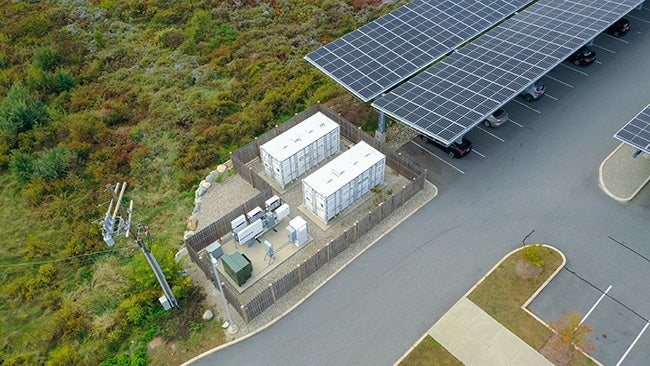
1. The Camelot Energy Group provides community guidance and resources regarding large-scale solar and battery energy storage (BESS) developments, including educational materials and public office hours that reference specific regional initiatives like the River Valley project in Easthampton, Massachusetts. Shown here is a close-up of the BESS container at River Valley. The project provides on-site power for a co-op grocery store. Source: Camelot Energy Group |
For example, many states have built resilience-specific tracks alongside their standard incentive programs. Local leaders recognize that a community hub (Figure 1) worried about outages needs a different program than a homeowner just trying to lower a bill. But the program simply existing isn’t the same as someone knowing it’s the right fit. The real work is helping someone who’s never had to think about kilowatts vs. kilowatt-hours figure out which program they need.
The Trust and Visibility Gap
A string of BESS fires, layered on top of a wave of unrelated lithium-ion fires involving e-bikes and scooters, has created a perception problem for the industry. The largely negative image of battery storage that many community members hold is hard for any single conversation to undo, especially in dense urban areas or in smaller communities served by volunteer fire departments.
Faced with that uncertainty, it was faster and safer for many municipalities to pass a moratorium than to build out permitting and zoning frameworks on their own, and the result was close to a domino effect, with moratoria spreading across counties and towns statewide.
The irony is that most states had already responded substantively, not just rhetorically. They published model laws, a customizable zoning and permitting template local governments could adopt directly. These outlines stood up to a peer review program that puts technical experts in front of every project above a size threshold, reviewing design drawings, vetting proposed equipment, confirming fire suppression systems are in place, and checking third-party test reports, emergency response plans, and hazard mitigation analyses. Projects receiving state incentive awards go through this layer of scrutiny as a condition of funding.
Very few communities living near these proposed projects seem to know that layer exists, which means a state-level solution and a community-level fear are running in parallel, as if unaware of each other.
Information and trust broke down because nobody built a shared understanding before it was urgently needed. Developers typically don’t live in the communities where they’re proposing projects, which raises a fair question on both sides: How does that engagement avoid feeling staged, and how is a community supposed to know what to ask for or how to respond?
What is Required
There’s a version of developer-community engagement that gets this sequencing right from the start. The information communities need to move forward usually exists. The challenge is getting it to the person who has to act on it, in a usable form, on a timeline that matches their needs.
Clean energy is still young enough as an industry that we haven’t built the shared, baseline fluency around it yet. Until that exists, fear will keep filling the vacuum. A few things would help close that gap:
Treat basic clean energy literacy as shared infrastructure. The industry needs a baseline level of public knowledge. True expertise will always require specialized training or experience, but a shared vocabulary robust enough that a safety record or a program’s tradeoffs are legible to the people they affect is critical to future deployments.
 |
|
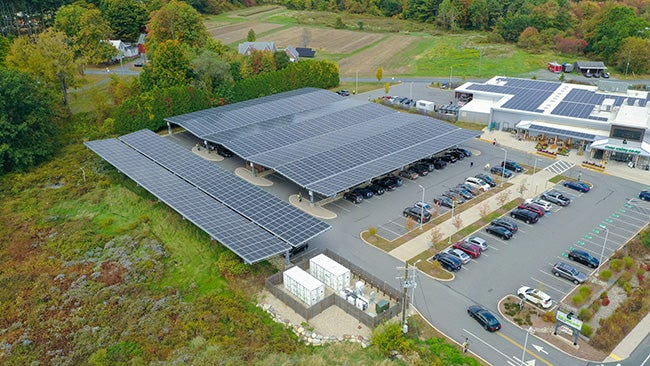
2. The solar photovoltaic system at River Valley is sized at 760.8 kW DC / 500 kW AC. The BESS at the site is sized at 240.0 kW / 1,000 kW. Source: Camelot Energy Group |
Prioritize community-scale deployment as a literacy engine. Community projects (Figure 2) are often the only place people encounter clean energy up close. Every one that succeeds builds vital public familiarity.
Put safeguards where the public can see them. Technical review processes only build trust if the people affected by a project know they exist. Visibility is what lets a safety record outrun fear.
Build shared reference points before pressure sets in. Siting maps, zoning frameworks, and standing agreements are far easier to negotiate calmly in advance instead of under the pressure of a live project.
None of this requires new technology or a bigger budget. It requires treating education, translation, and timing as an integral part of deployment. The programs, the safeguards, and the incentives are largely already there. What’s missing is the shared fluency that will let people trust them, and no single program, developer, or community can close this gap alone. It’s the next thing this industry has to build together.
—Michelle Aguirre is project manager at Camelot Energy Group.