
POWER
-
-
 Legal & Regulatory
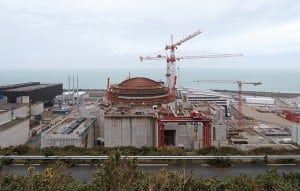
France to Slash Reliance on Nuclear in New Draft Policy
France will cap its nuclear power capacity at the current 63.2 GW, forcing closures if new reactors come online, and instead boost renewable generation if a bill unveiled by its energy ministry in mid-June
-
Commentary
And the Winner Is…
The 2014 POWER Plant of the Year makes history, both as a project and as our cover story. The Plant of the Year award goes to the most interesting, usually new, plant in the previous year. Sometimes it’s a
-
 Nuclear
First Power for Argentina’s Atucha 2 Nuclear Reactor
Argentina’s 692-MW Atucha 2 nuclear reactor achieved criticality in early June, marking a major milestone for the country’s third reactor, development of which began nearly four decades ago. A pressurized
-
Renewables
Effects of Urbanization on Generation in China
Zeng Ming, Duan Jinhui, Wang Liang, Gu Shanshan In 2013, urbanization in China reached 53.73%. Urbanization has become an important field for national reform. On the one hand, urbanization is effective for
-
 Renewables
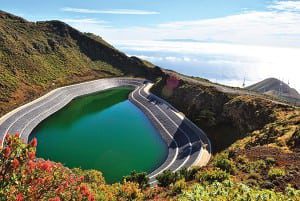
A Spanish Island’s 100% Wind-and-Water Power Solution
El Hierro, the smallest island on Spain’s Canary archipelago, in June became what developers say is the first energy-isolated territory to power itself solely with renewables. The project, which was
-
Renewables
Bright Future for Energy Storage
California has set an ambitious target of connecting 1.3 GW of energy storage to the grid by 2020. In October 2013, the California Public Utilities Commission (CPUC) mandated that 200 MW of this goal come in
-
 Coal
CoalIndonesia Eyes Tightening Coal Exports
Indonesia, the world’s leading exporter of thermal coal, in June again suggested it could limit coal production and further tighten its control on exports to protect supply for domestic power plants
-
 Cybersecurity
Grid Security Gets Physical
The attack began at 12:58 a.m. on April 16, 2013. Between then and 1:07 a.m., attackers cut telephone and telecommunications cables to Pacific Gas & Electric’s (PG&E’s) Metcalf substation near San
-
 Legal & Regulatory
Southeast Asia’s Energy Juggernaut
Consensus is that the locus of world energy demand has shifted away from the U.S. and Europe to Asia, driven by the soaring economies of the 10 countries that make up the Association of Southeast Asian Nations
-
 Coal
CoalSolid Coal Ash-Handling System Avoids Problems Associated with Wet and Dry Systems
Environmental and climate protection does not stop at the stack of a power plant. Disposal of separated combustion residuals, for example, must also be environmentally friendly. More and more nations are
-
 O&M
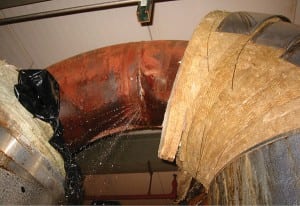
O&MStrategies for Inspecting HRSGs in Two-Shift and Low-Load Service
Aheat-recovery steam generator (HRSG) is much like other power generation equipment—run it at design conditions and chances are it will run with high availability and require only routine maintenance for
-
 Renewables
Treating WTE Plant Flue Gases with Sodium Bicarbonate
Sodium bicarbonate is an adsorbent that has been used for a relatively short time in industrial flue gas treatment (FGT) processes. This additive is especially interesting for operators of smaller
-
 Coal
CoalWATER AWARD: Jeffrey Energy Center’s Constructed Wetland Treatment System
U.S. coal power plants are finding that they need to comply with an increasing number of stringent environmental regulations, and while nobody in any industry looks forward to additional regulatory burdens
-
 Nuclear
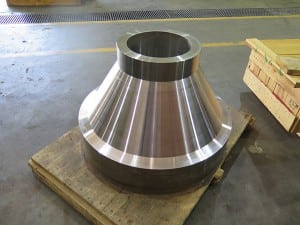
Welding and Fabrication Innovations Mitigate Reactor Pressure Vessel Embrittlement in Nuclear Plant Construction
Reactor pressure vessel (RPV) shells in the existing U.S. fleet of nuclear power plants were typically constructed by forging ring segments from ingots of low-alloy steel offering sufficient fracture toughness
-
 Gas
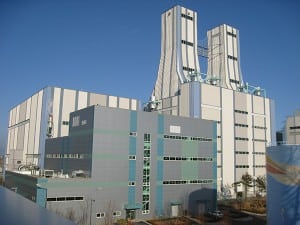
GasMARMADUKE AWARD: KOMIPO Relocates an Entire Combined Cycle Power Plant
Power plants are, with good reason, almost universally regarded as fixed assets to be operated, maintained, and retired on the spot where they were built. The idea of relocating something as large and
-
 Renewables
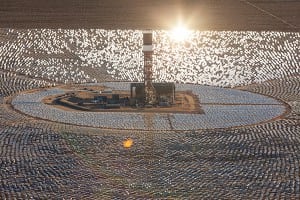
Ivanpah Solar Electric Generating System Earns POWER’s Highest Honor
The era of Big Solar has arrived, and at the moment there are none bigger than Ivanpah. For overcoming numerous obstacles to build the world’s largest solar thermal plant, the Ivanpah Solar Electric Generating System is awarded POWER’s 2014 Plant of the Year Award. When the 392-MW Ivanpah Solar Electric Generating System in Nipton, Calif., […]
-
 O&M
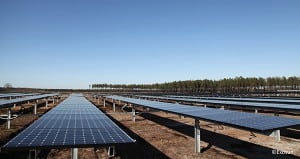
O&MTrackers Optimize Yield of Utility-Scale Solar Plants
The utility-scale solar market is rapidly growing in North America, representing a large area of opportunity for project and product developers alike. The market more than doubled in size between 2012 and 2013
-
 O&M
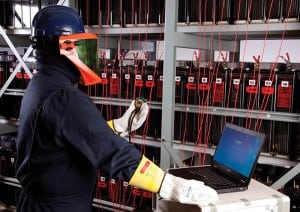
O&MIntelligent Monitoring of Distribution and Emergency Power Systems Improves Availability
Problematic power plant systems diminish availability and directly affect plant productivity and efficiency. In order to maintain availability, electrical testing and maintenance services are imperative. Two
-
Business
POWER Digest (August 2014)
S. Korea Extends Renewables Target Deadline. South Korea’s government on June 9 said it would push back the target for mandatory use of renewable energy by two years to ease requirements for the
-
 Infographics
The EPA’s Clean Power Rule in Three Infographics
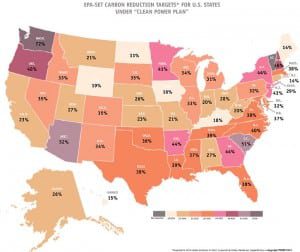
Under rules proposed by the Environmental Protection Agency (EPA) on June 2, 2014, existing fossil fuel–fired U.S. power plants must comply with state-specific goals to lower carbon pollution from the power sector by 2030, while modified and reconstructed power plants will be subject to technology-based performance standards. The EPA’s “Clean Power Plan” rule affecting existing […]
-
Hydro
Power British Columbia
British Columbia (BC) has long enjoyed some of the lowest electricity costs in North America, but when in August 2013, a draft of the BC Rates Plan which proposed a 26% rate increase by 2016, was leaked, this was met with such a backlash of protest that the government was forced to reconsider the proposal. […]
-
 Nuclear
Evolved Strategy Accelerates Zion Nuclear Plant Decommissioning
The decommissioning of nuclear plants has developed into a mature industry in the U.S. It started in the 1960s with the dismantling of low-power prototype and test reactors originally built to demonstrate
-
 Renewables
RWE’s Thomas Birr on Corporate Strategy in a Changing German Electricity Ecosystem
RWE AG is Europe’s third-largest electricity and fifth-largest gas marketer, with holdings in upstream oil and gas production, power grids, and energy trading. Its German power subsidiary has been the utility poster child for the effects of the Energiewende, the transformation of the Germany power system away from nuclear and coal toward renewable energy and […]
-
 Renewables
The EEI’s Campaign for Electric Utility Industry Supremacy
At the Edison Electric Institute (EEI) annual meeting this week in Las Vegas, the tone was one of collaboration with partners from Washington to distributed generation companies. Those partnerships will be needed as the investor-owned utility (IOU) industry fights not so much a war on coal as a war for mindshare and wallet share in […]
-
 Renewables
Shifting Sands: The Middle East’s Thrust for Sustainability
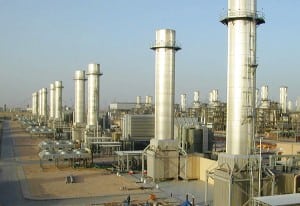
Economic and population booms forecast for several countries in the oil- and gas-rich Middle East are forcing a reassessment of those countries’ historic reliance on fossil fuels and a new focus on securing sustainable electricity and water supplies. The Middle East is a region of extremes. While some countries enjoy opulent wealth, others are some […]
-
 Environmental
Geoengineering: A Practical Climate Work-Around or Just Plain Crazy?
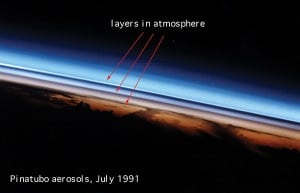
Faced with roadblocks to reducing greenhouse gas emissions via globally meaningful regulations or carbon pricing schemes, some scientists say it’s time to consider even more drastic human intervention. As it looks increasingly unlikely that the world will adopt a political and economic approach to reducing greenhouse gas emissions—primarily carbon dioxide—what was once regarded as a […]
-
 Distributed Energy
Blurring the Line Between Temporary and Permanent Power
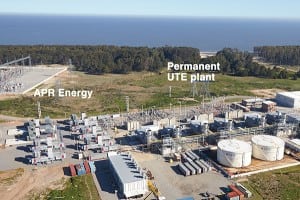
Temporary power may be the most widely distributed “distributed” generation worldwide, and its distribution is spreading, thanks to its ability to quickly meet urgent needs not only for event, construction, and post-disaster emergency power but also for fast-growing economies and stressed grids. That’s making it a serious competitor for “permanent” power in some situations. When […]
-
 Coal
CoalSpringerville Generating Station Earns PRBCUG 2014 Honors
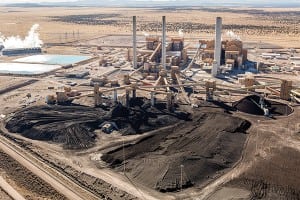
The Springerville Generating Station has been a work in progress since the first unit entered service in 1985. The PRBCUG recently recognized Springerville with its 2014 Plant of the Year award for implementing industry best practices, continual improvements, and worker safety. The presentation of the Powder River Basin Coal Users’ Group (PRBCUG) Plant of the […]
