POWER
-
 Environmental
Is China Considering Carbon Targets?
China, the world’s biggest emitter of greenhouse gases (GHGs) could limit its total carbon dioxide (CO2) emissions for the first time, possibly starting in 2016. He Jiankun, chairman of China’s Advisory Committee on Climate Change, reportedly told conference attendees in Beijing in June—one day after the U.S. Environmental Protection Agency proposed rules to slash carbon […]
-
Legal & Regulatory
Nest Thermostats: The Future of Demand Response Programs?
Sure, the Nest Learning Thermostat is smart, user-friendly, and downright sexy, but at $249, it’s more a luxury item than a mass-market appliance. Indeed, Nest thermostats are highlighted in upscale real estate listings alongside marble countertops and stainless steel appliances. Although Nest has done well since its debut in 2011, with almost a million units […]
-
 Environmental
Combined Mercury and SO3 Removal Using SBS Injection
Though no single mercury capture approach is best for all plants, when you can capture two (or more) pollutants with one sorbent, it’s worth a careful look. The U.S. Environmental Protection Agency’s (EPA’s) Utility Mercury and Air Toxics Standards (MATS) regulation requires power plants to reduce emissions of hazardous air pollutants (HAPs), including mercury. The […]
-
 O&M
O&MLatest Electromagnetic Technology Device Improves Inspection Accuracy and Repeatability
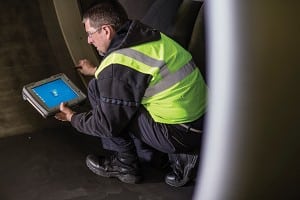
Eddy currents are electrical currents induced within conductors by changing magnetic fields. They are commonly used in nondestructive evaluation (NDE) and corrosion monitoring of structures with painted surfaces. The work of eddy current technicians, who specialize in the electromagnetic modality, requires a high degree of accuracy even when working under challenging testing conditions. Traditionally, technicians relied on […]
-
 Legal & Regulatory
Biomass Exemption Sails into the Sunset
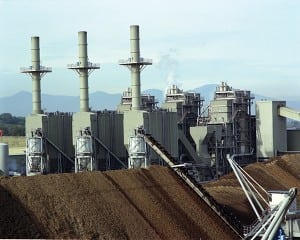
With quickly approaching deadlines for achieving renewable portfolio standard goals, the likely lapse of a critical exemption this month may increase the challenges for meeting those mandates. Approximately four years ago the U.S. Environmental Protection Agency (EPA) took the first step in regulating greenhouse gas (GHG) emissions from electric generating units (EGUs) by promulgating the […]
-
 Environmental
Is Your Plant Ready for MATS?
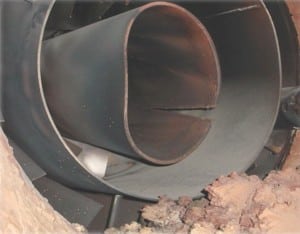
It has been more than two and a half years since the Environmental Protection Agency (EPA) issued national emission standards for hazardous air pollutants from coal- and oil-fired electric utility steam generating units (EGUs), and standards of performance for fossil fuel–fired electric utility, industrial/commercial/institutional, and small industrial/commercial/institutional steam generating units. Specifically, the rule created mercury […]
-
 Water
WaterThe Water-Energy Nexus Takes Center Stage
Power plant operators have long understood the vital role water plays in power generation. Now, as the rest of the world begins recognizing that as well, a conflict is brewing between the growing demand for electricity and increasingly strained water resources. Unless you’ve been living in a cave, you’ve likely heard the term “water-energy nexus” […]
-
 Renewables
Shifting Sands: The Middle East’s Thrust for Sustainability
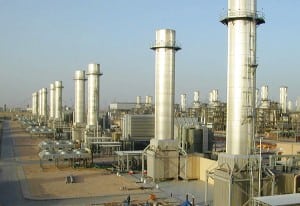
Economic and population booms forecast for several countries in the oil- and gas-rich Middle East are forcing a reassessment of those countries’ historic reliance on fossil fuels and a new focus on securing sustainable electricity and water supplies. The Middle East is a region of extremes. While some countries enjoy opulent wealth, others are some […]
-
 Environmental
Geoengineering: A Practical Climate Work-Around or Just Plain Crazy?
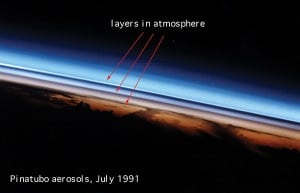
Faced with roadblocks to reducing greenhouse gas emissions via globally meaningful regulations or carbon pricing schemes, some scientists say it’s time to consider even more drastic human intervention. As it looks increasingly unlikely that the world will adopt a political and economic approach to reducing greenhouse gas emissions—primarily carbon dioxide—what was once regarded as a […]
-
 Distributed Energy
Blurring the Line Between Temporary and Permanent Power
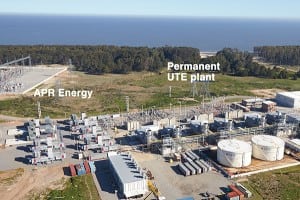
Temporary power may be the most widely distributed “distributed” generation worldwide, and its distribution is spreading, thanks to its ability to quickly meet urgent needs not only for event, construction, and post-disaster emergency power but also for fast-growing economies and stressed grids. That’s making it a serious competitor for “permanent” power in some situations. When […]
-
 Coal
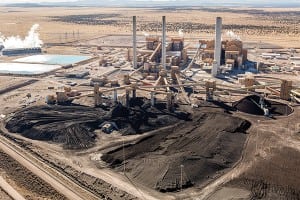
CoalSpringerville Generating Station Earns PRBCUG 2014 Honors
The Springerville Generating Station has been a work in progress since the first unit entered service in 1985. The PRBCUG recently recognized Springerville with its 2014 Plant of the Year award for implementing industry best practices, continual improvements, and worker safety. The presentation of the Powder River Basin Coal Users’ Group (PRBCUG) Plant of the […]
-
 Coal
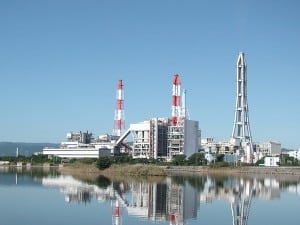
CoalDoes IGCC Have a Future?
Once touted as the savior of coal power and the future of clean coal generation, integrated gasification combined cycle (IGCC) technology has seen its prospects swamped by soaring costs and technological challenges. Though it remains controversial, its proponents are not ready to give up. If you’re an energy sector observer with an interest in integrated […]
-
Commentary
As Clean Energy Accelerates, a New Era of Choice Is Upon Us
Though our current power grid is more sophisticated and reliable than when Thomas Edison designed it nearly a century ago, it uses the same model: A company burns fuel to create electricity, which is then sent hundreds of miles along inefficient wires to customers who are given a single energy choice: on or off. Now, […]
-
 Renewables
New Floating Wind Array Planned in Scotland
The world’s first floating wind turbine array could be installed offshore of northeast Scotland by 2017 if a project recently unveiled by Kincardine Offshore Windfarm Ltd. proceeds as planned. The joint project between Pilot Offshore Renewables and the construction giant Atkins entails the installation of eight turbines on semi-submersible platforms about 8 miles off the […]
-
Renewables
Shining a Light on South Africa’s Power Plans
South Africa’s critical power situation has been the subject of much talk and speculation since 2008, when the country experienced its first electricity crisis after enjoying a surplus of cheap electrcity since the 1980’s. Download the report.
-
Coal
FERC Takes First Steps in Harmonizing Gas and Electricity Markets
After two years of work, about a dozen conferences and meetings, and multiple rounds of comments, the Federal Energy Regulatory Commission (FERC) announced on Mar. 20 that it was ready to begin the process of
-
 O&M
O&MSite-Specific Factors Are Critical for Compliance with Final 316(b) Existing Facilities Rule
On May 16, 2014, the Environmental Protection Agency (EPA) is scheduled to release its long-delayed final 316(b) rule for existing facilities. The rule—which was supposed to have been issued Apr. 17 after
-
 Cybersecurity
Introduction to NERC CIP Version 5
The North American Electric Reliability Corp. Critical Infrastructure Protection (NERC CIP) standards Version 5 represents the first major change in requirements and approach since its predecessor, Urgent
-
 Cybersecurity
Identifying CIP Version 5 Assets in Generation
Generators of electric power face a big effort to comply with the upcoming North American Electric Reliability Corp. Critical Infrastructure Protection (NERC CIP) Version 5 (V5) cybersecurity standards
-
Cybersecurity
When Old Systems Meet New Realities: Adding Security Controls to Generating Plants
On August 14, 2003, large parts of the Northeast and Midwest of the U.S. and the Canadian province of Ontario experienced one of the largest blackouts in history: 61,000 MW of electric load were lost
-
 O&M
O&MManaging the Changing Profile of a Combined Cycle Plant
With the growing need for operational flexibility across the power industry, the combined-cycle gas turbine (CCGT) fleet is increasingly being subjected to load-following and cyclic operation. This change in
-
 Gas
GasRecent Innovations from Gas Turbine and HRSG OEMs
There is no hotter market in power generation than gas. According to the Energy Information Administration (EIA), the U.S. is projected to add just under 60 GW of new generating capacity between 2013 and 2017
-
Commentary
Who’s Talking About Climate Change?
Everyone, it seems. From Bloomberg Businessweek to Rolling Stone, from ELECTRIC POWER (EP) to Platts Global Power Markets conferences, this spring everyone was talking about climate change. The topic is no
-
Renewables
The Word for Gas Is “Flexibility”
With the gas-fired power sector in continual flux, blessed by plentiful gas supplies but faced with uncertain fuel costs and competition from intermittent renewable generation, plant owners must make
-
 Nuclear
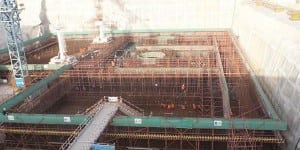
China Starts Construction of HTR Demonstration Plant
Construction of China’s first high-temperature gas-cooled reactor (HTR) demonstration plant kicked off this April after pouring of concrete for the basemat of the Generation IV reactor was completed. Though
-
 O&M
O&MFuel Flexibility Is the Gift That Keeps Giving
All power plants must continually strive to control operating expenses, but it is particularly important for coal-fired facilities to cut costs these days to stay competitive while meeting ever-more-stringent
-
 Legal & Regulatory
Europe Moves to Phase Out Renewable Subsidies
New rules adopted by the European Commission (EC) in April will gradually phase out renewable energy subsidies that currently bolster the European Union’s (EU’s) €48-billion-a-year clean energy
-
 Renewables
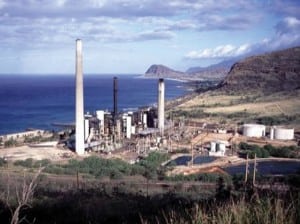
HECO Successfully Cofires Biofuel as No. 6 Oil Substitute
All states were not created equal, particularly when it comes to indigenous reserves of fossil fuels. North Dakota is experiencing a boom in oil production, which has increased almost 10-fold since 2005, and
-
Coal
POWER Digest (June 2014)
Australia Releases Emissions Reduction Fund White Paper. Australia’s Ministry of Environment on April 24 released its Emissions Reduction Fund (ERF) White Paper, formally setting out the final design of the