
POWER
-
 Coal
CoalGlobal Monitor (July 2008)
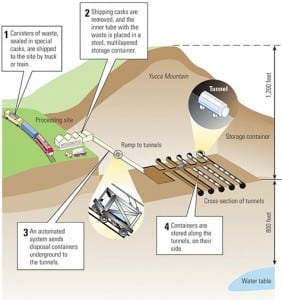
Yucca Mountain plan sent to NRC/ CPV cells get cooling chips from IBM/ StatoilHydro to pilot test first offshore floating wind turbine/ U.S. rivers next massive power source?/ Siemens delivers 500-MW gasifiers/ Algae: A green solution/ POWER digest
-
 Legal & Regulatory
The green trade-off
By Steven F. Greenwald and Jeffrey P. Gray These should be good times for environmentalists who focus on “green” energy policy. More than half the U.S. states have adopted renewable portfolio standards (RPS) that require utilities to meet specific renewable generation targets, and many are considering additional actions to reduce greenhouse gas (GHG) emissions. Such […]
-
 Smart Grid
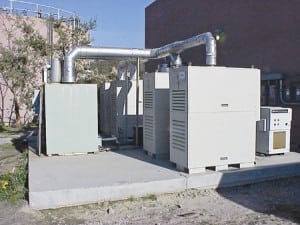
Microgrids promise improved power quality and reliability
Last month, POWER explored the growing importance of the smart grid, which is envisioned as using digital technologies to enable integrated, real-time control of all the system’s elements, from generation to end use. This month we focus on the emerging technology of microgrids: controlled groupings of dispersed generation sources that are connected to the main electrical grid but that can function independent of it. We examine their benefits and their potential impact on 21st-century utilities and their customers.
-
 Coal
CoalOptions for reducing a coal-fired plant’s carbon footprint: Part I
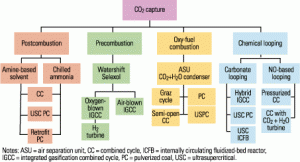
Caps on greenhouse gas emissions are imminent in the U.S., and they will change how we design tomorrow’s coal-fired power plants. Efforts are already under way to develop alternative capture and sequestration technologies, mainly for CO2. Unfortunately, the proposed processes all consume lots of energy, reducing plants’ net output and efficiency. In Part I of our look at these technologies, we list and quantify the negative impacts of postcombustion removal of CO2 from a coal plant’s flue gas. Next month, in Part II, we’ll do the same for four other CO2 reduction techniques: oxyfuel combustion, using higher-temperature and higher-pressure boilers, cofiring biomass, and replacing some coal-fired capacity with renewable capacity.
-
 O&M
O&MDigital radiographic systems detect boiler tube cracks
Boiler water wall leaks have been a major cause of steam plant forced outages. But conventional nondestructive evaluation techniques have a poor track record of detecting corrosion fatigue cracking on the inside surface of the cold side of waterwall tubing. EPRI is performing field trials of a prototype direct-digital radiographic system that promises to be a game changer.
-
 Instrumentation & Controls
Assessing and addressing cyber threats to control systems
Control systems used by utilities and other operators of America’s industrial infrastructure increasingly rely on an Internet connection that makes them as vulnerable to hackers as any computer or network. One reason many utility control systems are vulnerable is that, unlike your ISP’s systems, they don’t record an audit trail that reveals the source of the attack.
-
 Synfuel
Biofuels help green up gas turbines
Ethanol and biodiesel have become mainstream fuels that are increasingly used in combination with gasoline or petroleum diesel in automobiles. Now these same versatile fuels are starting to be used to power gas turbines. LPP Combustion LLC has developed a fuel preparation and delivery system that converts liquid fuels such as No. 2 fuel oil, biodiesel, ethanol, and coal liquids into substitute natural gas, which existing natural gas hardware can burn while enjoying reduced emission rates similar to those of natural gas.
-
 O&M
O&MBoiler optimization increases fuel flexibility
Burning spot market fuels can reduce plant fuel costs, but it can also introduce unexpected operational problems throughout the boiler island. Orlando Utilities Commission’s Stanton Energy Center optimized its Unit 2 combustion system and improved O&M practices as part of a project to increase the unit’s fuel flexibility without degrading reliability or heat rate. OUC’s attitude: If you can measure it, you can manage it.
-
 Commentary
Growing a green economy
I believe there are three basic objectives for the energy industry in the modern era. First, to provide a reliable and ample supply. Second, to ensure that the supply is provided at the least cost to consumers. And third, to accomplish the first and second objectives with the least possible adverse effects on the environment. […]
-

The fallout from shifting nuclear alliances
—Dr. Robert Peltier, PE Editor-in-Chief In the late 1880s’ “War of the Currents,” Thomas Edison used every outrageous tactic to promote direct current (DC) as superior to alternating current (AC), which was championed by George Westinghouse. Edison’s most overblown public display was the electrocution of Topsy, a Coney Island circus elephant, to prove the dangers […]
-
 Coal
CoalGlobal Monitor (June 2008)
Artificial photosynthesis for solar power? / Poultry litter to fuel 55-MW N.C. plan / First fuel cell-powered plane takes flight / First HTS transmission cable energized / PTC powers wind power industry / Renewing Greensburg / GAO deems coal-to-gas switch impractical / Assessing the Congo River’s power potential / POWER digest / Corrections
-

-
 News
NewsGuns and Moses
Charlton Heston’s legacy will surely rest on his iconic performance as Moses in The Ten Commandments and his unwavering support of the Second Amendment. I had the privilege of watching a classic Heston performance at the 2000 National Rifle Association convention in Charlotte, N.C., when he raised a handmade Brooks flintlock above his head and […]
-
 Coal
CoalGlobal Monitor (May 2008)
National Grid divested of Ravenswood/ GE to sell Baglan Bay plant; From prairie grass to power/Renewables experience 40% growth/ The sustainable city/Solar recharger for developing countries/ Seeking CCS solutions/ Hoover Dam could stop generating/ Japan turns to fossil fuels/U.S. reactors produce record power/ POWER digest
-
-
 Legal & Regulatory
Why RPS programs may raise renewable energy prices
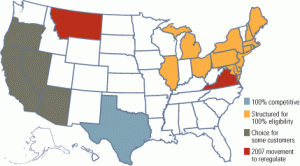
Until very recently, common wisdom held that the price of renewable energy would fall as legislative procurement mandates ensured its long-term demand. The resulting growth in supply and sales would spur investment in the field, create economies of scale, and accelerate progress down the technology learning curve. Something unexpected, however, happened along the way. Though […]
-
 Wind
WindRegulating wind power into a dispatchable resource
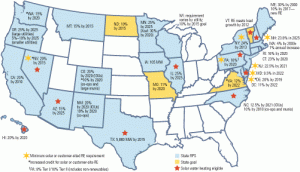
Perhaps the biggest shortcoming of wind power is its unreliability. Unconcerned with human needs, Mother Nature has decided that the wind usually blows strongest at just the wrong times, when electricity demand is lowest. However, using savvy negotiations to exploit a new provision in California’s renewable energy regulatory regime could make wind power more dispatchable during peak-demand periods and increase the capacity of wind farms at the same time.
-
 Coal
CoalFuture of national mercury rule now uncertain
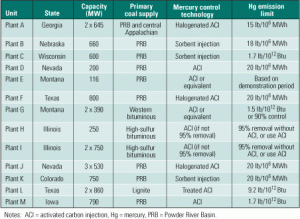
This February, a federal appeals court tossed out the Clean Air Mercury Rule and its cap-and-trade program and ordered that mercury be regulated more stringently as a hazardous air pollutant. Adding insult to injury, the court made its ruling effective one month later. While the EPA regroups, state energy and environmental regulators will have an opportunity to look closely at recent power plant permits for guidance. This article reviews the technology options and regulatory approach for mercury control used on recently permitted and currently operating coal-fired plants.
-
 Instrumentation & Controls
Cation conductivity monitoring: A reality check
The ability to detect contaminated feedwater or steam before it can corrode the internals of a turbine or HRSG and cause a forced outage is worth millions. One knock against cation conductivity monitoring—still the most common technique for the early detection of contamination—is the difficulty of interpreting conductivity readings when the plant’s makeup contains significant levels of organics or CO2. Here are the pros and cons of cation conductivity monitoriting and some alternative monitoring methods.
-
 Instrumentation & Controls
Making PM systems sweat the small stuff
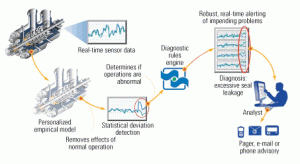
Modern predictive maintenance systems can monitor the health of most plant equipment. By sorting through the wealth of information those systems deliver, operators can discern important trends, including the early signs of a system or component failure.
-
 Smart Grid
Boulder to be first “Smart Grid City”
The next-generation power grid—enhanced by digital technologies throughout the network to give generators, distributors, and customers greater control—promises to improve efficiency and lower operating costs. This year, in the most full-scale effort yet, Xcel Energy begins introducing intelligent grid technologies that it hopes will make Boulder, Colo., the first Smart Grid City.
-
 Hydro
HydroA new wave: Ocean power
The idea of harnessing the vast power of Earth’s oceans has tantalized humans for more than a century. Today, the prospect of generating as much as 4,000 TW of clean energy from marine sources is fueling a resurgence of interest in a variety of technologies.
-
 Commentary
Smart Grid requires clearing mental gridlock
In mid-2006, a Google search of the term “Smart Grid†generated around 2,000 responses. The same search this past month yielded more than 500,000 hits from a wide variety of sources. The explosiveness of the concept is especially interesting because there is no universal agreement on what constitutes a smart grid—much less agreement on what […]
-
 Instrumentation & Controls
Turbine technology maturity: A shifting paradigm
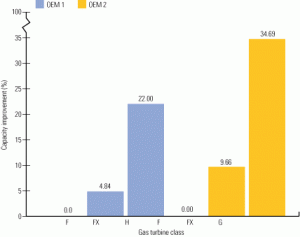
Selecting the right turbine(s) for a specific power project is a complex process that poses two challenges. One is understanding which field experience cited by suppliers represents proven technology; the other is evaluating whether a turbine upgrade represents an evolutionary change or a revolutionary transformation that warrants further study before deploying it in the field. Here‘s how a leading EPC contractor makes technology-neutral equipment selection decisions on behalf of its customers.
-
 Instrumentation & Controls
Time to get serious about security
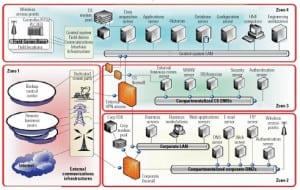
Managing ongoing threats to power plants’ digital, telecommunications, monitoring, control, and automation systems is no longer just a good idea. It’s an essential element of superior plant operations and now a regulatory requirement as well, thanks to new critical infrastructure protection standards recently approved by FERC.
-
 Gas
GasCastejon 2: Ready to reign in Spain
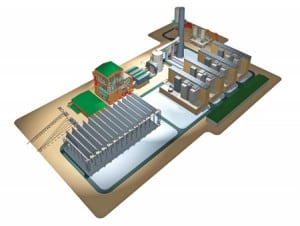
The new, 424-MW Castejon 2 combined-cycle plant designed and built by Alstom was recently given its provisional acceptance certificate. Alstom used its “Plant Integrator” approach to fast-track delivery of a plant just like Castejon 1, which averaged 98% availability during its first three years of operation. That kind of performance is crucial to generators operating in the Spanish merchant power market—or any market.
-
 O&M
O&MThe aging workforce: Panic is not a strategy
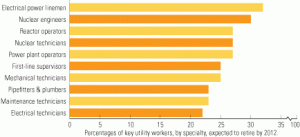
Leaders in the utilities sector talk a lot these days about talent. On one hand, they express concern about facing a shortage of knowledgeable staff as 76 million baby boomers exit the workforce. On the other, they worry about where they’ll find enough qualified people to remain competitive in light of the fierce battle for engineering talent that globalization has created. The antidote to these worries lies in reconfiguring HR practices.
-
 Business
ELECTRIC POWER 2008 offers access to the latest products and services
If you enjoy POWER magazine’s New Products department, you’re going to love the ELECTRIC POWER 2008 Exhibition. You’ll be able to see and feel the latest tools of the trade and talk to the folks who provide them to the generation industry. Here’s a sneak peak at what awaits you on the exhibit floor May 6 to 8 at the Baltimore Convention Center.
-
 Smart Grid
Reducing gridlock
North America’s electricity grid has been described as the world’s most complex machine. The grid is unique among utility infrastructure systems for its need to have supply and demand—generation and load—balanced at all times. There still are no technologies for storing large quantities of electricity akin to liquefied natural gas tanks, voice mail, or […]
-
 Coal
CoalGlobal Monitor (April 2008)
Tenaska proposes first new coal-fired plant with carbon capture/ Concerns raised over growth of China’s CO2 emissions/ Sandia, Stirling Energy Systems set new world record/ Indonesia orders first Wärtsilä Gas Cubes/ First wind turbines on Galapagos Islands cut oil imports/ Harnessing waste heat for electricity/ POWER digest/ Correction