
POWER
-
 O&M
O&MTools at Height
A structure or mechanical system that requires fasteners also demands tools to maintain it properly. In power sectors such as wind, fossil fuel, and nuclear, some work areas may be several hundred feet in the air. While working at those extreme heights, or even just 10 feet off the ground, it’s simply unacceptable to drop anything. That’s why the concept of “tools at height” is being embraced as a way to improve safety and efficiency on the worksite.
-
 News
NewsSpacer Cable Systems
Hendrix Wire & Cable, a provider of overhead and underground power distribution products, introduced its Spacer Cable Systems, a “green” solution for overhead distribution circuits. Because Spacer Cable is more compact and can withstand temporary contact with branches without causing outages, Hendrix Spacer Cable Systems can help reduce the amount of vegetation that must be […]
-
 O&M
O&MMicrons Matter: Proper Design of Fogging Nozzles
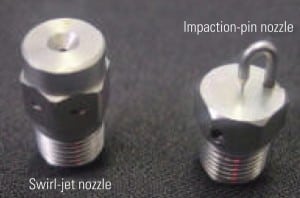
Inlet fogging systems for combustion turbines achieve their effect at the molecular level: The cooling effect occurs by converting thousands of gallons of water into single evaporated molecules suspended in the air. The right fog pattern comes down to a matter of selecting the best nozzle design and proper placement in the inlet air stream.
-
 News
NewsEco-Friendly Absorbent Pads
Oil Eater Naturals is a new line of eco-friendly absorbent pads made of natural plant by-products. Featuring woven construction, the pads are designed to provide a safer and cleaner workplace and help users meet OSHA and EPA requirements. The line includes Oil-Only Pads and Rolls that soak up oil and repel water; Universal Pads and […]
-
 O&M
O&MUsing Temperature- Measuring Indicators
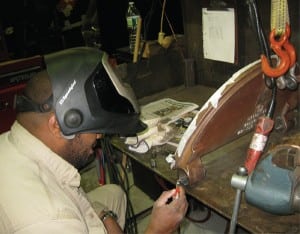
Correct welding procedures are extremely important elements of the work done by the PSEG Central Maintenance Shop (serving Public Service Electric and Gas Co., PSEG, a New Jersey utility). We have, for example, a Critical Weld Inspection Program for high-temperature pressure piping whose goal is to identify cracks in high-temperature piping welds.
-
 News
NewsElectric Wire Rope Hoists
Harrington Hoists launched the RHN Series, a new line of electric wire rope hoists, offered in two configurations: the deck/base-mounted hoist in 2–20 metric tons and ultra-low-headroom trolley hoist in 2–15 metric tons. Both versions are dual speed. The deck/base-mounted hoist features a compact, modular design that is perfect for stationary applications or combined with […]
-
Legal & Regulatory
Will San Bruno Be a “Game-Changer”?
Energy professionals and the general population are both acutely aware of the explosion of a Pacific Gas & Electric Co. (PG&E) natural gas pipeline in San Bruno, Calif., that led to the death of eight people and the total destruction of 38 homes in September 2010. The tragic accident garnered immediate national attention, thrusting the natural gas industry into the spotlight. The California Public Utilities Commission’s (CPUC) Independent Review Panel neatly encapsulated the sentiment surrounding the event: “The fact that a large segment of pipe literally blew out of the ground in an urban neighborhood and the residents were generally unaware of the proximity of a high-pressure natural gas transmission system to their homes—raises significant public safety concerns.”
-
 News
NewsIndustrial-Strength Pressure Sensing
Ashcroft A2, A2X, and A4 pressure transmitters answer the call for an accurate, rugged, and reliable heavy-duty sensor. Available in accuracies up to +/-0.25% full scale, the A2 is offered with a wide variety of electrical connections, analog output signals, and pressure ports to meet the requirements of most any industrial application. The A2X (explosion/flame proof) […]
-
 Solar
SolarTop Plant: Copper Mountain Solar 1, Boulder City, Nevada
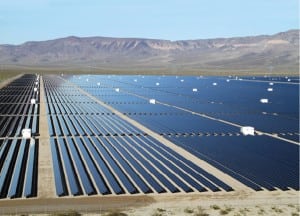
The current largest photovoltaic plant in the U.S., the 48-MW Copper Mountain Solar 1, utilizes approximately 775,000 solar panels to generate emission-free electricity for about 14,000 homes without the use of water. The facility was constructed in less than a year—an unprecedented achievement for a project of this size.
-
 News
NewsInteractive Virtual Training Content Software
Advanced graphical interface technology provider DiSTI Corp. unveiled Replic8, a new software tool to effortlessly create interactive virtual training content from Autodesk’s 3D Studio Max. Replic8 allows users to easily produce compelling 3-D interactive training content through a simplified development process. (The image is a Relic8-generated 3-D Cummins 855 Diesel Engine.) The software tool works […]
-
 Wind
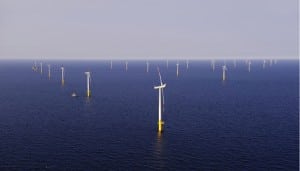
WindTop Plant: EnBW Baltic 1, Darss-Zingst Peninsula, Mecklenburg Province, Germany
Owner/operator: EnBW Energie Baden-Württemberg AG/EnBW Renewables GmbH Germany’s first commercial offshore wind farm—the 48.3-MW EnBW Baltic 1—consists of 21 Siemens wind turbines, each with a capacity of 2.3 MW and a rotor diameter of 93 meters. Siemens constructed the facility in an area covering about 7 square kilometers in the Baltic Sea.
-
Commentary
Wind Energy: Dealing with Intermittency Challenges
The wind power industry has exploded over the past decade. In the U.S. alone, almost 40,000 MW of wind power have come online since 2000. As more wind generation has been added, grid operators have been challenged to integrate a large amount of intermittent generation. As the state with by far the most installed wind power capacity, Texas has had to face this problem head on.
-
 Solar
SolarTop Plant:Â Kimberlina Solar Thermal Energy Plant, Bakersfield, California
The 5-MW Kimberlina Solar Thermal Energy Station is the first to use compact linear Fresnel reflector technology developed to generate continuous superheated steam, a key element for higher-efficiency power generation and integration with new and existing plants. The facility’s innovative technology helps deliver power even during periods of transient cloud cover.
-
 O&M
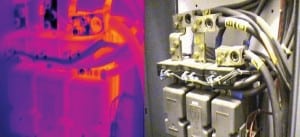
O&MPredictive Maintenance That Works
This is the fourth in a series of predictive maintenance (PdM) articles that began in the April “Focus on O&M” with an introduction to PdM as a process whereby maintenance is performed based on the condition of the equipment rather than on a predetermined interval. In the May and July issues, we began exploring specific PdM techniques, such as motor-current signature analysis and oil analysis.
-
 News
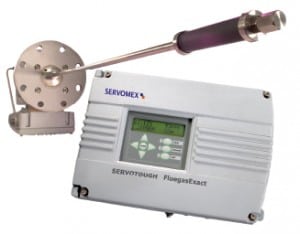
NewsCombustion Gas Analyzer
Building on the success of the Fluegas 2700 combustion gas analyzer, the new SERVOTOUGH FluegasExact integrates Servomex’s unique Flowcube flow sensor technology to give users even more confidence in their combustion gas measurements. The analyzer features a patented zirconium oxide cell for oxygen measurement and a thick film catalytic sensor for measuring carbon monoxide (CO) […]
-
Legal & Regulatory
The Water-Energy Balancing Act
Water has long been energy production’s silent partner. In the past, we Americans seemed to take it for granted that plentiful water supplies would be available for a variety of energy needs ranging from the operations of coal-fired power plants to natural gas production activities.
-
 Nuclear
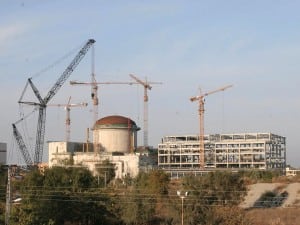
Top Plants: Four Plants Demonstrate Global Growth of Nuclear Industry
The global nuclear industry is moving forward at a brisk pace, only slightly slowed by the Fukushima Daiichi accident. The International Atomic Energy Agency’s most realistic estimate is that 90 new nuclear plants will enter service by 2030. Ten new nuclear plants went online over the past two years. We profile four of them as POWER’s nuclear Top Plants for 2011.
-
 O&M
O&MOptimizing Condenser Tube Selection
Selecting the most economical tube for a new condenser, or the retrofit of an existing one, is much more complex than mere price shopping. Each material has unique performance characteristics that affect the operating economics of the entire plant. A case study illustrates the importance of carefully choosing the tube material that is right for your plant.
-
 O&M
O&MCondenser Tube Failure Mechanisms
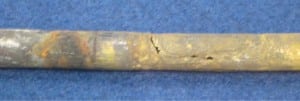
The operating environment within a condenser is extremely harsh, and in spite of the designer’s best intentions, sometimes tubes made of the best materials fail. The most important tube failure mechanisms typically result from different forms of corrosion and erosion. When it’s time to select new condenser tube material, you’ll need to consider the projected operating environment and failure mechanisms that material will be subjected to.
-
 O&M
O&MCondenser Retubing
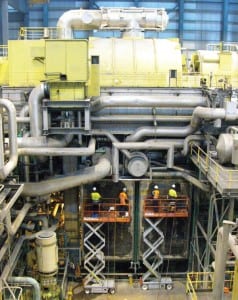
Once the condenser tubes are designed, selected, and purchased, the final step in a retubing project is to remove the old tubes and install the new ones. The success of this project is very dependent upon attending to quality control, following proper procedures, using the right tools, and having a highly skilled workforce.
-
 Gas
GasNordic Nations Provide Clean Energy Leadership
In the past few years, nuclear concerns, rising oil prices, and a growing understanding of our environmental impact has given energy issues a higher profile worldwide. In this report on the Continental Nordic countries, we look at the efforts being made in much of the Nordic region to secure a sustainable energy supply for the future and at the extent to which the innovative solutions of these countries can be exported around the globe.
-
News
It’s More Than a Process
The Office of the Inspector General (OIG) of the U.S. Environmental Protection Agency (EPA) recently concluded that the agency failed to follow prescribed policies in its peer review of the technical support document that provided the justification for its 2009 “endangerment finding” on greenhouse gases. The OIG report is timely, but in an unexpected way.
The Office of the Inspector General (OIG) of the U.S. Environmental Protection Agency (EPA) recently concluded that the agency failed to follow prescribed policies in its peer review of the technical support document that provided the justification for its 2009 “endangerment finding” on greenhouse gases. The OIG report is timely, but in an unexpected way.
-
 Nuclear
The U.S. Spent Nuclear Fuel Policy, Part 2: Playing Hardball
Ongoing investigations into cancellation of the Yucca Mountain project have revealed an astonishing number of irregularities by agencies responsible for the project. Those investigations have exposed a broken system that failed to properly manage the project and that surrendered to political pressure. Worse still, the draft report of President Obama’s Blue Ribbon Commission on America’s Nuclear Future gave the industry little reason to hope that there would ever be a long-term nuclear waste fuel repository.
-
 Gas
GasBlackout Leaves Southwest in the Dark
A large swath of Southern California, parts of Arizona, and Northern Baja Mexico was blacked out on Sept. 8—leaving seven million people in the dark—after an Arizona utility worker fixing faulty equipment near Yuma reportedly tripped the 500-kV North Gila–Imperial Valley transmission line, causing the outage. The blackout prompted two units at the San Onofre Nuclear Generating Station to go offline, stranded many people in elevators and trains, shut down airports, cut air conditioning on a day well above 90F, and caused damages of $97 million to $118 million, according to early estimates from the National University System’s Institute for Policy Research.
-
 Nuclear
Crossing the Digital Divide
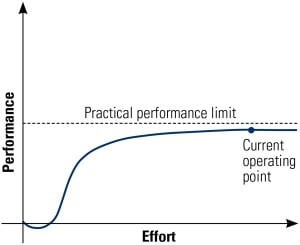
One of the great successes of the power generation industry over the past two decades has been the significant increase in nuclear plant reliability and other performance standards. However, there is reason to be concerned that the design, operation, and maintenance practices used by the current fleet of plants do not leverage all the possible advantages from a digital controls upgrade. Perhaps past success is the biggest barrier to future success.
-
 Wind
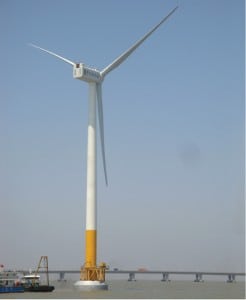
WindAMSC Former Employee Convicted in Sinovel Intellectual Property Case
An intellectual property battle between Massachusetts-based American Superconductor Corp. (AMSC) and China’s giant wind turbine maker Sinovel in late September culminated with an Austrian court conviction of a former AMSC employee, who was arrested in Austria and who pled guilty to corporate espionage charges. The court charged Dejan Karabasevic, a 38-year-old Serbian engineer, with stealing AMSC’s software, modifying it, and secretly selling it to Sinovel.
-
 Nuclear
Browns Ferry Unit 1 Restart: World-Class ALARA Performance
TVA completed the $1.9 billion restart of the 1,100-MW Browns Ferry Unit 1 in 2007. That restart project provided the opportunity to incorporate state-of-the-art materials and radiation-reduction techniques to ensure that Unit 1 would be an industry-leading low-ALARA-exposure plant when it returned to service. The reductions achieved were significant.
-
 Nuclear
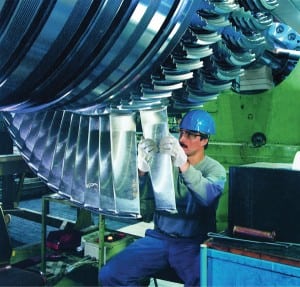
Siemens Joins Trend to Quit Nuclear
The number of companies pulling out of the nuclear business continues to grow. Just weeks after Louisiana-based engineering firm The Shaw Group announced it would sell its 20% stake in the nuclear company Westinghouse back to partner Toshiba, German engineering conglomerate Siemens said that, prompted by the German government’s decision to phase out nuclear power by 2022, it would quit the nuclear business.
-
Gas
Global Gas Glut: An Update
In our September article about the global profusion of natural gas, we based a portion of our discussion on the latest, vastly increased natural gas reserve estimates reported by the U.S. Energy Information Administration (EIA). Since our article was published, the EIA has adjusted its estimates downward. We want you to be aware of those lower recoverable reserve estimates. We also want you to know that the conclusions reached in that article do not change with the new estimates of natural gas reserves.
-
Nuclear
German Court Questions Legality of Nuclear Tax
A German finance court in September questioned the constitutionality of a controversial tax on fuel used in nuclear power plants, a decision that could influence rulings in various finance courts around the country that are reviewing complaints by nuclear operators regarding the levy.