
POWER
-
 Hydro
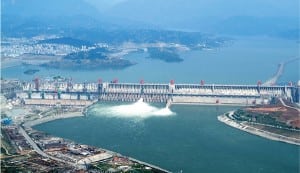
HydroThree Gorges Dam Completed Amid Technical Victories, Controversy
China in early July installed the 32nd and final turbine of its mammoth Three Gorges Dam, virtually completing the controversial 1994-initiated hydropower project on the middle reaches of the Yangtze River.
-
 Coal
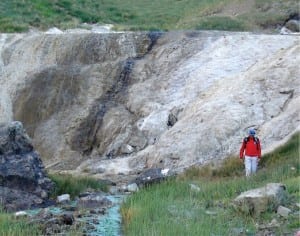
CoalChile’s Power Challenge: Reliable Energy Supplies
Droughts, unreliable gas imports, and protests against proposed projects have hampered the Chilean power sector and its largest economic driver, the copper-mining industry. Recent policies designed to foster more reliable supplies are a move in the right direction, but remaining obstacles are formidable.
-
 Coal
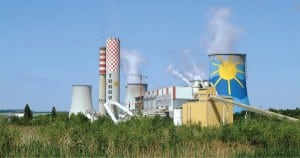
CoalEU Ruling Slackens Poland’s Coal Power Expansion Ambitions
Poland, a country that currently depends on coal power for nearly 85% of its electricity and plans to build another 11,300 MW of new coal-fired capacity by 2020, suffered a critical planning setback in mid-July as the European Union (EU) effectively blocked the country from using free carbon emission permits to build new coal-fired power plants.
-
 O&M
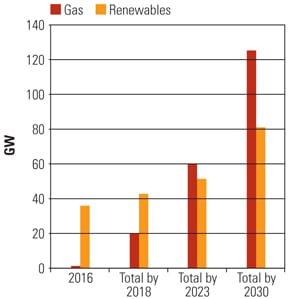
O&MPartners in Reliability: Gas and Electricity
The natural gas and electricity industries have entered into an increasingly codependent relationship as coal-fired electricity gives way to natural gas–fired generation. Both industries are firmly committed to providing reliable service, although each goes about its business in different ways. Utilities, regulators, and stakeholders are searching for ways to align interests and expectations.
-
 News
NewsSolar-Hybrid Mini-Grid Lights Up Brazilian Island
An innovative mini-grid in April turned on the lights for about 250 residents living in Ilha Grande, a tiny island on the northwest coast of Maranhão State in northeastern Brazil.
-
 O&M
O&MO&M and Human Stresses Caused by Low Gas Prices
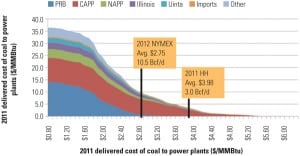
Plentiful supplies of low-cost natural gas have changed unit dispatch orders across the U.S., led to thermal stress–induced maintenance issues at cycling coal plants, and resulted in management challenges at coal and gas units alike. This scenario is unlikely to change so long as gas holds its competitive edge over coal.
-
 News
NewsSumitomo Introduces Battery System
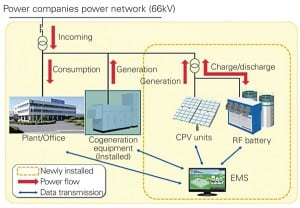
Japan’s Sumitomo Electric Industries in July began operation of a new power generation and megawatt-class storage system at its Yokohama Works site.
-
 Water
WaterWater and Power: Will Your Next Power Plant Make Both?
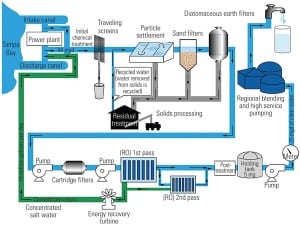
In much of the developing world, two essentials are often in short supply: potable water and reliable electricity. Some countries have invested heavily in desalination and combined cycle technologies to simultaneously solve both problems.
-
 Coal
CoalMajor Projects Commissioned in the U.S., Kuwait, and India
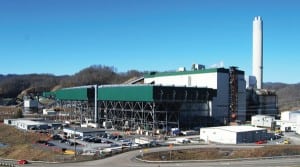
Several major power plants around the world began operations over the past months.
-
 News
NewsCompact Pump Series
Thompson Pump’s new Compact pump series has all the benefits of the popular Thompson Pump JSC series but is lighter, has fewer parts, needs less maintenance, and has a lower price. The Thompson Compact pump is 35% smaller and 20% lighter but offers the same performance as a standard size pump with 24-hour run time […]
-
Business
POWER Digest (September 2012)
Belgian Cabinet Votes to Prolong Tihange 1 Reactor Life. Belgium’s cabinet in early July approved plans by GDF Suez subsidiary Electrabel to keep the 1975-built Tihange 1 reactor operating until 2025—almost a decade longer than planned—but it rejected a proposal to delay by a year the planned 2015 closure of Electrabel’s two 1975-built reactors at […]
-
 News
NewsMultichannel Transmitter Models
Endress+Hauser introduced the Liquiline CM44 Series, multichannel transmitter models for monitoring and controlling processes in water, wastewater, chemical, power, and other industries. CM44 models accept inputs from up to eight Endress+Hauser Memosens digital analytical sensors, including nitrate, spectral absorption coefficient, pH, ORP, conductivity, oxygen, turbidity, and ion selective electrode sensors. (Memosens sensors are lab-calibrated devices […]
-
 Water
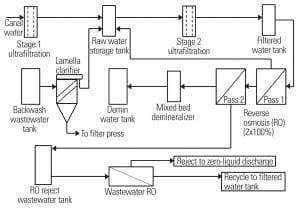
WaterDesign and Testing of a Water Treatment and ZLD System
In the following case study, Aquatech International Corp. discusses a water treatment system designed to minimize water usage and waste discharges, both liquid and solid, at a gas-fired combined cycle plant in California.
-
 News
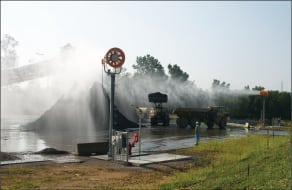
NewsTowers Improve Aim of Dust-Suppression Equipment
Dust Control Technology launched a family of tower mounts for the company’s atomized misting equipment, which extends droplet hang time and range while providing more precise aiming capability during slag-handling, aggregate-progressing, recycling, and coal-handling operations. Complementing a product line that already includes wheeled carriages and skid mounts, by delivering millions of 50- to 200-micron droplets […]
-
Legal & Regulatory
Daylight Saving: Energy Policy or Placebo?
In December 1973, President Richard Nixon explained to the American people his administration’s critical initiative to confront the “energy crisis” du jour (precipitated by the 1973–74 Arab oil embargo): “Many [energy savings measures] require inconvenience and sacrifice. But daylight saving time… will mean only a minimum of inconvenience and will involve equal participation by all. […]
-
Commentary
Fuel Diversity Is Critical in Industry Transition
Success in life and business is all about seizing the right opportunities at the right time. Opportunities abound today in the electric utility business. Our industry is in the midst of an extraordinary period of transformation and investment that will affect how we produce and deliver electricity—and what customers pay for it—for decades. By 2020, […]
-
 Gas
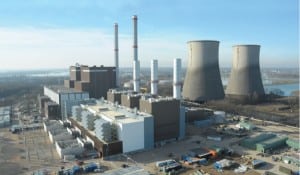
GasTOP PLANTS: Claus C Combined Cycle Power Plant, Massbracht, Limburg Province, Netherlands
The 1,309-MW Claus C power plant showcases the successful repowering of an existing steam power plant by upgrading it and adding a highly efficient combined cycle plant that doubles the original plant’s power output for just a 35% increase in fuel consumption. In addition, the newly retrofitted plant is cutting CO2 emissions by 40% compared with a simple-cycle gas-fired plant of equal capacity.
-
 Gas
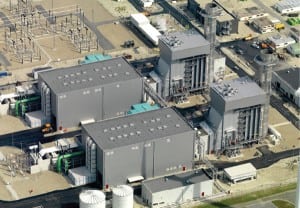
GasTOP PLANTS: Enecogen Power Station, Rotterdam, Netherlands
The Dutch utility Eneco and the Danish energy group DONG Energy recently collaborated in building the 870-MW Enecogen Power Station that has a thermal efficiency above 59% and is designed for maximum operational flexibility. As part of Eneco’s strategy to lower emissions across its fleet, the combined cycle plant is designed to quickly compensate for intermittent power produced by the utility’s wind turbines.
-
 Gas
GasTOP PLANTS: Glow Phase 5 Combined Cycle/Cogeneration Project, Rayong, Thailand
Glow Energy’s 382-MW Glow Phase 5 power plant in Thailand exceeded early expectations by packing into a tightly constrained space more capacity than anyone thought possible. The plant’s engineering feat earns it recognition as a POWER Top Plant for 2012.
-
 Wind
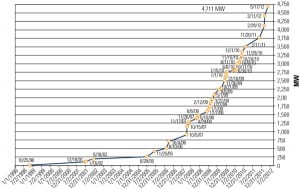
WindWhere More Is Not Merrier: The Battle Between Wind and Water in the Pacific Northwest
Bonneville Power Administration is torn between delivering the tremendous amount of inexpensive hydroelectric power produced in its region and a rapidly growing wind energy industry that has been ordered to reduce generation when hydroelectric plants are dispatched to protect fish habitats. Which renewable energy asset will win?
-
 Gas
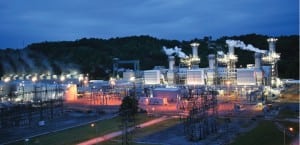
GasTOP PLANTS: John Sevier Combined Cycle Project, Rogersville, Tennessee
The Tennessee Valley Authority (TVA) is known for its large fleet of coal-fired plants. With TVA’s renewed emphasis on nuclear power and gas-fired generation, the organization will soon fulfill its new goal: “to be one of the nation’s leading providers of low-cost cleaner energy by 2020.” Construction of the 880-MW John Sevier Combined Cycle Plant puts TVA one step closer to achieving that goal.
-
Solar
Solyndra Story Doesn’t Get Stearns Reelected
Washington, 17 August 2012 — Poor Cliff Stearns. The soon-to-be-former Republican congressman from Florida found out Tuesday that voters in his district didn’t much care about the ruckus he’s been raising about the Obama administration and its funding of the failed Solyndra solar photovoltaic maker.
-
Nuclear
A Bumpy Road for Nukes
Washington, D.C., 6 August 2012 — It’s been a rough road for nuclear advocates in the U.S. of late, although nothing seems to dent the Pollyanna armor of the nuclear crowd, always appearing to believe a revival is just over the horizon and headed into view. Here are a few fraught developments for the nuclear […]
-
Coal
Tactical Advantage
A three-judge panel of the U.S. Court of Appeals for the D.C. Circuit on June 26 unanimously rejected all pending legal challenges against the U.S. Environmental Protection Agency’s (EPA’s) interpretation of the Clean Air Act (CAA) that allows the agency to regulate greenhouse gases (GHGs). What is the EPA’s future strategy in its war on coal?
-
 Nuclear
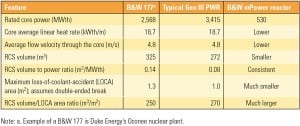
Small Is the New Big: The B&W Small Modular Reactor
Small reactors are big news, particularly the 180-MWe Generation III++ Babcock & Wilcox mPower small modular reactor (SMR). This SMR has all the features of its larger cousins, but the entire reactor and nuclear steam supply system are incorporated into one reactor vessel, all about the size of single full-size pressurized water reactor steam generator. Expect the first mPower—and probably the first SMR—to enter service before 2022.
-
-
 Nuclear
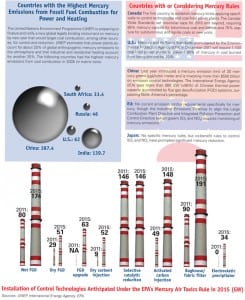
2011 Nuclear Industry Scorecard
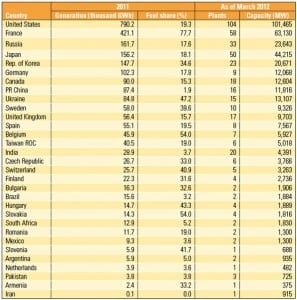
The world nuclear industry experienced few substantial changes in performance metrics for 2011—beyond Japan, that is. In the aftermath of Fukushima, the once–world leading Japanese nuclear industry fell to the bottom of the rankings, perhaps for good.
-
 Hydro
HydroMajor Developments for Solid Oxide Fuel Cells
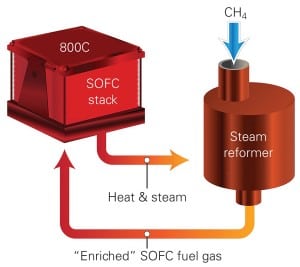
Solid oxide fuel cells (SOFCs), which oxidize a fuel to produce electricity, have received much attention of late for the technology’s myriad benefits, including high efficiency, long-term stability, fuel flexibility, and low carbon emissions—all at a relatively low cost.
-
Nuclear
Too Dumb to Meter, Part 3
As the book title Too Dumb to Meter: Follies, Fiascoes, Dead Ends, and Duds on the U.S. Road to Atomic Energy implies, nuclear power has traveled a rough road. In this POWER exclusive, we present the third chapter, “Micro-Mismanagement by Committee.” During the frenzy to manage atomic power after World War II, Congress created an executive branch agency that threatened to be too independent, too powerful, and too isolated from the rest of government. Compounding their errors, perhaps in recognition of what they had created, the solons also developed a way to insert their own power into the action. This proved to be a major mistake—blurring the lines between executive and legislative authority—causing no end of problems for the nation’s nascent atomic energy venture.
-
 Wind
WindThe Age of the Mammoth Wind Turbine Blade
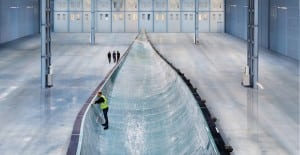
Siemens Energy in June announced it had produced the first batch of its new B75 Quantum wind turbine rotor blades, fiberglass components 75 meters (m) in length that were cast in one piece (Figure 3). The blades were manufactured to be installed this fall on Siemens’ second prototype of the German firm’s SWT-6.0 6-MW offshore […]