
POWER
-
 Business
Bulgarian PM Quits Over Power Price Protests
Protests in more than 20 cities by tens of thousands of Bulgarians over January electricity bills that averaged more than €100 ($130) forced the country’s prime minister, Boyko Borissov, and his center-right government to resign in mid-February.
-
 News
NewsPV Panel Surge Protection Devices
The ABB Low Voltage Products division released a line of OVR PV UL 1449 3rd Edition, pluggable DC DIN Rail surge protection devices (SPD) specifically designed for photovoltaic (PV) applications. The new SPDs protect solar panels from damage from direct and indirect lightning strikes, which solar panels are especially susceptible to because of their large, […]
-
 Business
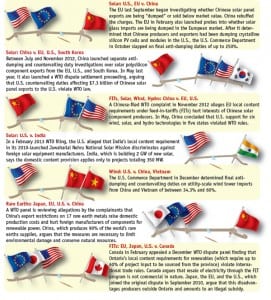
THE BIG PICTURE: Subsidy Tug-of-War
Government decisions to subsidize renewable power to increase its capacity for environmental and security reasons have spurred investments but also increased cross-border tensions. Increasingly, legal actions that seek to settle international trade disputes allege unfair subsidization.
-
Commentary
The Pacific Northwest’s Wind Fleet Integration Struggles
Mae West said, “Too much of a good thing can be taxing.” The Pacific Northwest has a good thing—plentiful, carbon-free power from its huge wind and hydroelectric fleets. But wind’s huge variability can be taxing. The Northwest’s scramble to integrate growing wind generation, and the resulting litigation melee, underscore the importance of quickly solving the variable resource integration puzzle.
-
 O&M
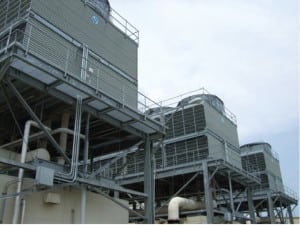
O&MBattling White Rust
Does your power plant use a chiller for combustion turbine inlet air cooling or other processes that reject heat? If so, there is a good chance you also have an auxiliary cooling tower or a wet surface air cooler to cool these systems.
-
Legal & Regulatory
Filling the Hole in California’s Capacity Procurement Plan
In February, the California Public Utilities Commission (CPUC) yet again missed an important opportunity to correct structural flaws that have plagued the state’s wholesale generation market in the wake of the 2001 energy crisis.
-
 O&M
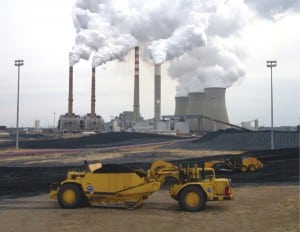
O&MTVA’s Paradise Unit 2 Sets New Continuous Operations Record
Paradise Fossil Plant Unit 2’s record-setting performance of 259+ days of continuous operation for a cyclone-fired boiler is attributed to excellence in plant operations and maintenance processes, a diligent and well-trained staff, and leadership that places high value on both. The Paradise experience proves that plants can’t help getting older, but they don’t have to get old.
-
Business
Preparing for a NERC CIP Audit
Undergoing a NERC CIP audit is an ordeal, particularly when the ground rules are not clearly spelled out in advance. An experienced NERC CIP auditor lays out a comprehensive five-step plan that will show you how to prepare for a successful audit.
-
 Environmental
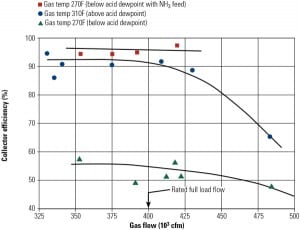
Electrostatic Precipitator Upgrade Opportunities
The results of stack emissions testing conducted at several coal-fired power plants during the past three years have provided useful guidance for plant operators who are required to meet new federal guidelines regarding the release of particulate matter. The data and guidelines presented here will assist those who operate plants with electrostatic precipitators to develop a strategy for filterable particulate emissions control.
-
Renewables
The Spotlight on a Mexican Success Story
Energy demand in Mexico, according to the Secretary of Energy (SENER), will increase by approximately 4% each year for the next ten years, and with it the potential for private sector growth in the industry. Download the report.
-
 News
NewsEPA-Compliant Particulate Monitor
Filtersense’s new continuous particulate emissions monitor and baghouse leak detector incorporates “Automatic Zero and Span Checks” to eliminate manual calibration audits, as required by the U.S. Environmental Protection Agency (EPA) for Maximum Achievable Control Technology (MACT) standards and other regulations for fabric filter particulate emissions monitoring. In addition to internal self-checks, the company’s field-proven induction-sensing […]
-
Nuclear
Too Dumb to Meter, Part 9
As the book title Too Dumb to Meter: Follies, Fiascoes, Dead Ends, and Duds on the U.S. Road to Atomic Energy implies, nuclear power has traveled a rough road. In this POWER exclusive, we present the 16th and 17th chapters, “Uranium Rush and the New ’49ers” and “Naked Shorts at Westinghouse,” the first two chapters of the “False Scarcity and Fools for Fuels” section.
-
 News
NewsNew HRSG Line for 100-MW Gas Turbines
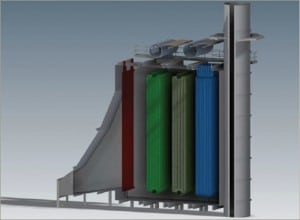
ATCO Emissions Management (ATCO) announced the addition of heat recovery steam generators (HRSGs) to its line of gas turbine auxiliary equipment for the power, oil, gas, and cogeneration markets. The new HRSG product, an energy recovery heat exchanger that recovers heat from a hot gas stream, will initially serve facilities with gas turbines up to […]
-
Gas
Should the U.S. Export Natural Gas?
Controversy concerning natural gas exports flared the day the U.S. Energy Information Administration (EIA) released its estimate that U.S. natural gas exports could begin in 2021.
-
Commentary
Biogas: An Alternative Energy Source
Most professionals in the energy industry know about biomass; fewer of us are conversant with biogas. This commentary explains the basics of biogas, with a focus on its current use and future potential as a source of electrical power.
-
 Coal
CoalNations Agree to Legally Binding Instrument to Curb World’s Mercury Emissions
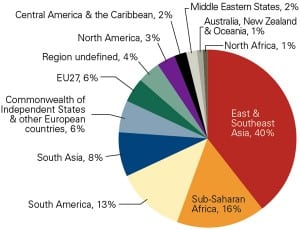
Mercury emissions from power plants in 137 United Nations member countries could be subject to strict controls and reductions if an international treaty is signed by participating nations this October.
-
Gas
Japan Banks on LNG
Japan’s scramble to replace generation lost from nuclear power plants that were shuttered after the March 2011 Fukushima Daiichi nuclear accident has forced it to rely on pricey imports of fossil fuels—and soaring energy costs are hammering the world’s third-largest economy.
-
 Coal
CoalDespite Pollution-Curbing Efforts, Dense Smog Covers Wide Swath of China
Four bouts of dense smog described as the worst air pollution in recent memory enveloped more than half of China in January, from the Beijing-Tianjin-Hebei triangle in the north of the country to Nanjing in the south, via the central city of Wuhan.
-
Hydro
Brazil Drought Threatens Power Supplies
A pervasive drought in northeast Brazil has dried up power supplies from the region’s hydropower facilities, making the area prone to blackouts and crippling economic growth in one of the country’s emerging agricultural havens.
-
 Nuclear
Hungary Inaugurates Subsurface Repository for Nuclear Plant Waste
Construction of a $310 million repository about 250 meters below Earth’s surface for low- and intermediate-level radioactive waste from the operation and future decommissioning of Hungary’s power plants reached a significant milestone at Bataapati.
-
Business
POWER Digest (March 2013)
Selected business news and deals in the power generation industry.
-
 Gas
GasTHE BIG PICTURE: Stretching the Pipeline
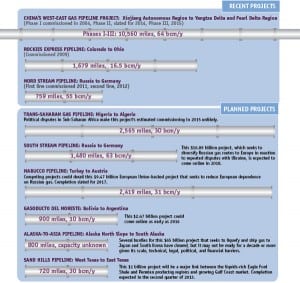
Here are some of the longest pipelines recently built as well as noteworthy ones in the pipeline.
-
 O&M
O&MHow to Avoid Feedwater Heater Drain Design Pitfalls
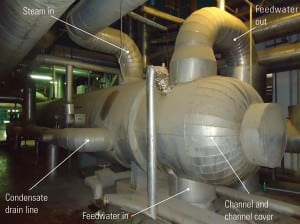
Feedwater heaters are used to preheat boiler feedwater by condensing steam extracted from several stages of the steam turbine. Feedwater heaters enhance the thermal efficiency of the power plant by reducing the amount of fuel burned in the boiler to produce a specified power. At the same time, the steam energy extracted from the turbine by the feedwater heater helps to reduce the rate of energy rejection to the environment via the condenser.
-
Legal & Regulatory
Align Generation Reliability and Fuel Supply Firmness
More and more electricity is generated by natural gas. This trend is likely to persist. Hydraulic fracturing technology is increasing domestic supplies and enabling natural gas prices to remain at historic lows.
-
 Coal
CoalTechno-Economic Considerations When Using Low-Grade Coal for Power Generation
The use of low-grade coal is becoming synonymous with circulating fluidized bed (CFB) power plants. Although CFB technology may often be a better choice than pulverized coal technology, that is not always the case. Owners and developers need to consider several technical and economic factors before making this decision.
-
 Waste to Energy
Expanded Honolulu WTE Plant Delivers Triple Benefits for Oahu
Covanta Energy and the City and County of Honolulu recently completed a $300 million expansion of a 20-year-old waste-to-energy (WTE) facility. The plant is now capable of processing up to 3,000 tons of municipal refuse daily, recycling all the metals, and generating up to 90 MW—enough to supply nearly 10% of Oahu’s electricity.
-
 Waste to Energy
Why Aren’t Construction and Demolition Wastes Considered Biomass Fuel?
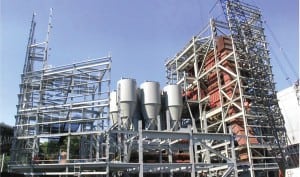
You may be surprised to learn that even with the increased demand for biomass fuels for power generation, construction and demolition fuel is classified as solid waste, not biomass. Reconsidering this designation is critical as U.S. environmental regulations tighten emission profiles for solid waste combustion units and renewable portfolio standards expand.
-
 Gas
GasSelecting a Combined Cycle Water Chemistry Program
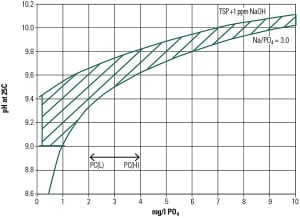
The lifeblood of the combined cycle plant is its water chemistry program. This is particularly true for plants designed for high pressures and temperatures as well as fast starts and cycling. Even though such plants are increasingly common, no universal chemistry program can be used for all of them.
-
 Wind
WindRethinking Wind’s Impact on Emissions and Cycling Costs
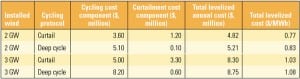
Recent reports by the National Renewable Energy Laboratory and others suggest that the emissions-reducing benefits of renewable energy sources such as wind and solar may have been overstated and the cost of cycling fossil-fueled plants underestimated. These findings may change how utilities and policymakers weigh the costs and benefits of wind and solar energy.
-
 O&M
O&MSteam Turbine Blade Reverse Engineering, Upgrade, and Structural Design
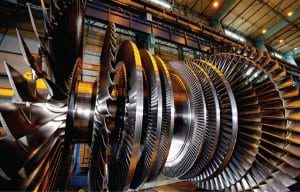
Steam turbine blade cracking often suggests the need for an upgraded blade design. Follow the process of reversing engineering a failed blade to produce a more reliable and efficient design.