
POWER
-
 Gas
GasRepowering South Mississippi Electric Power Association’s J.T. Dudley, Sr. Generation Complex
Repowering two units at the J.T. Dudley, Sr. Generation Complex added 180 MW of high-efficiency capacity to South Mississippi Electric’s portfolio. Now the cooperative can self-produce more than 50% of its electricity needs.
-
 Marmaduke
Classic Marmaduke: Marmy’s First Lesson
Steve Elonka began chronicling the exploits of Marmaduke Surfaceblow—a six-foot-four marine engineer with a steel brush mustache and a foghorn voice—in POWER in 1948, when Marmy raised the wooden mast of the SS Asia Sun with the help of two cobras and a case of Sandpaper Gin. Marmy’s simple solutions to seemingly intractable plant problems remain timeless. This Classic Marmaduke story, published more than 50 years ago, reminds us that even the most modern steam plant is only as good as its operators.
-
Business
Challenges Facing Power Generators in ERCOT
Although nearly all energy experts agree that demand for electric energy in Texas will outstrip supply in the coming years, developers of new power generation facilities are facing significant headwinds. The cause of the problems is a unique mix of circumstances.
-
News
Blowing Smoke
President Obama’s recent comments on climate change and the need for additional federal regulation of greenhouse gases carelessly handled the science he quotes.
-
 Coal
CoalR&D Projects Target Cheaper Carbon Capture, Use, and Storage
In order to burn abundant supplies of coal globally while minimizing carbon dioxide emissions, cheaper methods of capturing, using, and storing greenhouse gas emissions from power plants are needed. A new federal agency is on the leading edge of identifying and supporting promising technologies.
-
O&M
Improve Plant Heat Rate with Feedwater Heater Control
Meaningful, yet often hidden thermal performance losses occur in feedwater heaters.
-
 News
NewsLet Gravity Store the Energy
Gravity Power LLC—a startup based in Santa Barbara, California—has developed a low-cost, quick-start, and fast dynamic response energy storage technology that competes with classical pumped storage hydro and gas turbines for peaking and intermediate duty power generation. The system is simple, yet its potential is profound.
-
Legal & Regulatory
The Lurking Threat to State RPSs
The backlash against renewable portfolio standards (RPSs) has begun in earnest. In more than 20 states across the country, efforts are afoot to freeze, water down, or repeal one standard or another.
-
 News
NewsNew Products (August 2013)
240-W LED High-Bay Light for Hazardous Areas Larson Electronics released the the HAL-HB-240W-LED 240-W LED light for high-bay and floodlight applications in Class 1 Division 2 areas. Available with 19-, 25-, 40- and 125-degree optic configuration, this high-powered LED light comes closer to replicating 1,000-W metal halide illumination. At 240 W, the HAL-HB-240W-LED Class 1 […]
-
 Coal
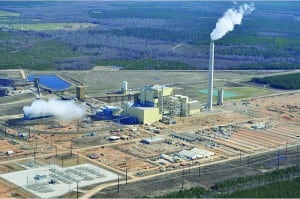
CoalAEP’s John W. Turk, Jr. Power Plant Earns POWER’s Highest Honor
AEP’s SWEPCO requested proposals in December 2005 for new generation to meet long-term capacity needs, and by August 2006 the company settled on coal-fired technology for a new plant site in Arkansas. Construction began in early 2008, and the new plant entered commercial service in December 2012. For overcoming numerous legal and regulatory obstacles and for building the first ultrasupercritical plant in the U.S., the John W. Turk, Jr. plant is awarded POWER’s 2013 Plant of the Year Award.
-
Commentary
Soul of the Universe
The theologian John Wesley, so taken with electricity, reverently called it the soul of the universe. Less impressed, perhaps, are state regulatory commissions that nonetheless set service territory boundaries to avoid the added expense in duplicative facilities. Becoming the sole source of the good stuff also invited regulation of rates, service standards, and whatever else […]
-
 Geothermal
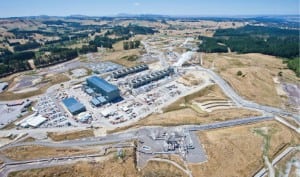
Contact Energy Ltd.’s Te Mihi Power Station Harnesses Sustainable Geothermal Energy
Te Mihi Power Station is a two-unit 166-MW geothermal plant currently undergoing commissioning on New Zealand’s North Island. It replaces the Wairakei Power Station constructed in 1958—but with a much smaller environmental footprint. The double flash technology selected produces ~25% more power from the same amount of geothermal fluid that is currently used at Wairakei. For its continuing commitment to renewable geothermal energy, Contact Energy Ltd.’s Te Mihi Power Station is the winner of POWER’s 2013 Marmaduke Award for excellence in power plant problem-solving. The award is named for Marmaduke Surfaceblow, the fictional marine engineer and plant troubleshooter par excellence.
-
 Nuclear
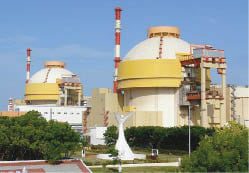
Indian VVER Reactors Ready for Startup
Two VVER-1000 reactors built and designed by Russian state firm Atomstroyexport under a $3 billion contract are slated to be commissioned this summer in the State of Tamil Nadu in India.
-
 Nuclear
Documentation Scandal Strains South Korea’s Power Supplies
South Korea, the world’s fourth-largest producer of nuclear power, in June warned of “unprecedented” power shortages this summer after it shut down two reactors due to faulty safety equipment and delayed the start of operations of another last month.
-
Nuclear
New Safety Standards Clear Nuclear Fog in Japan
In Japan, where all but two of 50 reactors remain shuttered for safety checks following the 2011 Fukushima catastrophe, at least four major utilities were gearing up to apply for safety screening of 12 reactors across six plants.
-
Hydro
UK Government Again Stuns $45B Severn Barrage
A proposal to build a $45.8 billion fixed barrage across the Severn estuary, between Brean in England and Lavernock Point in Wales, suffered another blow in June as an influential UK parliamentary committee deemed a high-profile privately financed proposal unsatisfactory for environmental and economic reasons.
-
 Smart Grid
Vehicle-to-Grid Aggregated Project Sells Electricity to the Grid
A technology developed by the University of Delaware (UD) and NRG Energy that provides a two-way interface between electric vehicles and the power grid earlier this year became an official paid resource on PJM Interconnection’s regional grid (Figure 4). One of the first of its kind, the project proves the so-called “vehicle-to-grid” (V2G) concept can sell electricity from electric vehicles.
-
 Gas
GasEIA: Non-Shale Gas Resources Add Significantly to Recoverable Global Estimates
An updated estimate of technically recoverable global shale gas resources by the U.S. Energy Information Administration (EIA) puts them at 7,299 trillion cubic feet (tcf)—10% higher than estimated in 2011.
-
Business
POWER Digest (August 2013)
UN Report on Global Renewable Energy Investment. The United Nations Environment Program (UNEP) released its report Global Trends in Renewable Energy Investment 2013 on June 11, finding that renewable energy investment at the global level was $244 billion in 2012. However, global investments in renewable energy fell 12% compared to 2011 due to dramatically lower […]
-
 Smart Grid
EPB Chattanooga Uses Smart Grid to Future-Proof Its Business Model
A municipal utility in the South may not be where you’d expect to find an exemplary smart grid implementation, but that’s just fine with EPB Chattanooga. Its leaders are raking in the kudos—including POWER’s 2013 Smart Grid Award—and their community is attracting new businesses in response to a fiber-optic-based system that has helped raise the profile of their city and bolster the sustainability of their utility.
-
Legal & Regulatory
Exporting Natural Gas
The transformative increases in current and expected future domestic natural gas production have spawned yet another energy debate: Should the U.S. should export natural gas?
-
Commentary
Bridging the Gap Between Company and Community
In communities all across North America, environmental justice (EJ), which calls for the fair treatment of all people, including those of color and the economically deprived, remains a serious concern.
-
 Coal
CoalWater Issues Challenge Power Generators
Drought and competing uses for water continue to challenge power plant operators worldwide. In response, innovative approaches for reducing water use are being explored from South Africa to China.
-
 Coal
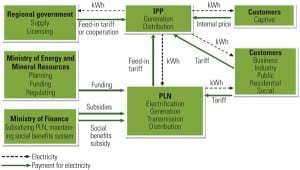
CoalIndonesia: Energy Rich and Electricity Poor
Even though it enjoys sizeable coal and natural gas reserves, Indonesia struggles to provide electricity to its growing economy. Geography is its most obvious challenge. Others include evolving international markets and an energy sector that remains highly politicized.
-
 O&M
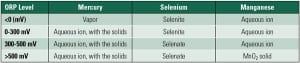
O&MORP as a Predictor of WFGD Chemistry and Wastewater Treatment
Recent studies have shown that system oxidation-reduction potential (ORP) is not only an important factor for predicting wet flue gas desulfurization (WFGD) absorber chemistry but also may be a predictor of process equipment corrosion and wastewater treatment requirements.
-
 O&M
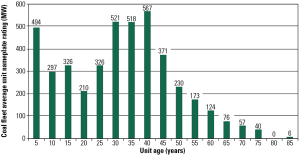
O&MThe Case for Utility Boiler Fuel Delivery System Upgrades
A vital part of any coal-fired unit is its fuel delivery system (FDS). A newly formed subcommittee of the ASME Research Committee on Energy, Environment, and Waste has investigated potential FDS upgrades on three typical 500-MW wall-, tangential-, and cyclone-fired boilers. The subcommittee has produced a series of suggested upgrades that have a simple payback of no more than two years.
-
 Smart Grid
EMP: The Biggest Unaddressed Threat to the Grid
The electricity grid has been characterized as the world’s largest and most complicated machine. The grid, like all machines, requires periodic upgrades and maintenance to prevent outages during the normal course of business, and it can be brought down by various outside forces. Solar flares and cyber attacks have temporarily crippled the machine, but an electromagnetic pulse event would be the “ultimate cyber security catastrophe.”
-
 Smart Grid
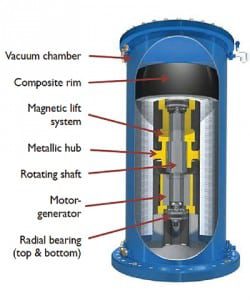
Beacon Power Makes a Comeback
Beacon Power Corp. was founded in 1997 to develop flywheel-based energy storage technology. By 2007, the 100-kW/25-kWh Gen 4 flywheel system was commercialized and deployed in several projects. However, market conditions pushed the company into bankruptcy in late 2011. The company has since emerged, reinvigorated with new investment and a new name: Beacon Power LLC.
-
 Coal
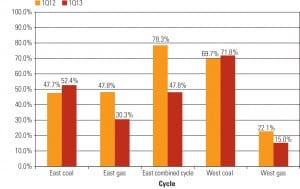
CoalGas-Electric Integration “Swamps” All Other Issues
Panelists at the ELECTRIC POWER 2013 Keynote and Roundtable Discussion in Chicago in May were consumed by the need to ensure future reliability by more closely integrating the gas and electricity markets. Acknowledged less directly were distortions created by renewable energy subsidies and mandates, onerous regulations affecting coal, and “irreversible” demand destruction caused by the success of energy efficiency and demand management programs. The elephant in the room was the continued demise of electricity markets.