Dynamic swings in both load and hourly spot prices are forcing combined cycle plants to ramp up and down quickly to remain profitable and competitive.
This is the third article in a POWER magazine series, with the first titled Futureproofing Gas Power Plant Investments and discussing various technologies to extend the life of existing facilities. The second article, Autonomous Power Generation – The Future is Now, shows how power plants can run unmanned.
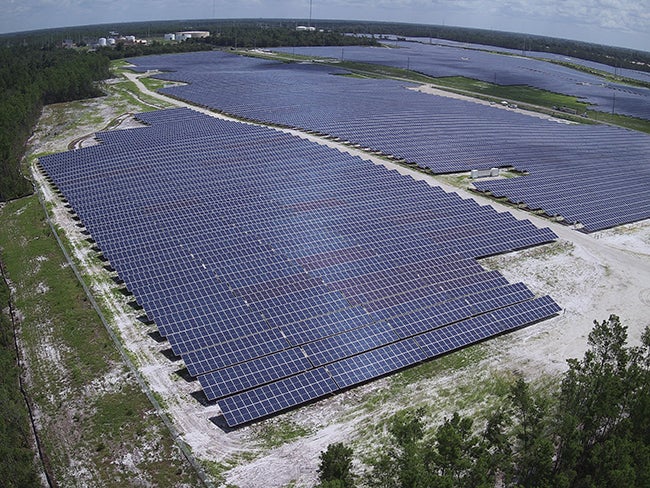
Renewable energy sources are rapidly entering the power grid, creating increasingly large swings in the overall load. Combined cycle power plants (CCPP) have become the primary means to balance this load, offsetting dips and peaks created by ever variable winds and solar intensity. Kilowatt-hour rates are also dynamic, rising and falling precipitously when energy production is out of synch with demand.
These conditions create both challenges and opportunities for combined cycle plants. Flexible and responsive plants can take advantage of market variability, while inflexible units that are slow to come to full production during profitable conditions can incur losses as they gradually ramp down. Therefore, flexibility and fast response effectively translate into higher operating margins and profits.
This article describes solutions that help combined cycle plants ramp up and down much faster, enabling operators to maximize their profits, while limiting losses during periods with low or negative operating margins.
A shifting market
In recent years, the share of renewable energy has risen quickly as coal capacity comes offline. Wind and solar energy have grown dramatically, creating a dynamic and destabilizing force in the energy markets since these sources are inherently variable, with their power output difficult to predict.
Wind producer outputs vary constantly, but often the wind will stay at least relatively constant for hours at a time. Solar producers will typically cycle up in the morning and generally produce until the evening, but intermittent and unpredictable cloud cover can affect solar intensity instantaneously and with no warning.
As more solar energy production enters the grid, CCPP producers will have to ramp down much further and faster in the morning, and then increase output quickly in the evening as solar production falls off. They must also adjust quickly as renewable production shifts. Such steep production rates of change are typically beyond the capability of the average CCPP facility.
As a result, the average CCPP plant is slow to take advantage of profitable times, and lags when cutting back production when demand falls, increasing losses. These plants also have relatively high idle rates that can further contribute to the poor or negative returns. Finally, any energy production during unprofitable times needlessly increases the plant’s overall emissions.
Operational flexibility
The obvious solution to this problem is to improve the rate of response and turndown of the CCPP site (Figure 1). Faster start-ups take advantage of profitable pricing sooner, and faster shutdowns and lower idle rates allow plants to quickly exit the market when profits decline, while minimizing operating losses and emissions during idle time.
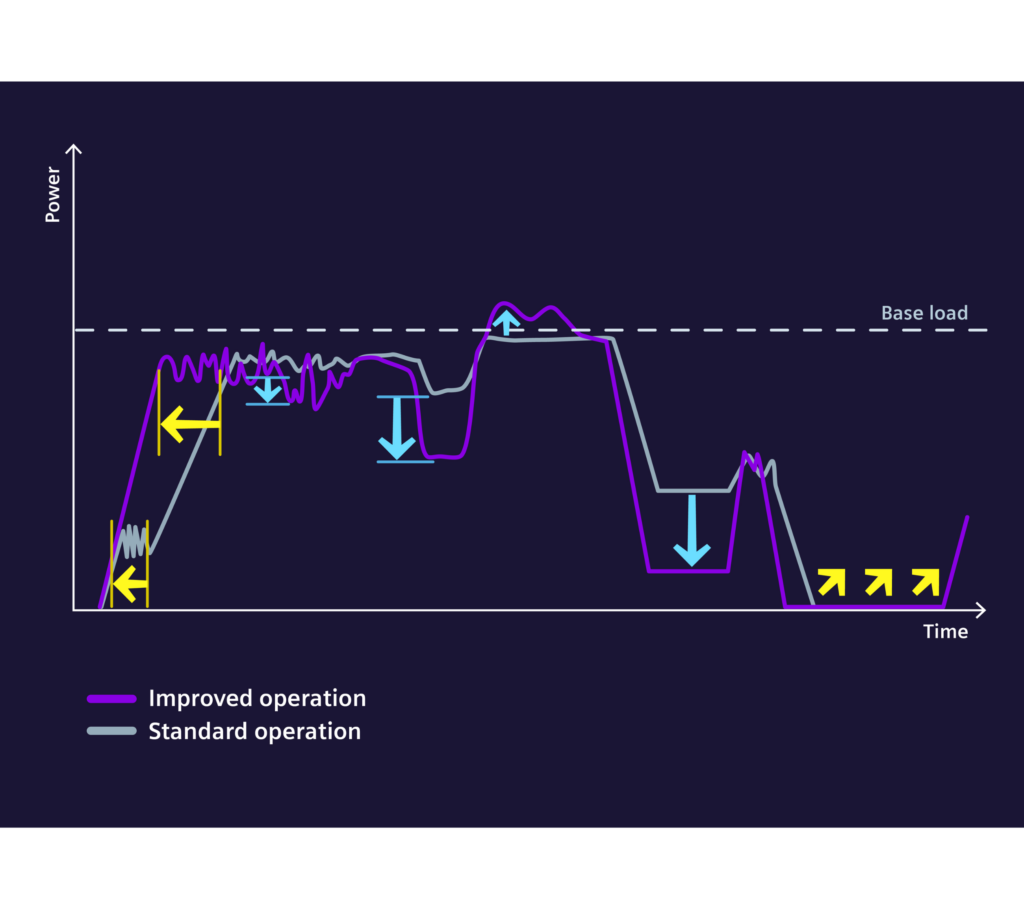
These improvements are made possible by carefully evaluating the design details of the equipment and utilizing a combination of modified procedures, control techniques, and specialty software to achieve much faster ramp rates. Importantly, these changes do not place additional thermal stress on the plant or shorten equipment life.
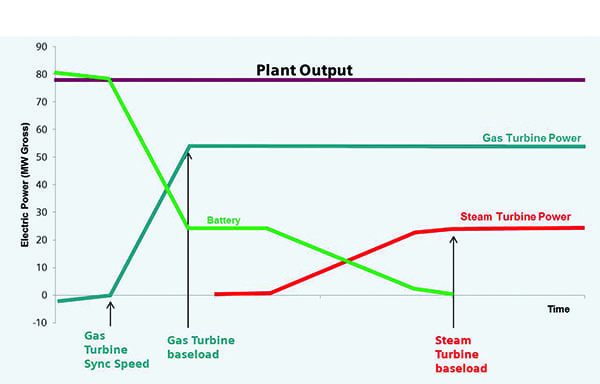
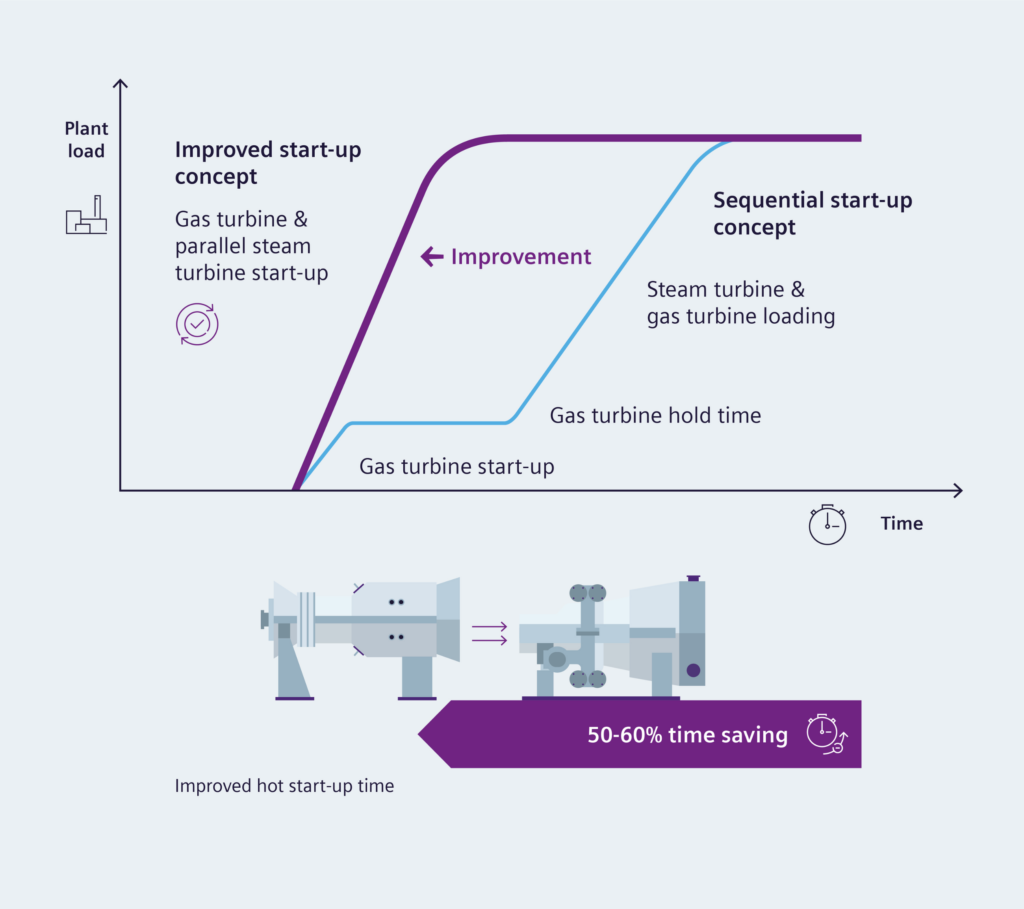
The process starts with a detailed review of the existing equipment, start-up and shutdown procedures, and the control systems currently installed in the plant. Most plants start up the gas turbine, hold it at temperature for some period, then slowly warm up the steam turbine. However, it is possible to simultaneously start and warm up both pieces of equipment at the same time if specific controls are implemented to monitor and control steam turbine heat stress. When these parallel ramping concepts and controls are implemented, start-up ramping can be dramatically improved (Figure 2).
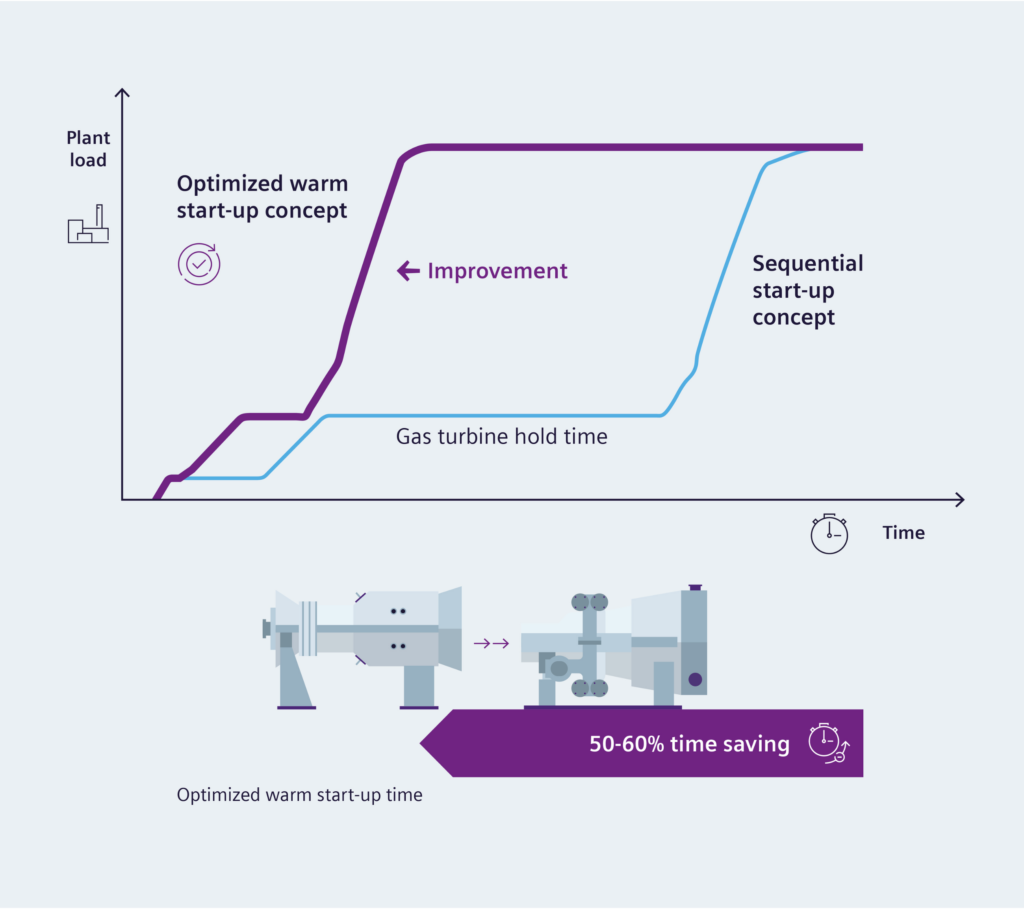
Warm start times, defined as starting a plant that has been down from 8 to 48 hours, can be reduced by 50% using similar techniques.
Shutdown times can be cut as well, allowing some plants to come down in under 30 minutes. Similar to the fast start-up concepts, these procedures and operating techniques bring both turbines down simultaneously.
All these reduced start and shutdown times cut fuel consumption, reduce emissions, and allow the plant to quickly capitalize on swings in demand prices as they occur.
Another source of significant savings comes from increased turndown of the site’s production capacity. These reductions are enabled through a combination of equipment modification and instrument and control upgrades to collectively extend the lower operating range by as much as 40%. Lower plant rates cut operating costs during idle times, which are likely to be more prevalent as more renewable energy sources enter the grid.
These concepts have been implemented and proven in a number of facilities. Sites have reduced their warm start times by 50 minutes, cutting fuel consumption by 800 MMBtus and avoiding 44 tons of CO2 emissions per warm start. Other sites have cut warmup times to under 60 minutes, with ramping at gradients of 30MW/minute.
Further details of all these concepts and examples are discussed in the Siemens Energy “Maximizing Power Plant Flexibility” white paper found here, and the success story below illustrates some of these concepts in action.
Spain’s Naturgy upgrades its gas turbine fleet
In the rapidly evolving landscape of renewable energy, Naturgy stands at the forefront of sustainable power generation. With Spain aiming for 160 GW of renewable capacity within a projected 214 GW total by 2030, the company recognizes the critical role of combined cycle plants in supporting this transition. As renewable generation increases, these assets provide the fast response, operational resilience, and efficiency needed to balance intermittent energy sources.
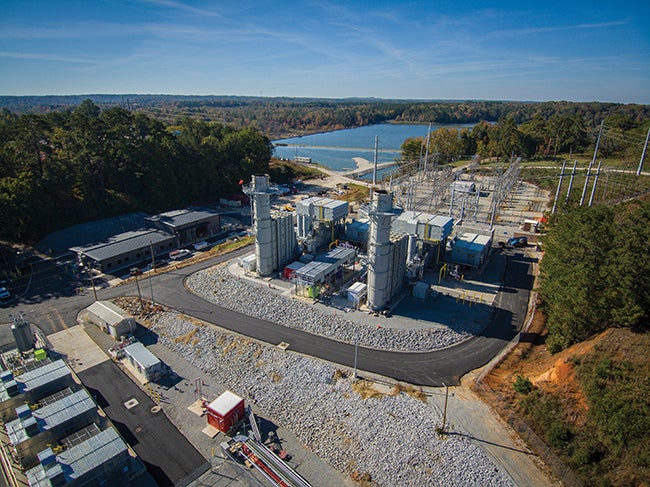
Naturgy operates 11 gas-fired power plants in Spain, including the combined-cycle power plants in Sagunto, Palos de la Frontera, and Campo. Equipped with Siemens Energy technology, these plants play a vital role in supporting Spain’s power system by continuously adapting their operating profile to meet changing requirements.
Naturgy partnered with Siemens Energy to upgrade their SGT5-4000F gas turbine fleet installed at the Sagunto, Palos de la Frontera, and Campo combined cycle power plants. The primary goals of the upgrade were to enhance the operational flexibility of their fleet and improve fuel efficiency.
These upgrades not only improved the operational profile of the power plant, but also significantly reduced gas consumption and CO2 emissions. All software‑based optimizations are anchored directly in the Siemens Omnivise T3000 control system, where operational decisions are executed in real time. At Sagunto, the T3000 forms the modern control backbone and enables highly flexible, efficient, and safe operations.
Through close collaboration, Siemens Energy and Naturgy are enhancing the efficiency and flexibility of Naturgy’s combined-cycle power plant operations by providing a reliable backbone for an evolving electricity grid.
Conclusion
If your CCPP plant exhibits slow ramp rates and/or poor turndown, a consultation with Siemens Energy professionals can be a wise first step. Their knowledgeable team will evaluate the site equipment and procedures, and they will provide a range of options to improve operational flexibility and achieve rapid response. Once implemented, these improvements will improve profitability and cut emissions immediately, while ensuring the facility will remain competitive as the power markets continue to shift in the coming years.
All Figures courtesy of Siemens Energy