Utilities and energy organizations are making major infrastructure investments while facing intense pressure to keep service affordable and meet regulatory expectations. Protecting cash flow requires a clear, timely view of where money is being spent across the organization.

When spending is spread across disconnected systems and complex operations, finance teams can struggle to track budgets and identify risks early. Stronger visibility helps control costs, manage payment timing, and make more informed financial decisions.
With greater control over everyday and emergency spending, finance teams can respond quickly as conditions change while supporting long-term infrastructure needs.
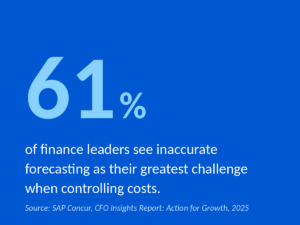
Start with these 11 strategies to strengthen cash-flow visibility and maintain greater financial control.
Control your spend
You can’t control what you can’t see, so put tools in place to give you the visibility you need across field operations, capital projects, and routine and emergency spending.
1. Identify and reduce unnecessary costs
Conduct a structured review of O&M, field services and contractor spend by category. Use data to identify where capex and maintenance costs can be optimized across your network, plant and asset base.
2. Gain visibility into field crew and project travel
When crews travel to outage sites, plants or remote assets, spend can quickly become
fragmented. Concur Travel and Concur TripLink provide a consolidated view across all bookings —planned and unplanned — enabling better rate negotiation and tighter cost control.
3. Invoice capital programs on time
For long-running infrastructure projects, such as grid upgrades, renewable installations, metering roll-outs, prompt and accurate milestone invoicing keeps cash moving and reduces the risk of delayed revenue recognition.
4. Bring field and project expenses into the system faster
Manual expense processes create blind spots for finance teams. Concur Expense has policy controls applied at the point of submission, giving earlier visibility and greater confidence in T&E compliance across distributed field teams.
Strengthen cash flow visibility
For AP and procurement teams, stronger cash flow visibility can help reduce risk and improve working capital.
5. Invoice in stages for capital programs
For network upgrades and multi-year construction projects, requesting upfront deposits and invoicing in milestones reduces the risk of funding extended programs before revenue is recognized, protecting working capital through lengthy delivery cycles.
6. See spend before it happens
In a utilities environment, unplanned project overruns and out-of-policy field spend can
erode margins quickly. Purchase Request enables proactive spend controls—applied
before purchase orders are created—to give procurement teams the visibility to act early.
7. Align supplier payment terms to your working capital cycle
Utilities manage complex supplier ecosystems across plant equipment, field services
and MRO. Establish payment schedules that preserve supplier relationships while
protecting working capital, particularly during peak capital expenditure cycles such as
planned outage seasons.
8. Automate non-PO invoice processing
High volumes of low-value invoices from local contractors, emergency suppliers and
service providers create a significant AP burden. Concur Invoice reduces manual effort, improves accuracy, and helps finance teams make more strategic decisions about when cash leaves the business.
Forecast and plan with confidence
Better analytics and budget control can help finance teams anticipate changing conditions and build resilience.
9. Track T&E and project spend in near real time
Waiting for period-end close to understand field crew costs or project spend is too slow in a dynamic operating environment. Near realtime reporting allows finance teams to monitor working capital movements and respond faster to cost pressures.
10. Identify seasonal and operational spending patterns
Utilities face predictable cost spikes tied to planned outages, storms, and maintenance
cycles. Intelligence and Consultative Intelligence provide insights across travel,
expense, project, and invoice data to reveal spending patterns, strengthen cash-flow
forecasts, and guide budget allocation.
11. Set and enforce spend budgets at project and asset level
Granular controls aligned with project WBS codes, cost centers, and capital programs help teams act before budgets are breached. Budget provides a near-real-time view of employee spend against budgets, allowing teams to monitor and adjust funding at the project, asset, or organizational level.

Explore how SAP Concur solutions can help improve cash flow visibility and control.
Watch a demo of Concur Travel & Expense
Talk to an SAP Concur expert about how the platform can help strengthen your cash flow visibility and control
1. SAP Concur, CFO Insights Report: Action for Growth, 2025
© 2026 SAP SE or an SAP affiliate company. All rights reserved. See Legal Notice on www.sap.com/legal-notice for use terms, disclaimers, disclosures, or restrictions related to this material.