Artificial intelligence (AI), data centers, and electrification are increasing U.S. electricity demand. Lawrence Berkeley National Laboratory estimates data centers could account for 11.8% of electricity consumption by 2030, within a projected range of 9.5%–15.3%. The U.S. Energy Information Administration (EIA) forecasts electricity consumption to increase by approximately 2.2% in 2026 and a further 1.6% in 2027. While new generation and transmission infrastructure will help meet demand, existing plants must continue delivering a reliable base load.
Nuclear energy supplied approximately 18% of U.S. utility-scale electricity in 2025, with an average fleet capacity factor of 91%. Maintaining that contribution depends not only on reactor systems but also on steam generators, feedwater piping, turbines, and other balance-of-plant equipment. Inspection-led maintenance, along with appropriately qualified repairs and protection, can help preserve reliability.
The Reliability Value of the Existing Nuclear Fleet
As of March 2026, the U.S. had 94 operating commercial reactors at 54 sites, averaging approximately 44 years of age. Many have already received license extensions beyond their original 40-year terms, and subsequent renewals may permit operation for up to 80 years, subject to Nuclear Regulatory Commission (NRC) review and aging-management requirements. These longer operating lives increase the importance of monitoring equipment degradation and intervening before defects require extensive corrective work. Life extension does not mean retaining every component indefinitely. Operators must distinguish between equipment suitable for continued monitoring, systems requiring structural repair or replacement, and sound surfaces where added protection could control a documented damage mechanism.
Nuclear plants supply large, baseload sources of electricity. A forced outage requires grid operators to secure replacement generation, potentially tightening regional supply margins and increasing costs. The consequences depend on the outage duration, regional demand, and available replacement capacity. A single reactor trip does not necessarily interrupt customer supply, but a prolonged loss can increase demand on other generating assets. For plants operating at high capacity factors, lost output is also difficult to recover later. Unexpected equipment maintenance can disrupt refueling schedules, increase specialist labor requirements, and expand future outage scopes. Predictable component condition is therefore valuable to both plant operations and grid reliability.
Managing Degradation in Steam and Feedwater Systems
In pressurized water reactors (PWRs), steam-generator tubes separate the radioactive primary system from the secondary system that produces steam for electricity generation. Corrosion, cracking, vibration and deposit buildup can damage these tubes, potentially affecting their integrity. Operators manage these risks through water chemistry control, regular inspections, and established repair procedures. Any signs of damage must be assessed against strict safety requirements.
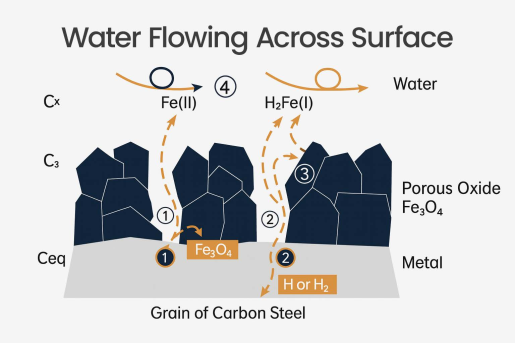
Other components, including feedwater piping, cross-under piping, and turbine steam systems, also face deterioration. One common issue is flow-accelerated corrosion (FAC), where flowing water or wet steam gradually wears away the protective oxide layer inside carbon-steel pipes, leading to wall thinning (Figure 1). Damage can be particularly severe around bends, joints, and areas where flow changes direction or speed. Vibration, water droplets, and temperature changes can cause further wear. Because deterioration often occurs internally, it may not be visible during routine external inspections.
The risks became clear in December 1986, when a major feedwater pipe rupture at a U.S. PWR prompted greater regulatory attention to pipe-wall thinning. Today, operators use ultrasonic inspections, monitoring, and predictive assessments to identify vulnerable areas and track deterioration. These measures help detect wall loss early, allowing repairs to be planned before equipment integrity or plant availability is affected.
Selecting Repairs and Protection According to Condition
The appropriate intervention depends on component condition, degradation mechanism, and applicable engineering requirements. Where wall thickness has fallen below acceptable limits, qualified weld build-up or component replacement may be required to restore structural integrity. Where the substrate remains fit for service, High Velocity Thermal Spray (HVTS) alloy cladding can provide long-term protection against further corrosion and erosion.
The two approaches can also be combined. Qualified welding restores lost wall thickness, while HVTS cladding can subsequently be applied over suitably prepared and inspected surfaces to provide a metallurgical upgrade and mitigate recurring degradation. This allows operators to coordinate structural restoration and longer-term protection within a single planned maintenance scope.
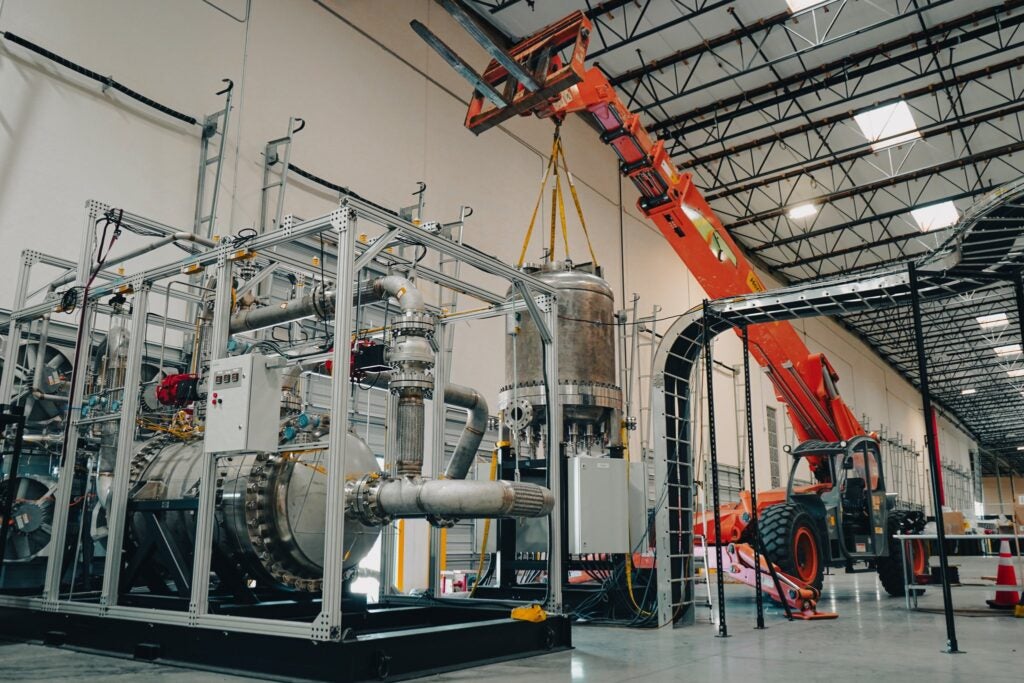
Unlike weld overlay, HVTS application (Figure 2) does not create a heat-affected zone in the base metal and can be completed more rapidly by eliminating post-application heat treatment requirements. Shorter application times may help operators complete maintenance work within planned outages and, where radiological controls apply, support ALARA (as low as reasonably achievable) objectives by reducing time spent in exposed work areas. The potential exposure benefit must be assessed against the full work scope, including preparation, application, and inspection.
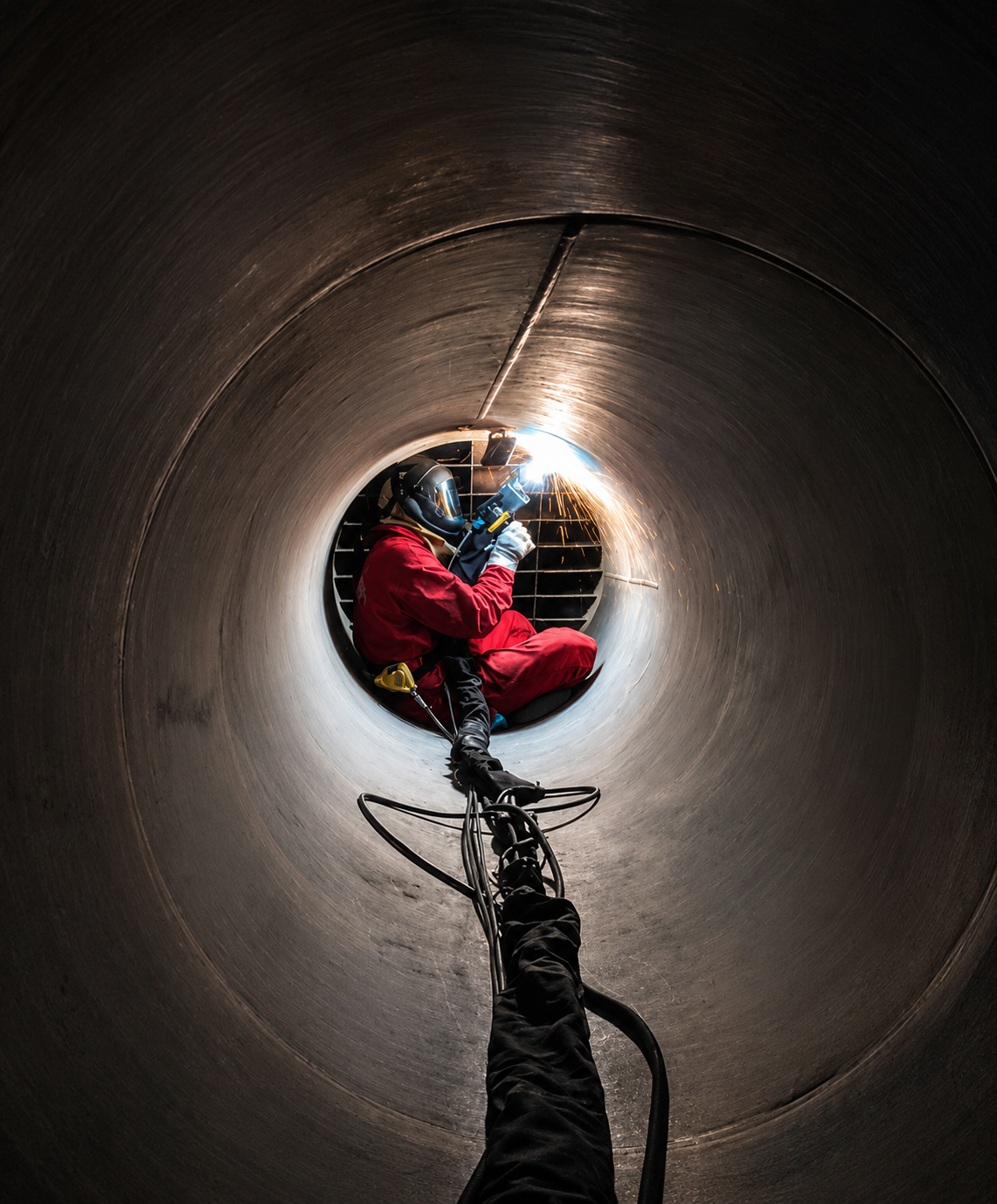
As a protective alloy layer, HVTS is intended to mitigate ongoing metal wastage and support longer component service life, potentially limiting the need for repeated interventions.
Case Study: Protecting Cross-Under Piping
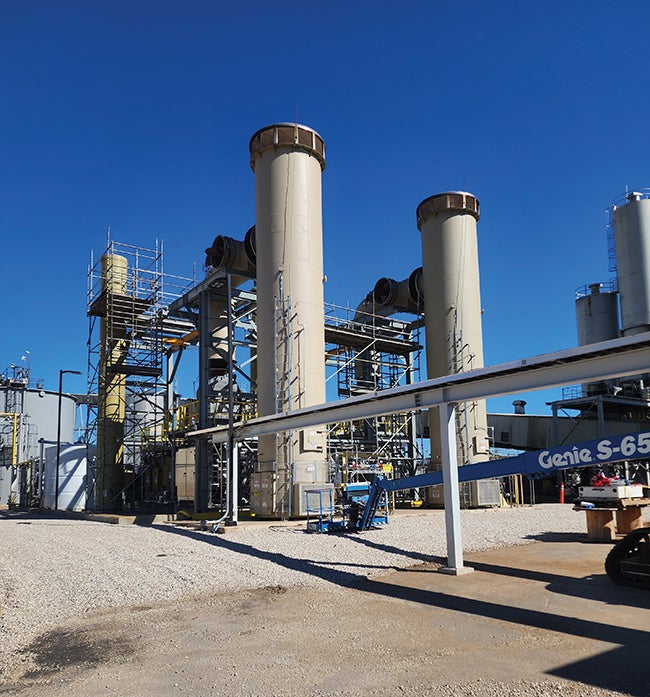
An application at one nuclear plant illustrates this approach. High-velocity wet steam had caused FAC and erosion in cross-under piping, particularly near turning vanes and high-flow regions. The operator sought to limit further wall loss without the disruption associated with large-scale piping replacement.
A localized HVTS trial began in 2009. In a wider life-extension assessment initiated in 2018, the plant evaluated pipe replacement, weld overlay, and HVTS cladding. Inspections identified priority locations (Figure 3), allowing the operator to divide surface protection work into planned outage scopes. Existing protection was removed where required, and engineered HVTS alloy cladding was applied to selected surfaces where the piping was suitable for continued service. This enabled the operator to focus on vulnerable regions rather than treat all piping identically, while coordinating preparation, application, and inspection with other outage activities.
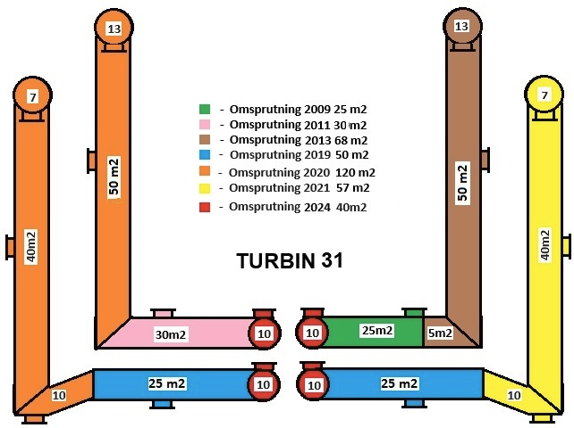
The project involved approximately 8,000 ft2 (740 m2) of treatment per unit across two units, delivered through a phased four-year program. Annual application areas ranged from approximately 850 ft2 to 3,000 ft2 (79 m2 to 279 m2), with no additional outage days required. Long-term performance has also been demonstrated, with cladding applied during an initial trial in 2009 reported to be in excellent condition after more than 15 years of service.
The case demonstrates how inspection, targeted protection, and phased execution can support longer equipment life while preserving planned outage schedules. It does not constitute a precedent for automatic approval at U.S. plants, where each application needs its own technical and quality assessment. Nor should the service record of a trial area be assumed to predict performance across every location or operating environment.
Turning Equipment Integrity into More Predictable Generation
For nuclear operators, effective asset integrity management starts with linking inspection results, operating history, and remaining-life assessments to a prioritized maintenance plan. Steam-generator tubing, FAC-prone piping, and turbine steam-system wear require distinct inspection and intervention strategies rather than a single treatment approach.
Planning ahead of outages allows time to establish repair designs, procedures, materials, quality controls, and access arrangements. Using inspection trends to define the scope early also reduces the risk of discovering extensive work only after the unit has been taken offline. It also helps differentiate components needing replacement or structural restoration from sound surfaces that may benefit from protection. Where work takes place in radiologically controlled areas, crew size, time on task, and the potential for repeat exposure should inform execution planning.
Capital allocation also benefits from this distinction. Measured degradation rates can show where a localized intervention is technically justified and where wholesale replacement is unavoidable. This helps operators prioritize expenditure according to component condition and expected operational benefit, rather than treating every susceptible circuit as requiring the same scope of work.
Operators can assess the contribution of these decisions through forced-loss rates, unit availability, outage schedule adherence, and repeat degradation findings. These measures connect component-level maintenance to the wider objective of dependable generation without displacing safety and regulatory requirements.
Maintaining a Reliable Fleet
As U.S. electricity demand rises, preserving the performance of existing nuclear assets remains essential alongside investment in new capacity. Early inspection, correctly matched repairs, and suitably qualified surface protection can limit recurring degradation and reduce avoidable outage work. Maintaining steam and feedwater system integrity therefore supports the long-term availability of America’s nuclear fleet.
—Keith Reeser is senior director with IGS, and Craig Herbster is nuclear corrosion subject matter expert with IGS.