A private equity–led consortium has agreed to take AES Corp. private in a $33.4 billion deal that—if completed—will shift one of the largest U.S.-listed power companies and a major data‑center renewables supplier into private ownership.
AES’s board says the move, which comes as load growth and capital needs are rising across the sector, is designed to address a significant need for capital beyond 2027 that, absent a sale, likely would have forced dividend cuts or substantial new equity issuance.
The consortium includes Global Infrastructure Partners (GIP), a global infrastructure fund manager now owned by asset‑management firm BlackRock; EQT’s Infrastructure VI fund, a global infrastructure investor based in Europe; the California Public Employees’ Retirement System (CalPERS), the largest U.S. public pension fund; and the Qatar Investment Authority (QIA), Qatar’s sovereign wealth fund.
On March 2, the group announced a definitive agreement to acquire AES for $15 a share in cash, valuing the equity at $10.7 billion and the enterprise at about $33.4 billion including debt. The offer represents a 40.3% premium to AES’s 30‑day volume‑weighted average price before takeover rumors surfaced in July 2025, the companies said in a statement. “The deal is expected to close in late 2026 or early 2027, subject to shareholder approval and applicable U.S. and foreign regulatory approvals,” they added.
A Major New Direction for AES
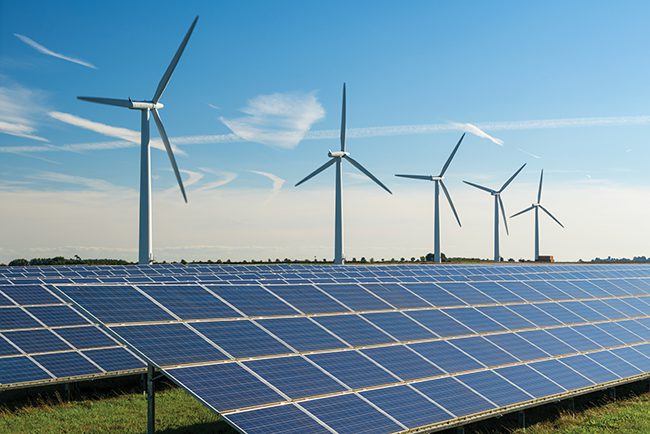
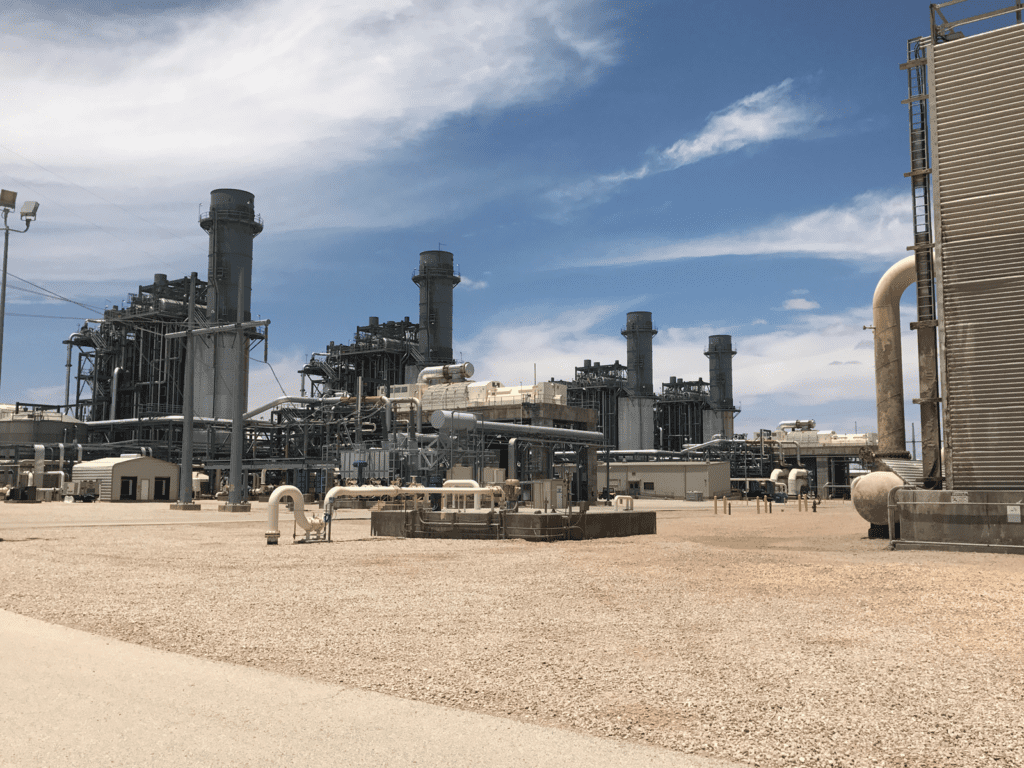
AES is a hybrid utility, merchant generation, and clean‑energy developer that spans regulated wires businesses in Indiana and Ohio, a rapidly scaling U.S. renewables and storage platform, and legacy gas and coal assets concentrated in Latin America.
During its third‑quarter 2025 earnings review in November 2025, AES said it sits at the intersection of rapid load growth from data centers, pressure to decarbonize, and a capital‑intensive utility and renewables build‑out that can strain investment‑grade balance sheets.
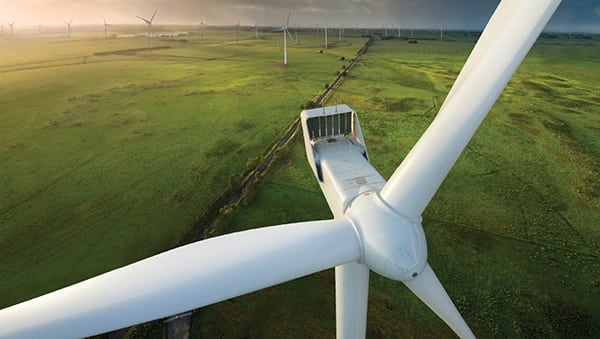
The company reaffirmed a 5%–7% adjusted EBITDA growth target through 2027, supported by an 11.1-GW backlog of renewable projects under signed power purchase agreements, according to the company’s earnings materials. The company said renewables EBITDA had increased 46% year-to-date, driven partly by roughly 3 GW of new projects brought online over the prior 12 months.
AES also highlighted its growing exposure to data-center demand. In its latest earnings discussion, the company said it had 8.2 GW of signed agreements with data-center customers, including 4.2 GW that is already operating and about 4 GW in backlog, while noting that more than half of new solar projects now include battery storage.
At the same time, AES told investors it was “self‑funded through 2027” and would lean on asset sales, cost cuts, and balance‑sheet discipline to maintain investment‑grade ratings while continuing to invest roughly $1.8 billion a year in growth, mainly in U.S. renewables and utilities. To fund that plan, AES has been layering parent‑level financing—including new senior notes, term loans, and an expanded commercial paper program backed by $1.8 billion of revolving credit—on top of substantial project‑level non‑recourse debt, tax‑equity partnerships, and tax‑credit transfer structures across its U.S. renewables and utility platforms.
In announcing the take‑private transaction, AES’s board said that growth beyond 2027—particularly new U.S. generation, grid upgrades, and data‑center‑driven infrastructure—would require capital on a scale that, as a public company, would likely have meant reducing or eliminating the dividend and/or issuing substantial new equity, a trade‑off the board is now trying to avoid via private ownership.
Midwestern Utilities to Remain Regulated
Under the agreement, AES shareholders will receive $15.00 per share in cash, while the buyer group will fund 100% of the purchase price in equity rather than layering on additional acquisition debt. AES said its utilities in Indiana and Ohio, which serve 1.1 million customers, will remain locally operated and managed and continue to be subject to existing state and federal regulatory oversight.
The company and EQT also said the acquisition “is not expected to impact customer rates” at those regulated utilities, a key assertion that state commissions are likely to test as they review transaction‑related costs, financial policies, and any ring‑fencing measures.
The deal potentially gives the GIP-led consortium a mixed portfolio that includes two Midwest electric utilities, a large and fast‑growing U.S. renewables and storage platform, and “critical energy infrastructure assets in Latin America,” including gas and hydro positions that have been contributing to EBITDA growth.
AES says it is the largest supplier of clean energy to corporations globally, citing 11.8 GW of signed agreements with major technology customers. “AES has a significant need for capital to support growth beyond 2027, particularly given the significant new investments in both U.S. generation and utilities businesses. In the absence of a transaction with the Consortium, the Company would likely require a plan that includes reduction or elimination of the dividend and/or substantial new equity issuances,” said AES’s board chair, Jay Morse. He said the board concluded the all‑cash offer “maximizes value for stockholders and provides compelling cash value” after running a “robust process.”
AES Chief Executive Andrés Gluski cast the deal as a way to execute on the existing strategy outside the quarterly earnings cycle: “We believe this transaction maximizes value for existing stockholders and positions the Company for long-term success as we continue delivering on our commitments to customers, communities and people. We look forward to partnering with the Consortium, which has expressed an appreciation for the value of AES’ innovation, global reach and diverse portfolio.”
On the buyer side, GIP founder Bayo Ogunlesi argued that AES’s fleet lines up directly with expected U.S. capacity needs: “AES is a leader in competitive generation, and at a time in which there is a need for significant investments in new capacity in electricity generation, transmission and distribution, especially in the United States of America, we look forward to utilizing GIP’s experience in energy infrastructure investing, as well as our operational capabilities to help accelerate AES’ commitment to serve the market needs for affordable, safe and reliable power.”
EQT’s infrastructure head Masoud Homayoun added that the consortium sees “the increasing need for a secure energy supply amid expanding power demand worldwide” and plans to “strengthen [AES’s] operating platform, including enhancing reliability and long-term competitiveness, while supporting a responsible and sustainable energy transition.”
The transaction, however, triggers overlapping reviews, including for AES shareholder approval; U.S. federal clearances; state utility commission approvals in Indiana and Ohio; and relevant foreign approvals tied to AES’s international operations.
AES notes that its regulated businesses will continue to be overseen by “local, state and federal/national authorities, underscoring that the deal represents a change in ownership rather than in regulatory franchise. Commissions in both states have already been engaged on sizable capex and rate‑case programs, including a forward‑test‑year rate filing at AES Indiana and a settled distribution rate review and planned framework transition in Ohio, giving regulators recent visibility into the utilities’ investment needs and performance, it suggested.
AES plans to file a proxy statement with the SEC regarding the transaction and bring the deal to a shareholder vote while regulators review the ownership and financing impacts on customers and grid reliability. The company expects to continue paying dividends “in the ordinary course” until closing, after which its stock will be delisted from the NYSE and AES will operate as a private entity under Horizon Parent, L.P.
Operationally, AES’s existing capital program is slated to remain in place, including completion of a 1.2‑GW gas repowering at AES Indiana; build‑out of 4.8 GW of backlog projects under construction through 2027; continued expansion of storage, which already accompanies more than half of new solar projects; and transmission investments in Ohio that AES expects will drive transmission to roughly 40% of rate base by 2027.
—Sonal Patel is a POWER senior editor (@sonalcpatel, @POWERmagazine).
Editor’s Note: This story is currently evolving and subject to change. We encourage you to revisit this article or check our website for the latest updates.